
CAIRO, Egypt — October 21, 2026 | by Frank, SunAura Machinery Export Projects
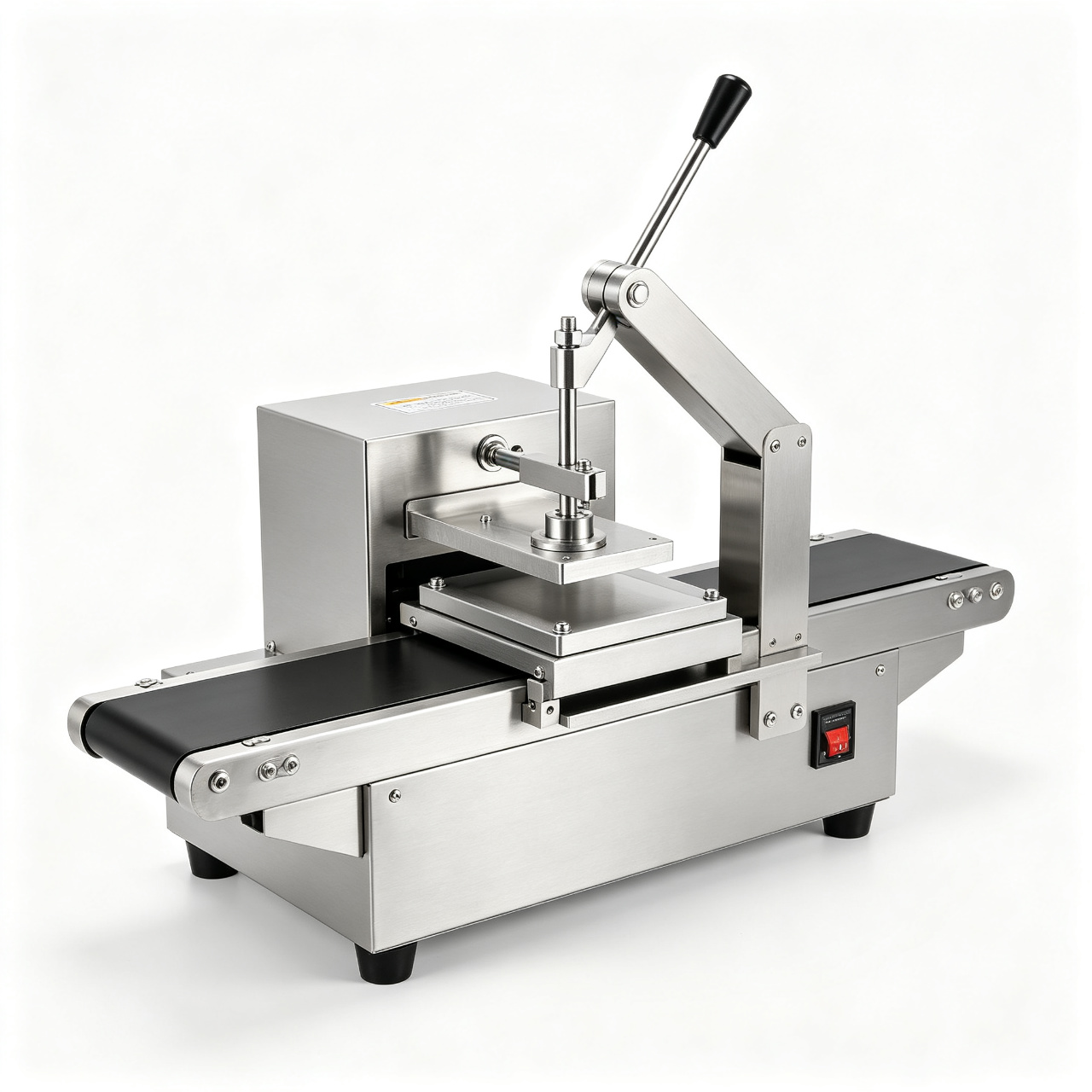
SunAura Machinery has commissioned two automatic induction foil sealing lines for a honey and packaged-food exporter based near Cairo whose products ship to the Gulf, North Africa and European ethnic-food distributors. The exporter packs creamed honey in glass jars, molasses and tahina in PET bottles and plastic jars, and fruit syrups in both formats — a mix that until last month was sealed with hand-held and semi-automatic units that could not keep up with the filling line and left the company unable to prove tamper evidence on every container. The two new lines use air-cooled continuous induction sealers over powered conveyors, one configured for glass jars and one for PET bottles, running at up to 60 containers per minute each. Since start-up, foil-seal failure at the customer’s receiving inspection has fallen from around 4% to under 0.3%, and the sealing step no longer sets the pace of the filling hall.
Why an Exporter Cannot Treat the Foil Seal as an Afterthought
For a food exporter the foil seal is the one piece of evidence a customer touches before the product is accepted. A tamper-evident liner that is intact, fully bonded and printed with the brand proves the jar has not been opened in transit, and the foil itself is an effective barrier against moisture, oxygen and leakage — particularly valuable for honey, which can absorb moisture and ferment, and for syrups that crystallize when exposed. The exporter had been winning retail listings on the strength of price and flavor, then losing repeat orders when supermarket receiving teams found a few unsealed or partially sealed jars in a pallet. A single weak seal in a box is enough for a distributor to put the entire shipment on hold.
Hand-held and semi-automatic sealing made the failure rate a function of operator fatigue and inconsistent timing. The operator had to place each jar under the head, hold the seal for a fixed period, and move the jar on; the moment the line sped up or a worker was pulled to another task, seals were missed, dwell times varied, and glass jars with damp or product-contaminated rims were sealed anyway. The exporter’s real problem was not the sealing technology but the absence of a deterministic, line-speed process that could be documented to a customer. The answer was to move sealing onto the conveyor, directly after capping, so every container received the same energy, for the same time, at the same cap pressure.
The Two Lines and What They Handle
The solution splits by container material because glass and PET behave differently under induction and need different head settings, conveyor handling and bottle control.
- Glass-jar line. Honey in 250 g, 500 g and 1 kg glass jars runs over a powered conveyor through a continuous head set up for induction foil sealing on glass jars. Glass tolerates high heat and holds the foil well, so this line uses the higher power settings for the larger lids and the 1 kg format, with a hold-down belt to keep the cap seated while the liner bonds.
- PET-bottle line. Molasses, tahina and syrup in 350 ml to 1.5 L PET bottles and plastic jars run on a second head tuned for automatic induction sealing on PET bottles, where the power and dwell must be controlled to protect the lighter plastic neck from distortion while still achieving a full seal.
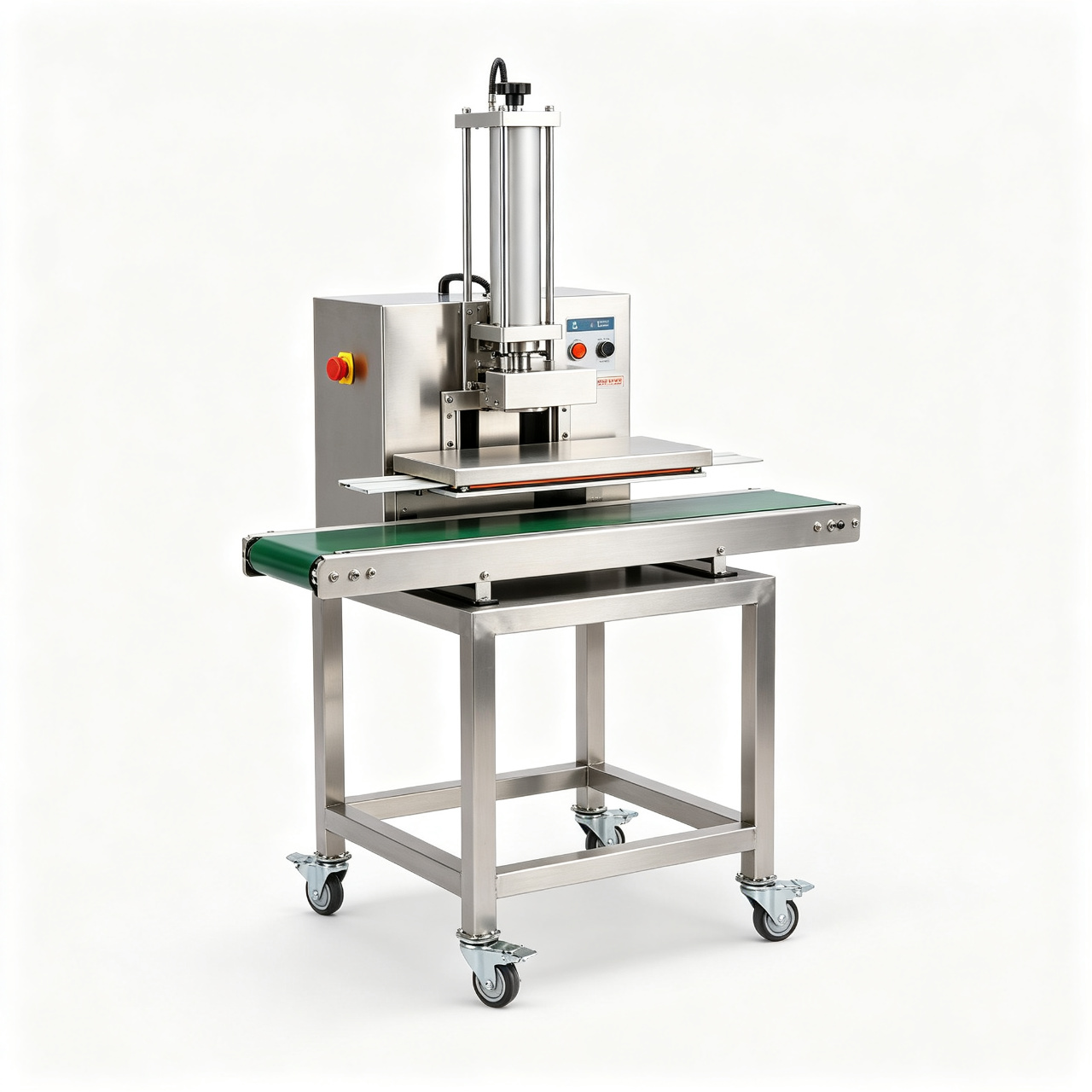
- Air-cooled heads. Both lines use air-cooled continuous aluminum foil induction sealers rather than water-cooled units, because the plant is dry and ambient temperatures are high and the maintenance team did not want chillers, water quality control or the leaks that water-cooled heads introduce.
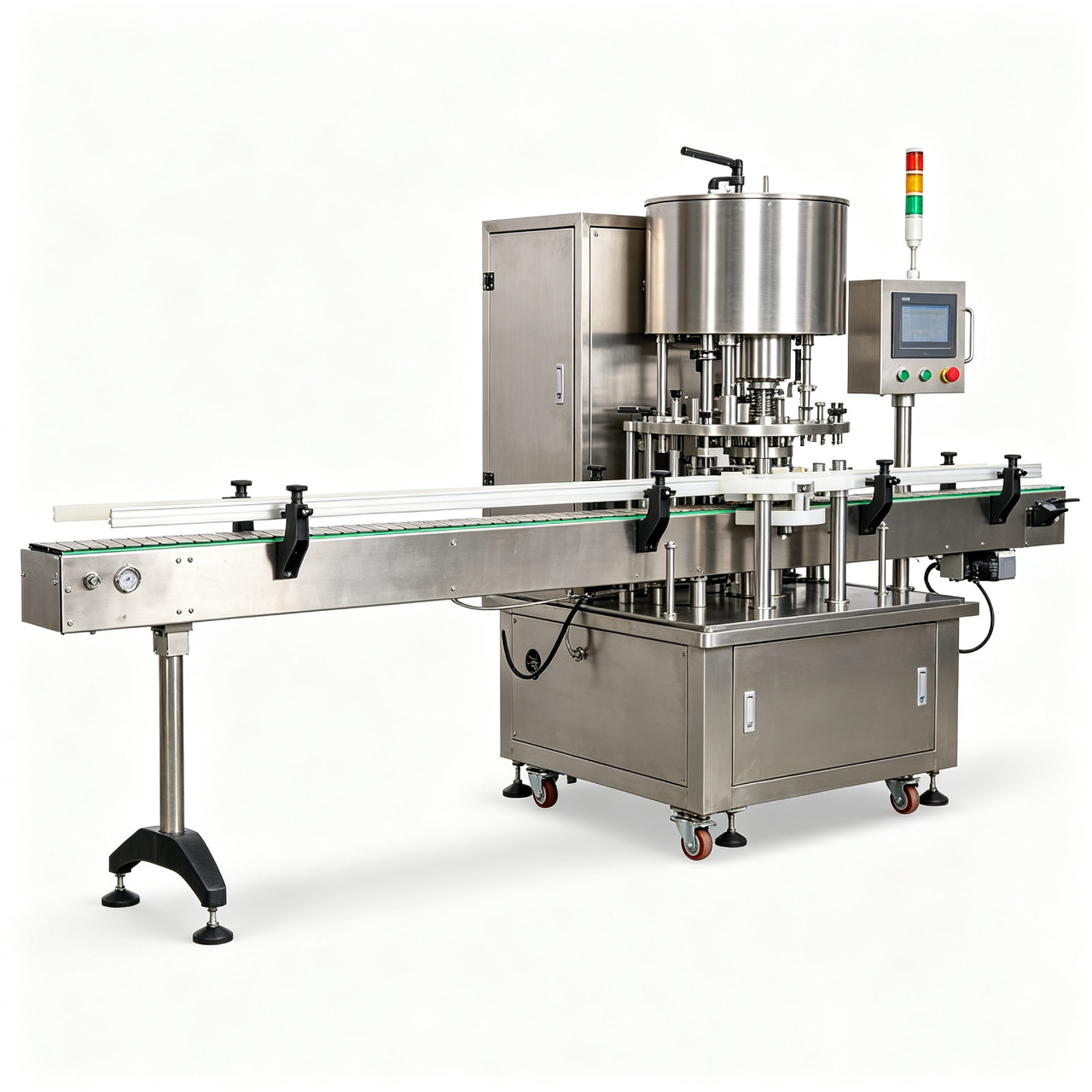
- Upstream and downstream. Existing liquid filling machines feed the sealers via rotary capping, and a rejection station after the head diverts any container that trips the cap or seal sensor, so only verified packs reach the labeler and case packer.
The full selection, including heads for small jars and wide-mouth containers, is covered in the induction sealing machines hub, which also lists the continuous foil sealer for bottles and jars used across the two formats.
How Induction Sealing Actually Works
Understanding the process explains the common failures. After capping, a one-piece or two-piece foil liner sits inside the cap. The container passes under a sealing head that generates an electromagnetic field; the aluminum layer in the liner heats almost instantly, melting the polymer coating on the liner face so it bonds to the container rim. The cap itself is not heated and can be handled immediately. In a two-piece liner, the wax layer releases and the cardboard backing stays in the cap as a freshness wad while the foil remains on the bottle. Four variables decide whether the bond is complete: the power output, the time under the head (set by conveyor speed), the distance between head and cap, and the condition of the sealing surface — it must be present, flat, dry and free of product.
On a manual line the operator cannot hold all four constant; on a conveyorized line they are fixed mechanically. The head height is set to the lid diameter, the power is stored in a recipe per container, and the conveyor speed is locked to the line. The exporter runs about twenty container and cap combinations, each stored as a recipe, so a changeover between the 500 g honey jar and the 1 L syrup bottle is a selection and a head-height adjustment rather than a trial-and-error tuning session.
Glass vs PET, and the Failure Modes the Plant Had to Learn
The two materials demanded different commissioning care, and the start-up period produced the predictable list of lessons. Glass is forgiving of heat and the thick rim gives a wide seal area, but the rim must be free of honey and the correct high-temperature liner has to be used; on a glass jar a damp or sticky rim is the main cause of a weak seal. PET is more sensitive: too much power or dwell softens the neck and the bottle can deform or the cap binds, so the PET line runs at a lower energy with a tighter speed window and the bottles are held upright by guide rails, because a wobbling PET bottle passes under the head at an inconsistent height. The plant also learned that the liner must be matched to the cap supplier — a liner bought on price from a different converter did not seal consistently until the correct foil and polymer layer were qualified — and that the head distance is measured per product, not assumed from the previous format.
| Measure | Hand-held / semi-auto | Continuous conveyor line |
|---|---|---|
| Line speed | Limited by operator | Up to 60 containers/min |
| Seal failure at receiving | ~4% | <0.3% |
| Dwell consistency | Variable | Fixed by recipe |
| Operators at sealing | 1 per machine, constant | Monitoring only |
| Tamper-evidence record | None | Seal/cap sensor + reject |
| Glass and PET formats | Shared, poorly tuned | Dedicated recipes |
Compliance, Brand Protection and the Commercial Payoff
For the export markets the exporter serves, the foil seal is increasingly tied to the paperwork: retailers ask for evidence of tamper-evident packaging, and the foil liner is the place to print the brand, lot and authenticity marks. The continuous lines give the company a consistent, photographable seal on every container rather than a mix of hand-applied liners, and the rejection station produces a record that a missing cap or a failed seal was caught before packing. The commercial result was immediate — two distributors that had previously held shipments over seal issues returned to normal release, and the line’s higher throughput freed the filling hall from a sealing bottleneck, lifting the whole plant’s daily packed volume rather than only the sealing step. The payoff logic is the same one that drives the foil sealing built into a complete turnkey jam and sauce filling and capping line delivered in Turkey.
Cleaning and Maintenance on a Sealing Line
An induction sealer is not itself a product-contact machine, but it sits in a sticky food environment and its reliability depends on the surrounding hygiene. Dripped honey and syrup on the conveyor, the guide rails and the star wheels eventually interfere with bottle spacing and cap height, which is why both lines are on wash-down conveyors and the rails and belts are wiped at the same frequency as the filler. The head has no product-contact surface and needs no CIP, but the bottles reaching it must have dry rims, which is why the filling and capping steps and the sealing step are specified together. The hygiene relationship between the filler and the sealed closure is explained in the engineering guide to cleaning and sanitizing liquid filling machines with CIP and SIP. Routine maintenance is light: keep the head face clean, check the air-cooling airflow, verify the reject sensor, and inspect the conveyor speed and head height against the recipe at each changeover.
Changeover, Spares and the First Two Months
The exporter runs around twenty container and cap combinations, and the first weeks were spent proving that every format, not just the flagship honey jar, sealed at the rated speed. The commissioning engineer worked through each SKU, storing the power, head height, conveyor speed and foil-liner code as a recipe and sampling a set of seals from every run, because a single unverified format is the format that would later fail on a customer’s receiving dock. The PET formats needed the most attention, with a few early batches showing the characteristic softened neck that means the energy was set slightly high; once that recipe was corrected, the line held its rejection rate. The plant also standardized on a single qualified foil converter after discovering that a cheaper, unapproved liner sealed inconsistently — a recurring lesson in induction sealing, where the liner is as much a part of the process as the head.
The spares package for the two lines was deliberately short and practical: air-cooling filters, a spare set of head-side consumables, sensor and belt items for the reject and conveyor sections, and a stock of the approved liners. The lines share a common control platform and common recipes, so an operator trained on the glass-jar line works the PET line without a separate qualification. By the end of the second month the exporter had absorbed the Ramadan-season syrup and molasses volume without the seasonal hand-sealing crew it had previously hired, and the two distributors that had once held shipments over seals were releasing containers at the dock.
Frequently Asked Questions
Can one induction sealer handle both glass and PET?
A single head can often seal both if the lid sizes and power needs are close, but a high-volume exporter that runs large glass jars and lighter PET bottles is usually better served by two dedicated heads or two recipes with careful settings, because glass and PET require different power and dwell. Dedicated lines are faster and avoid the risk of a mis-set recipe deforming PET.
Air-cooled or water-cooled sealing head?
Air-cooled heads suit dry, hot plants and continuous single-shift or two-shift duty without a chiller, which is what the Egyptian site chose. Water-cooled heads are used for very high, continuous kilowatt output and extreme-duty multi-shift lines, but they add a chiller, water treatment and a leak risk.
Why do some foil seals fail even on a new machine?
Almost always the sealing surface, not the head: a damp or product-contaminated rim, the wrong liner for the cap or material, an incorrect head height, or conveyor speed that has drifted. Qualify the liner with the cap supplier, keep the rim dry, and store the four variables in a recipe.
What speed can a continuous line achieve?
The commissioned lines run at up to 60 containers per minute per head, depending on lid size and format; the practical limit is set by the cap and the bottle control rather than the induction technology. A rejection station after the head ensures only fully sealed packs continue.
Specify the Seal as Part of the Whole Line
An induction sealing step works only when it is specified together with the filling, capping, conveyor and rejection steps and matched to the container material, because the four variables that create the seal are set by the equipment around the head as much as by the head itself. Send SunAura Machinery your container types and sizes, cap and liner specifications, target containers per minute and shift pattern, and the team will recommend glass- or PET-tuned heads, air- or water-cooling, and the rejection and conveyor arrangement to match. Request a line layout and quotation, and review the induction sealing machines range and the liquid filling machines that sit upstream of every sealed container.