
October 21, 2026 | by Ethan, SunAura Machinery Applications Engineering
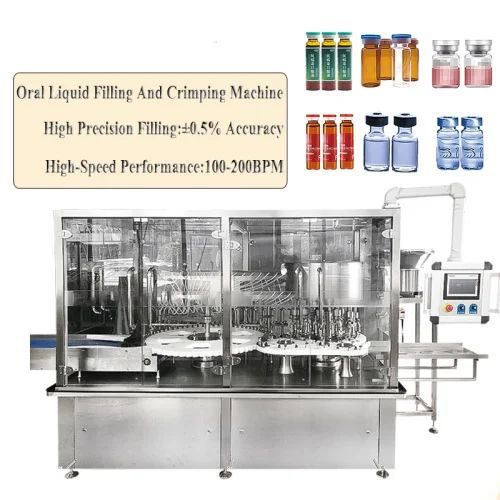
If you run a food, beverage, cosmetic or pharmaceutical line, the cleaning and sanitization of your liquid filling machines is not a secondary concern — it directly determines product safety, shelf life, the outcome of a customer audit and the speed of every changeover. A filler that looks clean on the outside can still harbor bacterial biofilm in dead legs, behind piston seals or in valve seats, and a single dirty manifold can undo the care taken everywhere else in the plant. This guide walks through the practical decisions production engineers and plant managers face when designing cleaning protocols for piston, overflow, gravity and flow-meter fillers, including how to choose between wet-out, CIP and SIP, where the hidden contamination sits, and what to verify on a new machine before the order is signed.
Why Filler Cleaning Matters More Than You Think
Packaging lines are judged on throughput and fill accuracy, but auditors and customers increasingly judge them on what happens between runs. Three pressures drive that attention.
- Regulatory. FDA 21 CFR Part 110 for food, EU GMP Annex 1 for pharmaceuticals and the BRCGS storage and packaging standards all require documented cleaning procedures with validated effectiveness. A filler that cannot be properly cleaned is a recurring non-conformity waiting to be written down.
- Product safety. Even low-moisture products can carry surface microbes. A sauce line that runs tomato paste in the morning and a dairy-based dressing in the afternoon without proper cleaning is a cross-contamination risk, and an allergen changeover — peanut to non-peanut, dairy to non-dairy — is the highest-stakes cleaning task on the floor.
- Operating cost. Inadequate cleaning leads to product degradation from off-flavors and mold growth in seals, accelerated wear as abrasive particles scratch cylinder walls, and unplanned changeover delays. A well-designed cleaning program usually pays for itself in reduced waste and rework alone.
The point buyers miss is that cleanability is mostly decided when the machine is purchased, not when the operator is handed a hose. A filler with threaded fittings, horizontal pockets and unflushable seals cannot be cleaned into compliance no matter how much caustic is poured through it. The same logic governed the build of the turnkey jam and sauce filling and capping line supplied to a Turkish food producer, where the product path was specified to strip down in under twenty minutes to satisfy an organic-certification audit.
Three Cleaning Levels: Wet-Out, CIP and SIP
Not every filler needs every level. The right combination depends on the product type, the industry and the regulatory environment, and over-specifying is as wasteful as under-specifying.
Wet-Out (Manual Disassembly Cleaning)
Wet-out is the basic level: operators disassemble the product-contact path, wash components by hand or in a parts washer, sanitize with approved chemicals, and reassemble. It is standard for small-batch and pilot-scale fillers, products that change frequently such as artisanal foods and contract packing, and high-viscosity products that leave residue needing mechanical removal. On a well-designed piston filler the product path should come apart in under twenty minutes. Look for tri-clamp fittings rather than threaded connections, quick-disconnect hose barbs, and cylinders and manifolds accessible without special tools.
CIP (Clean-in-Place)
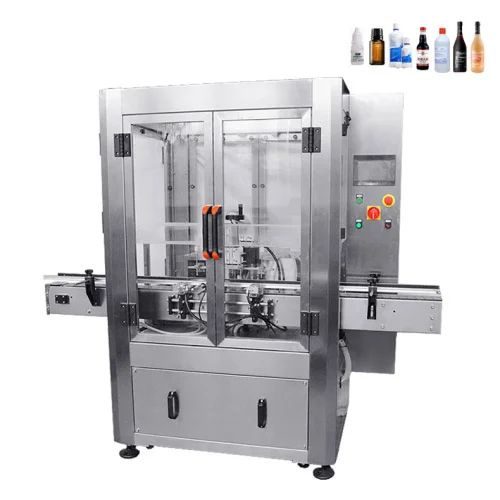
CIP circulates cleaning and sanitizing solutions through the product path without disassembly. It is standard for continuous high-volume lines in dairy, beverage and brewery applications. A typical cycle starts with a warm-water pre-rinse at 40–50°C to remove bulk product, followed by a caustic wash of 1–2% NaOH at 60–80°C for fifteen to thirty minutes at turbulent flow velocity — at least 1.5 m/s in the pipework — then an intermediate rinse to neutral pH, an optional weekly acid wash to remove mineral scale, and a final sanitization with peracetic acid, chlorine dioxide or hot water held above 85°C. For CIP to work, the filler must be designed for it: smooth internal surfaces, no dead legs, and supply and return ports that allow full circulation. A CIP-ready piston filler has spray balls in the hopper, recirculation loops on the manifolds, and pneumatic valves that can be actuated to flush bypass lines.
SIP (Sterilize-in-Place)
SIP goes beyond CIP, using saturated steam at 121°C under pressure to achieve a sterile product path without disassembly. It is required for aseptic filling lines such as UHT milk and sterilized sauces, products that cannot tolerate chemical residues, and facilities audited to pharmaceutical GMP. SIP demands that the filler and all connected piping tolerate pressure and temperature; gaskets must be EPDM or silicone rated for repeated steam exposure, and the cycle purges air with steam, holds temperature for thirty to forty-five minutes, then cools with sterile air or water. The same hygienic principle applies to the downstream closure: where a sealed sterile barrier is required, the cap and foil system described in the induction sealing machines range is integrated with the filler so that the sterile path is maintained from fill to seal.
Which Filler Types Are Easiest to Clean?
The mechanical design of the filler has a bigger impact on cleanability than the cleaning protocol. The common types compare as follows:
| Filler type | Product path complexity | CIP feasible? | SIP feasible? | Typical wet-out time |
|---|---|---|---|---|
| Gravity overflow filler | Simple (open hopper, short tubes) | Basic | No | 15–20 min |
| Peristaltic tube filler | Very simple (only tubing contacts product) | Tube replacement | No | 5–10 min (swap tubes) |
| Servo piston filler | Moderate (cylinder, manifold, valves) | Yes, hygienic build | Yes, pharma spec | 20–30 min |
| Gear pump filler | Moderate (pump head, seals) | Yes | Limited (seal temperature) | 25–35 min |
| Flow meter (mass) filler | Complex (meter tubes, control valves) | With spray balls | Yes | 30–45 min |
For contract packers or producers with frequent recipe changes, a peristaltic or overflow filler minimizes cleaning downtime. For high-volume single-product runs, a CIP-enabled piston or flow-meter filler is the right investment, and the automatic linear liquid filling machine configuration is commonly specified with hygienic manifolds and quick-strip product paths for exactly that reason.
Dead Legs and Hidden Contamination Zones
Even on a hygienically designed filler, certain spots accumulate residue if you are not watching for them:
- The piston seal area. The dynamic seal between piston and cylinder wall is a common biofilm site. If CIP does not flush behind the seal, the caustic wash never reaches it; hygienic piston fillers provide a flush port that directs cleaning solution into the seal cavity.
- Valve stem packing. Ball and plug valves have packing nuts where product can seep past; these need periodic disassembly even on a CIP line.
- The fill nozzle tip. The orifice is where product drips back and foam accumulates, and internal CIP flow may not reach the exterior. Wipe down nozzles between runs even on CIP days.
- The hopper agitator shaft seal. If the filler mixes the hopper, the shaft seal is a contamination point; inspect it weekly and replace gaskets on schedule.
- Gauge ports and instrument tees. Small-bore connections that do not flush at full flow velocity are classic dead legs. Slope piping toward drains and avoid upward-facing tees.
Chemicals, Temperatures and Water Quality
The cleaning chemistry follows the soil load. Protein soils such as dairy, egg and meat need alkaline caustic at elevated temperature, because hot water alone denatures protein and bakes it onto the surface. Sugar and starch soils from jam, syrup and sauce need a warm rather than hot pre-rinse — sugar caramelizes — followed by light caustic, with enzyme cleaners effective for resistant starch. Fat and oil soils are emulsified by hot caustic above 70°C, and mineral scale and dairy stone need a periodic acid wash with phosphoric or nitric acid, never mixed with caustic without a thorough intermediate rinse.
Two details are routinely overlooked. Water quality matters: hard water leaves scale that protects microbes and neutralizes chemistry, so a CIP skid on a hard-water site should be fed from softened water and use a measured acid cycle. Chemical compatibility with the wetted materials also matters: 316L handles most food-grade chemicals, but some elastomers swell or degrade in strong caustic or live steam, so EPDM and PTFE gaskets are the safe choice for CIP and SIP. Keep the safety data sheets for every chemical in use and verify the maximum concentration the filler manufacturer approves.
Documenting and Validating the Cleaning Process
A cleaning procedure that exists only in an operator’s memory is not a procedure. For audit-ready documentation, keep a written SOP with step-by-step instructions, chemical concentrations, temperatures and contact times; cleaning logs signed by the operator and supervisor for each run or shift; validation testing at least quarterly using swab tests for ATP or microbial counts; and a change-control rule that triggers re-validation after any product change, gasket replacement or machine modification. ATP swab testing is the fastest practical method: a handheld meter reads relative light units in about fifteen seconds, and a plant sets a threshold — typically under 100 RLU for food contact and under 10 for pharma — then investigates any reading above it. Visually clean is not the same as microbiologically clean.
Common Mistakes in Real Plants
- Shortening the wash to recover time. The caustic step is the most frequently cut cycle, and it is also the step that carries the biofilm. Cutting contact time is a false saving that shows up in the next audit.
- Low CIP flow velocity. Cleaning solution that trickles does not scour the pipe walls; the system needs turbulent flow at the designed velocity and return temperature, not just pressure.
- Reusing spent solution. Dirty wash liquor that is not monitored and replaced loses its effective concentration and redistributes soil.
- Forgetting the exterior and the conveyors. CIP cleans the inside; dripped product on the exterior, the nozzle outside surfaces and the conveyors are cleaned manually and must be on the checklist.
- No cleanability review at purchase. Buyers who never ask for a dead-leg drawing or a disassembly time inherit a machine that cannot be validated. Put cleanability in the RFQ and test it at FAT.
Frequently Asked Questions
Do I need CIP, or is manual wet-out cleaning enough?
Wet-out is sufficient for small batches, frequent changeovers and most hot-fill sauces and jams, provided the machine strips down quickly. CIP is justified for high-volume continuous dairy, beverage and brewery lines, and SIP for aseptic or pharmaceutical products. Match the regime to the product and the audit standard rather than specifying the highest option automatically.
How often should I validate the cleaning?
At least quarterly for routine lines with ATP or microbial swabs, and immediately after an allergen changeover, a product change, a gasket replacement or any modification. Establish a baseline RLU limit and investigate every result above it.
Does the cap and foil sealer also need a cleaning regime?
The sealing head itself is not a product-contact surface, but the bottles and jar rims reaching it must be clean and dry or the foil will not seal, and the surrounding conveyors and star wheels need the same wash-down schedule as the filler. The requirements for a sealed line are shown in the project adding an automatic induction foil sealing line for an Egyptian food exporter, and continuous foil sealing for bottles and jars is paired with the filler so the rim arrives dry.
What should I demand in the RFQ for easy cleaning?
316L product-contact surfaces, tri-clamp rather than threaded connections, a documented product-path disassembly time, a dead-leg and drainage drawing, CIP spray balls and recirculation ports if CIP is intended, and a cleanability demonstration at FAT using the actual product.
Specify Cleanability Before You Specify Speed
A filler that is accurate but cannot be cleaned is a liability in any food, beverage, cosmetic or pharma plant, and most cleaning problems are designed in at purchase. Decide between wet-out, CIP and SIP from your product and audit standard, map the dead legs and dynamic seals, match the chemistry to the soil, and validate with records rather than visual inspection. Send SunAura Machinery your product range, jar or bottle sizes, allergen and changeover profile and target cleaning time, and the engineering team will recommend a filler with the hygienic build and the wet-out or CIP arrangement your line actually needs. Contact the engineering team with your product and cleaning requirements, review the liquid filling machines range, and see the cleaning design in practice in the Turkish jam and sauce line case study.