
SunAura Expands Multihead Weigher Platform with 14-Head and 20-Head Frames for Frozen IQF, Sticky and Fragile Products
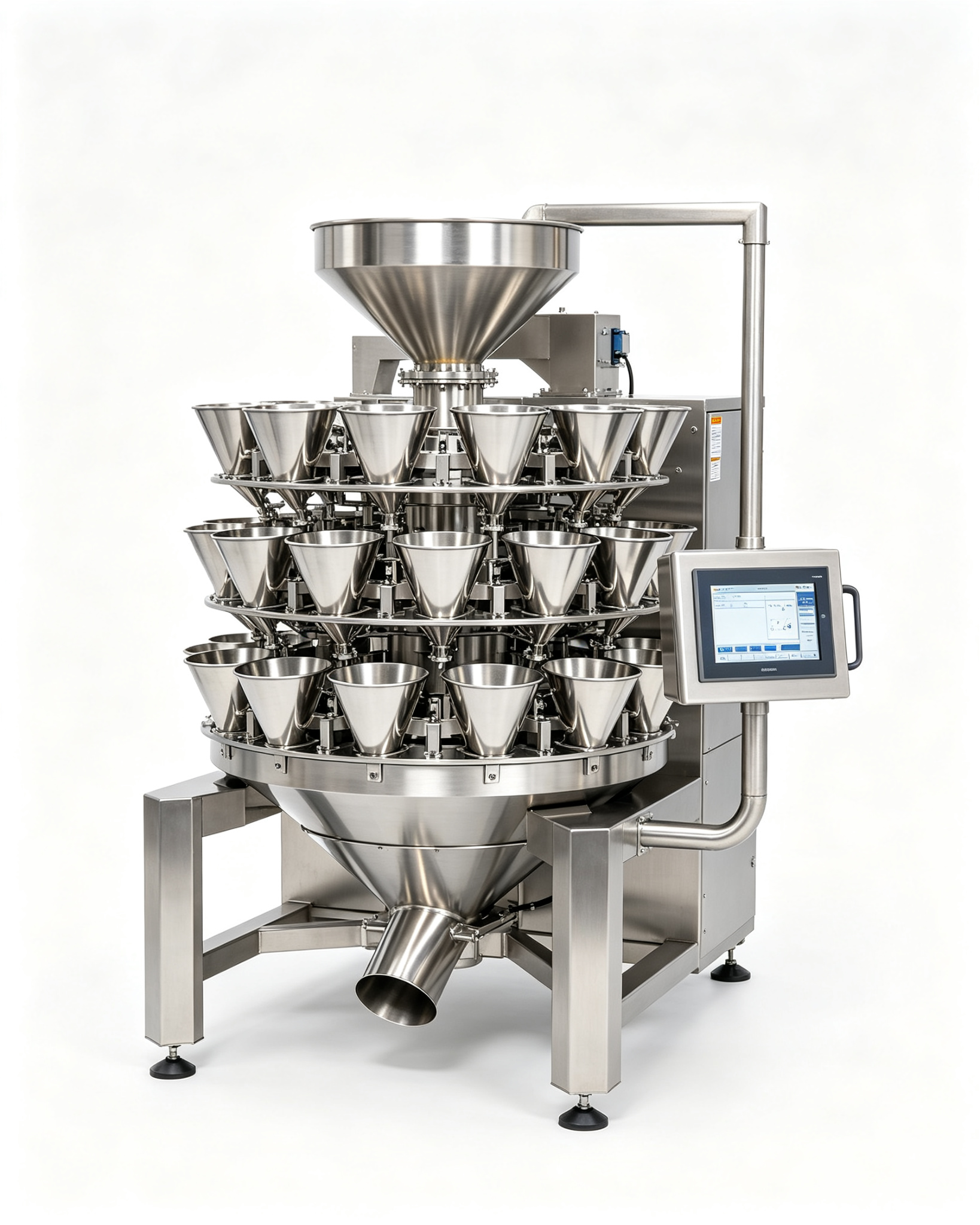
SunAura Machinery has extended its multihead weigher range with two new frame sizes — a 14-head and a 20-head configuration — built on the same 5-litre and 7-litre bucket geometry as the existing 10-head and 18-head models. The reason is not a desire for a bigger catalogue. It is that three product families kept arriving at our application desk with the same complaint: the 10-head frame was too slow for the target output, and the 18-head frame was too wide for the room the buyer actually had. This release sits directly in that gap, and this article explains what each frame size is for, how the new models differ from the 18-head unit buyers already know, and which type of buyer should care.
Why a Head Count Is Not a Speed Rating
The most common misunderstanding in weigher procurement is that heads equal speed. They do not. A multihead weigher reaches its target weight by combining the readings of several buckets, and the number of combinations it can test in one cycle sets the accuracy it can hold at a given speed. More heads buy you two things: a higher probability of hitting a tight target weight without giveaway, and a shorter cycle time because more combinations are available. Neither of those is free. Each additional head adds a feeding pan, a load cell, a bucket pair and a discharge timing channel, and the frame grows in diameter rather than in length.
That distinction matters commercially. A buyer dosing frozen peas at ±2 g on a 250 g bag does not need the same combination depth as a buyer dosing 3 g of freeze-dried fruit into a 12 g sachet, where ±0.2 g is the difference between a profitable and an unprofitable pack. Treating the two as the same problem is how lines get specified twice — once too slow, then again too expensive.
What the New Frames Change Against the 18-Head Model
The 14-head frame targets a middle band of output that the 10-head cannot reach and the 18-head overshoots. On a 30–40 g frozen vegetable portion it holds roughly 55–70 weighments per minute with a ±1.5 g to ±2 g tolerance, against roughly 40–50 weighments per minute on the 10-head. That is the difference between one and two lines for a mid-size IQF packer running two shifts.
The 20-head frame is aimed at a different problem: very small doses at high count. Single-serve nuts, dried berries, confectionery and pharmaceutical-style granules where the target is under 20 g and the tolerance is tighter than 1 % benefit from combination depth rather than from bigger buckets. The 20-head frame keeps the 5-litre bucket instead of moving to 7-litre, because at those doses a larger bucket only reduces resolution.
Frozen, Sticky and Fragile: Three Different Mechanical Answers
Head count is only half of the specification. The product’s behaviour decides the rest, and the three families below are the ones that most often force a different machine rather than a different number.
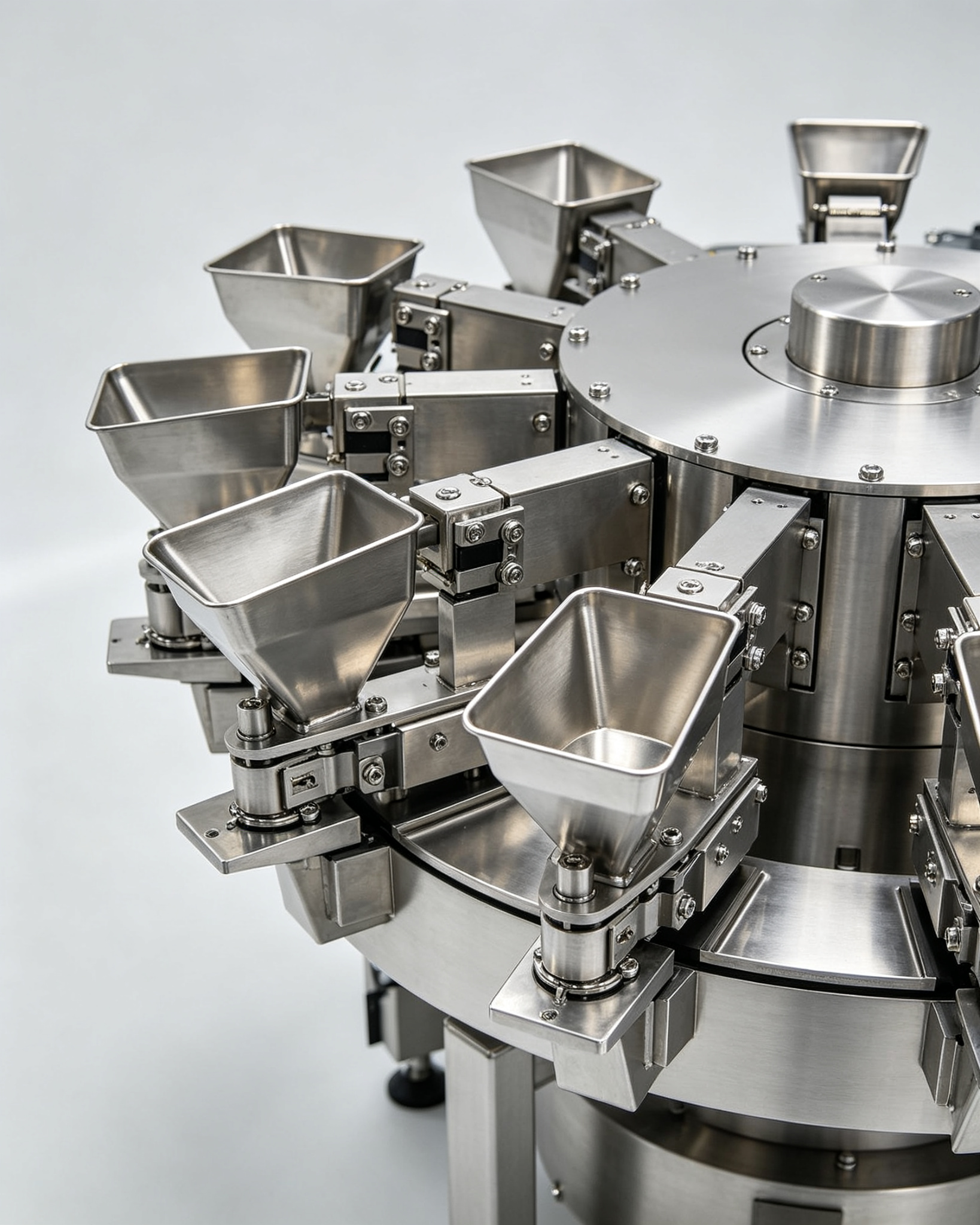
Frozen IQF products need a dimpled or textured bucket surface and a vibratory feed that does not let surface ice bridge between buckets. Without it the product sticks at the discharge and the weighing accuracy degrades within the first hour of a cold room shift. The new frames ship with the same anti-bridging bucket option as the 18-head unit, and the discharge chute timing is extended to cope with slower product fall.
Sticky products — dried fruit, marinated meat pieces, cheese cubes — need either a belt feed instead of a vibratory pan, or a pan with a non-stick coating plus a timed scraper. A standard stainless vibratory pan will run for twenty minutes and then start to build a film that changes the feed rate without changing the setpoint.
Fragile products — crisps, puffed snacks, biscuits — need a low-drop discharge and a bucket that opens gently. The limit is not the weigher but the drop height into the bag former, so the frame’s discharge geometry matters as much as the head count.
Who Should Buy Which Frame
If the target output is under 40 weighments per minute and the dose is above 50 g, the 10-head frame remains the correct and cheapest answer. If the output is 50–75 weighments per minute on 25–60 g portions with a tolerance of ±1.5 g to ±2 g, the 14-head frame is the machine that avoids buying a second line. If the dose is under 20 g and the count matters more than the gram tolerance, the 20-head frame with 5-litre buckets will outperform a larger-bucket machine at the same price point. The 18-head frame stays the right choice for 100–200 g retail portions where the buyer wants headroom for future SKU expansion without a second frame.
What Buyers Should Send Before a Quote
Weighing proposals go wrong at the input stage far more often than at the machine stage. Six items decide the frame size, the bucket volume and the feed type, and all six are available before the buyer spends anything: the product and its condition (frozen, chilled, ambient, sticky, fragile), the target dose in grams and the acceptable tolerance, the target packs per minute, the bag or pouch format and fill volume, the available floor space at the discharge end, and the ambient conditions in the room. Send those six and the frame recommendation is deterministic rather than promotional.
Full specifications for the range are on the multihead weigher product page, and the weighing section of a complete line is described under packaging lines. Buyers who want the weigher matched against the bagger, the checkweigher and the metal detector in one configuration can send their product data through the contact form; the engineering team returns a frame recommendation with the tolerance and output it can hold, not a single headline speed figure.
Where This Fits in the Wider Range
The multihead weigher is one of seven machine families SunAura builds for the front end of a packaging line, alongside liquid filling, capping, pillow packaging, thermoforming, induction sealing and complete line integration. The new frames will be shown in the assembly area documented on the workshop page, and the CE documentation package that ships with each unit is described under certifications and patents. For buyers comparing this release against a competing 14-head or 20-head frame, the differentiator to test is not head count but combination depth at the dose you actually run — and that is a question best answered with your own product on the machine.
Commissioning, spare bucket sets and load-cell replacement intervals are covered by the after-sales service team, and the standard spare-parts list for each frame size is available through the help center.