
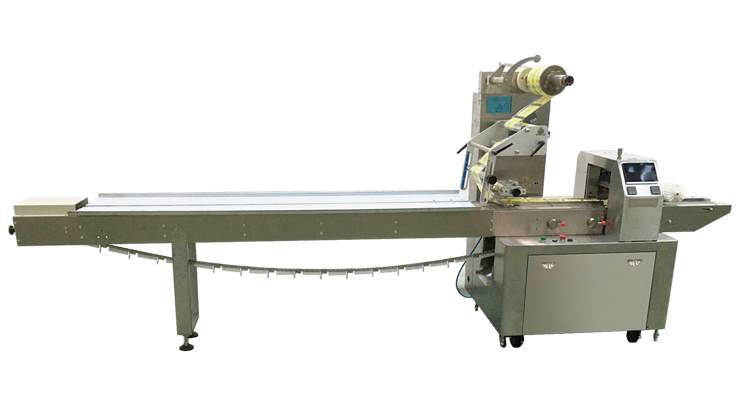
Qingdao, China — SunAura Machinery has commissioned a twin-lane servo pillow packaging line for a frozen berry producer in southern Chile, packaging individually quick frozen (IQF) blueberries, raspberries and mixed berries into 300 g, 500 g and 1 kg retail pouches. The project is a useful case study for any frozen-food plant facing the classic problem: product volume is growing, the single wrapper is the bottleneck, and the manager does not know whether to buy a second wrapper, a faster wrapper, or a twin-lane machine. The answer, in this case, was the third option.
Why a frozen berry plant hits a pillow-wrapper ceiling
IQF berries are weighed by a multihead weigher and dropped into a forming tube, where horizontal flow-wrap film is shaped into a pillow pouch. On a single-lane machine the weigher can weigh faster than the wrapper can seal: at 300 g portions the bagger may be capable of 80 bags/min, but the single wrapper tops out around 60 bags/min because the end-seal jaw only closes once per pouch. The weigher sits partly idle, and the line’s real throughput is capped by the wrapper, not the weighing. Add the realities of frozen product — frost on the film, condensation on the jaw, temperature-sensitive seal settings — and the practical speed drops further still.
The Chilean producer had exactly this situation. It was running a single wrapper that could not keep up with the weighing and packing area, and a second wrapper would have meant a second operator, a second film changeover, a second set of size parts and roughly double the floor space. The twin-lane servo wrapper solved it differently.
What a twin-lane pillow packing machine actually is
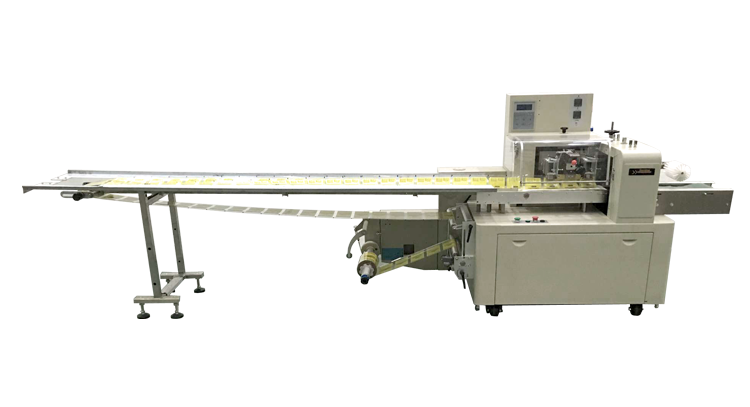
A twin-lane flow wrapper takes one or two film rolls and forms two parallel pouch streams side by side, with two sets of end-seal jaws closing in the same motion. In practical terms, the machine produces two bags for every one bag a single-lane wrapper makes at the same jaw speed. A single servo-driven wrapper with twin lanes can deliver roughly 100–120 small pouches per minute, fed by one multihead weigher set that splits portions between the two lanes.
The economic point matters: a twin-lane machine occupies roughly the footprint of one wrapper, needs one operator, performs one film changeover for two lanes, and uses a shared HMI recipe. For a plant that already has the weighing, freezing and packing area sized for higher throughput, the twin-lane wrapper is the most capital-efficient way to remove the bottleneck.
| Option | Typical output | Operators | Floor space | Changeover |
|---|---|---|---|---|
| Single-lane wrapper | ~50–60 pouches/min | 1 | 1 machine | 1 changeover |
| Two single wrappers | ~100–120 pouches/min | 2 | ~2 machines | 2 changeovers |
| Twin-lane servo wrapper | ~100–120 pouches/min | 1 | ~1 machine | 1 changeover |
Frozen-food specifics that drove the specification
Packaging IQF berries is not the same as packing dry snacks. Three requirements shaped the machine:
- Frost-resistant sealing. Condensation on the film and jaw can cause weak seals. The specification included jaw coatings, controlled jaw temperature for poly laminates used on frozen film, and a short air-knife / de-fog arrangement on the infeed so surface moisture does not enter the seal.
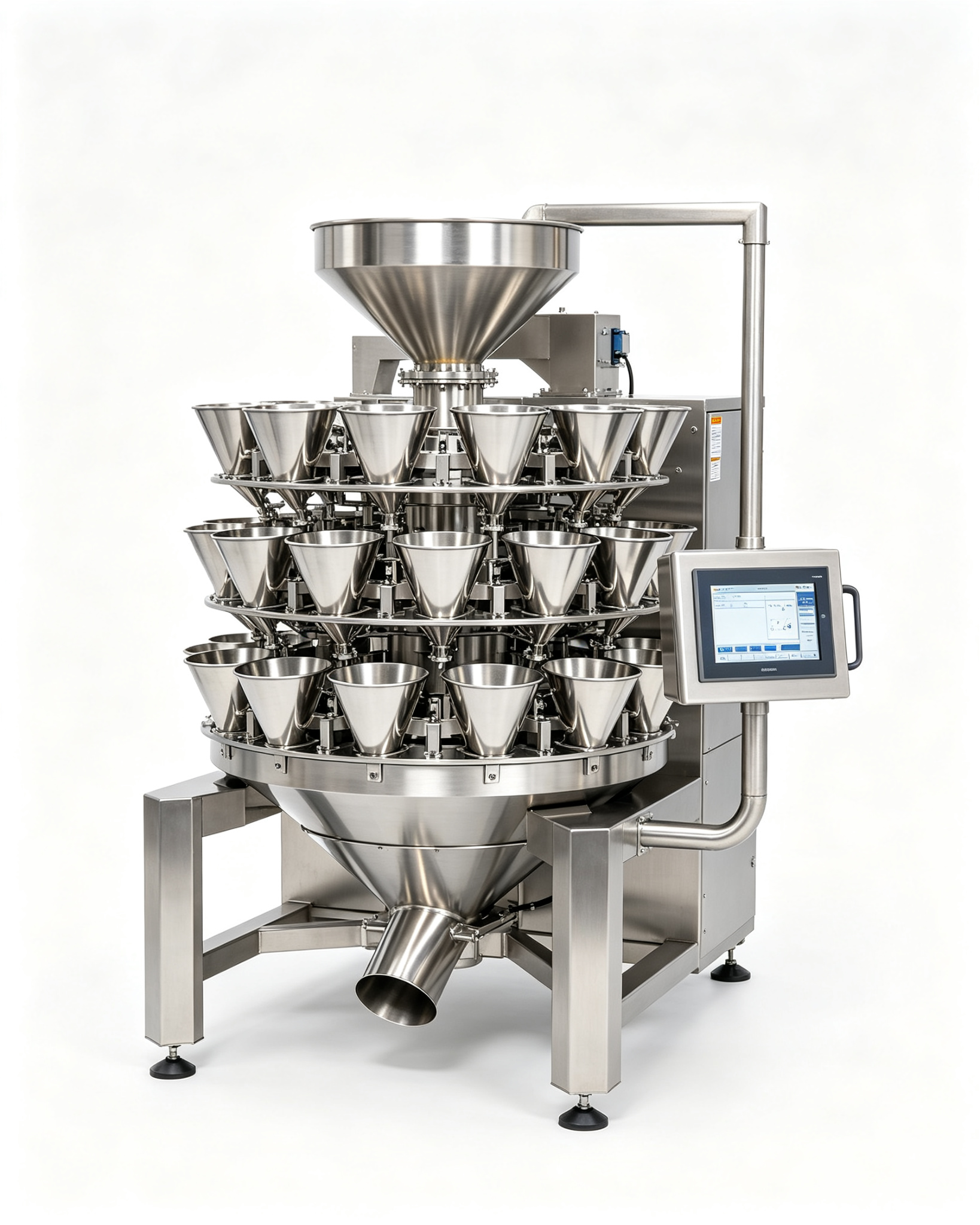
- Accurate multihead weighing for fragile fruit. Frozen raspberries bruise if dropped from height. The line used a medium-speed servo flow wrapper paired with a gentle-drop multihead weigher, low-drop discharge chutes, and staggered timing between the two lanes so the weigher never double-drops into one pouch.
- Fast SKU changeover between berry mixes. The plant runs blueberry, raspberry and mixed-berry runs, plus three pouch sizes. Recipe recall stored bag length, jaw temperature and lane timing per SKU, and lever-locked change parts removed spanners.
The result: a line that runs the two lanes at matched speed, produces a uniform pillow pouch across the 300 g / 500 g / 1 kg range, and changes over between berry types in minutes rather than hours — critical in a short harvest window where every lost hour of run time is a lost export container.
When a twin-lane machine is the right call
A twin-lane wrapper is the right investment when: your multihead weigher already outpaces your single wrapper; your pouch sizes are small (typically under 1 kg) where two narrow lanes fit comfortably on the web; you want to double output without doubling operators or floor space; and you run multiple SKUs where a single shared changeover matters. It is usually the wrong call for very large or irregular products, wide bags that cannot share a web, or plants whose real bottleneck is upstream weighing rather than wrapping.
For plants that need an even more rigid, skin-tight pack for premium frozen fruit, a servo-driven thermoforming machine is the alternative worth evaluating; the pillow pouch remains the right, lower-cost choice for standard retail frozen berry bags. In this project the pillow twin-lane gave the customer the throughput they needed within budget and lead time.
Film and seal choices for frozen berry pouches
Frozen retail bags are not plain polythene. The pouch must seal at sub-zero conditions, survive freezer abrasion, print well, and ideally include a micro-perforation or vent so trapped air does not balloon the bag in the freezer. Common structures are OPP/CPP laminates for the run-of-the-mill frozen berry bag, or PE-based structures where a zipper or stand-up style is wanted. The wrapper specification must match the film: jaw temperature, seal dwell and crimp pattern are set for the laminate, and running the wrong settings on a freezer-grade film produces either a weak seal that opens in the carton or a melted, torn seam. This is why recipe recall that stores the seal parameters per SKU matters — the film change between a blueberry run and a raspberry stand-up pouch should not require the operator to re-derive temperatures from scratch.
Moisture is the enemy of a good frozen seal. When a frozen product or a cold film enters a warm packaging room, condensation forms on the seal area. The de-fog / air-knife arrangement on the infeed and the jaw temperature profile remove surface moisture before the jaws close, which is the difference between a consistent hermetic seal and a bag that leaks after freezing. On this Chilean line, those provisions were specified from the start rather than added later, which avoided the weak-seal complaints the customer had seen on their previous equipment.
Line balance: weigh, wrap, case, pallet
Doubling the wrapper output is only useful if the rest of the line can keep up. Before the twin-lane machine was ordered, the customer’s weigh-and-pack area, the case packing and the downstream palletizing were checked against the new combined ~100–120 pouch/min rate. A faster wrapper feeding an undersized case packer just creates a pile of pouches on a conveyor and a queue at the end of the line. The project therefore sized the infeed accumulation, the case erecting and packing, and the downstream handling to match. This kind of whole-line balance check is the difference between a machine that raises real plant output and one that simply moves the bottleneck one step downstream.
Payback context
The economic case for a twin-lane wrapper is strongest where the alternative is a second wrapper plus a second operator. One machine, one operator, one changeover delivering the same throughput removes both the capital of a second line and the recurring labour and changeover time. For a seasonal export producer like the Chilean berry plant, the value is sharper still: a shorter harvest-to-shipment window means throughput that is lost in October cannot be recovered in November, so a wrapper that keeps the line running at matched speed through the campaign pays for itself in containers shipped on time. Buyers should model their own bag volume and labour cost, rather than accepting a vendor’s generic payback number, but the one-operator, one-floor-space structure is the core advantage to compare.
What buyers should check on a twin-lane wrapper quote
- Confirm output is the combined two-lane rate, not per-lane, and ask for the real rate at your pouch size.
- Ask how the multihead weigher splits product between lanes — timing and discharge chutes matter for fragile fruit.
- Verify film width and web handling for the widest pouch you will run on the shared web.
- Check that seal temperature, jaw coating and de-fog provisions suit frozen/condensing film, not just dry snacks.
- Confirm recipe recall covers both lanes together, so a SKU change sets both streams in one action.
- Request a reference video of twin-lane running on a comparable frozen-food SKU.
Day-to-day operation and changeover on the twin-lane line
Once running, a twin-lane servo wrapper is operated much like a single-lane machine, but the changeover procedure is where the design pays off. Because both lanes share the web path and the HMI, the operator selects the new SKU recipe — bag length, jaw temperature, lane timing, weigher target weight — and both streams re-set together. The forming shoulders for the two lanes are lever-locked, so a size change between 300 g and 1 kg pouches is a matter of minutes rather than the hour or more a mechanical twin-lane changeover used to require. For a plant running a short, intense harvest season, that matters: every minute spent changing over between berry types is a minute the multihead weigher is not producing export-ready bags.
Maintenance on a servo twin-lane wrapper centres on the jaw faces (cleaned and inspected daily in a frozen environment), the film transport belts, and the weigher chutes that handle fragile fruit. Because the machine uses servo axes rather than mechanical gears and chains for the key motions, there are fewer wear parts to replace between seasons, and recipe-driven positioning means the machine does not drift out of alignment between runs. For a southern-hemisphere exporter whose line sits idle for part of the year, that lower maintenance burden and faster restart when the next campaign begins are real advantages.
Frequently asked questions
What is a twin-lane pillow packing machine? A flow wrapper that forms and seals two parallel pouch streams from one machine, roughly doubling output for one operator and one changeover.
How much faster is twin lane than a single lane? About double the pouches per minute at the same jaw speed — typically 100–120 small pouches/minute combined versus 50–60 on a single lane.
Can a twin-lane wrapper handle frozen food? Yes, with frost-resistant jaw coatings, controlled seal temperature for frozen laminates, and de-fog provisions on the infeed; the weigher must use gentle low-drop discharge for fragile fruit.
Do I need two operators for twin lane? No. One operator manages both lanes; film changeover and recipe recall are shared, which is the main saving versus buying two separate wrappers.
The result for the Chilean producer is a line that matches their weigh-and-pack capacity, runs the three pouch sizes across three berry SKUs without lengthy mechanical re-setting, and ships export-ready pouches through the harvest window without a second wrapper or a second operator. It also gives them headroom: if demand grows again next season, the servo platform can be re-tuned and, if needed, paired with additional upstream weighing rather than replacing the wrapper itself. That is the value of specifying for line balance and changeover, not just peak speed.
Related reading
Summary
The Chilean frozen berry installation shows the practical case for a twin-lane servo pillow wrapper: when the multihead weigher outpaces a single wrapper and you need more output without more operators, more floor space or more changeovers, one twin-lane machine is usually the most efficient answer. The SunAura line is running 300 g–1 kg IQF berry pouches across blueberry, raspberry and mixed-berry SKUs with recipe-driven changeover.
Contact SunAura Machinery to scope a twin-lane or servo pillow line for your frozen-food or snack SKUs — send your pouch sizes, products and target bags-per-minute, and we will size the wrapper, weigher and de-fog package for your plant.