

Choosing the right carton sealer looks straightforward on the surface: pick a machine that applies tape to a box. But walk into any packaging workshop and you quickly find that “carton sealer” covers everything from a $300 hand taper to a $25,000 fully automatic case-sealing system with flap folding, corner taping, and in-line labeling. The wrong choice means operators fighting jams every shift, tape waste from misapplied seals, and a bottleneck that slows down your entire end-of-line packaging operation.
At SunAura Machinery, we have supplied carton sealers to factories in food, pharmaceutical, e-commerce, and building materials sectors across more than 30 countries. In our experience, the buyers who regret their purchase almost always skipped one critical step: they bought a machine based on its advertised speed without matching it to their actual carton range, throughput, and production environment. This guide gives you a practical framework for evaluating carton sealers — from semi-automatic tabletop units to fully automatic flap-folding and corner-sealing systems — so you can buy the right machine the first time.
Types of Carton Sealers: Which Category Fits Your Operation?
Before comparing brands and prices, you need to know which category of carton sealer matches your production reality. The four main categories are:
1. Semi-Automatic Carton Sealers
This is the entry-level workhorse. Operators fold the top flaps by hand and place the carton on the conveyor; the machine applies tape to the top and bottom automatically. Speeds range from 10 to 18 cartons per minute. Best for:
- Small to medium businesses with variable carton sizes
- Start-up e-commerce fulfillment operations
- Single-shift production with 500–1,500 boxes per day
- Factories that need a backup sealer for overflow periods
Within semi-automatic sealers, there are sub-variants worth knowing: side-belt drive (belt pushes the carton through from the side, good for heavy or tall boxes), top-belt drive (belt presses down from above, good for lightweight cartons), and adjustable-width models for facilities that handle a wide range of box sizes. Our semi-automatic carton sealer range covers all three configurations.
2. Automatic Flap-Folding Sealers
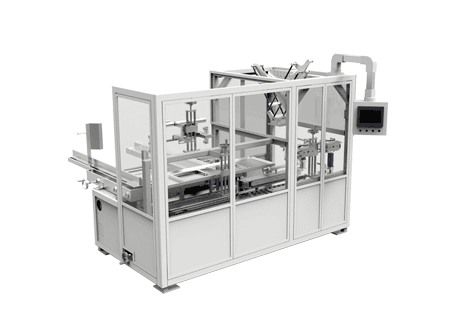
These machines fold the top flaps automatically as the carton enters the machine — no manual flap folding required. The operator only needs to place the box on the infeed conveyor. Speeds range from 15 to 25 cartons per minute. Best for:
- Medium to high volume production (1,500–4,000 boxes per day)
- Single-product lines with consistent carton dimensions
- Operations where reducing manual handling is a priority
- Food and pharmaceutical packaging where hygiene matters
Flap-folding sealers come in low-speed (15 cpm), medium-speed (18–20 cpm), and high-speed (22–25 cpm) variants. The speed difference comes from conveyor belt speed, flap folding mechanism design, and tape head actuation. Our full-automatic flap folding carton sealer runs at 25 cartons per minute with servo-driven flap tucking for consistent performance.
3. Corner / Edge Sealers (L-Seal and I-Seal)
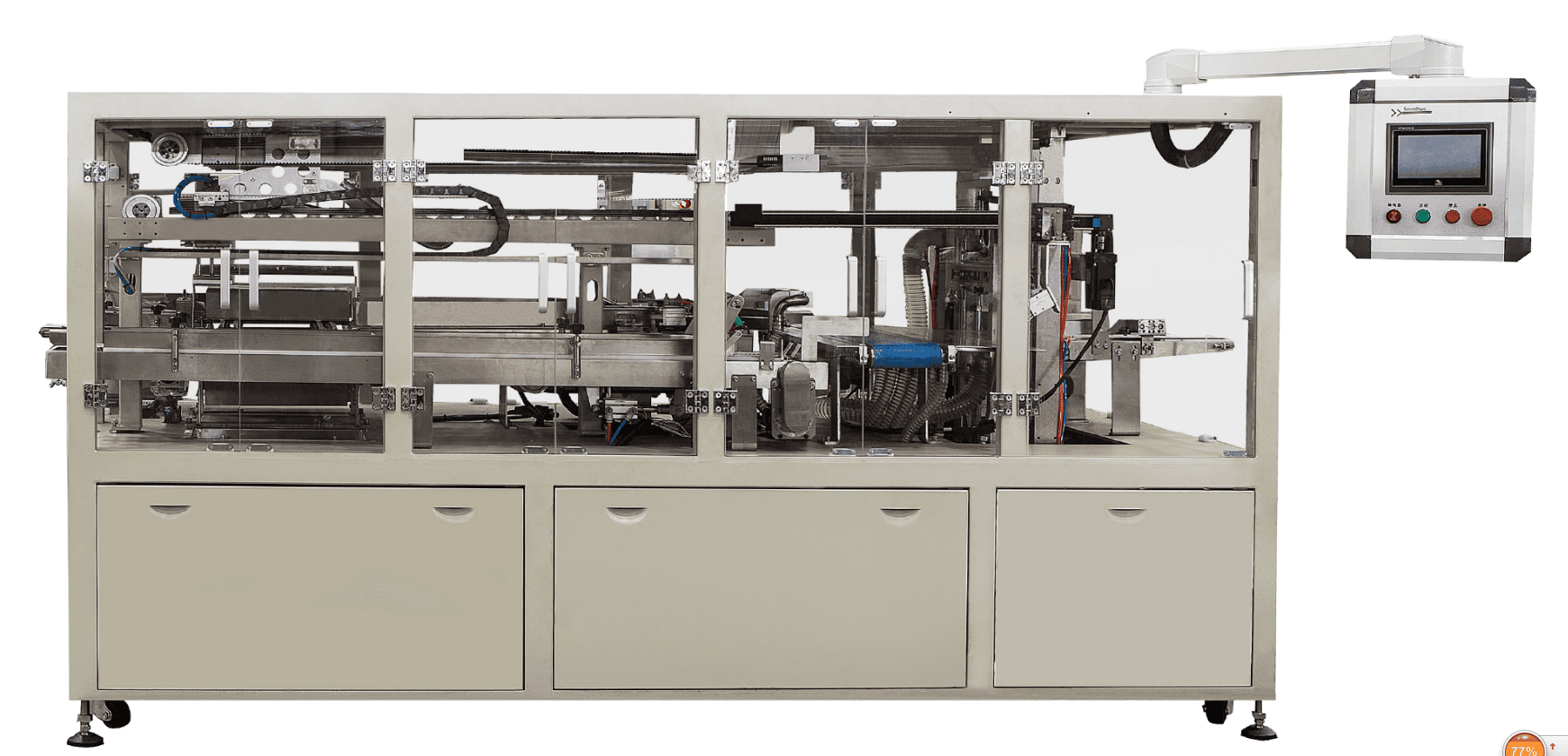
Corner sealers apply tape to the vertical edges of the carton in addition to the top and bottom seams. This creates a stronger seal that resists opening during stacking and shipping. Best for:
- Heavy cartons (15 kg+) that must survive warehouse stacking
- Export shipments that go through multiple handling cycles
- Products requiring extra tamper-evident sealing
- Cartons that sit in cold chain or humid environments
Corner sealers are usually integrated after a standard top/bottom sealer, forming a complete I-shape or L-shape seal. Our full-automatic corner carton sealer can be configured as a standalone unit or added to an existing sealing line.
4. Carton Sealing and Strapping Combinations
For high-volume operations, a combined sealing and strapping machine applies tape and then straps the carton with PP band in a single pass. This eliminates a separate strapping station and reduces labor. Best for warehouses and distribution centers handling 4,000+ cartons per day.
Key Specification Parameters to Evaluate
Once you know which category you need, the next step is comparing specifications. Here are the parameters that actually matter — not the ones marketing brochures emphasize.
Carton Size Range
Every carton sealer has a minimum and maximum carton length, width, and height. The critical question is: what range of box sizes do you actually run? If you handle 12 different carton SKUs, you need a machine whose adjustable range covers all of them — not just the most common one. Measure the smallest, largest, and most frequent carton dimensions before requesting quotes.
Throughput (Boxes Per Minute)
Rated speed on the spec sheet is usually measured under ideal conditions with a single carton size. Real-world throughput is typically 70–85% of the brochure number. When comparing quotes, ask for the steady-state speed under your actual carton mix — not the theoretical maximum. A machine rated at 20 cpm that consistently runs at 16 cpm in production beats one rated at 25 cpm that drops to 15 cpm when carton sizes change.
Tape Width and Type
Most carton sealers use 48mm or 60mm packing tape. Some machines accept both; others are fixed. If you use water-activated gummed tape for heavy export cartons, you need a machine designed for gummed tape — standard acrylic tape heads will not work. This is a common spec oversight that leads to buying a machine that cannot use your tape of choice.
Conveyor Height and Width
The conveyor height must match your existing line’s discharge height. A 50mm mismatch requires a costly adapter or manual transfer. The conveyor width must accommodate your widest carton with clearance for the side drive belts. Measure your existing conveyor height and width before specifying.
Electrical and Pneumatic Requirements
Semi-automatic sealers typically need only a standard power outlet. Fully automatic flap-folding and corner sealers also require compressed air at 6–7 bar. Verify your factory’s air supply before ordering — undersized compressors are a common post-installation surprise.
Semi-Automatic vs. Automatic: The Cost-Benefit Calculation
The most common buying decision is semi-automatic vs. fully automatic flap-folding. Here is how to calculate the break-even point:
| Factor | Semi-Automatic | Automatic Flap-Folding |
|---|---|---|
| Typical purchase price | $1,800–$4,500 | $8,000–$18,000 |
| Operator required | 1 (folds flaps + places box) | 0.3 (places box only) |
| Steady-state speed | 10–15 cpm | 18–25 cpm |
| Daily capacity (8h single shift) | ~4,800–7,200 boxes | ~8,600–12,000 boxes |
| Changeover time between sizes | 1–3 minutes (manual adjustment) | 1–2 minutes (handwheel or recipe) |
| Best daily volume range | 500–2,000 boxes | 2,000–6,000+ boxes |
The break-even calculation is simple: if you currently assign one full-time operator to carton sealing at $25/hour loaded cost, and the automatic machine reduces that to 20% of one operator’s time, you save roughly $20/hour. At 8 hours per day, 250 working days, that is $40,000 per year in labor savings. The $8,000–$18,000 price premium pays back in 3–6 months for a two-shift operation. For a single-shift, low-volume workshop, the semi-automatic remains the rational choice.
Common Buying Mistakes to Avoid
Mistake 1: Buying Based on Speed Alone
A machine that runs 25 cpm on the factory floor may run at 15 cpm in your plant because your cartons are slightly warped, your flaps do not fold cleanly, or your operators cannot feed boxes fast enough. Always ask the supplier to demonstrate the machine running your carton sample at the speed you need.
Mistake 2: Ignoring Tape Consumption Rates
Cheap tape heads apply too much tape overlap (wasting tape) or too little (leaking seals). A well-adjusted tape head uses about 120–140mm of tape per box seal. Over a year, the difference between 140mm and 180mm of tape per box adds up to thousands of dollars in tape cost. Ask suppliers for their documented tape consumption rate under your carton size.
Mistake 3: Overlooking Maintenance Access
Tape heads wear out. Springs lose tension. Blades need replacement. If the tape head is buried inside the machine with no quick-release access, every tape change becomes a 20-minute chore instead of a 2-minute task. Look for tools-free tape head design — it is a quality-of-life feature that matters every single day.
Mistake 4: Not Planning for Future Carton Sizes
The carton you seal today may not be the one you seal next year. If your product line is expanding, buy a machine with a wider adjustable range than your current needs. Upgrading from a narrow-range sealer later means buying a new machine entirely.
Integration with Your Packaging Line
A carton sealer is rarely a standalone machine — it sits between a case erector upstream and a strapping machine or palletizer downstream. When integrating, pay attention to:
- Handoff height: the sealer’s infeed height must match the case erector’s discharge height
- Speed matching: the sealer should run at the same speed or slightly faster than upstream equipment to avoid back-pressure jams
- Signal handshaking: if the sealer jams, upstream machines should stop automatically to prevent cartons piling up
For complete end-of-line solutions, our turnkey packaging line systems integrate case erecting, sealing, strapping, conveying, and palletizing in a single coordinated system — one vendor, one acceptance test, one warranty.
FAQ: Carton Sealer Buying Questions
What is the difference between a top-belt and side-belt carton sealer?
Top-belt sealers use a belt that presses down on the top of the carton to drive it through. They work well for lightweight, uniform cartons. Side-belt sealers use belts on both sides of the carton to push it through. They are better for heavy cartons, tall cartons, or cartons that are not perfectly rigid. For most general-purpose applications, side-belt drive is the more reliable choice.
How often should I replace the tape blades on a carton sealer?
Tape blades typically last 3–6 months with daily use, depending on tape quality and carton material. Dull blades cause ragged tape cuts and poor seal appearance. Keep a spare blade on hand — replacement takes 2 minutes. At SunAura Machinery, every sealer ships with one spare blade and a tool kit.
Can a carton sealer handle irregular or non-rectangular boxes?
Standard carton sealers require reasonably regular rectangular boxes. Irregular shapes (tapered cartons, open-top trays, or boxes with overhanging products) usually require custom fixturing or a different sealing method (shrink wrapping, strapping, or manual taping). Show your actual carton samples to the supplier before ordering.
What tape should I use with my carton sealer?
Most standard carton sealers work with 48mm acrylic or hot-melt packing tape. For heavy export cartons, water-activated gummed tape provides the strongest bond but requires a gummed-tape-compatible machine. For temperature-controlled environments, specify tape rated for your operating temperature range — cheap tape becomes brittle in cold rooms.
How long does installation and training take for an automatic carton sealer?
A semi-automatic sealer typically takes 30 minutes to set up — unpack, level, plug in, load tape. An automatic flap-folding sealer takes 2–4 hours including conveyor connection, air supply hookup, and operator training. Most suppliers include on-site commissioning for fully automatic machines; confirm this is included in the quote.
What is the typical warranty period for a carton sealer?
Industry standard is 12 months parts warranty. Quality manufacturers offer 24 months on mechanical components. Read the warranty exclusions carefully — tape heads, blades, and belts are wear items and often excluded from warranty coverage. Our carton sealing machine range ships with 18 months standard warranty on all mechanical components.
Making Your Final Decision
Buying a carton sealer comes down to matching the machine category to your daily box count, your carton size range, and your automation level. Start by measuring your actual throughput (not your target throughput), list every carton size you run, and then request quotes from at least three suppliers with those specifications. Compare not just the machine price but the tape consumption rate, changeover time, spare parts availability, and warranty terms.
For complete end-of-line packaging solutions that combine carton sealing with other downstream equipment, also see our guides to choosing the right shrink wrapping system and selecting a pallet wrapping machine.
Need help specifying the right carton sealer for your production line? Send us your carton dimensions, daily box count, and current sealing process, and our engineers at SunAura Machinery will recommend the right configuration — semi-automatic, automatic flap-folding, or corner sealing — with a transparent price and delivery timeline.
《 “How to Choose the Right Carton Sealer for Your Packaging Line: Complete Buyer Guide” 》 有 3 条评论
[…] For complete packaging line integration, see our turnkey packaging system solutions. We also offer carton sealer selection guidance for downstream case sealing […]
[…] a transparent quote and lead time. For downstream packaging integration, also see our guides on carton sealer selection and pallet wrapping machine […]
[…] evaluating whether corner sealing belongs in their operation, the decision framework in our carton sealer buying guide covers the full range of carton closing and sealing options — from tape, to glue, to corner […]