


October 4, 2026 | by Ethan, SunAura Machinery Service Engineering
When a packaging machine breaks down, the real cost isn’t the repair bill. It’s the lost production while you wait for the part to arrive. A $50 solenoid valve that takes 10 days to ship from overseas becomes a $20,000 problem when the line is down and the order deadline is Friday. Yet most packaging buyers spend weeks negotiating the machine price and minutes deciding on the spare parts and service agreement.
After supporting packaging lines in 60+ countries, we’ve seen the same expensive pattern repeat: companies that budget $200,000 for a machine balk at spending $2,000 on spare parts — then lose $50,000 in a single unplanned stoppage. This guide walks through how to think about spare parts strategy, when to buy a maintenance contract, and which parts you should always have on the shelf.
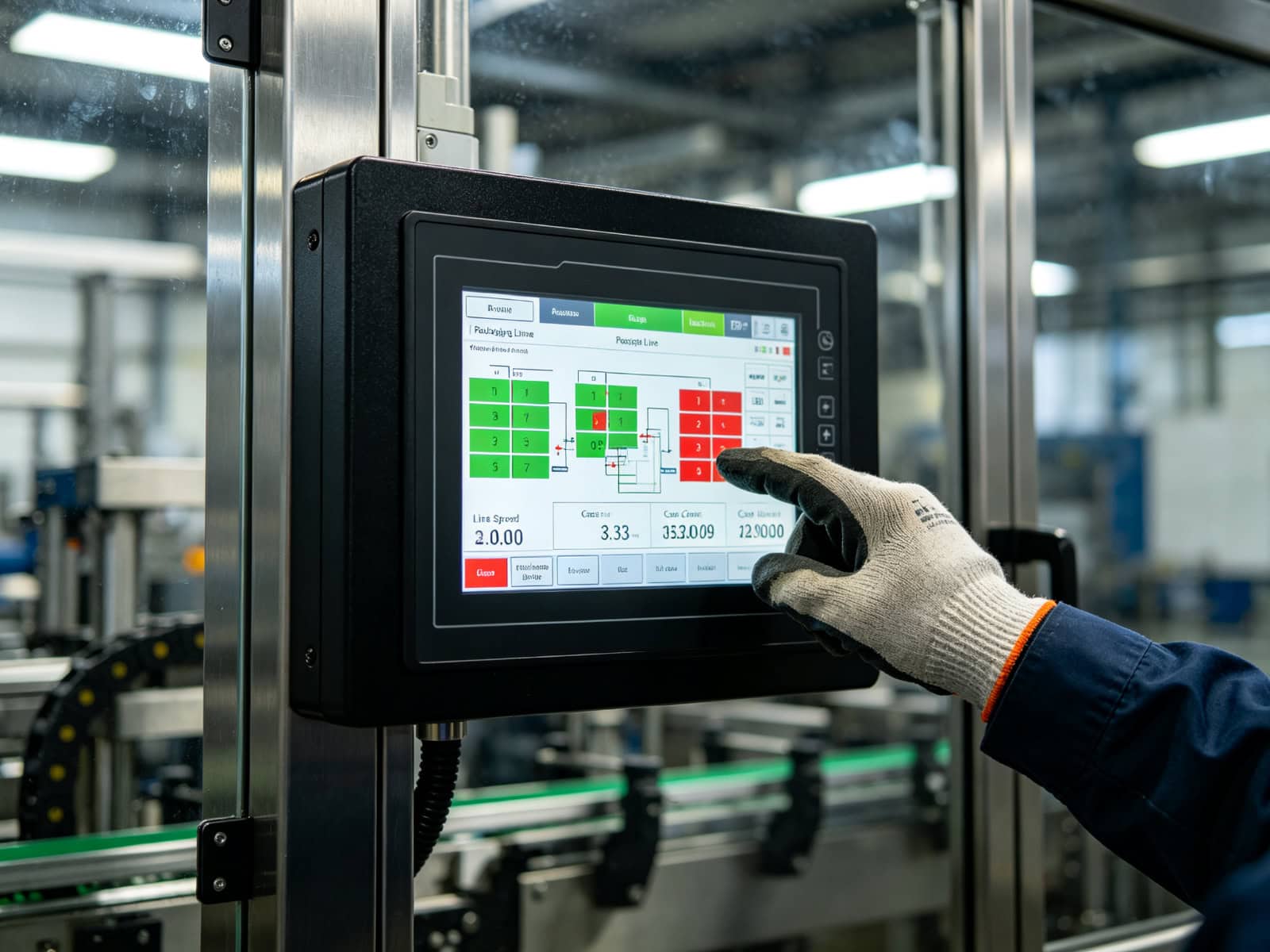
The stock list in this guide applies to every machine on the floor — from the recently launched automatic corner sealing machine to the robotic palletizer. The consumable parts for the corner sealer are covered in section 4.
The True Cost of Unplanned Downtime
Before deciding on a spare parts strategy, you need to know what downtime actually costs. It’s not just the machine being idle — it’s the labor still on the clock, the order that ships late, and the customer who orders from someone else next time.
| Downtime Cost Component | Typical Value |
|---|---|
| Lost production margin (per hour) | $500–$2,000/hour on a mid-speed line |
| Labor during stoppage | $100–$300/hour (workers waiting) |
| Expedited shipping for a part | $50–$200 surcharge on top of standard freight |
| Overtime to catch up after restart | 1.5× wages for 4–8 hours |
| Customer chargeback / late-order penalty | $500–$5,000 per incident (retailer-dependent) |
A single 8-hour unplanned stoppage on a $1,000/hour line costs about $8,000–$12,000 in direct losses — before accounting for customer relationships. That’s more than the entire annual spare parts budget for most small-to-medium lines.
Three Spare Parts Strategies
Strategy 1: No on-site stock, order when needed
The cheapest approach up front — and the most expensive when something breaks. You’re betting that nothing will fail between order and delivery. This works if your line runs one shift, has a local parts supplier, and can tolerate a 2–3 day stoppage. It does not work for export-dependent food producers running two shifts.
Strategy 2: Critical spares on-site (our recommendation)
Stock the 10–15 parts that stop the line immediately. Total cost: $500–$2,000 depending on machine size. This is the sweet spot for most customers. You carry enough inventory to handle the most common failures in-house, and order the rest when needed.
Strategy 3: Full spares package + maintenance contract
Stock everything and pay the manufacturer for annual preventive visits. Total cost: 5–10% of machine price annually. This is the right choice for high-volume lines running 24/7, where even 4 hours of downtime costs more than the annual contract fee.
| Strategy | Annual Cost | Best For |
|---|---|---|
| No stock | $0 | Single-shift lines with local supplier access |
| Critical spares on-site | $500–$2,000 (one-time) | Most mid-size packaging lines |
| Full package + service contract | 5–10% of machine price/year | 24/7 high-volume production |
Which Parts to Stock On-Site
Not all parts are equal. The parts that fail predictably — wear items — are the ones you stock. The parts that rarely fail — main PLC boards, gearboxes — you order when needed.
Always stock (wear items, predictable failure)
- Sealing wires and Teflon cloth on any heat-sealing machine — last 200–500 hours
- Drive belts and timing belts — last 6–12 months
- Photoelectric sensors — they get knocked out of alignment or contaminated
- Solenoid valves — they stick after 1–2 years of compressed air
- O-rings and gaskets on pneumatic cylinders and vacuum pumps
Order when needed (rare failure, long life)
- Main PLC and HMI touchscreen — rated for 50,000+ hours
- Gearboxes and gearmotors — 10+ year service life
- Main bearings — last the machine’s lifetime if lubricated
- Structural frames and stainless steel panels
Maintenance Contract: Worth It or Not?
Manufacturers will offer you a service contract at machine delivery. They typically cost 5–15% of the machine price per year. Whether it’s worth it depends on three questions:
1. How much does your downtime cost per hour? If downtime costs $500/hour and a contract covers two annual preventive visits plus remote support, it pays for itself if it prevents even one unplanned stoppage per year. If downtime costs $50/hour, you’re better off self-maintaining.
2. Do you have trained maintenance staff? If you have an in-house technician who can do the daily and weekly checks we outlined in our maintenance checklist, a contract is mostly useful for annual deep inspections. If you don’t have maintenance staff, the contract is how you keep the machine under warranty and running.
3. Is the machine critical to your revenue? A line that produces 70% of your company’s output justifies a service contract. A backup line or a low-speed auxiliary machine doesn’t.
OEM vs Generic Parts: The Math
Generic spare parts from AliExpress or local suppliers can cost 30–50% less than OEM. For consumables like O-rings and belts, that’s usually fine. For critical parts like sealing jaws, sensors and PLC components, the math rarely works in favor of generic:
- A generic sealing wire might cost $15 instead of $30, but if it burns through in 2 weeks instead of 3 months, you’re changing it 6 times as often — and risking film damage in between
- A generic photo sensor might work, but if it’s not calibrated to the same sensitivity as the original, it causes product-detection faults that look like machine problems
- A generic PCB board may fit physically but not communicate correctly with the HMI, causing intermittent faults no one can diagnose
Our rule: buy generic for wear items that you replace regularly and can test immediately. Buy OEM for anything that affects seal quality, product safety or machine communication.
Want a recommended spare parts list for your line? Send us your machine model and serial number through the contact page and we’ll send back the exact parts, quantities and lead times for your configuration. Every SunAura turnkey line ships with a recommended spares list, and our after-sales service team can ship critical parts within 48 hours to 60+ countries.
The bottom line: a $1,000 on-site spare parts kit that prevents one 8-hour stoppage pays for itself dozens of times over. A maintenance contract makes sense for high-criticality lines. And when it comes to parts, buy OEM for anything that touches the seal or the control system — the $20 you save isn’t worth the 4-hour stoppage.