
At high speed, hot-melt glue is cheapest per case (a small bead of adhesive). At low speed, tape is cheapest because the machine cost is low. Staples are very low on consumable but require heavier board.
Do I need a case erector and a case sealer as one machine?
Often yes at high speed — an erector-sealer combo closes the bottom and seals the top in one pass. For multi-SKU, separate erector and sealer give more flexibility.
Summary
Tape for low-speed, multi-SKU, ambient lines; hot-melt glue for high-speed food and beverage; staples for heavy industrial export. Match the closure to your speed, your climate and your board quality. Tell us your cases per minute and your product and we will spec the closure that holds to the customer’s door.
Related reading
- X-ray vs metal detector for food packaging inspection
- Hot fill vs aseptic vs cold fill for juice lines
Standard pressure-sensitive tape loses adhesion in refrigerated and especially frozen conditions. For cold-chain product, use a freezer-grade tape or switch to glue/staples.
Which closure is cheapest per case?
At high speed, hot-melt glue is cheapest per case (a small bead of adhesive). At low speed, tape is cheapest because the machine cost is low. Staples are very low on consumable but require heavier board.
Do I need a case erector and a case sealer as one machine?
Often yes at high speed — an erector-sealer combo closes the bottom and seals the top in one pass. For multi-SKU, separate erector and sealer give more flexibility.
Summary
Tape for low-speed, multi-SKU, ambient lines; hot-melt glue for high-speed food and beverage; staples for heavy industrial export. Match the closure to your speed, your climate and your board quality. Tell us your cases per minute and your product and we will spec the closure that holds to the customer’s door.
Related reading
- X-ray vs metal detector for food packaging inspection
- Hot fill vs aseptic vs cold fill for juice lines
Usually not. Tape, glue and staple heads are different machines. Plan the closure method up front based on speed and product.
Does cold chain kill tape?
Standard pressure-sensitive tape loses adhesion in refrigerated and especially frozen conditions. For cold-chain product, use a freezer-grade tape or switch to glue/staples.
Which closure is cheapest per case?
At high speed, hot-melt glue is cheapest per case (a small bead of adhesive). At low speed, tape is cheapest because the machine cost is low. Staples are very low on consumable but require heavier board.
Do I need a case erector and a case sealer as one machine?
Often yes at high speed — an erector-sealer combo closes the bottom and seals the top in one pass. For multi-SKU, separate erector and sealer give more flexibility.
Summary
Tape for low-speed, multi-SKU, ambient lines; hot-melt glue for high-speed food and beverage; staples for heavy industrial export. Match the closure to your speed, your climate and your board quality. Tell us your cases per minute and your product and we will spec the closure that holds to the customer’s door.
Related reading
- X-ray vs metal detector for food packaging inspection
- Hot fill vs aseptic vs cold fill for juice lines
Case Sealing: Tape vs Hot-Melt Glue vs Staples — Which Carton Closure Is Right for Your Line?
Buyers pick a case sealer the way they pick a stapler — by price. That is a mistake. Tape, hot-melt glue and staples are three different closure systems, and the wrong one shows up as opened cartons on the retailer’s shelf, a case sealer that cannot keep up with the line, or a closure that does not survive a refrigerated warehouse. This guide compares the three by speed, cost, product, climate and tamper evidence, and tells you when each earns its place.
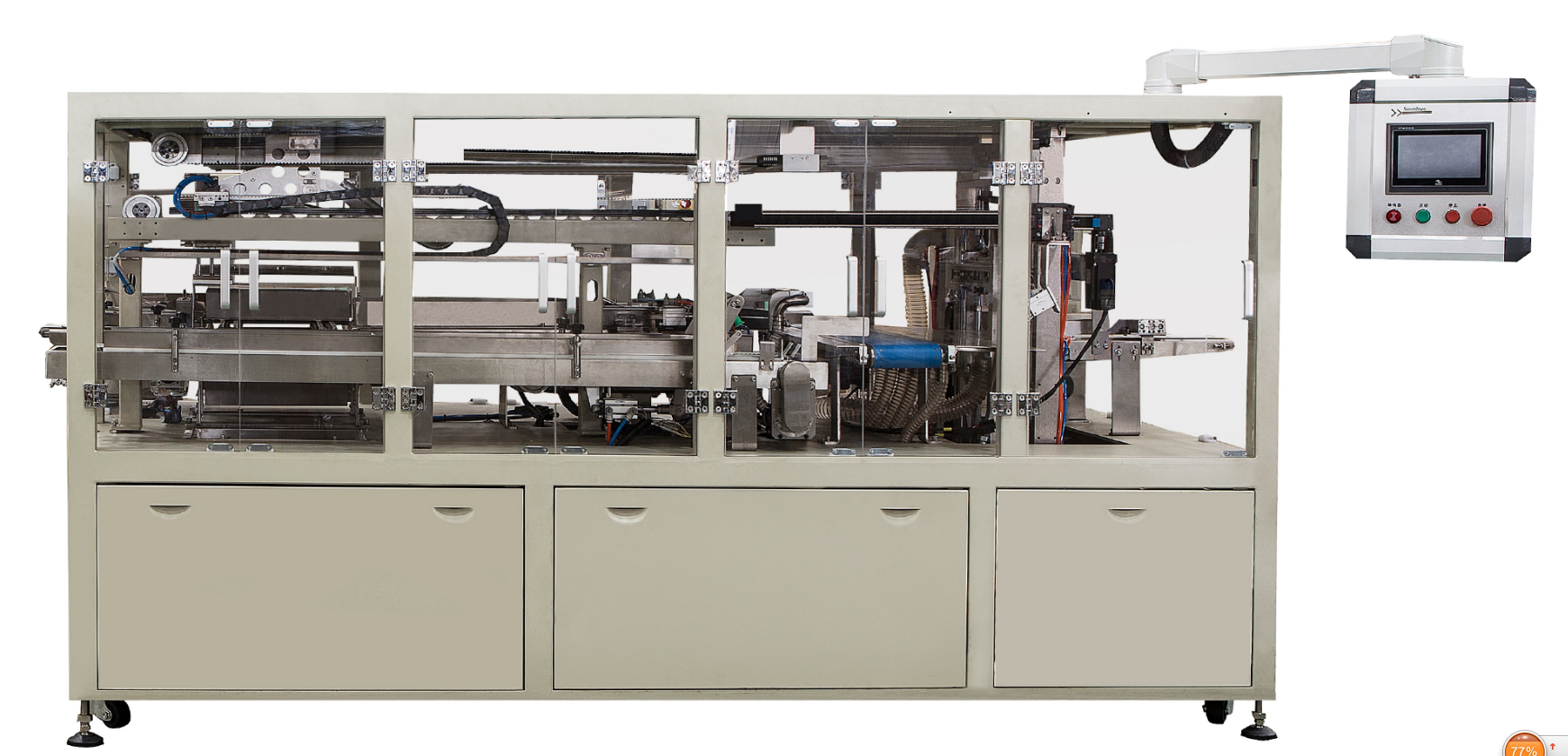
The three closure methods
Tape closure applies a pressure-sensitive or water-activated tape strip over the case top. Hot-melt glue sprays a bead of melted adhesive onto the flaps, which are then pressed closed before the glue sets. Staples drive a row of wire stitches through the flaps. They look like they do the same job, but they run at different speeds, tolerate different carton boards, and behave very differently in cold or humid environments.
| Pressure-sensitive tape | Hot-melt glue | Staples | |
|---|---|---|---|
| Speed | Medium (up to ~20 cases/min on auto) | High (50+ cases/min) | High (50+ cases/min) |
| Machine cost | Low | Medium–high | Medium |
| Consumable cost per case | Low–medium | Low (glue bead) | Very low (wire) |
| Carton board tolerance | Works on most boards | Best on clean, flat flaps | Works on heavier corrugated |
| Cold/humid behavior | Tape can lose adhesion in cold | Glue can fail in very cold | Unaffected by climate |
| Tamper evidence | Low (easy to reopen) | High (glue bond breaks the board) | High (visible staple holes) |
| Printability | Tape can be branded | No | No |
| Best for | Low-speed, multi-SKU, light cases | High-speed food, beverage, detergent lines | Heavy, industrial, export cases |
When tape is the right closure
Tape is the default for low to medium-speed lines, multi-SKU plants, and light to medium cartons. A semi-automatic case sealer applies tape to both flaps at up to about 15–20 cases a minute; automatic random case sealers handle mixed case sizes. Tape is cheap to buy, easy to load, and it lets you brand the tape. The weakness is cold chain: pressure-sensitive adhesive loses tackiness in refrigerated or frozen environments, and a tape that held at room temperature can open in a freezer. For ambient, dry distribution, tape is the workhorse. For frozen or refrigerated product, question it.
When hot-melt glue earns the premium
Hot-melt glue is the closure on high-speed food, beverage and detergent lines. The glue head sprays a bead, the flaps close, and the glue bonds in seconds. It runs at 50+ cases a minute, it is tamper-evident (opening the carton tears the board), and it costs very little per case once the machine is paid for. The trade-off is infrastructure: the glue needs a heated tank, hoses and a glue head, and the carton flaps must be clean and flat for the bond to hold. Dusty or oily cartons, or cartons with a coating, can fail. Hot melt is also less forgiving on a multi-SKU line that changes case sizes often — the glue pattern has to be re-programmed. On a high-speed single-SKU line, it is the standard.
When staples are the industrial choice
Staples are the closure for heavy, industrial or export cases: 20–50 kg sacks, hardware, automotive parts, anything that travels a long way on rough roads. Wire staples are unaffected by cold, humidity or dust, and they hold a heavy closed flap. They are the cheapest closure per case — wire is cheap — and the staple head is simple to maintain. The downsides: they are noisy, they require a heavier corrugated that the staple can bite into without splitting, and they are not tamper-evident in the branded sense — they are obvious but easy to re-staple. For consumer-facing e-commerce, staples look harsh; for industrial export, they are reliable.
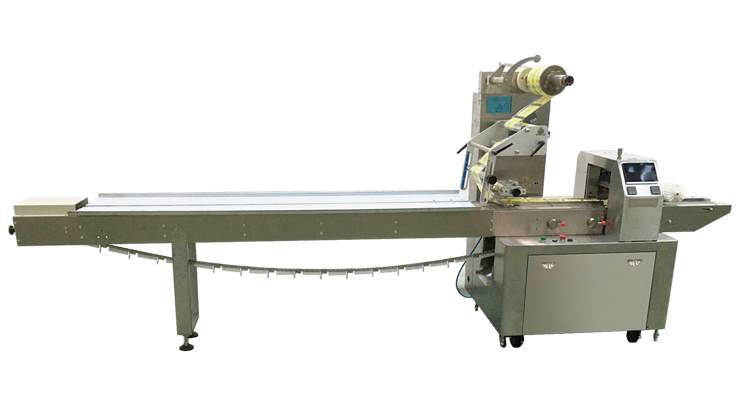
Speed matching: the closure sets the line ceiling
The case sealer is often the slowest machine on the end of the line. If your case packer produces 40 cases a minute and the tape sealer only does 18, the case packer waits. When SunAura builds an end-of-line cell, we size the case sealer to the slowest machine in the line — usually the sealer. Tape sealers top out around 20 cpm on automatic; glue and staple heads run 50+. If you are running a high-speed pillow line feeding a multi-head weigher, a tape sealer will become the bottleneck, and the cost of upgrading to glue later is double what it would have been on day one.
Changeover: multi-SKU plants pay attention here
A plant that runs 20 case sizes a week needs a random-size case sealer. Tape sealers adjust to case height with a hand crank or automatically; glue heads need the glue pattern re-programmed per size; staples need the staple head adjusted for flap thickness. SMED matters here: if your line changes over three times a day, the closure method that takes five minutes to change is worth more than the one that takes twenty. SunAura includes the changeover time in the quotation, not just the speed, because for a multi-SKU plant the changeover cost dwarfs the consumable saving.
Tape types: acrylic, hot-melt and water-activated
Not all tape is the same. Acrylic tape is the cheap, clear, general-purpose tape — it works on clean, dry cartons at room temperature. Hot-melt tape sticks harder and works on a wider range of board surfaces, including recycled fiber. Water-activated tape (gummed paper tape) is the strongest of the three: it wets the paper board, creates a permanent bond, and is the tamper-evident choice for e-commerce and export. If your cartons are made from 100% recycled fiber or have a dusty surface, acrylic tape will fail; upgrade to hot-melt or gummed tape. The tape price per roll is a tiny fraction of the failure cost, so do not spec the cheapest tape on a line you cannot afford to stop.
Glue bead patterns: not just one dot
Hot-melt glue is not one bead down the middle. Modern glue heads spray a pattern: two beads on the minor flaps, two on the major flaps, sometimes a center strip for heavy cases. The pattern is programmed for the carton size and board weight, and the glue temperature and bead size are set in the HMI. Too little glue and the case opens; too much and it squeezes out the inside and sticks the product. On a multi-SKU line, the glue pattern is part of the recipe the operator selects. SunAura includes pattern programming in the commissioning, not as a paid extra — because a wrong glue pattern is the difference between a case that holds and one that bursts on the pallet.
Random vs fixed case size
A fixed-size case sealer is cheap and fast, but it only handles one or two carton sizes. A random-size sealer uses side belts and top belts that automatically adjust to the case height and width as it passes through. If your line runs a single SKU at high volume, a fixed sealer is cheaper and simpler. If you run 20 SKUs across a shift, the random sealer pays for itself in saved changeover time. The case erector upstream must match: a fixed erector pairs with a fixed sealer; a random erector pairs with a random sealer. Mixing them means the line stops every time the case size changes.
What not to buy
Do not buy tape closure for a frozen-food line; the adhesive will fail. Do not buy hot-melt glue for a dusty, oily, multi-SKU line where you cannot keep flaps clean. Do not buy staples for a consumer e-commerce brand where the customer sees the box. And do not size the case sealer to the case packer’s peak speed without checking the closure method’s ceiling — that bottleneck is paid for in lost output every shift. If your line runs over 30 cpm, plan for glue or staples from the start.
Maintenance and consumables
Tape is the simplest to maintain: change the roll, clean the tape head. Hot-melt is the fussiest: the glue tank must be kept at temperature, the hoses purged on shutdown, and the glue nozzle cleared if it bakes. Staples need the staple wire coil loaded and the driver blade replaced as a wear part. Budget the consumable per case: tape is roughly the most expensive per case, glue the cheapest on high volume, staples in between. A cheap tape sealer that jams on every other case is not cheap.
Safety on the sealing head
Glue heads run at 150–180°C, staple drivers fire at hundreds of Newtons, and tape blades are sharp. A safety interlock that stops the head when the guard opens is not optional. Cheap case sealers often skip the guard and leave the operator’s fingers near the driver. SunAura specifies interlocked guards on every sealing head, and a two-hand start for the manual feed section. The glue head also needs a nozzle wiper and an auto-shutdown if the machine sits idle — baked glue is the most common glue-line failure.
Integration with the case erector and palletizer
The case sealer does not stand alone. The case erector forms the bottom, the case packer loads the product, and the sealer closes the top. The conveyor between them must hold the case square; if the case enters the sealer twisted, the tape goes on crooked or the glue misses the flap. On an automated cell, SunAura programs the erector, packer and sealer as one sequence: the erector waits for a case, the packer waits for the filled case, and the sealer signals the palletizer when a sealed case is ready. Buying the three from three suppliers and expecting them to talk is where end-of-line projects stall. One supplier, one PLC, one HMI — that is how the line runs unattended.
Budgeting the case sealer
The case sealer price is the visible part. Budget separately for: the infeed and outfeed conveyors between the packer and the sealer, the glue supply and heating hoses (for hot melt), the safety guards, the first-year consumables (tape rolls, glue sticks, staple wire), and installation. A random-size sealer costs more than a fixed one, and a glue sealer costs more than a tape sealer. When you compare quotes, ask what is included — a cheap sealer quote that skips the guards and conveyors will cost you more on installation. SunAura quotes the sealing section as part of the end-of-line cell, so the conveyor lengths, signals and safety are all in one number.
FAQ
Still choosing between tape, glue and staples? The three questions that settle it are: how fast does the line run, what is the climate (ambient, refrigerated, frozen), and what carton board do you use. Once those are answered, the closure method is usually obvious — the rest is selecting the right machine.
Can I switch closure methods later on the same case sealer?
Usually not. Tape, glue and staple heads are different machines. Plan the closure method up front based on speed and product.
Does cold chain kill tape?
Standard pressure-sensitive tape loses adhesion in refrigerated and especially frozen conditions. For cold-chain product, use a freezer-grade tape or switch to glue/staples.
Which closure is cheapest per case?
At high speed, hot-melt glue is cheapest per case (a small bead of adhesive). At low speed, tape is cheapest because the machine cost is low. Staples are very low on consumable but require heavier board.
Do I need a case erector and a case sealer as one machine?
Often yes at high speed — an erector-sealer combo closes the bottom and seals the top in one pass. For multi-SKU, separate erector and sealer give more flexibility.
Summary
Tape for low-speed, multi-SKU, ambient lines; hot-melt glue for high-speed food and beverage; staples for heavy industrial export. Match the closure to your speed, your climate and your board quality. Tell us your cases per minute and your product and we will spec the closure that holds to the customer’s door.