Usually no. X-ray finds everything a metal detector finds, plus non-metals. Some very high-risk lines (meat with bone risk) keep both, but most food exporters are better off with one well-placed X-ray.
How fast can the X-ray run?
Modern cabinets handle 60–120 m/min conveyor speeds depending on pack size and detector aperture. Speed is rarely the bottleneck; image processing and reject timing are.
Summary
For non-metallic packaging with a metal-only risk, a metal detector is the economical, correct control. For metallized film, glass, stone or bone risk, or retailer audits that demand more, X-ray is the upgrade — and it pays back in fill-level and missing-piece checks too. Send us your product, packaging material and contaminant list and we will specify the inspection that passes your next audit.
Sources
Technical points referenced: Fortress Technology interpack paper on metal detection and X-ray technologies; A&D Gulf “Metal Detector vs X-Ray Food Inspection”; Keypack “X-Ray vs Metal Detectors Engineering Guide”; RaymanTech on metal detectors in foil packaging. The Turkish exporter configuration is this project’s own.
Related reading
Yes. The beam is contained inside the shielded cabinet and only fires when a product is present. Interlocked doors shut down the beam. Radiation exposure is well below regulatory limits; operators do not need to wear dosimeters.
Do I need both a metal detector and an X-ray?
Usually no. X-ray finds everything a metal detector finds, plus non-metals. Some very high-risk lines (meat with bone risk) keep both, but most food exporters are better off with one well-placed X-ray.
How fast can the X-ray run?
Modern cabinets handle 60–120 m/min conveyor speeds depending on pack size and detector aperture. Speed is rarely the bottleneck; image processing and reject timing are.
Summary
For non-metallic packaging with a metal-only risk, a metal detector is the economical, correct control. For metallized film, glass, stone or bone risk, or retailer audits that demand more, X-ray is the upgrade — and it pays back in fill-level and missing-piece checks too. Send us your product, packaging material and contaminant list and we will specify the inspection that passes your next audit.
Sources
Technical points referenced: Fortress Technology interpack paper on metal detection and X-ray technologies; A&D Gulf “Metal Detector vs X-Ray Food Inspection”; Keypack “X-Ray vs Metal Detectors Engineering Guide”; RaymanTech on metal detectors in foil packaging. The Turkish exporter configuration is this project’s own.
Related reading
Yes. X-ray sees metals of all densities. Its weakness is very low-density contaminants (soft plastic, thin rubber) where the density difference from the product is too small.
Is X-ray safe for food and operators?
Yes. The beam is contained inside the shielded cabinet and only fires when a product is present. Interlocked doors shut down the beam. Radiation exposure is well below regulatory limits; operators do not need to wear dosimeters.
Do I need both a metal detector and an X-ray?
Usually no. X-ray finds everything a metal detector finds, plus non-metals. Some very high-risk lines (meat with bone risk) keep both, but most food exporters are better off with one well-placed X-ray.
How fast can the X-ray run?
Modern cabinets handle 60–120 m/min conveyor speeds depending on pack size and detector aperture. Speed is rarely the bottleneck; image processing and reject timing are.
Summary
For non-metallic packaging with a metal-only risk, a metal detector is the economical, correct control. For metallized film, glass, stone or bone risk, or retailer audits that demand more, X-ray is the upgrade — and it pays back in fill-level and missing-piece checks too. Send us your product, packaging material and contaminant list and we will specify the inspection that passes your next audit.
Sources
Technical points referenced: Fortress Technology interpack paper on metal detection and X-ray technologies; A&D Gulf “Metal Detector vs X-Ray Food Inspection”; Keypack “X-Ray vs Metal Detectors Engineering Guide”; RaymanTech on metal detectors in foil packaging. The Turkish exporter configuration is this project’s own.
Related reading
SunAura Machinery Installs X-Ray Inspection System for Nut and Dried Fruit Exporter: Why We Specified X-Ray Instead of Another Metal Detector
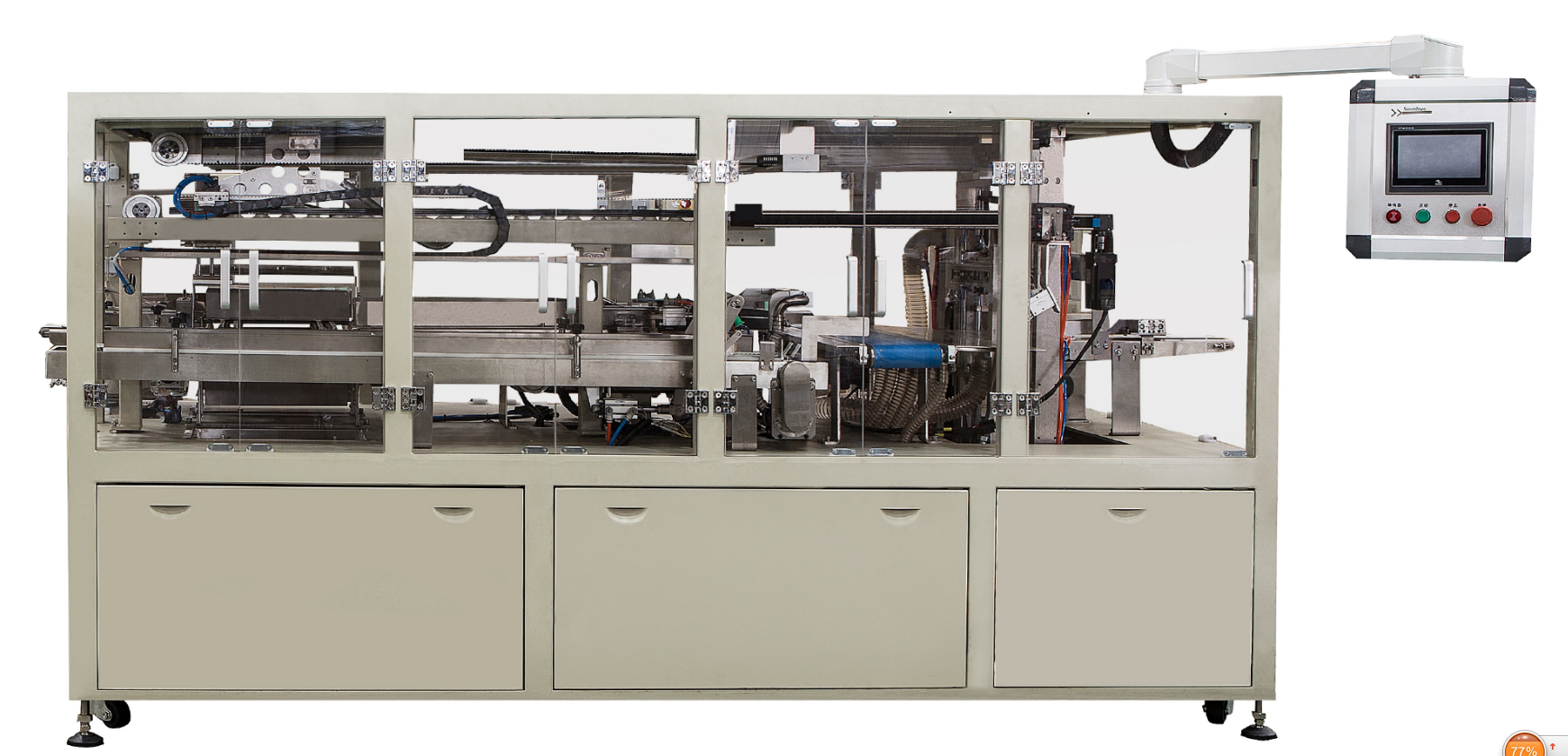
A nut and dried fruit exporter in Turkey came to us with a familiar problem: they already had a metal detector on their packing line, and customers kept asking for more. Retail audits were asking about glass, stone and calcified bone fragments. The product itself was moving through metallized film pouches, which the existing metal detector could not see through. The buyer asked us: do we upgrade the metal detector, or add an X-ray system? We specified an X-ray. This article explains why, and when a metal detector is still the right call.
What each machine actually detects
A metal detector finds metal by inducing a magnetic field and looking for a disturbance. It catches ferrous, non-ferrous and stainless steel fragments — wire, shavings, broken screen mesh, bolt tips. It does not see glass, stone, bone, dense plastic, rubber or ceramic. An X-ray passes a beam through the product and looks for density differences. It sees the same metals, plus glass, stone, calcified bone, dense plastic and rubber. It also checks fill level, missing pieces, broken products and contaminated sealing zones in the same pass.
| Metal detector | X-ray inspection | |
|---|---|---|
| Metals (ferrous/non-ferrous/stainless) | Yes | Yes |
| Glass in glass | No | Yes (with blind-zone caveats at neck/base) |
| Stone, calcified bone, dense plastic | No | Yes |
| Metallized film / foil packaging | No (product effect) | Yes |
| Fill level / missing piece / shape check | No | Yes |
| Relative capital cost | Low | Typically 2–3x |
| Speed | High, easy on conveyor | High, but image processing adds complexity |
| Best for | Non-metallic packaging, metal-only risk, budget lines | Foil/metallized film, multi-contaminant risk, retailer audit |
Why the Turkish exporter needed X-ray
Three things pushed the decision. First, the pouches were metallized film, which makes a metal detector go blind — the film itself is conductive, so the detector either rejects every pack or loses sensitivity. Second, the customer was exporting to EU retailers that audit for glass, stone and bone, not just metal. Third, the line needed to check fill weight and missing pieces on multi-packs, which a metal detector cannot do. Upgrading the existing metal detector to a higher frequency would have solved none of these. An X-ray did all three in one cabinet, mounted on the conveyor between the multihead weigher and the case packer.
When a metal detector is still the right choice
We do not put an X-ray on every line. If your product runs in non-metallic packaging (plastic pouches, paper, glass jars, HDPE bottles), your contaminant risk is overwhelmingly metal, and your budget is tight, a metal detector is the correct and cheaper control. It is simpler to calibrate, faster to clean, and it finds steel shavings from worn equipment reliably. Many food safety audits accept a well-specified metal detector when foil is not in the pack. SunAura still specifies metal detectors for lines where the product effect is low and the only realistic hazard is machinery wear. X-ray is the upgrade when the contaminant list gets longer or the packaging goes metallic.
The foil problem: why metal detectors fail on metallized film
Metal detectors use a balanced coil. When a product with any conductive or ferromagnetic character passes through, it shifts the balance — this is the “product effect.” Water, salt and iron-rich foods already cause product effect; metallized film and aluminum foil push it off scale. The detector either rejects every pack (because the film itself trips it) or you dial the sensitivity down until it misses real metal. The industry guidance is consistent: for foil or metallized packaging, X-ray is the only reliable inspection. If you have ever seen a metal detector rejecting 20% of a foil-wrapped line, that is the product effect, and no amount of tuning fixes it.
What else the X-ray does that the metal detector never could
The X-ray cabinet on the Turkish line was specified with secondary inspection software: it checks fill level in each pouch, detects a missing sachet inside a multi-pack, flags a torn nut that has punctured the film, and rejects a pouch that is under-filled. A metal detector has none of this. On a multi-SKU line where pack weights vary, the X-ray also auto-learns the product signature for each recipe, so the operator selects the product on the HMI and the inspection recipe switches. That secondary inspection value is often what pays for the X-ray within a year — it catches the under-filled packs that would otherwise become retailer complaints.

Reject and integration: the detail buyers miss
An X-ray without a good reject is a paperweight. You need a synchronized pusher or air blast that fires exactly when the bad pack reaches the reject station, and a locked reject bin so nobody accidentally puts a rejected pack back on the line. SunAura programs the X-ray, the reject and the line PLC as one sequence: the X-ray marks a bad pack, the conveyor tracks its position, the pusher fires, and the event is logged with a timestamp and product recipe. That log is what the retailer auditor asks for. We also mount the X-ray after the weigher and before the flow wrapper where possible, so a rejected pack never gets wrapped and coded — you save film and coding ink on every reject.
Budgeting: what the X-ray quote does not include
Beyond the cabinet itself, budget for: the reject conveyor and pusher, the safety interlocked reject bin, the encoder on the conveyor for position tracking, calibration test pieces (ferrous, non-ferrous, stainless, glass and stone phantoms), and operator training. The X-ray also needs a shielded enclosure — it is safe, but the interlocked door is a legal requirement. A cheap X-ray quote that skips the reject and the logging will fail your first audit. Ask for the full line integration, not just the cabinet.
Sensitivity, test pieces and shift validation
An X-ray is only as good as its calibration. Every shift, the operator runs a set of test phantoms through: a ferrous ball, a non-ferrous ball, a stainless ball, a glass bead and a stone or bone chip. The machine must reject each one, and the result is logged. This is not optional — it is what every GFSI audit (BRC, IFS, FSSC 22000) asks for first. The phantoms are kept in a sealed, labeled box, and if a phantom is lost or damaged, you replace it rather than keep using a chipped one. Sensitivity is set by the product, not by the machine’s maximum: salty, wet or dense products reduce sensitivity, so the test pieces must be run through the actual product, not through an empty conveyor.
X-ray vs checkweigher: not a substitute
Buyers sometimes ask whether the X-ray’s fill-level check replaces a checkweigher. It does not. The X-ray estimates fill level from the image; the checkweigher weighs the pack to a tenth of a gram. For net-weight control, the checkweigher is the legal instrument, and the X-ray is the contaminant control. On most food lines they run in series: product goes through the checkweigher first, then the X-ray, and both feed the line PLC. SunAura integrates both into one reject logic — if either fails, the pack is pushed out, and the reason is logged separately. Trying to skip the checkweigher because the X-ray “sees” fill level will fail your net-weight audit.
What not to buy
Do not buy an X-ray if your line only runs non-metallic packs with a clean metal-only risk — you will pay 2–3x for capability you do not use. Do not buy a metal detector for a foil or metallized film line; it will not work. Do not put inspection after the case packer; by then the bad product is already in a sealed case and unrecoverable. And do not skip the test-piece validation: every shift, the operator should run the calibration phantoms through and log the result. That is the single cheapest audit defense on the whole line.
Where to place the X-ray on the line
Inspection placement matters. Put it after the weigher and wrapper, before the case packer, so a rejected pack never gets into a case. Some buyers put the X-ray after the case packer, which means a rejected case has to be opened — expensive and unsafe. The X-ray also needs a clean, steady conveyor: vibration from a nearby vibration feeder or a slat chain with gaps reduces image quality. Plan the conveyor length around the reject station so there is room for the pusher and the locked reject bin. SunAura draws the inspection section as its own conveyor segment, with an encoder for pack tracking, so the reject fires at the right moment every time.
False rejects: the cost nobody budgets
A new X-ray on a line almost always rejects too much at first. Bags that lie at a slight angle, a product with a dark spot, a metalized seam that shifts — all can trip the sensor. Expect one to two weeks of tuning after installation, where the software learns the normal product signature and you adjust the sensitivity threshold. A well-tuned X-ray on a stable product should reject under 0.5%. If your line runs 5% false rejects, you are throwing away product. Build the tuning period into the commissioning plan and require the supplier to stay on site until the rejection rate is acceptable. This is the most common post-installation complaint, and it is almost always a commissioning problem, not a machine problem.
Spare parts and service life
An X-ray cabinet is a long-term asset, but the wear parts are real: the conveyor belt, the reject pusher, and the detector housing seals. The X-ray tube itself lasts years, but the detector array and the generator are the big-ticket service items. SunAura ships a spare-parts kit sized for the first year, and the HMI logs every reject and every calibration failure so your local technician can diagnose before flying out. When you compare quotes, ask what is covered in the first-year service agreement — a cheap machine with a three-hour parts wait is not cheap.
FAQ
Still deciding between a metal detector and an X-ray? The shortest path: list every contaminant your customers and regulators ask about, list every packaging material you run, and then ask us for a one-page comparison. Most exporters end up somewhere between the two, and the right answer depends on your audit list, not on the machine sales brochure.
Can X-ray detect stainless steel?
Yes. X-ray sees metals of all densities. Its weakness is very low-density contaminants (soft plastic, thin rubber) where the density difference from the product is too small.
Is X-ray safe for food and operators?
Yes. The beam is contained inside the shielded cabinet and only fires when a product is present. Interlocked doors shut down the beam. Radiation exposure is well below regulatory limits; operators do not need to wear dosimeters.
Do I need both a metal detector and an X-ray?
Usually no. X-ray finds everything a metal detector finds, plus non-metals. Some very high-risk lines (meat with bone risk) keep both, but most food exporters are better off with one well-placed X-ray.
How fast can the X-ray run?
Modern cabinets handle 60–120 m/min conveyor speeds depending on pack size and detector aperture. Speed is rarely the bottleneck; image processing and reject timing are.
Summary
For non-metallic packaging with a metal-only risk, a metal detector is the economical, correct control. For metallized film, glass, stone or bone risk, or retailer audits that demand more, X-ray is the upgrade — and it pays back in fill-level and missing-piece checks too. Send us your product, packaging material and contaminant list and we will specify the inspection that passes your next audit.
Sources
Technical points referenced: Fortress Technology interpack paper on metal detection and X-ray technologies; A&D Gulf “Metal Detector vs X-Ray Food Inspection”; Keypack “X-Ray vs Metal Detectors Engineering Guide”; RaymanTech on metal detectors in foil packaging. The Turkish exporter configuration is this project’s own.
Related reading