
October 23, 2026 | by Frank, SunAura Machinery Field Service Engineering
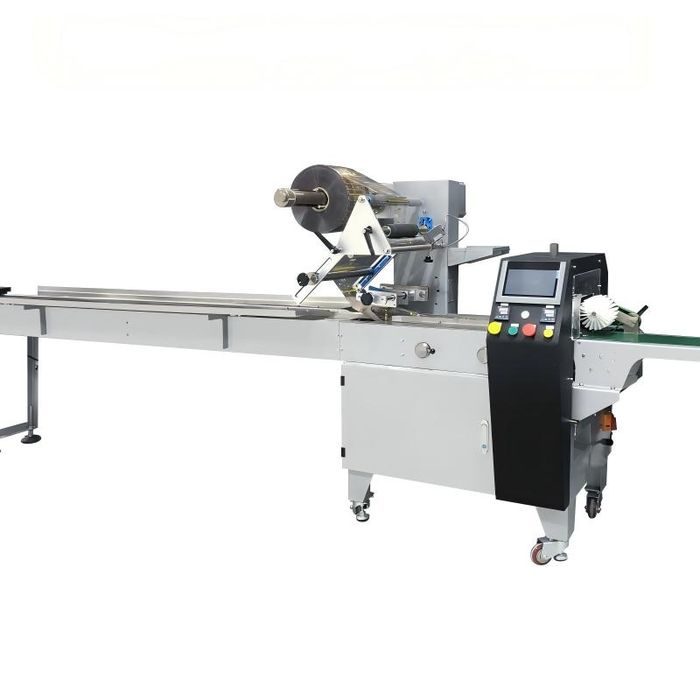
A pillow packaging machine — the flow wrapper or horizontal form-fill-seal machine — is a tightly synchronized system: film unwinds, forms around the product, seals longitudinally, cross-seals and cuts, and discharges, all timed to within milliseconds. When one variable drifts, the symptoms are familiar to every line operator: leaking seals, crooked bags, film jams, registration drift and mis-fed product. This field troubleshooting guide is organized by symptom so you can move from the defect on the table to the root cause and a fix without swapping parts at random. It covers the six fault families that account for almost all flow wrapper call-outs, plus a diagnostic sequence that keeps the new operator from chasing the wrong variable. The sealing temperature and pressure background is covered separately in our guide to flow wrapper seal temperature, pressure and dwell; this article picks up where that one leaves off and extends across jams, registration and bag geometry.
Start With the Five-Minute Diagnostic Sequence
Experienced fitters do not open the machine on the first bad bag. They gather evidence first, because the same visible defect can come from three different causes and the fastest path is to eliminate variables in order.
- Read the alarm log. Note the fault code, the axis it names and the bag count at which it started. A servo following error, a heater-zone alarm and a registration-limit warning each point to a different subsystem immediately.
- Collect ten consecutive bad bags. Lay them out in order. A consistent defect points to a fixed setting (temperature, alignment); a defect that worsens down the row points to drift (film stretch, a glazing pull roll, a failing heater); a random defect points to product variation or contamination.
- Measure instead of trusting the screen. Confirm actual jaw temperature with a contact thermometer and actual film tension by hand; HMI readouts drift when thermocouples loosen or tension arms wear.
- Change one variable at a time. Adjust temperature, then pressure, then speed, jogging a few bags between changes. Changing all three at once hides which correction worked.
- Record the good value. Once the run is correct, write the temperature, pressure, tension and speed into the recipe note so the next shift does not rediscover it.
Problem 1: Leaking or Weak Longitudinal (Center) Seals
The center seal runs the length of the bag. A weak or leaking center seal is the most common flow wrapper defect and shows up as product leakage, gas escape on modified-atmosphere lines, or a seal that separates under light finger pressure.
Temperature too low. Check this first. Each laminate has a narrow sealing window — typically 130–160°C for OPP/CPP and 140–180°C for PET/CPP. If the bar reads below setpoint, the heating element may be burned out, the thermocouple may be loose or the solid-state relay may have failed. Verify the actual jaw temperature with a contact thermometer rather than trusting the HMI.
Insufficient seal pressure. The longitudinal seal rollers must press the two film layers together with even force. On mechanical machines this is set by spring pressure; on servo machines it is set in the HMI. Worn rollers with flat spots give uneven contact even when the pressure reading is correct. Replace seal roller sleeves when the Teflon coating shows cuts or delamination.
Film thickness changed without a dwell change. Thicker laminates need longer contact time. On a servo machine dwell is a recipe value; on a mechanical machine it may require a gear change. This is the classic fault when a customer runs a promotional multipack on a thicker film and the seals start leaking.
Contaminated seal area. Product dust, oil or seasoning on the film prevents the heat-seal layer bonding, a frequent issue on snack and powder lines. Inspect the film guide rails for product being dragged onto the inside of the film before the jaws.
Problem 2: Weak, Burnt or Wrinkled End (Cross) Seals
The end seal closes the top and bottom of the bag. Symptoms range from seals that tear too easily (too cold or too short dwell) to burnt, brittle or wrinkled seals (too hot or too long dwell).
Unequal jaw zones. Most end-seal jaws heat two zones independently. If one zone is hotter, the seal is burnt on one side and weak on the other. Calibrate each zone and confirm the heater elements are seated evenly in the jaw block.
Dwell time wrong. The jaw needs enough contact time to fuse the film but not enough to degrade it. On a servo machine adjust dwell in 0.05-second steps, starting near 0.3 seconds and judging by seal appearance. The same temperature–pressure–dwell relationship is used to set high-speed servo pillow packaging machine recipes, and it is the setting most often lost when a recipe is copied without being tested.
Worn Teflon tape. The PTFE tape on the jaw teeth prevents sticking and gives a consistent heat surface. When it is scratched, bubbled or peeling, replace it — a five-minute job that is often overlooked.
Sealing on printed ink. If the end seal lands on a printed layer rather than the bare sealant layer, the ink blocks bonding. That is a registration fault (Problem 4), not a temperature fault, and turning up the heat will only make it worse.
Problem 3: Film Jams and Film Breaks
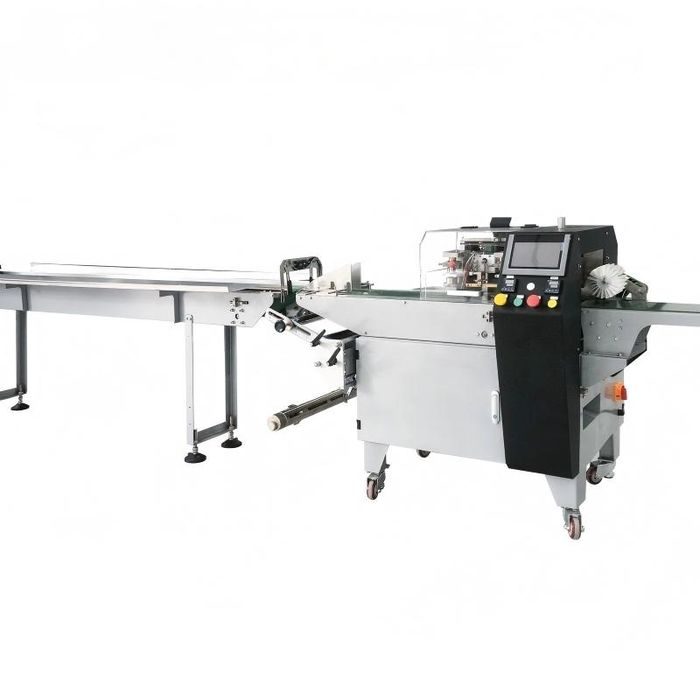
A film jam stops the line outright and is usually traceable to a handful of mechanical causes rather than the control system.
Film roll eccentric or off-center. A poorly wound roll oscillates as it unwinds and binds in the former. Check the roll on the unwind spindle: it should rotate true without wobble. If it does not, the roll is a film-supplier defect, not a machine fault.
Forming box misaligned. The former folds the flat film into a tube around the product. If it is shifted, the film binds. Loosen the former mounting, center the tube visually and jog at low speed while watching for rub points.
Pull-roll pressure too high. The pull rollers must grip without crushing. Excessive pressure stretches and thins the film until it snaps; insufficient pressure lets it slip and the registration drifts. The correct setting leaves a faint, even indentation on the film edge.
Product jamming in the infeed. A skewed, overlapping or bridging product wedges in the forming tube and pulls the film off line. Products should be separated by at least one product length, and the flighted belt should center each item. On multi-product lines, a missed infeed is the most common cause of an otherwise unexplained jam.
Problem 4: Print Registration Drift
On printed film the registration eye tracks the print mark and corrects film feed. If the image drifts off-center or the seal wanders across the artwork, the correction loop is not working.
Sensor sensitivity mis-set. The eye must distinguish the mark from the background cleanly. Adjust the potentiometer until the indicator triggers reliably on the mark and not on gradients or dust, and reset it for strongly different film colors.
Mark contrast too low. Black marks on white film read best; pale-gray marks on clear film may not read at all. If the printer cannot use solid black marks, fit a contrast or laser sensor instead of a standard photoelectric eye.
Cumulative film stretch. Pull rollers stretch the film slightly and the drift accumulates over a long run. Servo machines can make large corrections; mechanical machines have a limited range and will hit their correction limit. Hitting that limit repeatedly points to tension and pull-roll pressure, not the sensor.
Glazed pull-roll rubber. A hard, shiny pull-roll surface grips inconsistently. Clean it with isopropyl alcohol; if the surface stays glossy, replace the roller sleeve.
Problem 5: Crooked or Twisted Bags
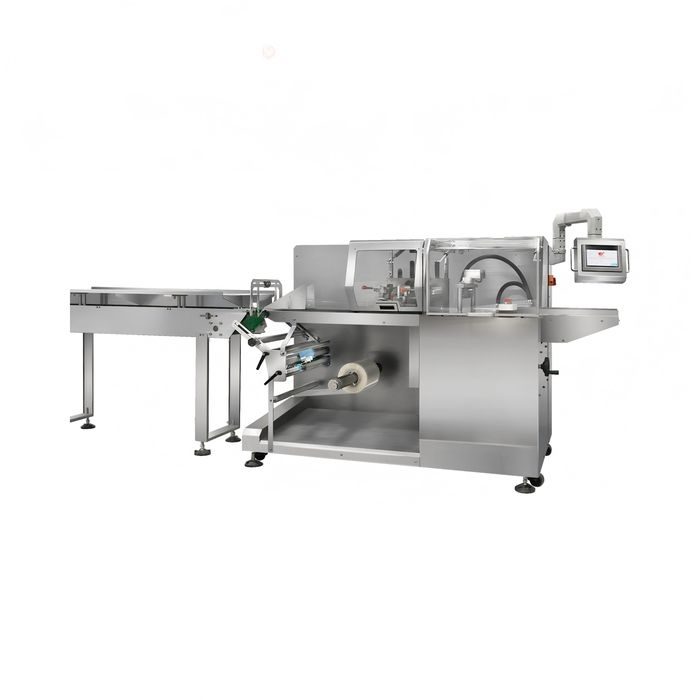
A skewed seal or off-center fin looks unprofessional and usually indicates mechanical alignment rather than a recipe error.
Film not centered on the former. This is the most common cause. Thread carefully, center the tube around the product and check that the center-seal fin sits straight down the middle of the bag. A crooked fin almost always starts at the former.
Product delivered off-center. If the infeed delivers product to one side, it pushes the film with it. Check the infeed guide rails and side guides on the flighted belt.
Discharge belt speed mismatch. A discharge conveyor that is faster or slower than the jaw discharge pulls or pushes the bag as it leaves, twisting it. On a servo machine the speeds are synchronized automatically; on a mechanical machine check the belt ratio.
Problem 6: Inconsistent Bag Length
Bags that come out long and short in a repeating pattern point to a timing issue rather than a temperature one.
Gear backlash on mechanical machines. Worn timing gears or chains let the pull roll drift between seals. Check chain tension and look for play in the gear train.
Servo following error. On a servo wrapper a following-error alarm means the motor cannot follow the commanded motion, from a mechanical bind (worn bearing, misaligned roller), an undersized drive or a tuning issue. Read the servo drive error log and resolve the mechanical bind before re-tuning.
Genuine product length variation. Irregular baked goods and soft products vary in length, so the bag length must be set to the maximum product plus clearance. Setting to the average guarantees short bags on long products.
When the Fault Is the Product, Not the Machine
Before condemning the wrapper, rule out the two inputs that sit outside it. The first is film: a batch with inconsistent sealant thickness, a film stored against a damp wall, or a laminate that was substituted without re-running the seal test will produce faults no machine adjustment can fix. Keep a sealed reference roll of the approved film and run a short side-by-side comparison when a new batch arrives. The second is the product itself: a sticky, oily or overfilled product contaminates the seal zone, and a product that is not metered consistently to the infeed causes jams and short bags that look like machine faults. On weighed and filled lines upstream — including filled and capped personal-care and food lines — the flow wrapper is only as stable as the machine feeding it, which is why the same sealing and changeover discipline appears in the servo piston filling platform CE update and the multi-format personal-care filling and tube line in Dubai.
Quick-Reference Fault Table
| Symptom | First check | Second check | Last resort |
|---|---|---|---|
| Leaking center seal | Seal temperature | Seal roller pressure | Replace roller sleeves |
| Burnt end seal | Jaw zone temperature | Dwell time | Replace Teflon tape |
| Film break | Roll centering and winding | Pull-roll pressure | Former alignment |
| Registration drift | Eye sensitivity and mark contrast | Pull-roll condition | Film tension / stretch |
| Crooked bags | Former centering | Infeed product position | Discharge belt sync |
| Wrong bag length | Servo following error | Gear or chain wear | Product length variation |
| Random contamination faults | Product dust or oil on film | Guide rails | Upstream metering |
Preventive Maintenance That Prevents Most Calls
- Clean the former and film path at the end of every shift — product dust is the silent cause of both contaminated seals and jams.
- Inspect and replace jaw Teflon tapes every 200–400 running hours or whenever they show cuts.
- Wipe pull rolls with isopropyl alcohol weekly to remove film residue that causes slipping.
- Lubricate bearing points per the manual with light food-grade grease.
- Verify seal temperatures with a contact thermometer monthly; HMI readouts drift over time.
- Keep a reference film roll and a written recipe per SKU so a bad batch or a changed shift can be diagnosed quickly.
Frequently Asked Questions
Why do my seals fail only on a specific film batch?
That usually means the sealant layer thickness or the film’s moisture content differs from the approved batch. Run a short comparison against a sealed reference roll; if the reference seals at the same settings, the film is the cause and the supplier should review the lamination.
How do I tell a temperature fault from a pressure fault?
Measure the actual jaw temperature with a contact thermometer. If it matches setpoint and the seal is still weak or patchy, the cause is pressure or a contaminated seal area. A uniform weak seal points to temperature; an uneven or streaky seal points to pressure, contamination or worn rollers.
Why does registration drift only over long runs?
Cumulative film stretch and a glazing pull-roll surface both build slowly. Clean the pull rolls, reduce excess tension and confirm the machine’s correction range is not being reached; servo wrappers tolerate far more drift than mechanical ones.
Should I adjust several settings at once to recover fast?
No. Change one variable at a time and jog a few bags between changes. Adjusting temperature, pressure and speed together may get you running but you will never know what actually fixed it, and the fault will return on the next changeover.
When should a flow wrapper fault be escalated to the manufacturer?
Escalate when the alarm log shows a repeated servo following error with no mechanical bind, when a heater zone fails despite a new element and relay, or when the defect persists after film and product have been ruled out. SunAura’s team can diagnose remotely from the alarm history before visiting.
Still chasing a fault you cannot clear? SunAura Machinery’s field service team can walk the diagnostic sequence over a video call with your maintenance fitter, or commission a site visit. Every servo wrapper in the pillow packaging machines range stores recipes and alarm history for exactly this, and the medium-speed pillow flow wrapper and heavy-duty pillow wrapping machine for large products ship with the same diagnostic HMI. Contact technical support or review the after-sales service commitments.