
JEBEL ALI, Dubai — October 23, 2026 | by Admin, SunAura Machinery Export Projects
SunAura Machinery has installed a multi-format personal-care filling, capping and tube line for a contract manufacturer in the Jebel Ali Free Zone that packs toothpaste, creams and serums for regional brands and for re-export into the Gulf and Europe. The brief was unusually broad for one supplier: one hall had to cover laminated tubes, small bottles and small jars, with short runs, frequent changeovers and halal-grade hygiene, instead of the dedicated high-speed line a large brand would install. The solution combines a press-type tube filling and capping two-in-one machine, a high-speed tube filler-sealer with steel stamping, a cap-elevator press-on capping machine and a rotary small-bottle filling and capping carousel, sharing common change parts and controls. Since commissioning the plant runs tubes at 60–90 units per minute, small bottles at 100–200 per minute and jars at 30–60, with fill accuracy held to about ±0.5% and the operator changing format between jobs in well under an hour.
Why a Co-Packer Cannot Run a Dedicated Line
A brand owner can justify a single high-speed line tuned to one product. A co-packer cannot. This plant’s customers send anything from 15,000 tubes of a promotional toothpaste to a run of 30 ml serum bottles for a derma brand, and each job changes the container, the cap, the fill volume, the viscosity and the carton. The equipment therefore had to be judged on three things a single-product buyer rarely weighs: how quickly a format can be changed, how many contact parts are shared between formats, and how cleanly the line moves between a thick cream and a low-viscosity serum without cross-contamination. Buying three completely separate single-purpose lines would have doubled the floor space and the spares inventory; the integrated arrangement instead uses a common control philosophy and a small set of validated change parts.
Line Configuration by Format
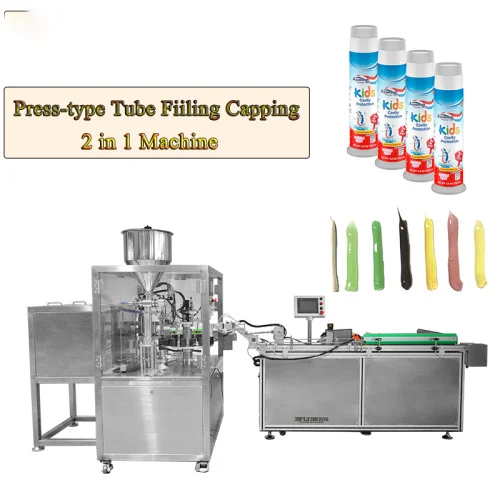
Laminated tubes. The core of the tube side is the automatic press-type tube toothpaste filling and capping two-in-one machine, which fills, seals and presses the cap in one cycle, plus the high-speed automatic tube filler-sealer with steel stamping for the higher-volume contracts. Empty tubes are loaded and oriented, the tube is filled from the bottom, the tail is sealed and code-stamped, and the cap is pressed and torqued. The filler uses a servo piston with a positive shut-off nozzle, because a cream or gel that strings or drips after the shot soils the tube rim and causes a leaky seal — the single most common defect in tube filling.
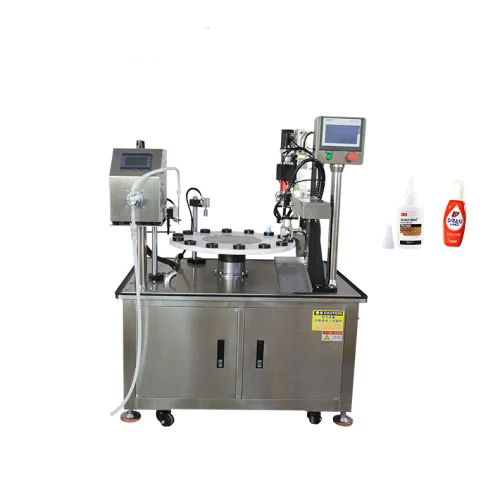
Small bottles and vials. Serums, lotions and thin liquids run on the rotary filling and capping carousel, which indexes bottles through fill, cap placement and torquing in one compact footprint. The rotary layout suits a co-packer because it delivers 100–200 units per minute on a small footprint and changes between bottle diameters with a set of guide stars and chucks rather than a full line rebuild.
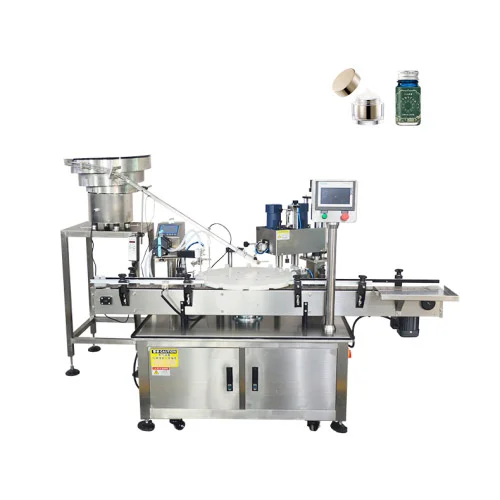
Small jars. Face creams and balms run on the automatic press-on capping machine with cap elevator, fed by a cap-sorter elevator so the operator only needs to keep the hopper filled. Press-on and snap caps are handled without the cross-threading risk that a screw-cap head introduces on a cosmetic jar, and the elevator removes the manual cap placement that otherwise limits the line to a single attentive operator.
The Hard Part Is Viscosity, Not Speed
In personal-care packing the throughput is almost never the limiting factor; the product is. The plant’s portfolio ranges from thin serums that fill like water to thick pastes and wax-based balms that barely flow at room temperature. Each end of that range breaks a different assumption. Thin liquids splash on fill and creep up the bottle neck, so the bottle filler uses a controlled rising-and-diving nozzle and a short foam delay; thick creams and balms are filled with a servo piston and a heated, jacketed hopper so the product stays pourable and the shot stays accurate without air pockets. The servo piston dose is programmed per product rather than set by a fixed stroke, which is how the line holds roughly ±0.5% across products that differ by an order of magnitude in viscosity.
The tube tail is the second place viscosity meets the machine. A cream on the rim of a laminate tube will not seal, so the shut-off nozzle has to finish cleanly before the tube moves to the sealing station, and the hot-air or seal-jaw temperature has to be matched to the laminate layer. This is the same temperature–pressure–dwell logic that governs any heat-sealed pack, and it is why the customer’s maintenance team also works through the flow wrapper troubleshooting guide for seal leaks, film jams and registration when the downstream bundling wrapper starts to fail — a leaking tube-tail and a leaking flow-wrap end seal are usually the same three variables in different clothing.
Changeover and Change-Parts Strategy
The economics of contract packing live in the changeover. A line that takes three hours to change formats cannot take short jobs, so the layout was designed around a documented tooling set rather than ad-hoc adjustment.
| Format | Container change | Typical changeover | Key tooling |
|---|---|---|---|
| Laminate tube | Tube diameter and length | 35–50 min | Fill nozzle, seal jaws, cap chuck |
| Small bottle | Diameter and height | 25–40 min | Guide stars, chucks, nozzle |
| Small jar | Jar width and cap style | 20–35 min | Cap-sorter change, press head |
| Product change | Viscosity or flavor | Wash plus recipe | Hopper wash, piston recipe |
Every change part is numbered and stored on a board by the line, and the fill volumes, nozzle dive depth, cap torque and seal temperatures are held as recipes, so a changeover restores a validated setting rather than relying on the operator’s memory. The cap elevator and sorter are the parts that make the press-on capping machine the high-speed automatic bottle capping machine concept work in a mixed-format hall: a single operator can tend both the bottle and jar stations because cap placement is no longer manual.
Hygiene, Allergens and Halal
A personal-care co-packer handles fragranced products for many brands, and cross-contamination of a scent or an ingredient is a rejected order rather than a minor defect. The product-contact parts on the filling heads are quick-release stainless steel, the hoppers are jacketed for hot wash and drain, and the line is on a documented clean-down between allergens and strong fragrances, with a rinse-verification sample retained for the customer. The halal requirement applies to the process as well as the formula: the same equipment is cleaned and verified between non-compatible products, and the material declarations for the seals, gaskets and lubricants are kept in the quality file. The customer’s export customers also asked for European compliance, so the machines were ordered with the documentation described in the CE certification update for the servo piston filling platform — the Declaration of Conformity, risk assessment and EN 60204-1 electrical file — because a line that may re-enter the EU has to be compliant on arrival rather than retrofitted in Dubai.
Commissioning and the First Quarter
The first weeks were spent building the recipe library, not pushing speed. Each product was run for a fill-weight study, a leak test on the tube tail and a cap-torque check, and the values were recorded before the job was handed to the customer’s operators. The two lessons that came out of the study were the usual ones for this type of work: the tube-tail rejects were eliminated by tightening the no-drip nozzle timing rather than by increasing seal temperature, and the bottle-line start-up waste was cut by phasing the carousel start so the first index never fills an empty pocket. By the end of the first quarter the plant was taking on short-run promotional jobs it had previously declined, because the changeover time had moved them from loss-making to margin-positive.
Validation, Spares and the Secondary-Packaging Step
A multi-format line needs a different maintenance plan from a single-purpose machine. The customer’s validation file holds a filled-weight and leak record per product rather than one blanket sign-off, because a tube of toothpaste and a bottle of serum are validated against different targets; each new recipe is run through the fill-weight study, a tube-tail or cap leak test and a code check before production is released. The spares package is built around the shared components rather than each station: common sealing elements for the tube tails, the cap-sort and elevator wear parts, a set of nozzles and the fill-head gaskets, and the electrical and sensor items that a maintenance team cannot fabricate. Keeping a validated set of nozzles and change parts per format is what keeps a changeover from turning into a three-hour tuning exercise.
After filling, capping and coding, the finished packs are collated into cartons and promotional bundles, and the plant’s bundling area uses a flow wrapper for the multipack and gift-set jobs the brands run around the holiday season. That secondary wrapper is the point where a filled tube or bottle meets a heat-sealed film again, and the customer reports that the same disciplined approach — measuring actual temperature, checking pressure, changing one variable at a time — keeps the multipack seam reliable. The facility also keeps the bundling area within its halal hygiene zone, so the packaging does not become the one place where two products’ lots get mixed.
Why the Customer Chose This Arrangement
The contract manufacturer had initially quoted three separate machines from three suppliers, then abandoned the plan when the wiring, spares and operator training could not be reconciled. Buying the stations as one matched set gave the plant a single controls language, a single change-part numbering system and a single documentation pack, and it made the CE and food-contact files consistent across the whole installation for export orders. The trade-off the customer accepted was that none of the individual stations is the fastest possible machine on its own — the value is in the ability to move between formats and markets, not in the peak speed of a single run. That is the correct choice for a co-packer and the wrong choice for a brand that runs one product at full capacity; the two buyers should never be sold the same solution.
Frequently Asked Questions
Can one line really handle tubes, bottles and jars?
Yes, but as a set of matched stations with shared change parts and recipes rather than a single universal machine. Tubes use the tube filler-sealer, small bottles use the rotary fill-and-cap carousel and jars use the press-on capping station; the common control philosophy and numbered tooling make the formats work in one hall.
What accuracy is realistic on thick creams and toothpaste?
A servo piston with a positive shut-off and a jacketed hopper holds around ±0.5% on viscous creams and pastes. The jacketed hopper keeps the product at a consistent temperature, which matters more than raw piston precision once viscosity becomes the variable.
How are tube tails sealed and coded?
The filled tube is sealed at the tail by hot-air or a matched seal jaw, then the batch and date are stamped into the tail. A clean, drip-free nozzle is essential because product on the rim prevents the seal from bonding — the leading cause of tube leaks.
What makes the biggest difference to contract-packing profitability?
Changeover time. Documented change parts, recipe storage and automatic cap sorting let a short run be changed over in well under an hour, which determines whether promotional and low-volume jobs earn a margin. Speed is secondary for a co-packer.
Can the machines be certified for European re-export?
Yes. The filling and capping stations are ordered with the current CE documentation — Declaration of Conformity, risk assessment and electrical safety and EMC reports — and the relevant material declarations for food and cosmetic contact, which is how the line is able to serve both GCC and European customers.
Specify the Format, Not Just the Machine
For a personal-care co-packer the right purchase is not a single fast machine but a flexible set of format stations, a clean change-part strategy and a controls and documentation package that survives export to the customer’s market. The Dubai line turns the co-packer’s weakness — short, mixed runs — into a schedule it can quote on. Send SunAura Machinery your tube, bottle and jar specifications, your viscosity range, the cap styles and the monthly volume by format, and the engineering team will size the stations, list the change parts and quote the hygiene and certification package to match. Request a line layout and quotation, browse the tube filling and capping equipment in the tube filler-sealer range, and review the available certifications for export orders.