

QINGDAO, China — October 5, 2026 — Five packaging trends are shaping how food manufacturers spend their machinery budgets this year, according to the applications engineering team at SunAura Machinery. The trends are visible across the more than 100 countries the company ships to, and each one maps to a specific equipment decision that food plant buyers are making now — not in five years.
Trend analysis from a machinery manufacturer’s perspective is different from a market report: we see what buyers actually specify, what fails at commissioning, and what gets re-ordered. Based on those patterns, here is what food packaging procurement looks like in 2026, and where the money is going.
Trend 1: Film Down-Gauging With Performance Guarantees
The first trend is film getting thinner — but not cheaper. Food producers under PPWR-style packaging reduction pressure are moving from 50-micron to 38–42-micron shrink and flow wrap film. The catch is that thinner film only works if the machine runs it without misfeeds and seal failures.
That requirement changes the buying conversation. Buyers are no longer asking “what’s the cheapest wrapper” — they ask for a documented film range on the wrapper, including minimum gauge, and a seal-strength guarantee at the target line speed. The machines that win those orders are servo-driven flow wrappers with precise film feeding and heat control, because mechanical drives drift and create wrinkles on thin film at high speed.
The direct connection to equipment: food plants are standardizing on servo-driven horizontal flow wrappers with automatic film tracking, and verifying performance with the actual film they will run — the same way we recommend running a factory acceptance test with your real film, not the supplier’s standard material. For producers evaluating this class of machine, the high-speed horizontal pillow packaging line and the full flow wrapper range are documented on the pillow packaging machines page.

Trend 2: Labor Shortage Pushes End-of-Line Automation
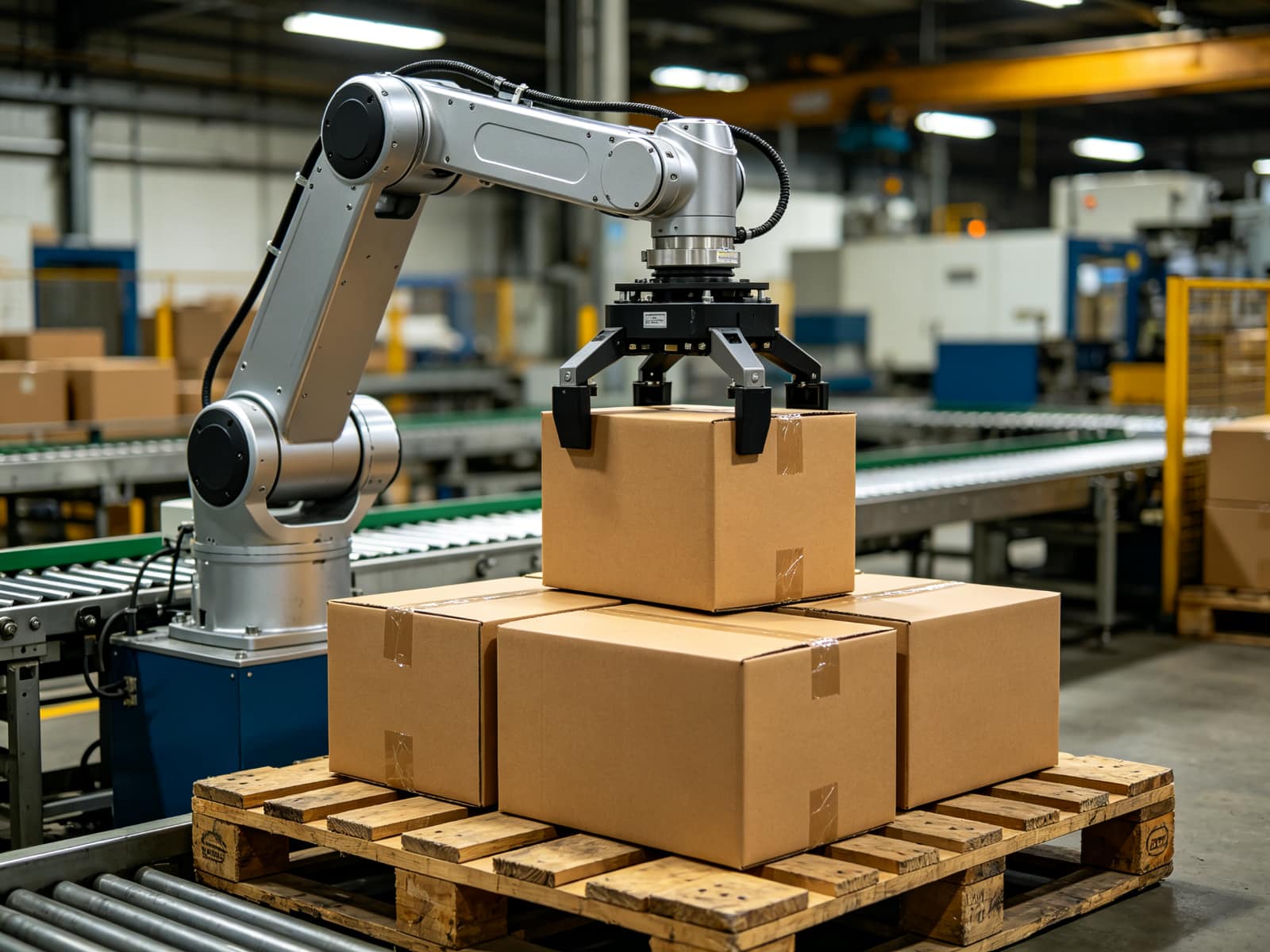
Every market we ship to reports the same problem: the people who used to run case erectors, palletize boxes, and wrap pallets are retiring or moving to jobs that pay better. Food plants are automating the end of the line first, because that is where the most repetitive, physically demanding work sits.
The pattern in 2026 orders: a case erector to form cartons, a robotic or gantry palletizer to stack them, and a pallet wrapping machine to finish the load. The equipment decisions hinge on three numbers — pallet patterns per shift, the number of SKUs, and the stacking height. Food plants running one or two SKUs at high volume choose continuous palletizers; plants with 20+ SKUs choose robotic palletizers with gripper changeover, because changeover time, not stacking speed, becomes the bottleneck.
The palletizer range covers both paths, from low-level case palletizers to four-axis robotic units for mixed-line plants. The typical payback we see on end-of-line automation in food plants is 18–30 months, driven by replacing two to four positions across two shifts.
Trend 3: Changeover Speed Becomes a Purchase Criterion
Multi-SKU production — private label, seasonal SKUs, regional recipes — is spreading through food packaging. A producer running 15 SKUs on one line spends its real cost in changeover downtime, not in line speed. Two plants can have identical machines; the one with faster changeover wins on cost per unit.
The buying behavior has shifted accordingly. In 2026, food buyers increasingly ask for documented changeover procedures and times in the proposal — format change, film roll change, and code date change included. Servo-driven machines with recipe memory answer this requirement: the operator recalls a recipe and the machine sets the format automatically. Mechanical machines require physical change parts and skilled setup, which is why the comparison in our servo-driven vs mechanical packaging machine comparison shows changeover time as one of the largest cost differences over a machine’s life.
For line builders, the practical advice is to standardize changeover language in the RFQ: require suppliers to quote format change time with two named SKUs, verified at the FAT with those SKUs’ formats. It converts a marketing claim into a testable number.
Trend 4: In-Line Quality Inspection Moves to Vision
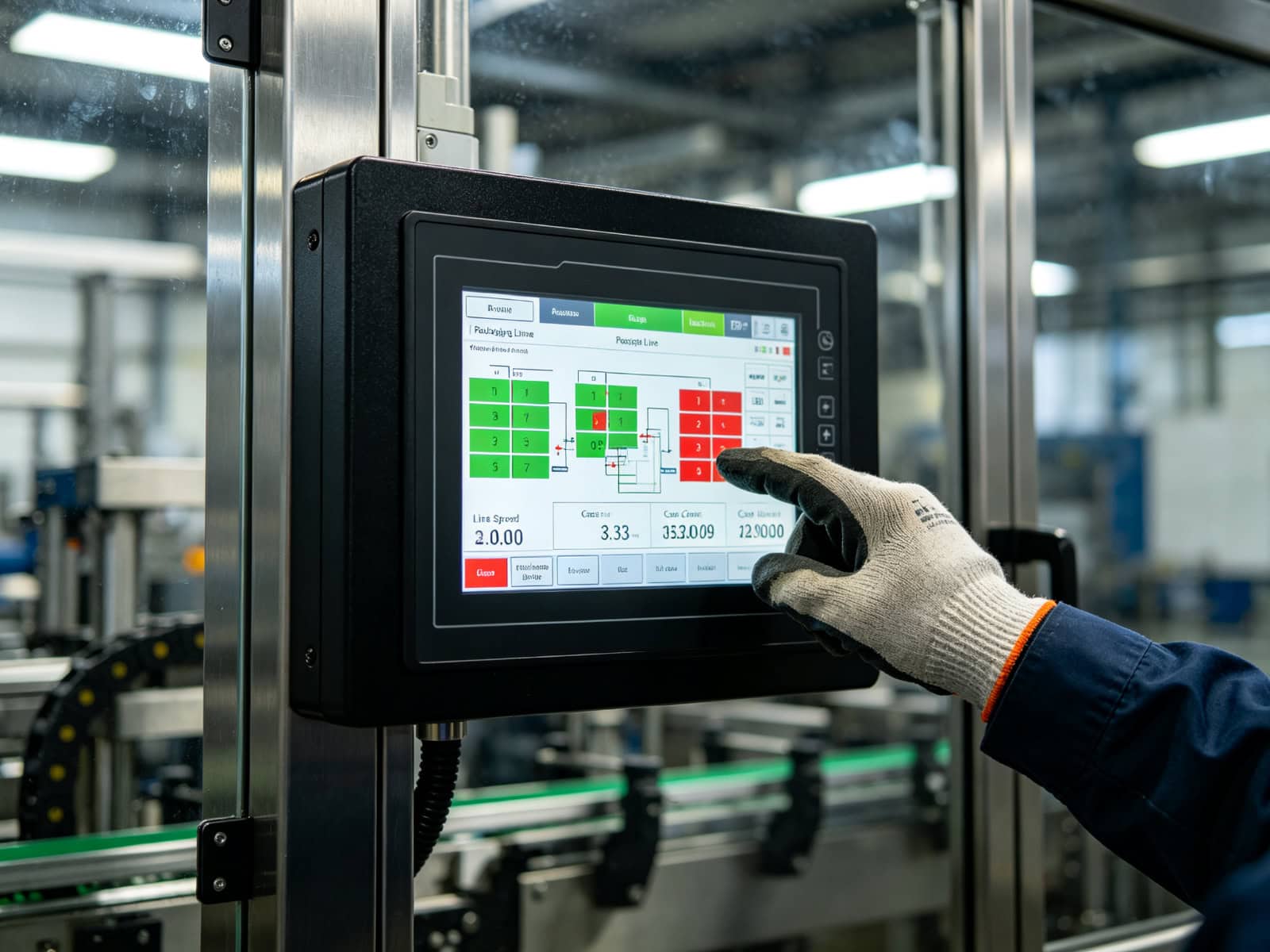
Checkweighers remain the workhorse, but food plants are adding vision inspection — seal integrity, label position, fill level, and foreign material detection — directly on the line. The driver is retailer chargebacks: a mislabeled or underweight case reaching a distribution center triggers a fee that can exceed the case’s margin.
Vision systems are no longer a premium add-on. They are becoming standard on new food packaging lines, particularly for products with legal average-fill requirements. The equipment decision is about placement and integration: the vision station needs to sit at a point where rejects can be diverted cleanly, which usually means before the case packing station. Buying the machine and the vision system as one integrated line avoids the interface problems that come from bolting a third-party camera onto a wrapper that wasn’t designed for it.
Food plants can see how integrated lines handle this in the food & beverage packaging line solutions section, which shows complete lines from primary packaging through case packing and palletizing.
Trend 5: Equipment Suppliers Must Prove Compliance
The fifth trend is not about the packaging itself — it is about who is allowed to sell the machine. Exporting food packaging equipment now requires documented CE certification, and increasingly ISO 9001 quality management and factory audit evidence, because the buyer’s own food-safety certification (BRC, IFS, FSSC 22000) requires audited suppliers.
Food plants are adding supplier qualification to the RFQ: they ask for the CE declaration, the factory’s ISO 9001 certificate, and — for larger projects — an independent factory audit before the purchase order. This is a qualification gate that small or unregistered workshops cannot pass, and it is shifting business to manufacturers with formal quality systems.
This is why SunAura Machinery recently completed a TUV Rheinland factory audit for ISO 9001 and CE compliance — the audit evidence is now part of every proposal for food and pharma packaging projects. Buyers should ask for the same proof from every supplier on their shortlist, and verify the certificates’ validity dates rather than accepting an undated scan.
What This Means for the 2026 Machinery Budget
Read together, the five trends point to a consistent equipment strategy for food plants:
| Trend | Equipment Implication | Budget Priority |
|---|---|---|
| Film down-gauging | Servo flow wrappers with film tracking | Primary packaging machines |
| Labor shortage | Case erectors, palletizers, wrappers | End-of-line automation |
| Multi-SKU changeover | Recipe-driven servo machines | Replace mechanical machines |
| Vision inspection | Integrated line, not retrofits | New line builds |
| Supplier compliance | CE + ISO 9001 + audit evidence | Supplier shortlist gate |
For a food plant planning a single machine upgrade, the highest-return move in 2026 is usually the end-of-line automation — the case erector, palletizer, and wrapper combination — because it converts direct labor into machine hours with a verifiable payback. For a plant planning a new line, the winning configuration pairs servo primary packaging with an integrated vision station and end-of-line automation, all from one supplier who can document compliance and changeover performance.
A 90-Day Action Plan for Applying These Trends
Turning trends into procurement decisions is easier when the evaluation is structured. SunAura’s engineering team uses a three-phase plan with food plant buyers, and it works for plants of any size:
Days 1–30: baseline your current line. Measure what the line actually does today: shift throughput, changeover time between your two largest SKUs, film gauge and cost per meter, case throughput at the end of line, and the monthly chargeback or damage claims from retailers. These numbers become the before-baseline for every payback calculation. Most plants find this data already exists in shift reports and finance records — it just needs to be pulled together.
Days 31–60: shortlist on documents, not brochures. Send the same RFQ to three suppliers with four named requirements: documented changeover time between two named SKUs, a film range covering your target gauge, CE declaration matching the machine model, and current ISO 9001 certificate. Rank the responses on the documents, then invite the top two for the FAT. Suppliers who cannot answer all four in writing remove themselves from the list.
Days 61–90: verify at the factory acceptance test. The FAT should run your film, your cartons, and your SKU formats — with your baseline numbers as the acceptance criteria. Measure changeover time with a stopwatch, run the thin film at line speed, and check the seal strength on your product. A supplier who refuses to run your materials at the FAT is a signal that the machine will not meet your numbers in production.
Plants that follow this sequence report two outcomes: the shortlist narrows to suppliers who can document performance, and the machines that arrive run at the quoted numbers from the first week — because the numbers were verified before the order, not discovered after installation.
Frequently Asked Questions
Are these trends the same for small food producers?
Partly. Film down-gauging, compliance evidence, and changeover speed matter at every scale — a small producer faces the same film cost and the same retailer audits. Labor-driven end-of-line automation is more relevant above roughly 1,000 cases per day; below that volume, semi-automatic case erectors and manual palletizing with a semi-automatic wrapper usually justify the investment better. The scale threshold is one of the first questions SunAura asks before recommending a configuration.
Which of these trends is being driven by regulation?
Film down-gauging is the one most directly tied to regulation — packaging reduction targets under extended producer responsibility rules, and the PPWR direction in Europe. Compliance evidence (CE, ISO 9001) is also regulatory in origin, because food-safety certification cascades from food law to the machinery suppliers. The other three trends — labor, changeover, vision — are driven by economics rather than regulation.
How do I know if my plant needs a robotic or a conventional palletizer?
Count the SKUs. One or two SKUs at high volume: a conventional continuous palletizer is faster and cheaper. More than 20 SKUs, or frequent pattern changes: a robotic palletizer with tooling changeover wins because changeover time is the true bottleneck. Between 3 and 20 SKUs, the decision depends on pattern count and shift structure — worth a direct conversation with the equipment supplier with your SKU list in hand.
Should vision inspection be bought with the line or added later?
Buy it with the line. The reject divert needs to be engineered into the conveyor layout, and the camera position depends on the machine’s discharge geometry. Adding a vision system to an existing line later is possible but always involves conveyor rework and often a slower line during installation. On a new line, the incremental cost is small and the integration risk is far lower.
How should a buyer verify a supplier’s compliance claims?
Ask for three documents in writing: the CE declaration of conformity naming the machine model, the ISO 9001 certificate with its validity dates, and an audit report or certificate from an independent body if the project is large. Check that the CE declaration covers the machine model you are buying — not a generic statement — and that the certificates are current. Any supplier that hesitates on these documents should be dropped from the shortlist.
Planning Your Investment
SunAura Machinery builds and ships complete food packaging lines — primary wrapping, filling, case erecting, palletizing, and wrapping — with CE certification, ISO 9001 quality management, and factory audit evidence included in the proposal package. To review how the 2026 trends apply to your product range, line speed, and SKU count, contact SunAura Machinery with your production profile. Complete line examples are also documented in the packaging lines section and the industry solutions pages.
About SunAura Machinery
SunAura Machinery is a packaging equipment manufacturer based in Qingdao, China, exporting complete lines and individual machines to more than 100 countries. The company’s range covers pillow wrapping, liquid filling, case erecting, carton sealing, palletizing, and pallet wrapping equipment, all CE certified.
Editorial note: Trend observations reflect SunAura’s installation and order data as of October 2026. Market conditions vary by region.