Aseptic vs Hot-Fill vs ESL vs Retort: Choosing a Shelf-Stable Filling Process
You have a product that needs to sit on a shelf without refrigeration, and somewhere in the feasibility work the same question keeps coming back: do we hot-fill, run an aseptic line, aim for an extended-shelf-life ultra-clean build, or sterilize the sealed container in a retort? The four routes all end at a shelf-stable or long-life pack, but they spend the heat budget in different places and pull the capital, the container choice and even the recipe in different directions. Pick the process before the package, because getting this backwards is how a brand ends up with a line that cannot run the bottle it has already tooled.
At SunAura Machinery we specify filling and capping lines for beverage, dairy, sauce and ready-meal producers, and the honest starting point is that there is no universally superior process. There is only the process that matches your acidity, your volume, your shelf-life target and the container you want on the shelf. This guide sets out how each route actually works, where it earns its keep, where it is the wrong buy, and a table you can use to pressure-test a supplier’s recommendation.
The One Variable That Sorts the Whole Decision: Acidity
Before comparing machines, settle the pH of the formulation. The regulatory and microbial world divides sharply at pH 4.6. Above that line you are in low-acid territory, where Clostridium botulinum and other spore-formers have to be destroyed under a fully controlled commercial-sterility regime, which in practice means either aseptic processing or in-container retort. Below pH 4.6 you are high-acid or acidified, and the less heat-resistant spoilage organisms can be handled by hot-fill-hold or by an ultra-clean ESL line. Many fruit juices, teas, sports drinks and acid sauces sit naturally under 4.6; milk, plant-based beverages, soups, broths, low-acid vegetables and most ready meals sit above it.
This is why a supplier who recommends hot-fill without first asking for your pH is a concern. Hot-fill is fundamentally a high-acid technology. It can be made to work on acidified products, but it is not a legitimate route for an ambient low-acid beverage, and forcing it there creates a real food-safety problem rather than a cost saving. Get the measured pH and the worst-case pH across the production run on paper first, because every downstream decision hangs off it.
Hot-Fill: The Product Sterilizes the Bottle
Hot-fill is the most straightforward of the thermal routes. The product is heated, typically to somewhere in the region of 85–96 °C, and filled into the container at that temperature. The bottle is held hot for a short dwell, often around 15–30 seconds, and then inverted or capped and tipped so the hot product contacts and sanitizes the headspace and the underside of the closure. As the sealed pack cools, a partial vacuum forms inside, which doubles as a useful integrity indicator: a properly sealed hot-filled bottle pulls in slightly, while a leaker does not. The product itself is the sterilizing agent, applied in a single thermal pass, with no sterile room.
The strengths are real. There is no cleanroom to validate, the equipment is mid-range in capital, and a correctly run hot-fill line delivers an ambient shelf life commonly quoted in the range of 12–18 months for high-acid drinks. The pack is genuinely shelf-stable and does not depend on a cold chain. The limitations are equally clear. The container must survive the heat, so you need heat-set PET, glass or HDPE rather than an ordinary lightweight PET bottle, and under-engineered PET can suffer the vacuum-panel collapse that few brochures mention. The heat also dulls some color and reduces heat-sensitive vitamins, and the process is not suitable for carbonated drinks, because carbon dioxide comes out of solution as the product is heated.
Aseptic: Sterilize Everything Separately, Combine in a Sterile Zone
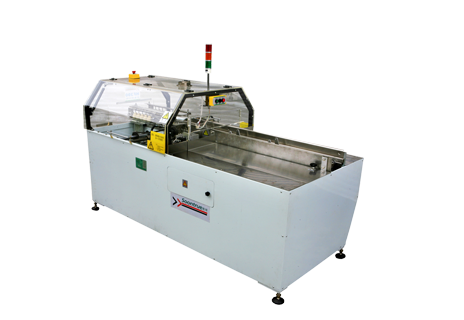
Aseptic processing is the most technically sophisticated route and the one that unlocks ambient low-acid beverages without retort flavor. The product is sterilized separately, almost always by an ultra-high-temperature step — on the order of 135–150 °C for just a few seconds — and then rapidly cooled. The packaging and the closure are sterilized separately, commonly using hydrogen peroxide or peracetic acid combined with heat, and the sterile product is filled into the sterile pack inside a sealed filling zone kept under positive HEPA-filtered pressure. The finished package never sees the high process heat, because that heat was applied and removed before filling.
The payoff is product quality. Because the thermal exposure is measured in seconds rather than minutes, aseptic lines retain far more of the fresh flavor, color and heat-sensitive vitamins, and they work across both high-acid and low-acid formulations. Ambient shelf life is typically quoted around 6–12 months and can extend beyond 18 months in high-barrier packaging; the limiting factor is usually gradual oxygen and light ingress through the pack rather than microbial growth. The price is capital and complexity. A complete aseptic system — UHT treatment, sterile holding, aseptic filler, clean-in-place and the validated sterile enclosure — sits at the top of the cost range, and the changeover and re-validation between runs are longer and more demanding than on a conventional filler.
Two practical details matter during procurement. First, standard aseptic fillers are built for homogeneous liquids; if your product contains identifiable fruit pieces or particulates, you need a particulate-capable filler that can handle chunks, which costs noticeably more and is offered by fewer suppliers. Second, the chemistry has to be right: the package must survive the chemical sterilization without degrading, and not every material qualifies. Ask how the sterile-zone integrity is monitored and how a failed sterile run is detected and quarantined, not just how the line runs on a good day.
ESL: The Middle Ground Between Refrigerated and Aseptic
Extended-shelf-life lines occupy the space between a standard refrigerated cold-fill and a fully aseptic system. An ESL line uses ultra-clean rather than fully aseptic handling: the product is typically pasteurized or given a higher-temperature treatment, the filler is built to a stringent hygiene standard with sanitized surfaces and controlled air, and the filled pack is kept refrigerated. The result is a refrigerated product that lasts considerably longer than a conventionally filled one — often several weeks rather than a few days — without the full capital and validation burden of a true aseptic enclosure.
ESL is the right answer when you have a cold chain you trust and want to extend distribution reach and reduce waste, but it is not shelf-stable. It still depends on refrigeration, and it should not be marketed or handled as an ambient product. The temptation is to treat an ultra-clean line as aseptic on paper to save the capital, but the two are validated to different standards, and the distinction matters for both safety and shelf-life claims. Treat ESL as a deliberate refrigerated choice rather than a discount aseptic.
Retort: Fill, Seal, Then Sterilize the Whole Pack
Retort processing inverts the aseptic sequence. The product is filled into its final container and the pack is sealed, and then the entire sealed package is heated inside a pressure vessel — the retort or autoclave — typically to temperatures around 116–121 °C and held there for a period that can run from tens of minutes to well over an hour depending on the product and pack geometry. The food is effectively cooked inside its own packaging, and both the product and the container are sterilized together in one operation.
Retort is the most accessible way into ambient low-acid food. The entry capital is far lower than an aseptic system, small minimum runs are practical, and the shelf life is the longest of the four — properly processed retorted goods can run to multiple years, which is why military and emergency rations use the process. It is also forgiving of slow and unpredictable export distribution where reliable refrigeration simply does not exist. The cost is the heat load on the product. The extended cooking creates the familiar cooked or caramelized note, reduces vitamins and softens particulates, which is a problem for a fresh-tasting beverage but an actual benefit for stews, beans, chilis and braised ready meals that improve with slow cooking. Retort-compatible packaging — metal cans, multi-layer retort pouches and PP trays — must be specified to withstand the pressure and temperature, and processing has to account for how slowly heat reaches the center of a dense or large pack.
Selection Table: The Four Processes Side by Side
| Dimension | Hot-fill | Aseptic | ESL (ultra-clean) | Retort |
|---|---|---|---|---|
| Acidity window | High-acid, pH below 4.6 | Any, including low-acid | Mostly high-acid; refrigerated | Any, including low-acid |
| How the heat is applied | Hot product sterilizes the bottle | UHT seconds, then cooled before fill | Pasteurization plus ultra-clean fill | Sealed pack sterilized in autoclave |
| Typical fill temperature | Roughly 85–96 °C | Ambient, sterile zone; UHT upstream | Cold, ultra-clean | Ambient fill, then ~116–121 °C in retort |
| Container requirements | Heat-set PET, glass, HDPE | Packaging that survives sterilization | Standard to hygienic packs | Retort-rated cans, pouches, trays |
| Shelf life and storage | ~12–18 months ambient | ~6–18 months ambient | Weeks, refrigerated | Up to multiple years ambient |
| Relative capital cost | Mid | Highest | Mid | Lowest entry for low-acid |
| Changeover and validation | Relatively short | Long; sterile re-validation | Moderate | Moderate; cycle-based |
| Product character | Some heat effect on vitamins | Closest to fresh flavor | Fresh, but refrigerated | Cooked note; tenderized particulates |
| Best-fit products | Juices, teas, acid drinks, sauces | Milk, plant drinks, export low-acid beverages | Refrigerated premium and cold-chain drinks | Soups, stews, beans, ready meals, rations |
When Not to Choose Each Process
A trustworthy supplier will name the wrong-fit cases, and you should ask for them directly. Do not choose hot-fill for an ambient low-acid product, for a carbonated drink, or with a lightweight ordinary PET bottle that cannot take the heat and the vacuum. Do not choose a full aseptic line if your realistic volume is low and the capital will never amortize; at small or uncertain volumes, retort or a co-packing arrangement is the disciplined route, and many successful brands start there and move to aseptic only once volume justifies it. Do not choose ESL if you have no reliable cold chain or intend to sell the product as ambient, because the line is not validated for that. And do not choose retort for a beverage whose entire promise is fresh, delicate flavor, or for a product with crisp particulates that the long cook will turn soft, unless the cooked character is genuinely part of the proposition.
There is also a reverse case worth naming. If your portfolio spans both fresh beverages and cooked meals, the answer is often not one compromise process but two dedicated routes, with the retort handling the slow-cooked SKUs and the aseptic line handling the drinks. Forcing a single process across genuinely different product families is a false economy that lowers quality in both. The same logic applies to a brand testing a new category: run it through a retort co-packer first to prove the market, and only commit to aseptic capital once demand is real.
Cost, Volume and the Point Where Aseptic Becomes Cheaper
The capital gap is the single most common reason a process is mis-specified. A complete aseptic system can cost several times as much as a retort installation, and it requires a meaningful minimum run to be economic. The per-unit economics, however, reverse at scale: aseptic lines run at very high speeds and, once the capital is sunk, tend to have a lower processing cost per unit above a high annual volume, while retort remains cheaper to enter and far more practical at small batch sizes. Do not take a single quoted machine price as the decision; model the realistic annual volume, the changeover frequency, the labor and the cost of the cold chain, and compare the total cost over the life of the line.
The process also constrains the downstream equipment, which is why the line has to be specified as one system rather than as separate purchases. The filler has to be matched to the liquid filling machines and the dosing technology suited to the viscosity, and the filled bottle then runs into the high-speed bottle capping machine that applies the closure with controlled torque. For products that need a tamper-evident hermetic seal over the cap, the line integrates induction sealing machines, and the finished pack carries the brand through labeling machines rated for the container and the storage conditions. A process choice that ignores how these stations connect will surface as jams and rework long after installation.
Frequently Asked Questions
Can I hot-fill a low-acid beverage to avoid buying an aseptic line?
No, not for an ambient product. Hot-fill is a high-acid process and does not deliver the commercial sterility a low-acid ambient beverage requires. An ambient low-acid product needs a validated aseptic process or in-container retort. The measured pH, kept below 4.6 if the formulation genuinely allows it, is the only basis for a hot-fill route.
Why does aseptic taste closer to fresh than retort?
Because of the heat duration. Aseptic applies ultra-high temperature for only a few seconds and cools the product before it reaches the pack, while retort holds the sealed product at high temperature for many minutes, cooking it in the container. The short exposure preserves volatile flavor, color and vitamins, which is why beverages and dairy generally favor aseptic and slow-cooked foods favor retort.
Is an ESL line the same as an aseptic line at a lower price?
No. ESL uses ultra-clean handling and still requires refrigeration, whereas aseptic is validated to full sterility and produces an ambient product. They are built and validated to different standards. Treat ESL as a refrigerated extension of shelf life, not a budget route to an ambient shelf-stable claim.
Should a new brand start with retort or commit to aseptic?
For an unproven product at low volume, retort — often through a co-packer — is the lower-risk entry because it needs little minimum volume and modest capital. Once annual volume is established and the fresh-flavor profile justifies it, the brand can move to aseptic. Committing aseptic capital before demand is proven is the higher-risk path.
Summary: Match the Process to Acidity, Volume and Shelf Life
The decision is less mysterious than the brochures make it sound. Start with pH: below 4.6, hot-fill gives a proven ambient line with mid-range capital, while an ultra-clean ESL line extends refrigerated life when a cold chain is available. For ambient low-acid products, choose between aseptic and retort: aseptic when volume is high and fresh flavor, color and vitamins are brand-critical, and retort when you need the lowest entry cost, the longest shelf life and a cooked, ready-meal character that benefits from slow heat. Do not buy a process for the volume you hope to reach; buy it for the volume you can underwrite, and use retort or co-packing as the disciplined bridge until aseptic scale is real.
If you are planning a shelf-stable or long-life line and want the process specified against your real pH, volume and container rather than a generic proposal, talk to our applications team. The container format itself is the next decision after the process, and our companion guide explains why a cold-brew brand chose aluminum cans over glass and PET; for the choice between a rigid thermoformed tray and a flexible bag, see why a snack producer kept flow wrapping over thermoforming. Send us your formulation, target shelf life and expected volume and we will recommend the process, map the line and quote the configuration — contact SunAura Machinery to start the review.