
October 20, 2026 | by Frank, SunAura Machinery Export Projects
DA NANG, Vietnam — SunAura Machinery has commissioned an automated vacuum-packaging area for a frozen seafood exporter in central Vietnam that ships IQF shrimp and white-fish fillets to the European Union, Japan and the United States. The processor had outgrown a row of single-chamber vacuum machines that two operators worked by hand, a layout that limited the blast-freezer loading rhythm and left the line dependent on the speed of the person closing the lid. The upgrade pairs an automatic weighing station for IQF shrimp with a high-throughput double-chamber vacuum section for fillets, a continuous band sealer for stand-up retail pouches, and stainless conveying to carry packs through to metal detection and the freezer. Vacuum-pack output rose from roughly 220 to about 480 packs per hour across two shifts, and the proportion of bags returned by the blast freezer for a weak or broken seal fell from about 3.5% to under 0.5%.
The Two Products That Drove the Design
The plant packs two quite different products, and forcing them through one machine was the source of the original problem. IQF shrimp are frozen individual pieces that must be portioned by weight into a retail pouch, then vacuumed or gas-flushed and sealed; the priority is accurate weight and a cycle that keeps the shrimp loose rather than clumped into a block. White-fish fillets, by contrast, are vacuum-packed in flat, layered bags to remove all oxygen and prevent freezer burn over a long export sea journey; the priority here is a high, consistent vacuum and a seal that survives freezing and handling. The shrimp needed weighing and a slightly gentle cycle; the fillets needed maximum vacuum and high throughput. The line was therefore split into two parallel streams rather than one compromise machine.
The shrimp stream runs through an automatic weighing station, the fillet stream through a chamber section, and both streams converge on the same inspection and freezing conveyor. This kind of split layout is common in protein plants that pack both retail and bulk formats, and it is the correct way to handle products that differ in form and packing method.
What the Line Includes
- Weighing for IQF shrimp: an 18-head multihead weigher portions the frozen shrimp by weight, combining the buckets that most nearly hit the target so giveaway is minimized and the shrimp stay loose. The discharge drops into the pouch on a timed cycle rather than a free fall.
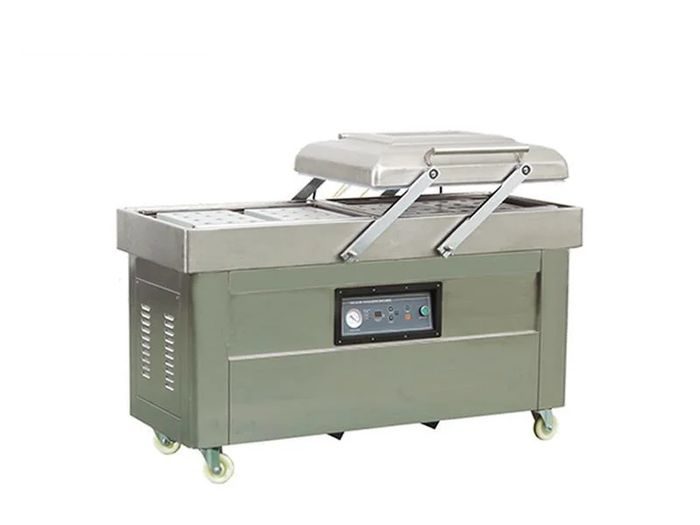
- Double-chamber vacuum for fillets: a high-throughput vacuum packaging machine section with a double-chamber configuration, where one chamber evacuates while the other is loaded, removing the idle time that limited the original single-chamber row. A large-chamber single machine handles whole fish and bulk cuts.
- Continuous sealing for retail pouches: a continuous band sealer closes the stand-up pouches that do not require a chamber vacuum, giving a consistent, dated seam at production speed.
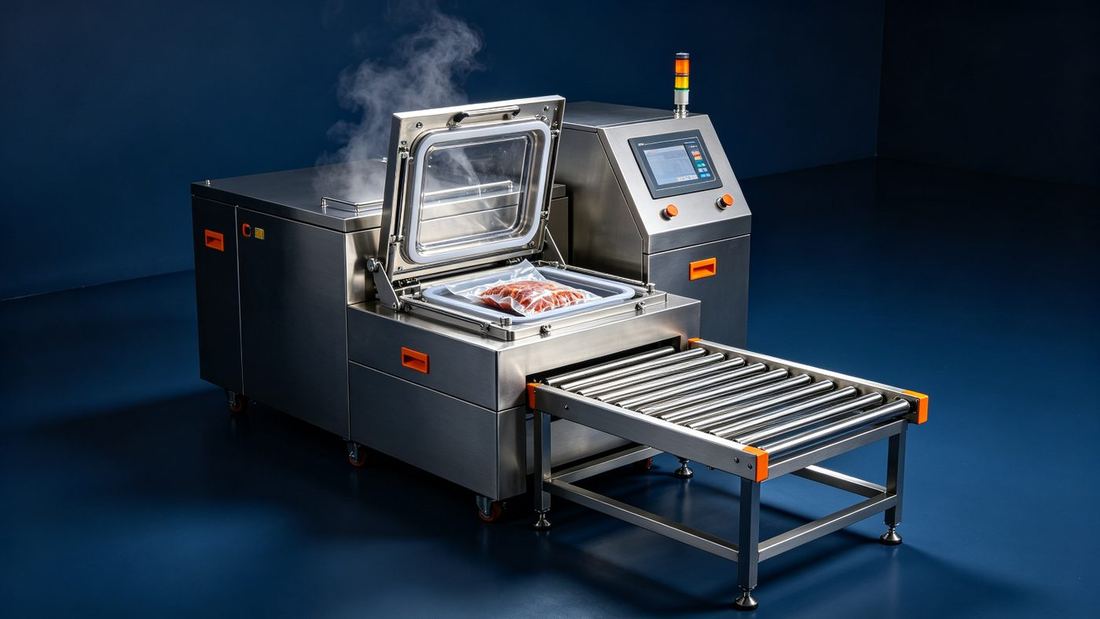
- Stainless conveying: wash-down conveyor sections carry both streams through metal detection, label and weight check, and into the blast-freezer staging area.
Seal Integrity in a Wet, Cold Environment
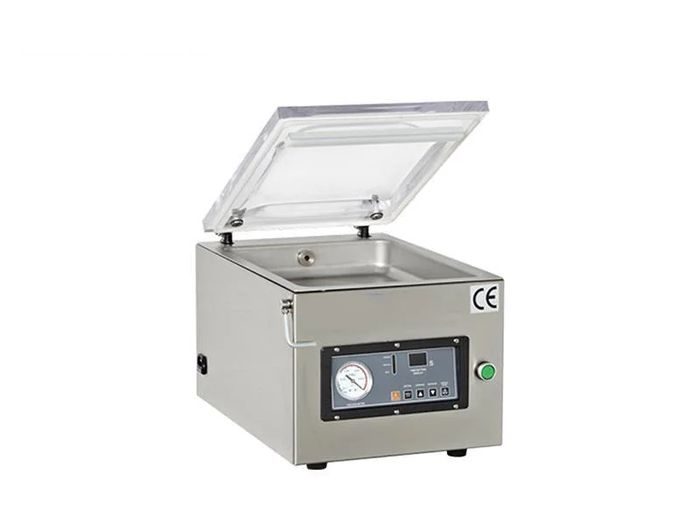
Frozen seafood exposes the single most common failure in vacuum packing: the seal. A pouch that carries a trace of water, brine or fish protein at the seal line will not close cleanly, and the weak seam either fails in the blast freezer or leaks slowly during storage. The original line accepted this as a background loss; the new line was designed to prevent it. The chamber machines verify the vacuum level on each cycle and seal only at the programmed point, the sealing bars were kept clear of product by a loading template that holds the fillet away from the seam, and the embossed channel bags were specified in a PA/PE composite suited to freezing. Operators were trained to wipe the seal line and to reject a bag whose seam was contaminated rather than trying to pass it.
The pumps are the other critical item. A seafood chamber runs cold, wet products all day, and moisture drawn into the pump degrades the oil and shortens pump life. The line used the machines’ lower-vacuum settings where a small amount of liquid was present, kept bag headspace, and specified a pump arrangement suited to the cold environment; the maintenance routine is a weekly oil check and a pump-oil change on a fixed interval rather than waiting for performance to fall. In a wash-down plant, the 304 stainless construction is not a marketing feature but a requirement, because the area is hosed and sanitized every shift.
Numbers Recorded at Commissioning
| Measure | Manual single-chamber row | Automated vacuum area |
|---|---|---|
| Vacuum-pack output (two streams) | ~220 packs/h | ~480 packs/h |
| Bags rejected for weak seal | ~3.5% | <0.5% |
| Operators across packing | 6 | 3 |
| Shrimp weight giveaway | Hand-weighed, variable | Multihead-combined |
| Freezer loading rhythm | Stalled by sealing | Buffered, continuous |
| Machine body | Mixed | 304 stainless, wash-down |
Why Weighing Before Vacuum Changes the Economics
For the IQF shrimp stream, hand-weighing was both slow and a giveaway cost. Frozen shrimp are sold against a declared net weight, and an operator who errs on the safe side routinely puts an extra piece into each pouch; across an export contract that giveaway is free product. The multihead weigher uses the combination principle: many small weigh buckets are measured at once, and the control system picks the combination that matches the target most closely, so the average overfill is reduced and the line is not slowed by a person at a scale. The timed discharge also matters for frozen pieces, because a long free fall into a rigid pouch bruises and fragments the shrimp; the bucket timing and a short drop keep the product whole and loose, which is a quality requirement in the Japanese market.
Compliance, Traceability and the Export Customer
Seafood exported to the EU and Japan is audited, and the packing line has to produce records as well as bags. The metal detector rejects into a locked bin, the checkweigher logs every pouch, the chamber machines record the vacuum level and cycle, and the continuous band sealer prints a lot code on the seam. The customer’s quality team can therefore trace a rejected pack back to a specific shift, a specific chamber and a bag lot. The bag material and the seal process were validated against the destination market’s food-contact requirements, and the embossed PA/PE pouches were qualified on the machines before volume began rather than being substituted on price. That discipline — qualifying the consumable before the run, not after a failure — is what separates a seafood line that passes its audits from one that spends its season reworking packs.
The Freezer Handoff and What Vacuum Actually Delivers
Vacuum sealing earns its money at the blast freezer, so the line had to be timed to the freezer rather than treated as a standalone packing operation. A sealed fillet that waits on the floor in a warm room loses the quality the vacuum was meant to protect; the conveyor and the freezer staging buffer were therefore arranged to move packs into the blast in continuous, single-layer batches instead of stacking them on carts until a load was ready. The freezer pulls the core temperature down quickly, and the vacuum pack prevents freezer burn and oxidation during the long frozen storage and the sea voyage that follows. For the shrimp, the controlled gas or vacuum level and the loose product meant the packs froze without clumping, which is what allows the retail customer to portion the shrimp straight from the pouch.
It is worth being honest about what vacuum does and does not do. Removing oxygen extends the chilled or frozen shelf life of a protein and prevents freezer burn, but it does not sterilize a product that was already mishandled, and it cannot replace temperature control. The processor therefore kept the upstream cold chain strict, verified seals, and treated the printed best-before date as the output of the whole chain rather than of the machine alone. The operators were also trained to distinguish the three common reject causes that the line throws up: a contaminated seal line, a bag that is not the correct channel film for the freeze cycle, and a vacuum cycle that is interrupted by excess liquid at the pump. Each has a different correction, and the fastest fix is to know which one the machine is reporting rather than simply re-running the bag.
Changeovers, Spares and the First Month
The plant packs a long list of retail weights and several bulk formats, so changeover time was a condition of the project rather than an afterthought. The chamber machines store the cycle parameters — vacuum level, sealing time, gas settings if used — as a recipe per product, so switching from a 400-gram fillet pack to a bulk format is a recipe change and a seal-bar check rather than a manual dial turned by memory. The double-chamber machines share the same spare seal-bar and the same pump parts as the single chambers, which keeps the spare-parts list short and avoids a situation where a different machine on the line needs a part that is not held in the country. The local service partner stocks the sealing elements, pump oil and the usual wear gaskets, the items that account for nearly all unplanned stops in a chamber line.
The first weeks were spent on the things that only real product reveals. The embossed bags from two suppliers sealed slightly differently, so the plant standardized on one qualified film; the chamber loading template was adjusted once the fillet dimensions were measured on the actual catch; and the pump oil interval was shortened for the wet summer run. None of these were machine faults, but each was the difference between a line that holds 0.5% rejects and one that drifts back to a few percent. By the end of the first month the plant was running the vacuum area with three operators across two shifts and feeding the blast freezer continuously, which was the throughput target the original hand-worked layout could never reach.
Questions From the Plant Floor
Chamber vacuum or a continuous band sealer for seafood?
They are not alternatives. Use a chamber vacuum for products that need the air removed and a freezer-stable seal, such as fillets and whole fish. Use a continuous band sealer for pouches that are pre-filled or gas-flushed and need a consistent, dated seam without a chamber. The plant runs both, because the retail stand-up pouch and the flat fillet bag have different requirements.
Single or double chamber?
Single chamber suits smaller batches and large products; a double chamber alternates the cycle between two chambers and lifts throughput by roughly 60–80% because the operator loads one while the other is under vacuum. Above roughly 150 packs per hour, or when the line feeds a freezer on a fixed rhythm, double chamber is the practical choice.
Can a multihead weigher weigh frozen, wet shrimp?
Yes, with the right buckets and timing. Multihead weighers handle frozen and granular products well; the combination logic controls the weight, and the discharge timing is set so the shrimp fall in a short, controlled drop to avoid bruising. The equipment around it must be wash-down and the weigher suited to the cold environment.
How do you stop the seals leaking on wet products?
Keep the seal line dry and clear of product, use an embossed channel bag in a freezer-grade PA/PE composite, verify the vacuum level every cycle, and maintain the pump. Moisture drawn into the pump is the usual long-term failure, so the oil must be checked and changed on schedule.
Planning a Protein or Seafood Packing Area
The principle that made this line work is to match the machine to the product form rather than forcing every pack through one chamber. IQF products are weighed and gently discharged; flat fillets are vacuumed to maximum; retail pouches are continuously sealed; and all streams converge on inspection and freezing via wash-down conveyors. The weighing and discharge logic is covered in detail in the multihead weigher integration guide on discharge timing and line balancing, and the finished packs reach the export dock on the systems described in the report on a powered telescopic conveyor for container loading at a distribution center. To plan a vacuum-packing area, send SunAura Machinery your product forms, pouch sizes, target packs per hour and destination cold chain — request a line layout and quotation.