Why a Dairy Added Vacuum Decay Leak Testing for Sealed Cups: How It Beat Bubble and Pressure Decay Methods
A regional dairy filling yogurt and fermented drinks into pre-sealed plastic cups reached the point where a familiar problem stopped being acceptable. A small but steady stream of product was arriving at retailers with weak or leaking seals, and the returns were not just the cost of the cup. They were rejections on the next delivery, claims against the supplier scorecard, and a quality manager who could not say with confidence whether the leak rate was one in ten thousand or one in a thousand. The line already had a bubble test at the end, but the result depended on an operator watching for a single rising bubble under water. This is the story of how the plant moved to deterministic vacuum decay leak testing, why it beat the methods it replaced, and where the same choice would — and would not — make sense for your line.
At SunAura Machinery we specify inspection and sealing equipment for dairy and food plants, and the honest framing is that leak testing is not a glamorous purchase. It is a control that either gives you a number you can defend or quietly lets defective packs leave the building. The technology choice matters because the various methods do not produce the same kind of evidence, even when they all claim to find leaks.
Why the Bubble Test Was No Longer Enough
The incumbent method on the line was a bubble emission test, sometimes called a bubble immersion or water bath test. A sealed cup is submerged and a vacuum is drawn, and if air escapes through the seal it shows as a stream of bubbles. The principle is easy to understand and the equipment is cheap, which is why it has been used for decades. The problem is the nature of the result. Bubble testing is a probabilistic, subjective method: it depends on a person seeing the right bubble at the right moment, it produces no quantitative measurement, and the result varies with the operator, the lighting, the water condition and how long the test is held. Independent comparisons have found that no standard dye or bubble method reliably identifies every defective pack, and the risk of false calls runs in both directions — a leak missed by a tired inspector, or a good pack flagged because of a loose bubble in the bath.
There is a second, practical drawback. The test is wet and effectively destructive for the tested unit, so it can only be run on a small sample pulled off the line rather than on every pack. That means the quality team is inferring the state of the whole production run from a handful of cups, and a slow intermittent seal defect can sit between the sample points. The dairy’s quality manager could record that the bubble test had passed, but could not quantify the actual leak rate or trend it over time, which made the method difficult to defend in a customer audit.
The Deterministic Alternatives: Pressure Decay and Vacuum Decay
The modern replacement family is deterministic physical testing, where the machine measures a pressure change and converts it into a repeatable number rather than relying on a human eye. Pressure decay is the more general industrial method: a part is pressurized and the instrument watches for a drop in pressure that indicates a leak. It works well on rigid, closed components, but a sealed food cup is a flexible, often headspace-filled object rather than a pressure vessel, and pressurizing it directly is not always practical. This is why the packaging-specific method that fits sealed cups, trays and pouches is vacuum decay, standardized for packages as ASTM F2338.
Vacuum decay inverts the approach. The sealed pack is placed inside a closed test chamber and a controlled vacuum is pulled around it. If the pack leaks, headspace gas — or, for liquid-filled product, vapor from the contents near the defect — escapes into the chamber, and the instrument measures the small rise in pressure, the vacuum loss, over a fixed cycle. A good pack holds a stable reading; a leaking pack produces a measurable decay that the tester compares against a calibrated pass threshold. The whole cycle is dry, nondestructive and fast, and published validation work on ASTM F2338 systems reports a total test time under one minute per package, with the ability to reliably identify laser-drilled defects of roughly five micrometres and larger in rigid and flexible nonporous packs.
Why the Dairy Chose Vacuum Decay Over the Other Options
The choice was not simply “the most sensitive tester available.” It was the method whose evidence and operating character matched the product. Vacuum decay is nondestructive, so tested good packs can return to the line rather than being scrapped, and it is dry, which suits a clean dairy environment with no water bath to maintain. It produces a numeric decay value that can be logged, trended and shown in an audit, and it is recognized under ASTM F2338 and within the USP general chapter on package integrity, which classifies vacuum decay as a deterministic technology alongside pressure decay, mass extraction, high-voltage detection and tracer gas in vacuum mode, while bubble emission and microbial challenge sit in the probabilistic group.
The other deterministic methods each have a niche the dairy did not need. High-voltage leak detection passes an electrical current across a non-conductive pack and is excellent for certain sealed blister and pouch formats, but it requires the product to be conductive and the pack to be clean and dry. Tracer gas testing, often using helium, offers extreme sensitivity but needs the gas to be sealed into the pack and adds consumable cost and complexity. Vacuum decay needed no tracer, no conductive product and no wet process, and it handled the full range of cup sizes with a change of chamber fixture rather than a different machine.
Selection Table: Leak Test Methods Side by Side
| Dimension | Bubble / immersion | Pressure decay | Vacuum decay (ASTM F2338) | Tracer gas / high-voltage |
|---|---|---|---|---|
| Result type | Visual, subjective | Numeric, deterministic | Numeric, deterministic | Numeric, highly sensitive |
| Destructive? | Wet; tested unit scrapped | Usually nondestructive | Dry, nondestructive | Depends on method |
| Best product fit | Simple flexible packs, small samples | Rigid, pressurizable parts | Sealed cups, trays, pouches, rigid packs | Very small leaks, specific formats |
| Typical test time | Manual, operator-paced | Seconds to tens of seconds | Under one minute per pack | Longer; gas or setup needed |
| Data for audit | Pass/fail note only | Logged pressure value | Logged decay value, trendable | Logged quantitative leak rate |
| Running cost | Low equipment, high labour | Low | Low; no consumables | Tracer gas and fixtures add cost |
| Main weakness | Missed defects, false calls | Hard to apply to flexible cups | Needs chamber fixture per size | Complexity and consumable cost |
When Vacuum Decay Is the Right Call — and When It Is Not
Specify vacuum decay when you fill sealed, nonporous cups, trays, pouches or rigid packs and need a dry, nondestructive test that produces a defensible number on every checked unit. It is particularly strong where customers audit quality records, where the cost of a leak in the field is high, and where the same machine has to cover several pack sizes with quick fixture changes. It is the natural upgrade from a bubble bath when the business has outgrown subjective sampling and needs to trend the leak rate rather than simply tick a box.
Do not buy it blindly in two situations. If the product is a genuinely porous or highly breathable pack — certain paper-based or micro-perforated formats — the chamber cannot hold the differential and the method is not applicable, and you should look at headspace or tracer approaches instead. And if you run a very low-volume, single-SKU line with no audit pressure and an acceptable, well-controlled bubble procedure, the deterministic tester may be more capability than the business currently needs; the capital is justified by the risk and the evidence requirements, not by the technology for its own sake. As with any inspection equipment, the worst outcome is buying a tester nobody calibrates or maintains, which produces confident-looking numbers that no longer mean anything.
Evidence, Standards and the EEAT Case
Part of why the dairy could defend the investment is the body of published work behind it. ASTM F2338 is a recognized nondestructive test method for packages, and peer-reviewed validation studies using certified laser-drilled defects have shown vacuum decay reliably identifying packs with holes of about five micrometres and above, with the result repeatable across test sites and operators. The same studies found traditional dye and bubble methods unable to match that reliability, with false positives persisting even after the challenge conditions were adjusted. For sterile and regulated products, regulators have encouraged properly validated physical methods over reliance on microbial testing, which has accelerated the shift toward deterministic equipment across the wider food and pharmaceutical sector.
For a buyer, the practical implication is to ask the supplier for validation evidence rather than a sensitivity claim in a brochure. That means the certified defect sizes used, the false reject and false accept rates on your actual product, the calibration interval and the documented test method. A tester is only as good as its validation, and a number without a traceable threshold is not the control it appears to be.
Cost, Payback and Procurement Risks
The business case rests on avoided cost rather than added output. The dairy measured it against the real consequences of field leaks: rejected deliveries, claims, the administrative burden of handling complaints, and the protection of a brand position built on product arriving intact. Because the test is nondestructive, it does not create scrap on good packs, and because it needs no tracer gas or consumables, the running cost is largely the small energy use and the routine calibration. The capital payback is therefore a function of how few field failures need to be prevented to cover the machine, and for a plant selling into demanding retail accounts that threshold is usually reached quickly.
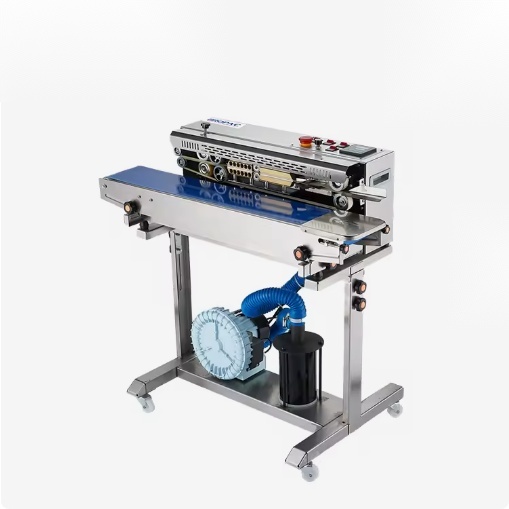
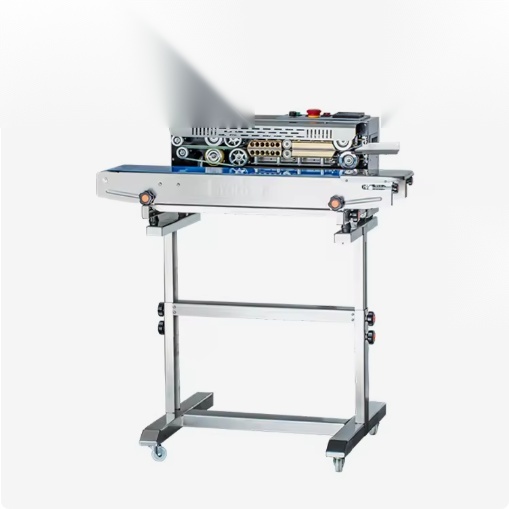
The procurement risks are mostly upstream and integration-related. The tester needs the packs to arrive in a consistent orientation and at a defined pitch, so the conveyors feeding the inspection station and the sealing process itself have to be stable. The seal is created on the continuous band sealing equipment or the form-fill-seal pillow packaging machines upstream, and a drifting seal temperature will show up as a rising reject rate at the tester — which is useful information, but only if the line is designed to act on it. Treat the leak tester as a feedback loop that points back at the sealing process, not as a gate that simply removes bad cups.
Frequently Asked Questions
Is vacuum decay sensitive enough for food cups rather than medical vials?
Yes. While much of the published validation comes from pharmaceutical packs, the same method is well established for food cups, trays and pouches. Real-world sensitivity depends on chamber design and pack volume, so ask for validation on your specific product rather than quoting a generic micrometre figure.
Does nondestructive testing mean I can test every single pack?
Good packs can return to the line because the test is dry and does not damage them, but whether 100 percent testing is practical depends on line speed and chamber cycle. Many plants test every pack at lower speeds or use a validated sampling plan at high speed; the correct approach is set during method development against your throughput.
How is this different from a pressure decay tester?
Pressure decay pressurizes the part itself and watches for a pressure drop, which suits rigid components. Vacuum decay pulls a vacuum around the sealed pack and measures the rise in chamber pressure, which is the practical way to handle flexible, headspace-filled cups and pouches without pressurizing them.
What do I need to maintain and calibrate?
Keep the chamber seals clean, verify the reference or master leak on a schedule, and retain the validation records. A documented calibration routine and a certified reference defect are what keep the numeric threshold defensible over time.
Summary: Trade a Subjective Bath for a Defensible Number
The dairy’s decision came down to the kind of evidence each method produces. Bubble testing is cheap and intuitive but subjective, wet and limited to samples, with a documented history of missed defects and false calls. Pressure decay is deterministic but awkward to apply to flexible sealed cups. Vacuum decay, under ASTM F2338, gives a dry, nondestructive, numeric result in under a minute, with published validation down to roughly five micrometres, and it trends the leak rate in a form an auditor will accept. Choose it for sealed nonporous cups, trays and pouches where field leaks carry real cost; look elsewhere for genuinely porous packs, and do not over-buy it for a low-risk line that does not need the evidence. The point is not to detect leaks for their own sake. It is to stop defective seals quietly eroding a customer relationship.
Sources and Further Reading
- ASTM International, F2338 Standard Test Method for Nondestructive Detection of Leaks in Packages by Vacuum Decay Method.
- USP General Chapter <1207>, Package Integrity Evaluation — Leak Test Technologies, including the deterministic versus probabilistic classification.
- Science.gov topic aggregation, Leak Detection Test, linking peer-reviewed vacuum decay validation and comparison studies against dye and bubble methods.
If you want to move from a bubble bath to a validated leak test, our applications team can size a chamber and build the validation around your real cups and line speed. The same deterministic discipline applies to the robot cell in our guide on robotic end-of-arm tooling, and for lines that flush packs with inert gas, see how a beverage canner chose on-site nitrogen generation. Send us your cup dimensions and current reject data and we will recommend the tester, the fixtures and the calibration plan — contact SunAura Machinery to review the line.