
For food and pharma, yes — bottles collect dust in the hopper. An air rinse station blows debris out before filling.
Can I add a rotary later to a tabletop line?
Yes, if the conveyor spacing and filler infeed are compatible. SunAura designs for future expansion so the upgrade is a swap, not a rebuild.
Summary
Rotary for high-speed round rigid bottles; linear for medium-speed multi-SKU; tabletop for low volume and startups. Match the unscrambler to your speed, bottle shape and changeover needs. Send us your bottle size, speed and number of SKUs and we will spec the right bottle handling — and tell you if a cheaper option will do.
Sources
Technical ranges referenced: Nantong Jianfeng Machinery rotary vs linear unscrambler performance analysis; URGC Group 2026 bottle unscrambler buying guide; Frain Industries automatic bottle orienters and unscramblers procurement guide; Posimat technical considerations when choosing a plastic bottle unscrambler; IndustryIDX rotary bottle unscramblers buyer’s guide. The Jakarta co-packer configuration is this project’s own. Speed ranges, changeover times and dB figures are industry estimates, not supplier specifications.
Related reading
- Shrink bundler vs tray pack vs wrap-around case for water
- Belt vs roller vs modular plastic conveyor buying guide
200–600+ BPM on round rigid PET. Actual output depends on bottle size, hopper refill and downstream filler speed.
Do I need an air rinse?
For food and pharma, yes — bottles collect dust in the hopper. An air rinse station blows debris out before filling.
Can I add a rotary later to a tabletop line?
Yes, if the conveyor spacing and filler infeed are compatible. SunAura designs for future expansion so the upgrade is a swap, not a rebuild.
Summary
Rotary for high-speed round rigid bottles; linear for medium-speed multi-SKU; tabletop for low volume and startups. Match the unscrambler to your speed, bottle shape and changeover needs. Send us your bottle size, speed and number of SKUs and we will spec the right bottle handling — and tell you if a cheaper option will do.
Sources
Technical ranges referenced: Nantong Jianfeng Machinery rotary vs linear unscrambler performance analysis; URGC Group 2026 bottle unscrambler buying guide; Frain Industries automatic bottle orienters and unscramblers procurement guide; Posimat technical considerations when choosing a plastic bottle unscrambler; IndustryIDX rotary bottle unscramblers buyer’s guide. The Jakarta co-packer configuration is this project’s own. Speed ranges, changeover times and dB figures are industry estimates, not supplier specifications.
Related reading
- Shrink bundler vs tray pack vs wrap-around case for water
- Belt vs roller vs modular plastic conveyor buying guide
Yes, but gently — thick glass bottles on a padded disc are fine; thin glass will break. Spec a glass-grade disc and lower the disc speed.
How fast is a centrifugal unscrambler really?
200–600+ BPM on round rigid PET. Actual output depends on bottle size, hopper refill and downstream filler speed.
Do I need an air rinse?
For food and pharma, yes — bottles collect dust in the hopper. An air rinse station blows debris out before filling.
Can I add a rotary later to a tabletop line?
Yes, if the conveyor spacing and filler infeed are compatible. SunAura designs for future expansion so the upgrade is a swap, not a rebuild.
Summary
Rotary for high-speed round rigid bottles; linear for medium-speed multi-SKU; tabletop for low volume and startups. Match the unscrambler to your speed, bottle shape and changeover needs. Send us your bottle size, speed and number of SKUs and we will spec the right bottle handling — and tell you if a cheaper option will do.
Sources
Technical ranges referenced: Nantong Jianfeng Machinery rotary vs linear unscrambler performance analysis; URGC Group 2026 bottle unscrambler buying guide; Frain Industries automatic bottle orienters and unscramblers procurement guide; Posimat technical considerations when choosing a plastic bottle unscrambler; IndustryIDX rotary bottle unscramblers buyer’s guide. The Jakarta co-packer configuration is this project’s own. Speed ranges, changeover times and dB figures are industry estimates, not supplier specifications.
Related reading
- Shrink bundler vs tray pack vs wrap-around case for water
- Belt vs roller vs modular plastic conveyor buying guide
SunAura Machinery Specifies a Rotary Bottle Unscrambler for an Indonesian Sauce Co-Packer: Why Centrifugal Beat Linear for 250ml PET Bottles
A sauce co-packer in Jakarta came to us with a half-empty room at the start of their filling line. They were hand-feeding 250ml PET bottles into the filler at 80 bottles a minute, with two operators rotating shifts, and they wanted automation. The obvious answer — a cheap inline unscrambler — was not the right answer. We specified a rotary centrifugal unscrambler. This article explains why: the difference between a rotary and a linear unscrambler is not just speed, it is what bottles you can run, how fast you can change over, and how much floor space the whole line needs.
How each unscrambler works
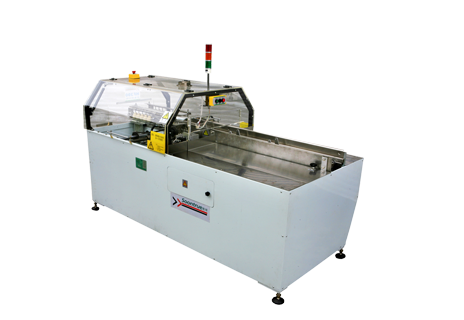
A rotary (centrifugal) unscrambler dumps bulk bottles into a hopper, lifts them onto a spinning disc, and uses centrifugal force to feed bottles onto a narrow track where orienting screws and air jets flip them neck-up. A linear (inline) unscrambler uses a belt or vibratory track that singulates bottles from a hopper and orients them with rails and air knives. A tabletop or hand-fed unscrambler is the low-speed option: an operator places bottles on a conveyor that feeds the filler. The three are not scaled versions of each other — they are different machines for different speeds and bottle types.
| Rotary / centrifugal | Linear / inline | Tabletop / hand-fed | |
|---|---|---|---|
| Speed range | 200–600+ bottles/min | 40–150 bottles/min | 10–60 bottles/min |
| Bottle tolerance | Round PET, glass, rigid bottles | Round and simple shapes | Almost any bottle, low volume |
| Changeover | 30–60 min, change parts | 5–15 min, tool-less adjust | Minutes, no change parts |
| Floor space | Compact (disc + hopper) | Long (track length) | Smallest |
| Relative cost | Highest | Medium | Lowest |
| Best for | High-speed, single-SKU round bottles | Medium-speed, multi-SKU | Pilot, startup, low volume |
Why the rotary won in Jakarta
The co-packer was running 250ml and 500ml round PET sauce bottles at 120 bottles a minute, with plans to double to 250 BPM within a year as new co-packing contracts came in. The bottles were round and rigid — exactly what a centrifugal disc handles best. A linear unscrambler tops out around 150 BPM, which would have been the bottleneck within months. A tabletop machine would not have replaced the two operators. The rotary disc took the bulk hopper, oriented the bottles, and fed the linear filler at a steady 120 BPM with one operator loading the hopper instead of hand-placing bottles. We paired it with an air rinse station and a neck-handling starwheel so the bottles enter the filler already oriented.
When a linear unscrambler is the right call
Linear unscramblers are the right choice when speed is moderate and bottle variety is high. A co-packer running 50ml sauce bottles one hour, 250ml bottles the next, and 1L jugs after that needs a machine that changes over in minutes, not an hour. Linear machines use adjustable rails and guides rather than change parts, so an operator swaps between bottle sizes in 10–15 minutes. They are also cheaper than rotary machines and easier to maintain. For a multi-SKU plant at 60–120 BPM, the linear machine’s flexibility beats the rotary’s raw speed. SunAura specifies linear unscramblers for personal-care and cosmetic co-packers where bottle shapes change every shift.
When tabletop is the correct answer
Tabletop or hand-fed unscrambling is not a compromise — it is the right choice for startups, pilot lines, and short runs. If you run 30 BPM and change bottle shapes every day, a $50,000 rotary machine will sit idle while an operator feeds bottles. The tabletop setup costs a fraction, takes a fraction of the floor space, and handles almost any bottle shape because a human is doing the orienting. Many of our customers start with tabletop and upgrade to linear or rotary when volume justifies it. Buying a high-speed rotary for a 30 BPM line is the classic over-spec mistake.
What the rotary unscrambler cannot handle
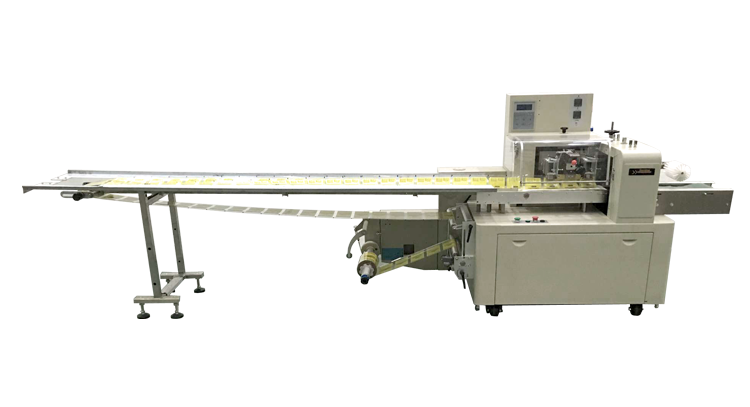
Centrifugal discs are built for round, rigid, upright bottles. They struggle with: bottles with handles (they jam on the disc), square or rectangular bottles (they do not feed the track), lightweight flimsy PET that deforms on the disc, glass bottles with thin walls (they break), and bottles with loose caps that can fall off during orientation. If your product has a handle or an irregular shape, a linear machine with custom rails is the answer, not a rotary. And if your bottle is so light that it bounces off the disc, the rotary will not orient it consistently — you will get neck-down bottles jamming the filler.
Changeover: the number that decides
For a single-SKU plant running one bottle shape all year, changeover time does not matter. For a co-packer changing shapes twice a shift, changeover time is your production loss. A rotary machine that takes 45 minutes to change over, done four times a day, is three hours of lost production. Modern rotary machines with automatic changeover (servo-adjusted guides, recipe-driven disc speed) cut that to minutes — but they cost more. Ask the supplier for the actual changeover time on your bottle sizes, not the brochure number. SunAura tests changeover at FAT with the customer’s bottles, so the quoted time is the real time.
Hopper capacity and refill frequency
The hopper is where operators spend their shift. A small hopper means the operator is refilling every 20 minutes; a large hopper means refill once an hour. For a two-shift plant, the hopper size is a labor decision, not a machine spec. Bulk bottle dumpers (a hopper that accepts a gaylord or pallet box) remove the manual refill entirely. If your bottles arrive in bulk gaylords, spec a bulk dumper. If they arrive in cases, a standard hopper with a case tipper is enough. Do not buy a rotary machine with a tiny hopper and expect one operator to keep up — they will not.
Why the unscrambler sits at the front of the line
The unscrambler is the first machine on the line, and it sets the pace for everything downstream. If the unscrambler feeds 120 BPM but the filler wants 150, the filler waits. If the unscrambler feeds 200 but the filler only takes 120, the bottles back up and jam. A rule of thumb: size the unscrambler 10–15% faster than the filler, so it can feed a buffer and still keep up during short dips. Many buyers size the unscrambler to the filler exactly and then wonder why the filler starves on changeover. SunAura sizes every upstream machine 10–15% faster than the downstream machine, and adds an accumulation table between them, so the line balances.
Glass vs PET: what changes in the unscrambler
Glass bottles and PET bottles behave differently on the disc. Glass is heavier and breaks on impact; PET is lighter and can bounce or deform. A rotary unscrambler set up for PET will shatter glass bottles if you run glass without slowing the disc and adding padding. A glass-grade disc has soft contact surfaces, lower RPM, and gentle air knives. If your line runs both glass and PET (common in contract packing), specify a dual-bottle setup with recipe-driven disc speed. Running glass on a PET disc is a one-way trip to broken glass in the hopper — clean-up takes a shift.
What not to buy
Do not buy a rotary unscrambler for irregular, handled or flimsy bottles — the disc will jam. Do not buy a linear unscrambler for a 300 BPM single-SKU line; it will be the bottleneck. Do not buy a tabletop machine for a 200 BPM line; you will need four operators and they will make mistakes. And do not buy the unscrambler without the rinse and the neck-handling starwheel upstream of the filler — bottles have to be clean and oriented before they reach the filling nozzles. SunAura quotes the whole bottle-handling section: unscrambler, rinse, conveyor, filler, capper, as one line.
Budgeting
A rotary unscrambler costs more upfront but replaces two operators on a high-speed line. A linear machine is cheaper but slower. A tabletop machine is cheapest but labor-heavy. Calculate the labor saving over five years: two operators at $30,000 a year each is $300,000 over five years — that pays for a rotary machine on its own. For a low-speed multi-SKU line, the linear machine’s flexibility saves more than the rotary’s speed ever could. Ask for the line cost, not just the unscrambler price.
Orientation sensors and reject logic
A good unscrambler does not just orient bottles — it confirms orientation before they reach the filler. A photo-eye or vision sensor checks that every bottle is neck-up; neck-down or sideways bottles get rejected by a blow-off or a diverter before they jam the filler. On a high-speed line, this reject logic is what keeps the filler running. Without it, one sideways bottle stops the whole line. Modern systems also count bottles, track reject rate, and alert the operator when the disc is feeding badly. When you compare unscrambler quotes, ask what happens to a mis-oriented bottle: a machine that just jams is a machine that will stop your line.
Noise and operator environment
Rotary unscramblers are loud. The spinning disc, the air knives, and the bottles clattering down the track generate 80–90 dB in the hopper area. In a plant where operators work nearby, specify sound-dampening covers and remote hopper loading. A co-packer with operators at the line shift after shift will have hearing complaints if the unscrambler is open. For a Jakarta plant where operators work close to the machine, we specified a covered disc with a remote bulk dumper, so the noise stayed inside the guard.
FAQ
Can a rotary unscrambler handle glass bottles?
Yes, but gently — thick glass bottles on a padded disc are fine; thin glass will break. Spec a glass-grade disc and lower the disc speed.
How fast is a centrifugal unscrambler really?
200–600+ BPM on round rigid PET. Actual output depends on bottle size, hopper refill and downstream filler speed.
Do I need an air rinse?
For food and pharma, yes — bottles collect dust in the hopper. An air rinse station blows debris out before filling.
Can I add a rotary later to a tabletop line?
Yes, if the conveyor spacing and filler infeed are compatible. SunAura designs for future expansion so the upgrade is a swap, not a rebuild.
Summary
Rotary for high-speed round rigid bottles; linear for medium-speed multi-SKU; tabletop for low volume and startups. Match the unscrambler to your speed, bottle shape and changeover needs. Send us your bottle size, speed and number of SKUs and we will spec the right bottle handling — and tell you if a cheaper option will do.
Sources
Technical ranges referenced: Nantong Jianfeng Machinery rotary vs linear unscrambler performance analysis; URGC Group 2026 bottle unscrambler buying guide; Frain Industries automatic bottle orienters and unscramblers procurement guide; Posimat technical considerations when choosing a plastic bottle unscrambler; IndustryIDX rotary bottle unscramblers buyer’s guide. The Jakarta co-packer configuration is this project’s own. Speed ranges, changeover times and dB figures are industry estimates, not supplier specifications.
Related reading
- Shrink bundler vs tray pack vs wrap-around case for water
- Belt vs roller vs modular plastic conveyor buying guide