
Standard LDPE can stiffen below freezing. For frozen food lines, specify cold-grade film or use a tray/case. Test a sample bundle in your freezer before committing.
Can I switch between 6-packs and 12-packs on one machine?
Yes, with recipe-driven collator lanes and changeover guides. Modern bundlers store the pattern in the HMI; changeover is typically 10–20 minutes.
Summary
For rigid bottles at high speed where film is enough, a shrink bundler is the cheapest, fastest choice. For unstable or retail-ready products, add a tray. For distribution-heavy multi-SKU loads, use a wrap-around case. Send us your bottle size, bundle pattern and speed and we will spec the right multipack section — and tell you if a cheaper option will do.
Sources
Technical ranges referenced: Smurfit Kappa wrap-around case and tray packer overview; Polypack shrink bundler for bottles and spices; SSP Packaging end-of-line multipack systems; PMMI ProSource tray former directory; Krones cardboard packaging comparison (wrap-around vs cover-flap cases). The Izmir water line configuration is this project’s own. Speed ranges, film gauges and energy figures are industry estimates, not supplier specifications.
Related reading
- Rotary vs linear bottle unscrambler for sauce co-packers
- Belt vs roller vs modular plastic conveyor buying guide
Film-only bundling on glass jars is risky — they tip in the tunnel. Use a tray packer for glass; the tray supports the base.
Does shrink film survive a freezer warehouse?
Standard LDPE can stiffen below freezing. For frozen food lines, specify cold-grade film or use a tray/case. Test a sample bundle in your freezer before committing.
Can I switch between 6-packs and 12-packs on one machine?
Yes, with recipe-driven collator lanes and changeover guides. Modern bundlers store the pattern in the HMI; changeover is typically 10–20 minutes.
Summary
For rigid bottles at high speed where film is enough, a shrink bundler is the cheapest, fastest choice. For unstable or retail-ready products, add a tray. For distribution-heavy multi-SKU loads, use a wrap-around case. Send us your bottle size, bundle pattern and speed and we will spec the right multipack section — and tell you if a cheaper option will do.
Sources
Technical ranges referenced: Smurfit Kappa wrap-around case and tray packer overview; Polypack shrink bundler for bottles and spices; SSP Packaging end-of-line multipack systems; PMMI ProSource tray former directory; Krones cardboard packaging comparison (wrap-around vs cover-flap cases). The Izmir water line configuration is this project’s own. Speed ranges, film gauges and energy figures are industry estimates, not supplier specifications.
Related reading
- Rotary vs linear bottle unscrambler for sauce co-packers
- Belt vs roller vs modular plastic conveyor buying guide
Shrink bundlers run 40–60 bundles a minute on rigid bottles. Wrap-around case packers run 10–25 cases a minute. For high-volume water, bundling is the only way to keep up.
Can I use shrink film on glass?
Film-only bundling on glass jars is risky — they tip in the tunnel. Use a tray packer for glass; the tray supports the base.
Does shrink film survive a freezer warehouse?
Standard LDPE can stiffen below freezing. For frozen food lines, specify cold-grade film or use a tray/case. Test a sample bundle in your freezer before committing.
Can I switch between 6-packs and 12-packs on one machine?
Yes, with recipe-driven collator lanes and changeover guides. Modern bundlers store the pattern in the HMI; changeover is typically 10–20 minutes.
Summary
For rigid bottles at high speed where film is enough, a shrink bundler is the cheapest, fastest choice. For unstable or retail-ready products, add a tray. For distribution-heavy multi-SKU loads, use a wrap-around case. Send us your bottle size, bundle pattern and speed and we will spec the right multipack section — and tell you if a cheaper option will do.
Sources
Technical ranges referenced: Smurfit Kappa wrap-around case and tray packer overview; Polypack shrink bundler for bottles and spices; SSP Packaging end-of-line multipack systems; PMMI ProSource tray former directory; Krones cardboard packaging comparison (wrap-around vs cover-flap cases). The Izmir water line configuration is this project’s own. Speed ranges, film gauges and energy figures are industry estimates, not supplier specifications.
Related reading
- Rotary vs linear bottle unscrambler for sauce co-packers
- Belt vs roller vs modular plastic conveyor buying guide
SunAura Machinery Ships Shrink Bundling Line to a Turkish Water Bottler: Why Shrink Bundling Beat Tray Packs and Wrap-Around Cases for 500ml Water
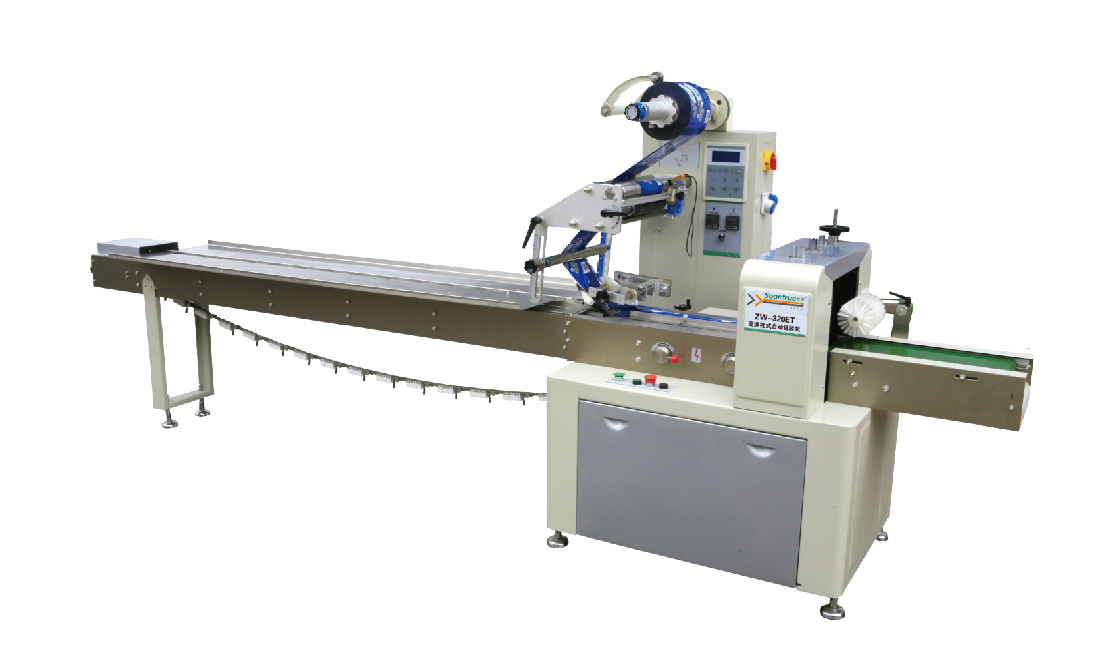
A bottled-water producer in Izmir came to us last quarter with a problem they already knew the answer to. Their 500ml still water line was running 24,000 bottles an hour, and the secondary packaging they had been buying — a corrugated tray with a film overwrap — was costing them more than the bottles themselves. They asked us to compare three ways to pack 6-packs and 12-packs: a shrink bundler, a tray packer, and a wrap-around case packer. We specified a shrink bundler. This article explains why, and when each of the three actually earns its keep.
The three ways to make a beverage multipack
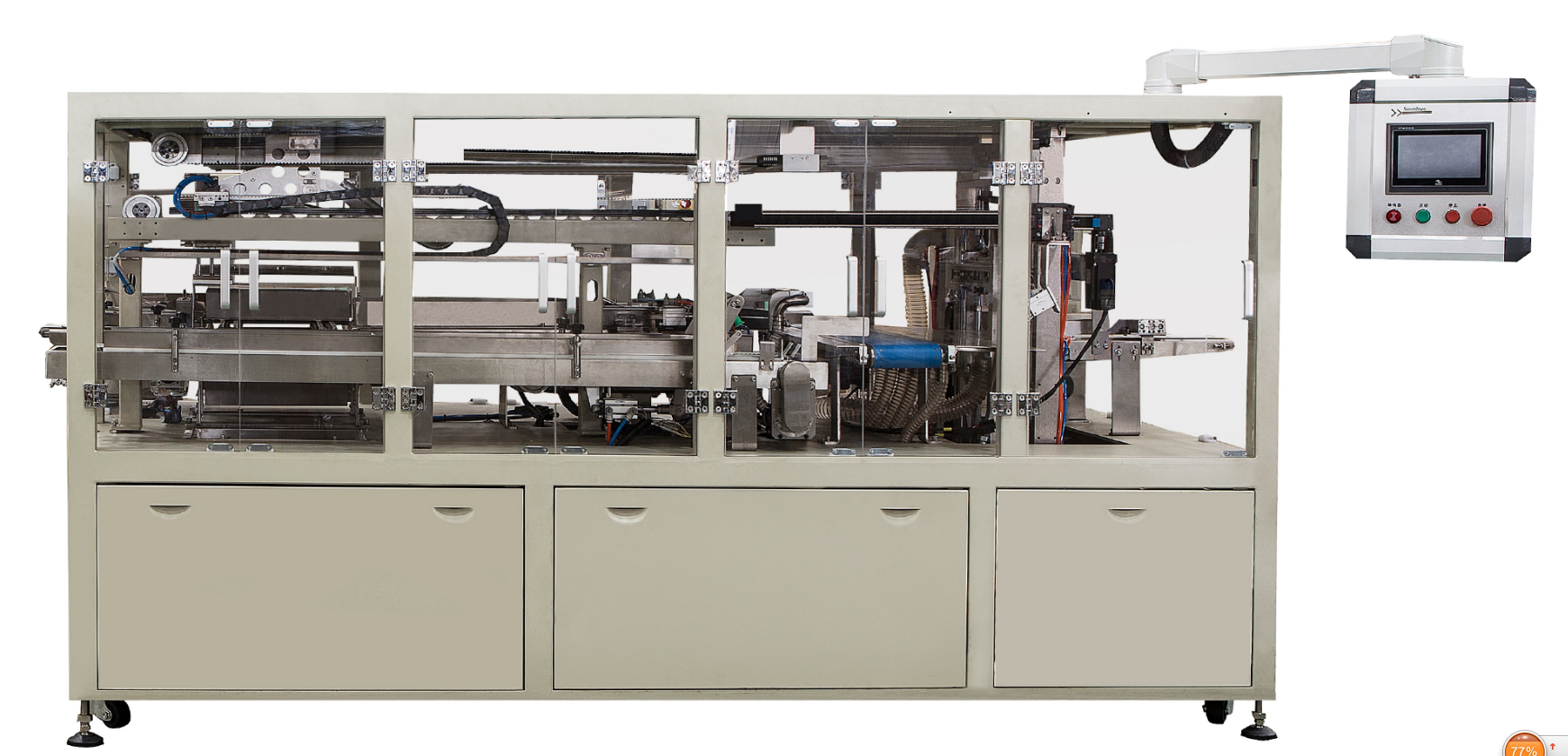
A shrink bundler groups bottles on a flighted conveyor, wraps them in printed or clear LDPE or PVC film, cuts and seals the film, and passes the bundle through a heat tunnel so the film shrinks tight around the group. A tray packer forms a corrugated tray (or sets one from a magazine), places the bottles into it, and overwraps the tray with film — sometimes with a full lid, sometimes as a pad-and-wrap. A wrap-around case packer takes a flat corrugated blank, forms it into a case around the collated bottles, and closes it with hot-melt glue or tape. All three end up with a unit you can stack on a pallet; they differ in how much corrugated you use, how fast you run, and what the retail shelf looks like.
| Shrink bundler | Tray packer | Wrap-around case packer | |
|---|---|---|---|
| Secondary material | Film only | Corrugated tray + film | Corrugated blank, formed on machine |
| Speed range | Up to 40–60 bundles/min | 15–30 bundles/min | 10–25 cases/min |
| Corrugated cost | None | Low–medium | Highest |
| Retail presentation | Clear film, printed film option | Stable tray, good shelf stand | Full case, distribution ready |
| Load stability on pallet | Good for rigid bottles | Better (tray supports base) | Best (full case edges) |
| Floor space | Compact (collator + tunnel) | Medium | Longest (blank magazine + former) |
| Relative machine cost | Lowest | Medium | Highest |
| Best for | Water, carbonated drinks, beer multipacks | Lightweight, unstable, retail-ready | Distribution, warehouse, mixed loads |
Why the shrink bundler won in Izmir
The product was 500ml PET still water — rigid, uniform, and sold as 6-packs and 12-packs in convenience channels. The line ran 24,000 bottles an hour, which translates to roughly 18 bundles a minute at 12 bottles each. That speed is comfortably inside a shrink bundler’s range. The Izmir plant was shipping to distributors that break bulk and repalletize, not to retail shelves where a tray stands alone. The bottles were rigid enough that film alone held them together on the pallet. The corrugated tray they had been buying was adding material cost and a second supplier (tray former) without improving the shelf or the pallet. A shrink bundler gave them the speed, the material savings, and a smaller machine footprint. We paired it with a film perforator so the bundles open easily at the store, and a film scrap reclaimer to keep the tunnel floor clean.
When a tray packer is the right call
Tray packing is the right choice when the product needs a base. Lightweight glass bottles, irregular bottles with handles, yogurt cups, jars that tip over, or products that must stand on a retail shelf without a case — these need a tray. The tray keeps the base square, keeps the jars from leaning, and gives the bundle a stable foot on the shelf. Tray packs also use less corrugated than a full wrap-around case, which matters when sustainability targets are in play. If your customer is a supermarket that expects a shelf-ready pack, a tray packer with a printed film overwrap is the standard answer. SunAura builds tray packers for spice, jar and dairy customers where the product cannot survive a film-only bundle.
When a wrap-around case packer is the only correct choice
Wrap-around case packing is for distribution. If your product goes straight to a warehouse, onto a pallet, and out to retailers that open the case on the shelf, you need a full corrugated case. Cases stack higher on pallets, protect the product through rough distribution, and handle mixed loads that would crush a film-only bundle. Wrap-around machines form the case around the product, so they use less corrugated than a standard RSC case that is erected and then packed — but they are still the most expensive and slowest of the three. For a high-volume single-SKU water line shipping to distributors, the case is overkill. For a multi-SKU beverage shipping through several distribution centers, the case earns its cost.
What the shrink bundler cannot handle
Do not put these through a film-only shrink bundler: glass jars that need a rigid base (they will tip in the tunnel), irregular shaped bottles that do not group square, hot-filled products that need to cool before wrapping (the film will wrinkle), or products that cannot tolerate the heat tunnel (film-wrapped ice cream, for example). If your product is lightweight and unstable, the bundle will walk off the conveyor and the film will not hold it on the pallet. In those cases, add a tray. And if your distribution route is rough — container transload, mixed pallet stacking, long-haul trucking — a film-only bundle will lose bottles; you need a case.
Film choice: LDPE, PVC, printed film
The film is half the operating cost. LDPE is the standard for beverage bundles — it shrinks well, is cheap, and runs at moderate temperatures. PVC is clearer and shrinks faster, but it is more expensive and has recycling issues in some markets. Printed film adds branding and tamper evidence but costs more per roll. Perforated film has pre-cut holes so the bundle opens easily at retail. For a water line, plain LDPE at 45–60 microns is the default; switch to printed film only if your brand owner pays for the packaging upgrade. Ask the film supplier for a sample run on the actual product — film that works on a 500ml bottle may wrinkle on a 1.5L handle bottle.
Heat tunnel: the detail buyers forget
The shrink tunnel is where bundles are made or broken. A tunnel that is too hot warps the bottles; too cold and the film is loose and baggy. A good tunnel has top and bottom heat, adjustable airflow, and a cooling zone so the bundle sets before it hits the conveyor. Speed matching matters: the tunnel length has to match the line speed, otherwise the bundles pile up inside. SunAura sizes the tunnel to the bottle, the film gauge and the line speed, and tests the bundle at FAT. A bundler that looks fine on the floor but wrinkles on the actual bottle is a common quote-to-factory surprise.
Energy and operating cost of the heat tunnel
The heat tunnel is the single biggest energy consumer on a shrink bundling line. Electric tunnels heat resistively; gas tunnels burn natural gas or LPG. On a line running two shifts, the tunnel’s energy bill dwarfs the machine’s capital cost. For a high-volume water plant, a gas tunnel pays back against electric within a year on energy savings. Insulated tunnels with recirculating air cut energy use by 20–30% compared with uninsulated designs. When you compare quotes, ask for the tunnel’s energy consumption in kW or kW·h per bundle — not just the machine price. SunAura quotes gas and electric tunnel options separately so the customer can run the payback on local energy prices.
Palletizing after the bundler
Bundles exit the shrink tunnel warm and soft. They need a cooling section before they go to the palletizer, otherwise the film stays loose and the bundle deforms when stacked. A cooling conveyor with fans sets the film. After cooling, the bundles go either to a manual palletizing station (low volume) or to an automatic or robotic palletizer (high volume). For the Izmir water line, we added a short cooling conveyor and a robotic palletizer, so the whole section ran unattended. Skipping the cooling section is a common shortcut that shows up as collapsed bundles on the pallet three days later.
What not to buy
Do not buy a shrink bundler for unstable, fragile or hot products — the film and tunnel will not hold. Do not buy a wrap-around case packer for a high-volume single-SKU water line; you will pay twice for speed you do not use and corrugated your distributor throws away. Do not buy the bundler without the collator. And do not forget the upstream conveyor: bottles have to arrive single-file and at the right spacing, otherwise the collator cannot group them. A bundler bought without the infeed laner is a bundler that jams every changeover.
Budgeting the whole multipack section
Ask for the section cost, not just the bundler price. The real line includes: the bottle laner/divider upstream, the collator, the film feed and sealing head, the heat tunnel, the outfeed conveyor to the palletizer, and the film scrap reclaimer. A tray packer adds a tray former and a magazine. A wrap-around packer adds a blank magazine, a hot-melt glue system and a case closer. SunAura quotes the whole multipack section as one number, so there are no integration surprises on installation day.
Sustainability and film reduction
Brand owners and retailers are pushing to cut plastic in secondary packaging. A shrink bundler that uses one film wrap per bundle already uses less material than a tray plus film, and far less than a corrugated case. Modern LDPE film at 45–50 microns does the job that 60–70 microns did a decade ago, and mono-material LDPE is easier to recycle than laminated films. If your brand has a plastic-reduction target, the bundler is the starting point — you can switch to thinner film, printed film (which replaces printed corrugated), and perforated film that opens cleanly. A wrap-around case uses more corrugated, which has its own carbon footprint. For a sustainability-minded buyer, the bundler is not just the cheapest option, it is the lower-footprint option.
FAQ
How fast is a shrink bundler compared to a case packer?
Shrink bundlers run 40–60 bundles a minute on rigid bottles. Wrap-around case packers run 10–25 cases a minute. For high-volume water, bundling is the only way to keep up.
Can I use shrink film on glass?
Film-only bundling on glass jars is risky — they tip in the tunnel. Use a tray packer for glass; the tray supports the base.
Does shrink film survive a freezer warehouse?
Standard LDPE can stiffen below freezing. For frozen food lines, specify cold-grade film or use a tray/case. Test a sample bundle in your freezer before committing.
Can I switch between 6-packs and 12-packs on one machine?
Yes, with recipe-driven collator lanes and changeover guides. Modern bundlers store the pattern in the HMI; changeover is typically 10–20 minutes.
Summary
For rigid bottles at high speed where film is enough, a shrink bundler is the cheapest, fastest choice. For unstable or retail-ready products, add a tray. For distribution-heavy multi-SKU loads, use a wrap-around case. Send us your bottle size, bundle pattern and speed and we will spec the right multipack section — and tell you if a cheaper option will do.
Sources
Technical ranges referenced: Smurfit Kappa wrap-around case and tray packer overview; Polypack shrink bundler for bottles and spices; SSP Packaging end-of-line multipack systems; PMMI ProSource tray former directory; Krones cardboard packaging comparison (wrap-around vs cover-flap cases). The Izmir water line configuration is this project’s own. Speed ranges, film gauges and energy figures are industry estimates, not supplier specifications.