Single-Lane vs Twin-Lane vs Multi-Lane Packaging Machines: When to Add Parallel Lanes Instead of Pushing One Machine Faster
Here is the wall that almost every growing plant eventually runs into. The line that handled 80 units a minute comfortably is being asked for 140, and the engineering meeting splits into two camps. One side says buy a faster single machine, spec a bigger servo, run the film harder. The other says keep the proven speed and run two lanes side by side, splitting the product upstream so each lane only sees half the volume. Both answers can be correct, which is exactly why the argument drags on. The decision is not about which machine has the more impressive catalog number. It is about how a single fast lane and a set of parallel lanes behave differently when a product jams, when a film reel runs out, when the SKU changes, and when the upstream filler hiccups.
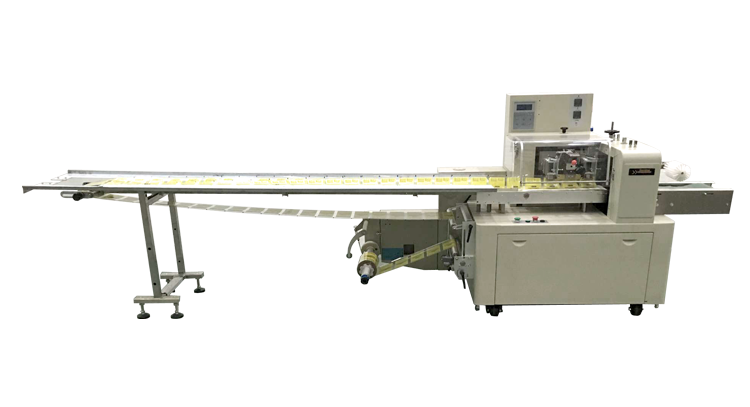
At SunAura Machinery we configure both layouts on the same pillow and flow packaging platforms, and the useful thing to settle first is that “lanes” describes how the product is divided, not a separate category of machine. A single-lane machine takes every product through one forming, sealing and cutting path. A twin-lane machine splits the feed into two identical paths running in parallel, often sharing one frame and one control system. A multi-lane machine runs three, four, six or more narrow paths together, which is how most stick-pack, sachet and small-portion output on the flow wrapping platform is built. Once you think in terms of dividing the flow rather than buying a different animal, the trade-offs become much easier to reason about.
Why a Single Machine Has a Real Speed Ceiling
It is tempting to treat a packaging machine as a number that can simply be dialled up, but every lane is bound by the slowest physical event in its cycle. On a horizontal flow wrapper that means the cross-seal jaws still have to close, hold under pressure long enough to make a hermetic seal, open and clear the product before the next one arrives. On a vertical form-fill-seal machine it means the film must form the tube, the jaws must seal and cut, and the weighed dose must drop cleanly into the bag. Run the infeed faster than that cycle and you do not get more good packs. You get short seals, registration drift, crushed products and rejects, which is why a machine rated at 120 cycles a minute in a brochure often runs at 80 to 90 in a real plant once the seal quality and the downstream checkweigher are respected.
There are also product-handling limits that have nothing to do with the motor. Delicate biscuits, soft bakery pieces and fragile ready-meal components cannot be accelerated and transferred past a certain point without damage, no matter how good the servo is. A single very fast lane concentrates every one of these stresses onto one path and one set of timing settings. Push it to the edge of its envelope and the whole line lives there, with little margin for a slightly sticky film on a humid day, a worn belt, or an operator who is slow to refill the infeed. Speed, in other words, is not free, and the last 20 percent of a single machine’s rating is usually the most expensive and least reliable part to extract.
How a Twin-Lane Machine Splits the Problem
A twin-lane layout takes the same target output and divides it across two parallel paths, so each individual lane only runs at a comfortable fraction of its capacity. To hit 140 units a minute, instead of forcing one lane to 140, you run two lanes at 70 each, well inside the speed where the seals, transfer and product handling are already proven. The product is split upstream by a divider, a timing screw or a two-out feed from the upstream weigher or depositor, and the two lanes typically share a frame, guarding and a single HMI even though their sealing paths are independent. The individual motions are slower, which usually improves seal consistency and reduces rejects rather than worsening them.
The advantage that buyers underestimate most is redundancy. On a single fast lane, a jam, a film change or a fault stops 100 percent of the output and the whole downstream line waits. On a twin-lane machine, one lane can often be isolated, cleared or re-threaded while the other keeps running at reduced rate. You do not lose the entire flow for a single fault, and scheduled maintenance can be staggered across the two lanes. For a plant feeding a retailer line that cannot simply stop, that partial availability is often the deciding factor, and it is a property of the architecture rather than anything on a spec sheet.
What a Multi-Lane Machine Is Built For
Once the portion gets small and the count gets high, the economics flip toward a dedicated multi-lane machine. A four-lane or six-lane vertical form-fill-seal machine runs four or six narrow tubes and cross-seal shafts in parallel, producing stick packs, sachets, sauce portions, coffee granules, sugar sticks and similar single-serve formats at several hundred finished units a minute even though each individual lane is moving quite slowly. The lanes share a common film web on some designs or run separate webs, and one cross-seal stroke and one cut act on all lanes at once. This is the standard way to make small-portion output economical, because trying to reach the same count on one lane would demand impossible cycle speeds and would put every egg in a single fragile basket.
The trade-off is flexibility and changeover. Multi-lane machines are optimised around a narrow format and a fixed lane count, so switching sachet width, length or volume means changing forming tubes, seal jaws and dosing across every lane at once, which takes longer and ties up more tooling. They are at their best when a plant runs a relatively stable set of high-volume single-serve products for long campaigns, rather than a broad catalogue of shapes that change every shift. If you are making millions of the same stick pack, the multi-lane is unbeatable; if you are juggling twenty different bag sizes, it can become a changeover burden.
Selection Table: Single, Twin and Multi-Lane Side by Side
| Dimension | Single-lane | Twin-lane | Multi-lane |
|---|---|---|---|
| Typical output band | Low to medium; one proven cycle | Medium to high; target split across two | Very high; small portions, many parallel paths |
| Relative capital cost | Lowest; one frame and one set of tooling | Higher; divider, two sealing paths, shared frame | Highest per machine; justified only by volume |
| Changeover difficulty | Simplest; one set of parts to swap | Moderate; two paths but shared settings | Hardest; every lane re-tooled at once |
| Maintenance burden | One set of wear parts | Roughly doubled parts, but staggered service | Many small components; needs disciplined upkeep |
| Output during a fault | Zero; the whole line stops | Partial; one lane can keep running | Often partial; one lane may be isolated |
| Footprint efficiency | Smallest for a given frame | Wider frame, but less than two full machines | Compact for its output count |
| Best product fit | Mixed SKUs, varied sizes, moderate speed | Higher-volume stable products needing redundancy | Stick packs, sachets, single-serve portions |
| Typical industry | General food, co-packing, hardware | Bakery, snacks, confectionery at scale | Pharma, coffee, condiments, supplements |
When Each Layout Earns Its Keep
Stay with a single lane when the output target already sits comfortably inside the proven cycle, especially in a multi-SKU plant where changeover is a daily reality. One lane means one set of tooling, one set of timing settings, the smallest footprint and the fastest product change, and it is the easiest machine for a small team to run. It is also the sensible default when volume is uncertain and you want to preserve the option to add a second, separate machine later rather than committing to a complex parallel frame up front. A servo-driven single lane will cover a surprisingly wide band before parallel lanes genuinely become necessary.
Move to a twin-lane machine when the target output would push a single lane past roughly 80 to 85 percent of its reliable cycle, or when the cost of a full stoppage is high enough that redundancy has real value. Because each lane runs slower, seal quality and gentle product handling usually improve at the same time as total output rises, and the ability to keep one lane running through a fault is the hidden payoff. It is the natural fit for a plant with a handful of high-volume products that still change occasionally, where a full multi-lane machine would be too specialised but a single lane would be running at its limit.
Choose a multi-lane machine only when the product is a small, stable, high-count portion made in long campaigns. The cost per finished sachet or stick pack is then the lowest available, and the output count is unreachable any other way. The decision should be driven by a concrete volume forecast, because a multi-lane machine that cannot be kept fed and kept running is an expensive asset to idle. The same parallel-lane logic that protects a twin-lane build applies here, but the changeover and tooling cost make it a commitment rather than a flexible platform.
When Not to Buy the Extra Lanes
The clearest reverse advice is to avoid buying lanes you cannot keep fed. A twin or multi-lane machine only delivers its rated output if the upstream weigher, depositor, filler or kitchen can actually supply the divided flow, and many a parallel line has been installed only to starve because the upstream equipment was never upgraded. Do not add lanes to solve a problem that is really a bottleneck one stage earlier. Equally, do not specify a multi-lane machine for a broad, fast-changing SKU catalogue: the changeover time will erase the throughput advantage, and a simpler single lane that actually runs will outperform a complex machine that is forever being re-tooled.
Resist the assumption that two lanes are always better than one at moderate output. Below the stress region, a single lane is cheaper to buy, cheaper to maintain, faster to change and easier to staff, and the redundancy of a twin-lane frame has little value if the plant rarely runs continuous campaigns. Buying parallel capacity “just in case” is a premium insurance policy that only pays when the volume and the stoppage cost are both real. And be careful comparing catalog cycles across layouts: a 200-unit multi-lane rating and a 100-unit single-lane rating describe different products, so insist on a sustained, accepted-good-output figure measured on your actual SKU rather than a peak number.
Cost, ROI and the Risks to Price In
A twin-lane machine is not simply twice the price of one lane, because it shares a frame, guarding and HMI, but it still costs meaningfully more than a single machine and adds a divider and a second set of wear parts. A multi-lane machine is the largest capital item and carries the most tooling and changeover inventory. The return has to be calculated on accepted output rather than rated output, and it should credit three things that a single fast lane cannot offer: lower reject rates from slower individual cycles, partial production during a fault, and less wear on each path. As a rough planning estimate, plants that run a parallel build near its design output typically recover the premium through labor and reject savings within a few years, while machines that end up under-utilised simply do not.
The risks to put in the budget are the upstream feeding upgrade, the extra tooling set for changeovers, and the higher skill level needed to maintain a multi-lane frame. A small team that is comfortable with one machine may need training to keep six narrow lanes timed and aligned. These are manageable costs, but they are real, and ignoring them is how a technically correct parallel layout gets a bad name inside a factory that was never resourced to run it.
Frequently Asked Questions
Are two lanes more reliable than one fast machine?
For output availability, yes. A single lane stops completely on any fault, while a twin or multi-lane build can often keep the other paths running at reduced rate. The individual lanes also run slower and cooler, which tends to reduce seal failures and wear. The trade is more parts to maintain and a higher upfront cost.
Does a multi-lane machine make sense for a co-packer with many SKUs?
Usually not as the primary machine. Multi-lane frames are optimised for a narrow, stable format in long campaigns, and changing sachet width or length means re-tooling every lane. A co-packer with frequent changeovers is usually better served by flexible single or twin-lane machines and should reserve multi-lane equipment for a predictable high-volume product.
How do I know when a single lane is no longer enough?
A practical signal is sustained operation above roughly 80 to 85 percent of the machine’s reliable, accepted-good cycle, combined with rising seal rejects or product damage. If the last portion of the speed rating is causing quality problems and the downstream equipment still has capacity, splitting the flow across two comfortable lanes usually beats forcing one lane harder.
Can I add a second lane later instead of buying a twin-lane frame now?
Yes, and that is a reasonable staged approach when volume is uncertain, provided the floor space and upstream capacity allow a second machine. A purpose-built twin-lane frame is more compact and shares controls, but a second standalone machine preserves flexibility and lets you defer the capital until the demand is confirmed.
Conclusion: Match the Lane Count to the Real Flow
The short version is that a single lane wins on flexibility, cost and changeover for moderate, mixed output; a twin-lane machine wins when you need higher volume without pushing one path to its limit and you value partial output during a fault; and a multi-lane machine is the dedicated answer for small, stable, very high-count portions. The mistake in either direction is buying on peak catalog speed rather than on the sustained, accepted-good flow your upstream equipment can actually supply. If you also need to decide how those packs are bundled, the choice between an L-bar and a side sealer for shrink wrapping and how the finished pallets are held with steel versus polyester strapping are the natural next decisions downstream.
Share your target output, SKU list and the capacity of the equipment feeding the line on the SunAura Machinery contact page, and our engineers will model the single, twin and multi-lane options against your real flow so you can see where the parallel build genuinely pays and where a single machine is the smarter buy.