Steel vs Polyester (PET) vs Polypropylene Strapping: Why an Appliance Exporter Moved Heavy Pallets Off Metal Banding
For decades a heavy export pallet was a steel-strapped pallet, and in many plants that assumption has never been questioned. The metal band was the thing that visibly could not be broken, and anything plastic looked like a lighter substitute for lighter loads. The appliance exporter in this project had run painted refrigerators and washing machines on steel strapping for years and was not looking to change materials. The review started for an unglamorous reason: a rising count of warranty returns where a sharp strap edge or a rust mark had damaged a finished panel in the container, alongside a steady stream of minor handling injuries on the dispatch floor. What began as a quality problem became a material-selection exercise, and the result was a move to high-tensile polyester on the heavy appliance pallets while steel was kept for the handful of loads that genuinely need it. The case is a useful teaching story because the properties are measurable and the substitution is far more selective than a simple “plastic replaces metal” headline.
SunAura Machinery specified the strapping configuration and the automatic strapping machines within the wider load securing system for the upgraded dispatch line, and the important point is that this was not a blanket rejection of steel. The three common materials, steel, polyester and polypropylene, behave differently under tension, shock and moisture, and they are not interchangeable on the same tools. A correct specification picks each material for the load it actually restrains rather than choosing one winner for the whole warehouse.
How the Three Materials Behave Under Load
Steel is the strongest material at a given width and thickness and has almost no elongation, typically around 1 percent, which means it holds a rigid, non-compressible load exactly where it is and retains tension indefinitely. That near-zero stretch is its defining virtue on a stable heavy load and its defining weakness on a load that settles or shifts, because steel cannot give and instead goes slack or, under shock, can fail without warning. It is also the most unforgiving material to handle: heavy, sharp-edged, prone to recoil when cut, and able to rust and stain a product when exposed to moisture. Industry guidance reserves steel for the jobs those properties suit, such as steel service centres, rail applications, hot or very sharp products, and heavy construction loads.
Polyester, usually called PET, is the rigid high-strength plastic and is the genuine steel substitute. It elongates in the working range by roughly 10 to 12 percent and then recovers, so it stretches under a shock or as a load settles and springs back to hold tension rather than snapping or going slack. On a per-width basis, modern PET carries tensile loads that rival and in some manufacturer data exceed steel, while resisting corrosion and presenting no sharp edges. Polypropylene, or PP, is the low-cost general-purpose strap with higher elongation, around 18 to 24 percent, but poor tension recovery: it loses a measurable share of its tension in the first day or two, more in heat, which is why it suits carton closing and light unitising rather than heavy pallets. Confusing PP with PET is the most common reason a plant concludes, wrongly, that “plastic strapping” is not strong enough.
The Numbers Behind the Decision
Published supplier data makes the comparison concrete. For a 19 mm strap, both steel and PET are commonly rated in the rough region of 850 to 1,100 kg, while PP sits far lower at around 300 to 500 kg. The weight difference is substantial: steel runs at roughly 2.3 kg per 100 metres against about 0.9 kg for PET, which matters for freight and for the physical effort of handling coils. PET retains its strength across a wide temperature band, roughly minus 40 to 80 degrees Celsius, and does not corrode, whereas steel rusts in damp or marine conditions. These figures vary by grade, width and gauge, so they should be treated as industry estimates and verified against the supplier’s specification rather than assumed to be universal, but the broad picture is consistent across every source: PET is a credible heavy-load material and PP is not.
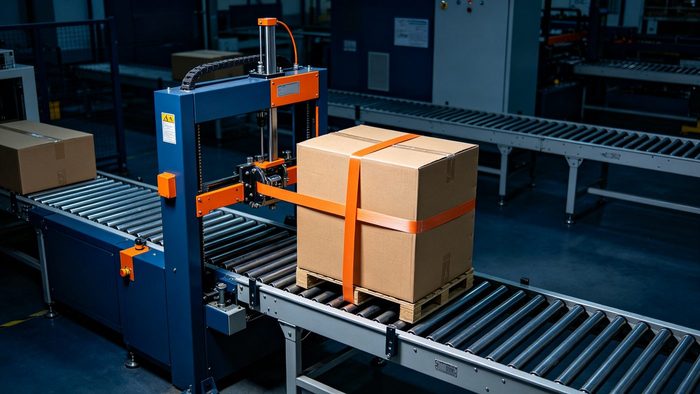
Selection Table: Steel vs PET vs PP
| Dimension | Steel | Polyester (PET) | Polypropylene (PP) |
|---|---|---|---|
| Break strength | Highest; several tonnes possible | Very high; rivals steel per width | Lowest; light duty only |
| Elongation | Around 1%; rigid hold | Roughly 10–12% with recovery | Around 18–24%; poor recovery |
| Tension retention | Excellent and indefinite | Very good over the long term | Poor; loses tension in hours |
| Shock resistance | Poor; no give under impact | Excellent; stretches and recovers | Good initially, then slackens |
| Corrosion and staining | Rusts; can mark the product | Corrosion free | Corrosion free |
| Handling safety | Sharp edges and recoil risk | Safer; no sharp edges | Safe and light |
| Relative cost | Highest; tracks metal prices | Medium; stable pricing | Lowest |
| Best load fit | Rigid, sharp, hot, rail loads | Heavy settling loads, appliances | Cartons, light bundles |
Why the Appliance Pallets Moved to Polyester
Three specific reasons drove the change, and all of them follow directly from the material properties. Finished appliance panels are painted and easily spoiled, so the sharp edges and corrosion marks of steel created real warranty and returns costs, while smooth-faced PET leaves no edge damage and no rust stain. The pallets also stack and travel through long-haul vibration, where a strap has to hold vertical compression without fatigue; PET keeps its tension and absorbs the vibration by stretching and recovering, whereas steel can loosen or fail when the load moves. On top of that, the dispatch team gained a material that is lighter and safer to handle, reducing the recoil and cut hazards that come with tensioned steel. For a load that is heavy but not a rigid steel coil, PET matched the requirement on strength while removing the damage and safety costs that steel imposed.
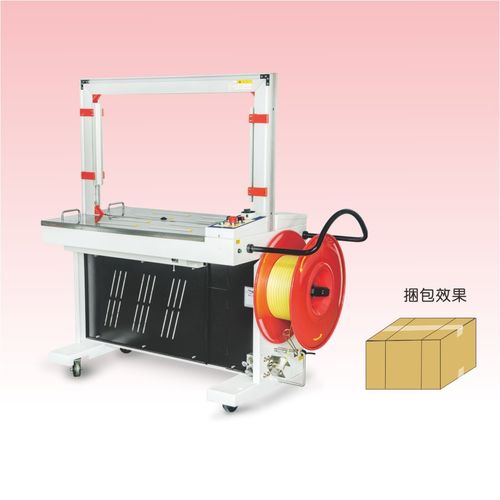
The automation argument reinforced the choice. PET works with modern battery tools and automatic friction-weld strapping machines, producing a consistent joint and tension without the manual crimping tools and seals that steel requires, which suited a high-volume export dispatch line. The result was a repeatable, hands-free strapping cycle with lower handling risk and no corrosion, at a material cost that is generally below steel. The change paid back through fewer damaged units and fewer injuries rather than through a dramatic difference in the strap price itself.
Where Steel Still Has to Stay
The honest part of the specification is that steel was deliberately kept for a defined set of loads, and treating PET as a universal replacement would be a mistake. Steel remains the correct choice for extremely heavy, dimensionally stable and non-compressible loads such as steel coils, sheet metal, granite and structural timber, where the answer is absolute strength and a rigid hold with no stretch. It is also required for products that are hot or sharply abrasive, which can melt or slice through plastic even with edge protectors, and for some rail freight where carrier rules specify the material. Where a regulation or a destination facility mandates steel, that requirement has to be confirmed before any substitution, because approved alternatives exist but are not automatic. On these loads steel’s weaknesses are irrelevant and its strength is the whole point.
PP, meanwhile, should stay in its own lane. It is an economical choice for closing cartons, light bundles and short-trip unitising where break strength is not the limiting factor, but it is not a heavy-load material and should never be specified as a steel substitute on a settling pallet simply because it is the cheapest plastic. The correct hierarchy is steel for rigid non-compressible strength, PET for heavy loads that move or settle, and PP for light duty, and mixing the two plastics under a generic “plastic” label is a procurement error that leads to loose pallets and failed loads.
When Not to Substitute, and the Tooling Trap
The most important reverse warning is that the three materials are not drop-in interchangeable on the same tools. Tensioners, sealers and joint methods differ: steel uses crimped seals or sealless notch joints, PET and PP use friction welds, heat seals or buckles, and running one material on another’s tooling is a common cause of strap failure and hand injuries. A material change has to be planned together with the tooling and machine settings rather than swapped on the existing equipment. It is also worth noting that a steel strap bent through a right angle loses a substantial share of its strength, which matters on cornered loads, and that sharp edges should be paired with edge protectors even when PET is used, rather than assuming the plastic cannot be cut.
Do not move away from steel if the load is genuinely rigid, hot, sharp or rail-regulated, because those are exactly the conditions where PET’s stretch is a drawback and its surface can be damaged. Equally, do not over-specify PET on a light carton line where PP is already adequate, as the extra strength adds cost without benefit. The discipline is to specify each pallet on its load behaviour, edge profile, transport mode and handling exposure, and to keep the materials and their matching tools clearly separated inside the plant.
Cost and Payback: Where the Money Actually Moves
The strap itself tells only part of the cost story. Steel is the most expensive material per metre and tracks the metal market, while PET sits in the middle with more stable pricing and PP is the cheapest. On a like-for-like heavy pallet the polyester band is generally cheaper than steel, but the larger savings arrive indirectly: fewer finished units written off through strap damage or rust, fewer handling injuries and their downtime, and lower freight weight because PET is roughly a third of steel’s weight per metre. When those avoided costs are added to the material difference, a plant that moves a suitable heavy load to PET usually recovers any tooling change within a reasonable period, whereas a switch justified only by the strap price would be marginal. The same arithmetic does not apply to the rigid, sharp or rail-regulated loads that stay on steel, where the avoidance of a single failed shipment is worth far more than the material premium.
Frequently Asked Questions
Is polyester strapping as strong as steel?
On a per-width basis, high-tensile PET carries loads in the same band as steel and exceeds it in some formulations, but steel has the higher absolute break threshold and zero stretch. For heavy loads that settle or shift, PET’s ability to stretch and recover often makes it more effective than a rigid steel strap, while steel stays best for non-compressible rigid loads.
Why does polypropylene go slack on a heavy pallet?
PP has high elongation and poor elastic recovery, so it loses a noticeable portion of its tension in the first day or two, faster in heat. That makes it unsuitable for heavy or long-haul loads, where PET holds tension long term. PP is best reserved for carton closing and light, short-trip unitising.
Can I use my existing steel tools on PET strap?
No. The joint methods and tensioners differ, and steel crimping tools are not designed for PET, which uses friction welds, heat seals or buckles. Switching materials requires matching tooling and machine settings, and running the wrong combination is a frequent source of failed joints and injuries.
Does PET strapping rust or mark finished products?
PET does not corrode and has no sharp steel edges, so it avoids the rust stains and panel damage that drove the appliance exporter’s change. It works across a wide temperature range and is lighter to handle, though very sharp load edges still call for edge protectors.
Conclusion: Keep Steel for Rigid Strength, PET for Loads That Move
The measured outcome is that steel stays the answer for heavy, rigid, hot, sharp or rail-regulated loads, PET is the safer, corrosion-free, shock-absorbing choice for heavy pallets that settle and for finished surfaces that must not be marked, and PP remains the low-cost option for light cartons and bundles. The recurring failures come from treating all plastic as one material and from swapping strap materials without changing the tools. Those decisions sit downstream of the packaging machines themselves, which is why the parallel-lane logic in our guide to single versus multi-lane machines and the shrink bundling choice between an L-bar and a side sealer lead naturally into how the finished pallets are secured.
If you are reviewing load security and want the strap material, tooling and automatic machine settings matched to your actual pallets and transport conditions, share the load weights, edge profiles and freight routes on the SunAura Machinery contact page and our engineers will specify where PET can safely replace steel and where the metal band has to remain.
Selected Sources
- PAC Strapping Products catalog: break strength, elongation, tension retention and shock resistance across PP, PET, cord and steel.
- Alliance Packaging Group, steel vs plastic for heavy loads: load rigidity, edge profile, rail rules and corrosion.
- JB Polypack, high-tensile PET straps: tensile figures, weight, temperature range and appliance pallets.
- AIMS Industrial Supplies and X-Pak Global: tension-loss behaviour, handling safety and tooling compatibility.