
JOHANNESBURG, South Africa — October 24, 2026 | by Admin, SunAura Machinery Export Projects
SunAura Machinery has installed a continuous induction foil sealing line for a peanut butter and nut spread manufacturer in Gauteng that packs both glass jars and PET jars for national retail and distribution across the SADC region. The plant runs smooth and crunchy peanut butter, almond butter and a private-label chocolate spread in jar sizes from 250 g to 1 kg, and the brief had three hard requirements: a tamper-evident seal a consumer can trust on the shelf, a bond that keeps peanut oil from migrating out under long road and rail distribution, and a sealing system that survives the hot Highveld production hall without a water-cooling infrastructure the factory does not have. The answer was an air-cooled continuous induction sealer with a large sealing head for the 82 mm and 100 mm jar caps, integrated after the filling and capping stations. Since commissioning the plant seals both glass and PET jars on one line with zero reported leakages in the first two months, changing between the two materials with a power-recipe change rather than a mechanical rebuild.
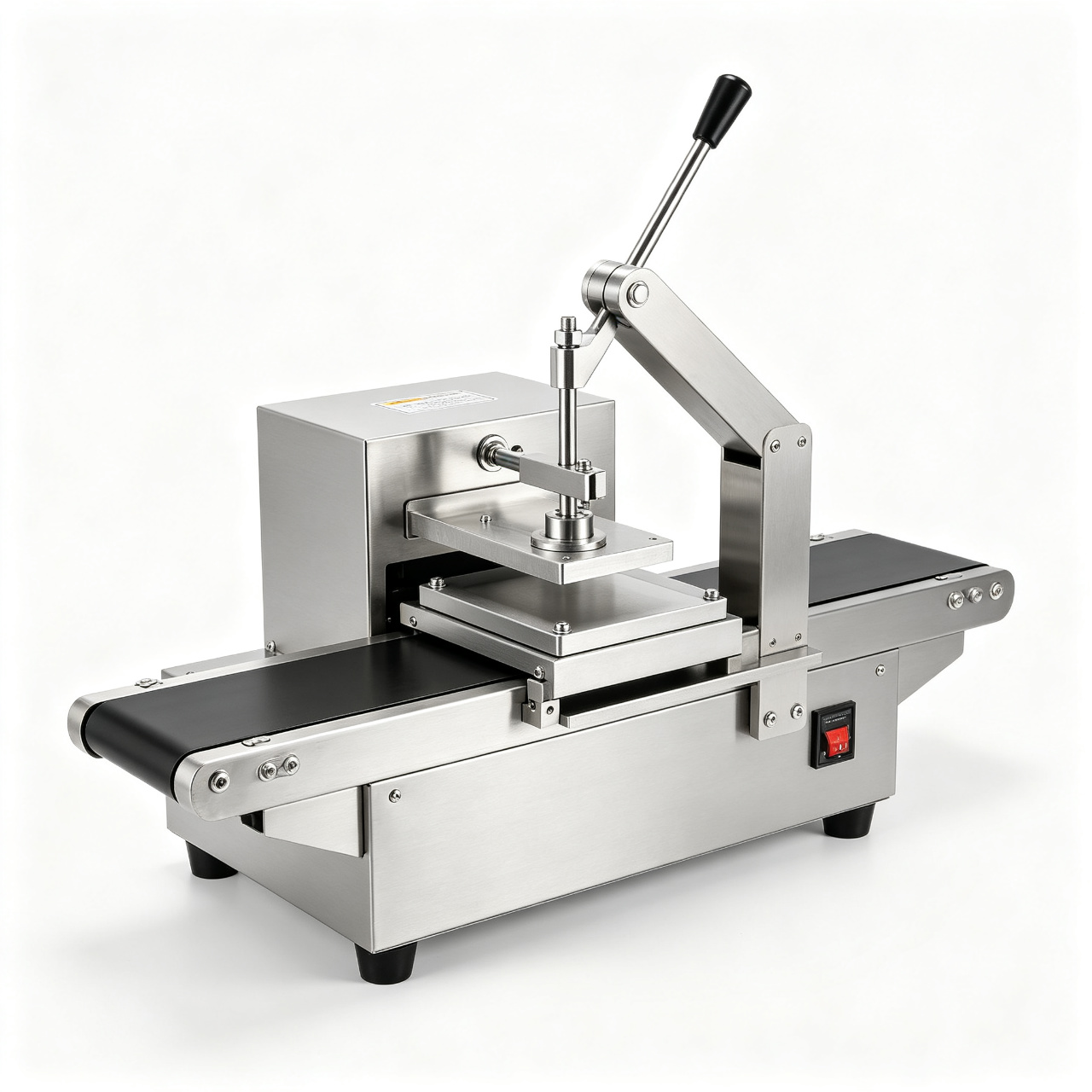
Why Peanut Butter Needs an Induction Seal
A jar of nut spread is a difficult package to protect. Peanut butter is dense, oil-rich and slow to spoil, but the free oil that separates to the surface can migrate through a plain screw cap over time, and the product is a retail staple that sits in a shopping basket, a car on a hot day and a long-haul truck crossing regional borders. Retailers and consumers treat the intact foil seal as the proof that the jar has not been opened — tamper evidence is effectively mandatory for branded food in formal retail — and the seal also stops oil leakage, keeps oxygen out and locks in the roasted aroma. Pressure-sensitive liners and heat tunnels were considered, but neither gives the bond across both glass and PET that a foil induction seal provides, and a failed oil-seal on a supermarket shelf is the most expensive defect a nut spread plant can produce.
How Induction Sealing Works on the Jar
The process is deceptively simple, which is also why it is easy to set up badly. The closure arrives at the line already carrying a laminated liner: a pulpboard backing, a wax layer, an aluminium foil layer and a heat-sealable polymer film facing the jar. After filling, the cap is torqued onto the jar so the liner sits in firm contact with the lip. As the jar passes under the induction head, the coil’s electromagnetic field heats the aluminium foil, the wax releases the liner from the cap, and the polymer layer melts and bonds to the container’s sealing surface. When the jar cools, the foil has become a permanent seal and the cap has become a re-sealable lid. The variables that decide whether the bond is complete are the power delivered to the coil, the dwell time under the head, the distance between the head and the cap, and the torque holding the liner flat — four variables, each capable of causing a leak on its own.
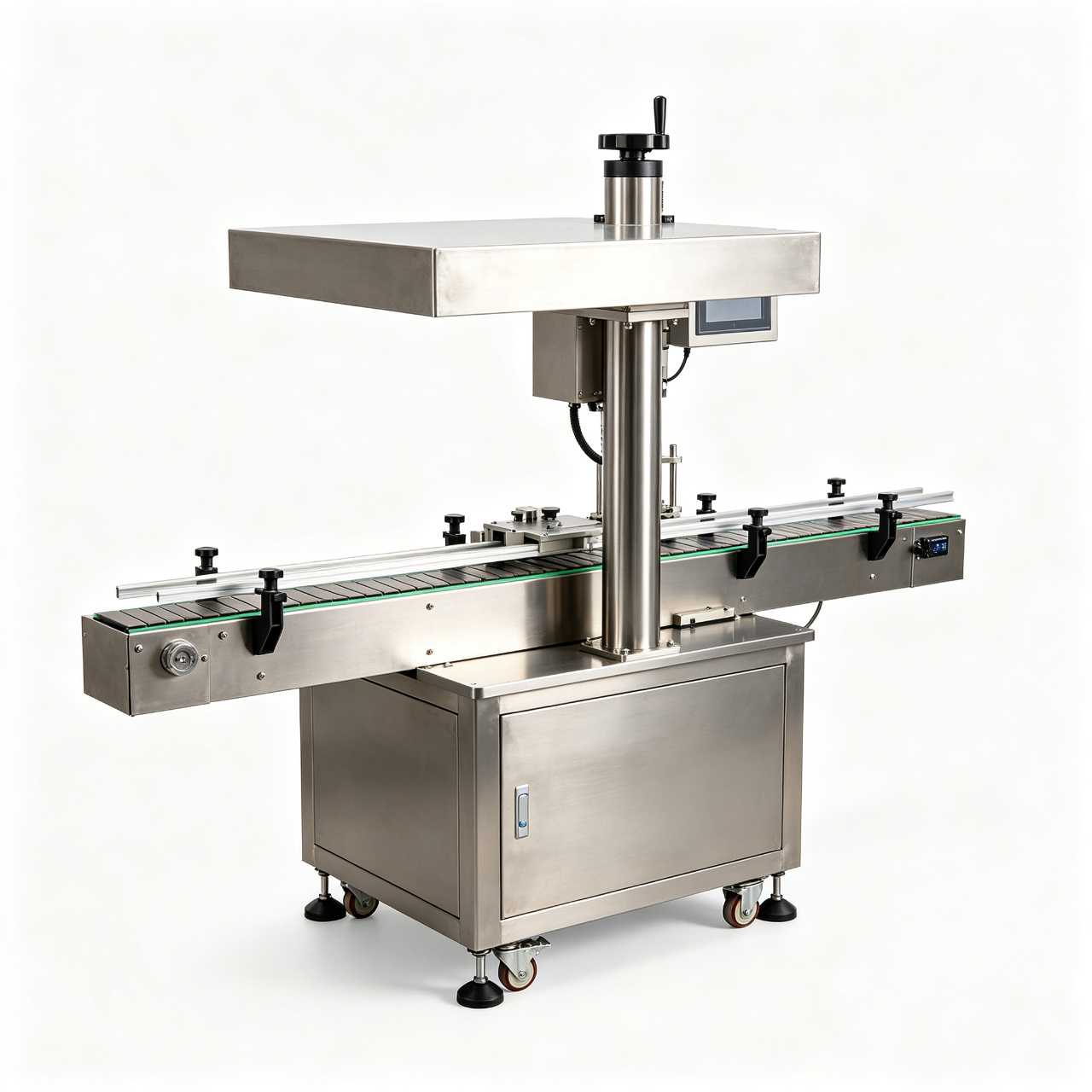
Why a Large Head and Two Materials
Most of the plant’s jars are standard 63 mm or 70 mm closures, but the 500 g and 1 kg retail jars use 82 mm and 100 mm caps, and a small induction head cannot heat the foil evenly across that diameter — the centre bonds while the edge stays cold, which is exactly where oil finds its way out. The line therefore uses the large-head continuous induction sealer for 30–150 mm caps, which covers the full range with a single head. The harder engineering problem is the glass-and-PET mix. Glass is a thermal sink that draws heat away, so it needs a higher power setting and slightly longer dwell; PET is thermoplastic and will soften or distort if that same setting is applied. Each material is stored as a separate recipe, and the operator selects glass or PET at the HMI rather than dialling power by hand. The two standard machines that bracket the plant’s range are the continuous induction foil sealer for glass jars and the continuous foil sealer for both bottles and jars, all drawn from the same induction sealing machines family.
| Parameter | Glass jars | PET jars |
|---|---|---|
| Cap sizes | 63, 70, 82 and 100 mm | 70 and 82 mm |
| Power setting | Higher; glass sinks heat | Lower; PET softens if overheated |
| Conveyor speed | Slightly slower for the 1 kg jar | Standard line speed |
| Key risk | Cold edge leak on large caps | Neck distortion, melted liner |
| Recipe | Stored “GLS” program | Stored “PET” program |
Air-Cooled, Not Water-Cooled: The Climate Decision
An induction head generates its own heat, and a generator running at high duty in a Gauteng summer needs cooling. The factory had a choice between a water-cooled generator, which needs a chiller and a treated water loop, and an air-cooled machine that uses forced air over the coil and electronics. Water-cooled units can hold the highest continuous duty cycles, but they impose a chilled-water infrastructure, a coolant maintenance routine and a second failure mode in a plant where the existing water supply is untreated; the air-cooled machine avoids all three and has more than enough duty for the plant’s speed. The machine specified is the air-cooling continuous aluminum foil induction sealer, sized so that even the 100 mm glass jar runs below the generator’s continuous-duty ceiling. The line was positioned in a well-ventilated section of the hall with clearance around the cooling fans, and the operator checks airflow as part of the shift start.
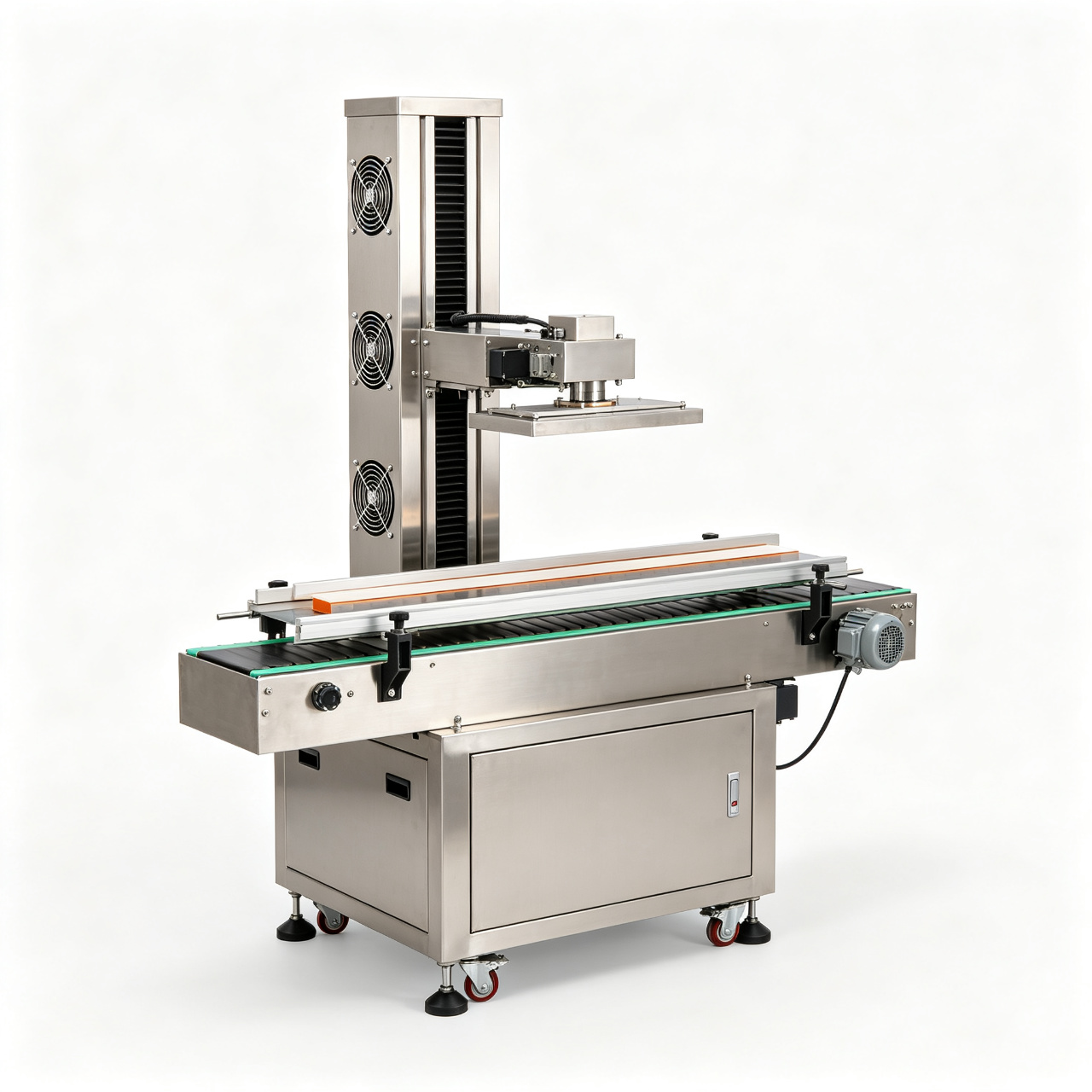
Setting the Seal and Proving It
The commissioning was built around measured proofs, not visual confidence. At the start of each production run the team sets the power and conveyor speed for the material and cap size, runs a short lead-in, and then tests the seal three ways: a peel test to confirm the foil tears fully across the lip rather than lifting, a squeeze or burst test to confirm there is no slow leak, and a cap-torque check, because under-torqued caps let the liner lift and over-torqued caps strip the thread. A line rider from the filler watches for the two classic failure modes: cold spots on the edge of large caps (fixed by raising power or slowing the belt) and foaming or neck distortion on PET (fixed by the opposite). The same discipline — measure the actual condition, change one variable, verify — applies to every sealing technology on a food line; it is the method behind the thermoforming roll-stock versus tray sealing comparison and the frozen-food MAP line SunAura shipped to Poland, where the same sealing logic was used against frost and condensation instead of high ambient heat, as documented in the Polish frozen food thermoforming line project.
Integration, Hygiene and the Jar Line
Upstream of the sealer the plant fills the nut spread with a piston filler, the heated jacketed hopper keeping the product consistent in the morning’s cold start, and the jars are sealed immediately after capping so the foil is applied before any oil can reach the rim. The conveyor spacing was adjusted so every jar passes centrally under the coil, because a jar that runs off-centre under a large head gets one hot side and one cold side. Changeover between cap sizes is a height and recipe change rather than a head change thanks to the large head, and the line stops automatically on a missing cap or a jam, with the sealed and unsealed jars kept clearly separate. The plant’s halal and food-safety requirements were met with the stainless contact parts and documented food-grade liners, and the electrical and sealing documentation was supplied for the SADC export customers who increasingly request it. Routine maintenance is limited to the liner orientation, the cap torquer, the conveyor guides and the cooling airflow, and the plant holds the spare coil liners and wear parts covered under the after-sales service and spare parts program.
The First Quarter and the Cost Case
The plant’s reason for replacing the previous hand-sealing arrangement was not speed alone; it was the cost of a single leaking jar. Before the continuous line, a proportion of jars were sealed with a manual, semi-consistent process, and the customer’s retailers returned occasional cases where oil had migrated through the cap or the foil had not bonded cleanly. Each return was not just a lost jar but a customer complaint and a reorder at risk, and the problem worsened with the long, hot road and rail journeys into neighboring countries. The continuous line removed the variation: the coil delivers the same energy to every jar, the torque is controlled, and the seal is verified before the case is packed. Within the first two months the reported leakages had fallen to zero and the line was comfortably ahead of the target output, with the operator’s time redirected from sealing to filling and line feeding.
The economics turned on three points. First, the air-cooled machine avoided the chiller and the treated-water loop that a water-cooled generator would have demanded, keeping the capital project and the utility work simple. Second, the large head meant one machine covers the whole cap range instead of a second unit for the 1 kg jars, which halved the footprint and the spare-parts inventory. Third, the foil liners are a consumable the plant now buys in standard, documented grades for glass and PET rather than sourcing closures by chance, so the seal is specified and purchased rather than hoped for. The customer also found the tamper-evident seal useful commercially: the intact foil became a feature the sales team points to when selling into formal retail chains, where a credible seal is effectively an entry requirement.
What the Ordering Process Looked Like
Because the result depends on the closure as much as the machine, the project started with samples rather than a specification sheet. The plant sent its glass and PET jars, the actual cap closures with the liners they intended to buy, and a representative range of products, including a crunchy butter and a thinner chocolate spread. The engineering team sealed each combination at the workshop, mapped the power and speed window for each, and confirmed the large-head and air-cooled choices against the measured results rather than the nominal line speed; the test-sealed jars were returned to the customer with the records so their quality team could run their own peel and shelf checks. This sample-first sequence is the safest way to specify an induction line: the machine is effectively one half of a system, and the cap and liner are the other half, so a quote produced without seeing the real closure is a guess. The same approach — proving the process on the customer’s own materials before shipment — is standard across SunAura food lines.
Frequently Asked Questions
Can one induction sealer handle both glass and PET jars?
Yes, but the two materials use different power recipes because glass draws heat and PET softens. Each material is stored as a separate program and selected at the HMI; the jar must still pass centrally under the coil with the cap torqued correctly. A single large-head machine can cover the full 30–150 mm range.
Why use a large head instead of a standard one?
Cap diameters above roughly 70–80 mm exceed the even heating area of a small head, leaving a cold edge where the foil fails to bond and oil leaks. A large head heats the foil uniformly across 82 mm and 100 mm caps, which is essential for the 500 g and 1 kg peanut butter jars.
Is air cooling enough for a high-speed line?
For most single-head food lines it is, provided the generator is sized for the largest cap and the machine is installed with clear ventilation. Water cooling is reserved for the very highest continuous-duty applications; it also requires a chiller and treated water that many regional plants do not have.
What causes a foil seal to fail?
The usual causes are under-torqued caps lifting the liner, the jar running off-centre, insufficient power or dwell, contamination on the jar lip — including peanut oil — and applying a glass recipe to PET. A cold edge on large caps and a softened PET neck are the two most common symptoms.
How is the seal tested on the line?
With a peel test for full coverage, a squeeze or burst test for leaks and a torque check on the cap. Tests run at the start of every production run and after any material or cap change, with the results recorded before the run is released.
Sealing peanut butter, nut spreads, honey, sauces or pastes into glass or PET jars? Send SunAura Machinery your jar materials, cap sizes, line speed, ambient conditions and the product viscosity, and the engineering team will size the induction head, recommend air or water cooling and set the glass and PET power recipes. Request a quote and a line layout, browse the full induction sealing machines range, and review the export compliance documentation before shipment. Test seals on your own jars and caps can be run at the Qingdao workshop.