
BANDUNG, West Java — October 22, 2026 | by Frank, SunAura Machinery Export Projects
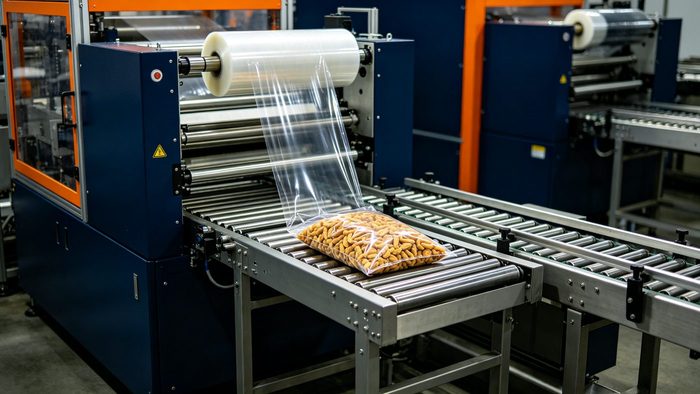
SunAura Machinery has completed factory acceptance testing and shipped a high-speed servo-driven pillow packaging line to a major instant noodle producer in West Java, Indonesia. The line is rated at 180 bags per minute on 85 g single-serve noodle blocks, with the same machine able to run five-pack bundles and family-size packs after a recipe change. It replaces two ageing cam-driven wrappers that the producer had been running since 2015, and the decision to buy servo rather than mechanical was made after the customer’s engineers spent a day running their own film and product samples through both architectures at SunAura’s test lab. The order is a reminder that for high-volume, multi-SKU noodle and snack producers, the wrapper is often the bottleneck that determines whether the whole factory can meet promotional peaks.
Why the Noodle Plant Needed a New Wrapper
The producer runs two brands across single-serve cups and bags, multipacks and export packs for regional distributors. The two old cam-driven wrappers were reliable but increasingly expensive to keep competitive: they peaked at 110 bags per minute, took up to an hour to change between the 85 g single pack and the five-pack bundle, and the print-mark registration on the branded film drifted during long runs, raising film waste and producing occasional off-mark bags that the supermarket buyers rejected. The plant was also adding a premium export range that uses a thicker laminated film, which the old sealing jaws could not handle without adjusting the cams every shift.
The brief was therefore specific rather than simply “faster.” The new line had to run at a sustained 160 bags per minute on the single pack, change between the main pack formats in under twenty minutes, hold print registration on a 0.055 mm laminate within one millimetre, and be pre-wired so that a weighing head could be added later for a planned snack range. That last point mattered because the same factory wants to expand from noodles into seasoned snacks and condiments, and a bagging line that cannot later accept a multihead weigher becomes a stranded asset. The pillow packaging machines range is built around exactly this kind of staged growth.
Line Configuration
The turnkey system was specified to sit behind the customer’s existing noodle-block forming and seasoning equipment, and integrates the following front-end modules:
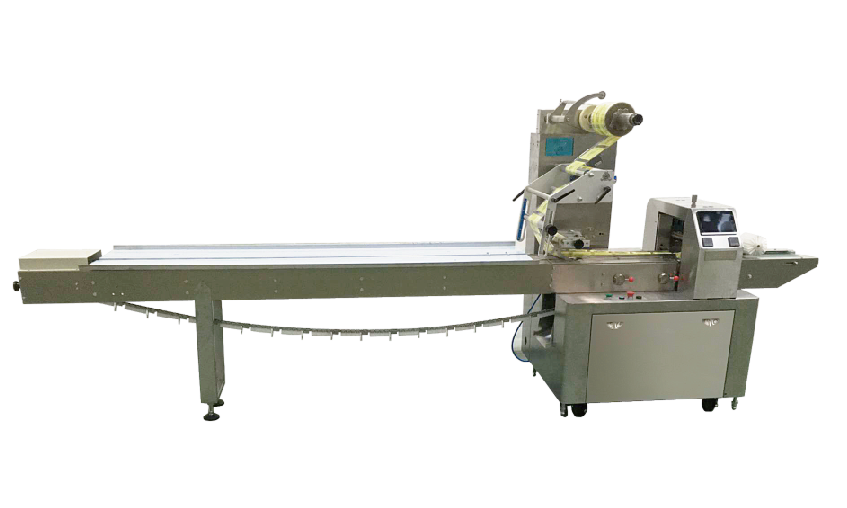
- High-speed servo flow wrapper. A three-servo wrapper from the high-speed servo pillow packaging machine series — independent servos for film feed, sealing jaw and discharge conveyor, rated up to 200 bags per minute on rectangular packs, with print-mark registration, automatic film-splice warning and independent center-seal temperature control.
- Bucket infeed conveyor. A stainless-steel cleated belt that receives noodle blocks from the customer’s upstream formers at variable pitch and is synchronized electronically to the wrapper speed rather than mechanically geared.
- Weigher interface. The line is pre-wired and programmed to accept a multihead weigher for the later snack phase; the interface is the same architecture used for the 18-head multihead weigher in bagging lines.
- Rejection system. An air-jet diverter at the outfeed removes unsealed or underweight packs on signal from the weigher or the customer-supplied vision system, so nothing open or underfilled reaches the case packer.
Because the packs will eventually be bundled for shelf display, the line was laid out as a high-speed horizontal pillow packaging line with the discharge at the correct height and orientation to feed a future collator and multipack sleeve without a change of conveyor.
Why Servo Rather Than Mechanical
The customer evaluated both a mechanical cam-driven wrapper and a full-servo model. After running their own film and samples through both machines at SunAura’s test lab, they chose servo for three reasons. This is the same decision the engineering guide servo vs mechanical pillow packaging machines works through in detail.
- Faster changeover. The mechanical wrapper needed 45–60 minutes to switch between the 85 g single pack and the five-pack because the film width, product length and jaw temperature all changed, and the cams had to be re-timed. The servo machine stores twenty recipe presets and changes over in under fifteen minutes through the HMI, with the only mechanical task being the forming shoulder.
- Tighter film control. The customer runs printed OPP/CPP laminate with registration marks. The servo film feed held ±0.5 mm registration across the speed range, against roughly ±1.5 mm on the mechanical equivalent, cutting printed-film waste during startup and on long runs.
- Lower maintenance over time. The servo machine has fewer wearing parts — no cam followers and no timing belts to tension — and the customer’s maintenance team cited this as a deciding factor, because their current mechanical wrappers require quarterly cam adjustments by a fitter.
FAT Results
Factory acceptance testing ran four days. The customer supplied their own production film (OPP/CPP, 0.055 mm thick, 320 mm wide) and dummy noodle blocks, so the results reflect their real operating conditions rather than SunAura’s test material.
| Parameter | Specification | FAT result |
|---|---|---|
| Sustained speed (85 g block) | 160 bpm | 172 bpm sustained over 2 hours |
| Print registration accuracy | ±1.0 mm max | ±0.4 mm average |
| Seal integrity (burst test) | ≥250 kPa | 310 kPa average |
| Film-splice warning | Automatic at 10% remaining | Triggered correctly at 12% |
| Changeover single to five-pack | ≤20 min target | 12 minutes observed |
| Reject accuracy | 100% open-seal rejection | Zero false rejects over 1,000 packs |
| Thicker export film | Seal without drift | Stable across full 8-hour run |
Installation, Training and the Risks Written Into the Contract
The equipment is scheduled to leave Qingdao on October 28 and reach Jakarta by late November, with a SunAura commissioning engineer on site for installation and operator training and production targeted for early December. The commissioning plan covers the single-serve and five-pack recipes first, then the thicker export film, and the operator training includes making a changeover without a mechanic — the capability that drove the servo purchase. The customer also ordered a 24-month spare parts package: sealing-jaw Teflon tapes, film-feed belts, temperature controllers, sensors and a set of forming shoulders for the planned pack formats.
Two risks were settled in the contract rather than left to the installation. First, the film and print mark were tested on the customer’s actual roll during FAT, because registration results only mean anything with the real laminate; the FAT therefore included a burst and peel test on the customer’s own film. Second, the future weigher interface was demonstrated at FAT with a control panel simulating the weigher discharge, so the planned snack phase will not require a controller retrofit. Specifying the line’s growth path before purchase, rather than discovering it later, is the point of the integrated weighing-and-bagging design SunAura delivered for a parallel multihead weighing and pillow bagging line for an Indian salted-snacks producer.
Film, Sealing and the Humid Climate Problem
Indonesia’s high humidity and the noodle plant’s warm hall are unkind to a high-speed pack. The film absorbs moisture, the seal can fail if the laminate is not conditioned, and a weak end seal on a noodle bag is a bag that the distributor rejects in a container that has sat at the dock. The line therefore runs the OPP/CPP laminate through a controlled film path with the center and end-seal temperatures held independently, and the servo jaw applies a dwell that is timed to the film rather than fixed by a cam. The factory also specified the automatic splice warning because an unnoticed film roll change on a 180-bag line produces a long run of empty or torn packs before an operator reacts; the warning at roughly 10% remaining gives the crew time to prepare the next roll without a hard stop. The burst and peel tests performed at FAT were repeated on the customer’s actual film rather than a test roll, because the sealing result is meaningless without the real laminate and the real print-mark pitch.
The producer’s export range added a second sealing requirement: the thicker laminate used for family packs and some overseas orders needs a longer dwell and slightly higher temperature. On a mechanical machine that would mean a cam change and a re-timed jaw; on the servo wrapper it is a stored value in the recipe, so the export pack runs after the single-serve pack with no mechanical work. This is a small detail at the quotation stage but it decides whether the factory can genuinely run mixed orders on one line, which was the whole point of the investment.
Safety, Operator Design and the Decision to Pre-Wire for Growth
The wrapper is fitted with the guarding and interlocks expected on a line that runs around a two-shift team: interlocked guards over the sealing jaw and film path, an emergency stop on the panel and at the infeed, and guarding that stops the machine before a hand can reach the jaw. Equally important for a plant that promotes line operators from the floor, the changeover is now an HMI task rather than a mechanical one, so the company is not dependent on the single fitter who knows how to re-time the old cams. The training plan therefore spends more time on recipe selection, film loading and seal inspection than on the mechanics the old machine demanded.
The pre-wired weigher interface is the part of the order that deserves emphasis for any buyer planning a future range. Specifying the frame, control bus and discharge timing for a weighing head at the point of purchase adds a small fraction to the price, but retrofitting the same interface to a bagger that was built as a single-product machine is expensive and often impossible. The producer’s planned snack range will use the same wrapper, the same guarding and the same operator, with a weigher added above the frame; the alternative — buying a second, dedicated snack line — would have duplicated the bagger, the floor space and the spares. If a factory expects to add weighed products, the multihead weigher interface should be on the order rather than in the wish list.
Frequently Asked Questions
How fast can a pillow wrapper pack instant noodles?
Single rectangular noodle blocks run on a servo flow wrapper at 160–200 bags per minute sustained; the line commissioned here held 172 bpm over a two-hour FAT run. The practical limit is set by the block infeed and the wrapper’s feed synchronization, not the sealing jaw alone.
Can one wrapper run both single packs and multipack bundles?
Yes, provided the packs share the same film-width range and the forming shoulders are available. A servo wrapper changes the pack length, speed and jaw settings through stored recipes, so the only mechanical change is the forming shoulder; the single-to-five-pack changeover here was timed at twelve minutes.
Can a noodle bagging line later add a multihead weigher for snacks?
It can if the line is pre-wired for it. The control protocol and the frame must be specified at purchase; a servo wrapper with a standard communication bus can accept the weighing head later, whereas an older mechanical wrapper generally cannot. The future weigher interface on this line was demonstrated at FAT.
What film suits a high-speed noodle pillow pack?
OPP/CPP laminates around 0.05–0.06 mm are standard for printed noodle packs, with the seal temperature and jaw dwell matched to the film. A servo wrapper lets dwell time be adjusted independently for thicker export laminates without changing mechanical parts.
How does the line handle a film roll change without stopping?
The wrapper gives a splice warning when the roll is nearly spent so the crew can prepare the next roll, and the servo film feed accelerates back to registered speed quickly after a splice. The FAT confirmed the warning triggered at 12% remaining and that no empty packs were produced through the change.
What spares should be ordered with a high-speed noodle wrapper?
Sealing-jaw Teflon tapes, film-feed belts, temperature controllers, sensors and a set of forming shoulders for each pack format are the standard 24-month package; a servo line adds controller and sensor items rather than the cam and belt parts a mechanical machine needs.
A Wrapper Sized for the Peaks, Not the Average
For an instant noodle producer whose capacity is judged on promotional peaks and multipack export orders, the wrapper is the machine that either supports growth or caps it. The line shipped to West Java gives the producer a sustained 160-plus bags per minute, a twelve-minute changeover, sub-millimetre print registration and a ready-made interface for the snack phase. Send SunAura Machinery your block or pack dimensions, film specification, pack formats and target bags per minute, and the engineering team will run your samples and recommend the right wrapper speed, infeed and growth-ready configuration. Request a quote or a test run, browse the pillow packaging machines range, and compare architectures in the servo vs mechanical guide. Learn more about SunAura Machinery.