
QINGDAO, China — October 11, 2026 — SunAura Machinery has delivered an automatic strapping line to a corrugated box manufacturer in the Middle East, integrating three strapping machines with the plant’s existing case-sealing and palletizing operations. The line applies two horizontal straps and one vertical strap to each palletized load, stabilizing loads for long-distance export shipment and cutting the strapping crew from four operators to one.
The project grew out of a claim problem. The customer’s corrugated boxes traveled as palletized loads through two sea freight legs and a warehouse transfer, and unstabilized loads arrived at the distributor with shifted layers and crushed corners. Manual strapping with hand tools applied inconsistent tension — straps that were loose enough to slide or tight enough to cut the boxes. The plant manager needed consistent, repeatable load stabilization without adding labor to a packing line that was already running two shifts.
Line Configuration
The delivered line applies strapping at two points in the operation — individual bundles and palletized loads:
| Station | Equipment | Key Specification |
|---|---|---|
| Bundle strapping | Automatic strapping machine at case sealer outfeed | 2 straps per bundle, up to 20 bundles/min |
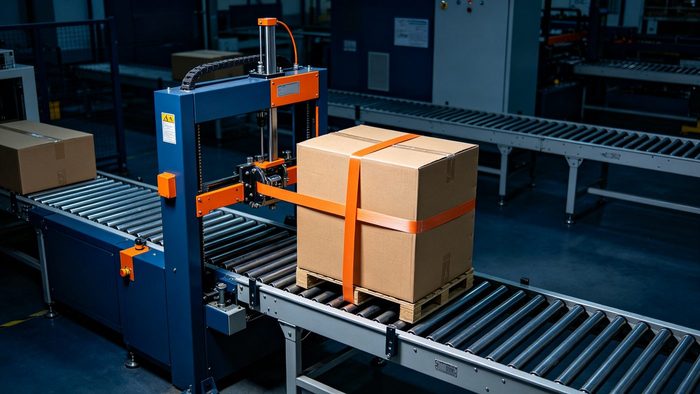
| Pallet strapping | Automatic pallet strapper with vertical strap arch | 2 horizontal + 1 vertical strap per pallet |
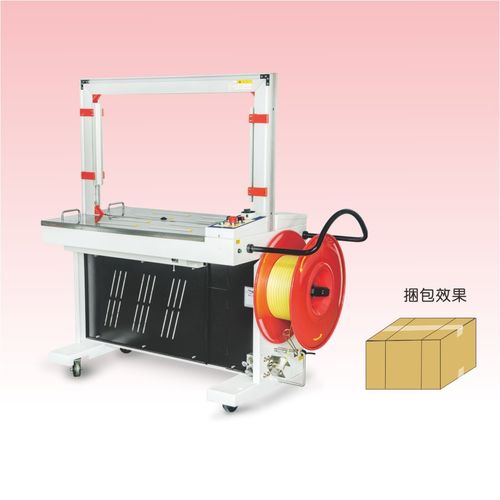
| Strap type | PP strap, 9–12mm width | Heat-sealed joint, consistent tension |
| Control | Single PLC + HMI | Tension per strap position, recipe per load type |
The bundle strapping machine runs inline at the case sealer’s outfeed, strapping each bundle before it moves to the palletizing station. The pallet strapper then secures the completed load — the standard configuration for export shipments that need both bundle integrity and load retention. The full range, including the inline and pallet configurations, is documented on the strapping machines page and the automatic strapping machine page.
Bundle Strapping vs Load Strapping: Two Different Jobs
Strapping performs two different functions on a packing line, and buyers who confuse them specify the wrong machine. The distinction matters for the line plan:
| Factor | Bundle Strapping | Pallet Load Strapping |
|---|---|---|
| What it secures | Individual bundles or packs of cases | Complete palletized loads |
| Purpose | Keep bundles together through handling | Stabilize the load for transit |
| Strap position | Across the bundle, 1–2 straps | Horizontal straps around the load, optional vertical strap |
| Typical speed | 15–25 bundles/min | 30–60 pallets/hour |
| Machine | Inline strapper at case outfeed | Pallet strapper with arch |
Both stations were needed on this line: bundle strapping keeps the boxes together during the transfer to palletizing, and load strapping provides the transit retention that prevents the shift and crush damage behind the customer’s claims. The same two-level logic applies to most export packing operations. The selection framework for the full range — including when a semi-automatic unit is the right budget choice — is covered in the strapping machine buying guide.
Tension Control: The Specification That Decides Damage Rates
Strapping tension is the single specification that determines whether strapping protects the load or damages it. Too little tension and the strap slides, allowing the load to shift; too much and the strap cuts into the corrugated corners, damaging the boxes it is supposed to protect.
The delivered machines use servo-controlled tension with a per-position setting: the horizontal straps run at a moderate tension tuned to the corrugated load, and the vertical strap runs at a slightly higher setting because it carries the load’s compression force. The tension is set in the recipe and verified during commissioning with the customer’s actual loads — the same verification discipline that applies to pallet pattern design on the high-level layer palletizer delivered for a beverage bottler last month.
Two tension details are worth noting for export operations. First, strap tension should be re-verified when the load height or product weight changes — a recipe setting that was right for 1.6m loads can cut into 1.2m loads. Second, the strap joint quality matters: heat-sealed joints hold consistently, while metal clip joints can snag and tear in handling. The automatic machines use heat-sealed joints, which is one of the reasons the customer’s transit damage claim rate dropped in the first quarter after installation.
Integrating Strapping With the Case Sealer and Palletizer
The strapping line is the middle section of an end-of-line operation: it takes sealed cases from the carton sealer and delivers stabilized loads to the dispatch area. The integration points are the same ones that decide whether the whole end of line flows:
Bundle strapper position: the bundle strapper sits at the case sealer’s outfeed, running at the sealer’s speed. The strap cycle must be faster than the case cycle, or the strapper becomes the bottleneck — the same logic that applies to every machine added to a line. On this line, the strapper runs at 20 bundles per minute against a sealer rate of 18 cases per minute, leaving margin.
Load transport to the pallet strapper: the palletized load moves from the palletizer to the pallet strapper on a heavy-duty conveyor, and the transfer is where loads shift if the conveyor is mis-specified. The conveyor selection method — including the load weight ratings that pallet-level transport requires — is covered in the conveyor selection guide.
Strapping before or after wrapping: the load strapping runs before the stretch wrapper in the standard configuration, because the straps hold the load structure while the film provides surface protection. Running the strapper after the wrapper works but adds a film-puncture risk from the strap ends. The sequence decision belongs in the line plan, not discovered at commissioning.
Commissioning Findings Worth Sharing
Three findings from the Middle East installation apply to most strapping projects:
Strap quality varies more than buyers expect: the customer’s first strap roll — a cheap import — had inconsistent width and surface friction, causing feed jams and weak joints. The fix was a strap specification: width tolerance, joint strength, and friction characteristics agreed with the supplier. Strap is a consumable, but it is the consumable that determines whether the machine runs at rated speed.
Corrugated load height changes with humidity: in the Gulf climate, corrugated boxes absorb moisture and grow slightly, changing the load height between morning and afternoon. The pallet strapper’s arch height adjusts automatically, and the tension recipe compensates. Buyers in humid or coastal climates should confirm the arch adjustment range covers the expected load height variation.
Operator training covers the joint inspection: the commissioning training includes a strap joint inspection habit — check every 50th joint for full weld, and watch for the pattern that indicates worn heaters. Heat-sealed joints fail silently, so the inspection is the quality gate that catches the trend before a joint fails on a load in transit.
Maintenance Profile
Strapping machines have a simple maintenance profile concentrated in the strap path and the joint mechanism:
- Daily: clean the strap path of dust and strap dust; check the strap roll for the correct feed
- Weekly: inspect the joint heater condition and clean the joint anvil; check the tension mechanism
- Monthly: verify tension calibration with a strap tension gauge; inspect the arch rollers on the pallet strapper
- Quarterly: full check of the strap feed rollers, the tension brake, and the servo drive calibration
Spare parts for the strap feed, joint mechanism, and tension system ship under SunAura’s 48-hour spare parts dispatch program, and the full stocking method for line consumables is covered in the packaging machine spare parts strategy guide.
Buying Checklist for Strapping Lines
When comparing quotes for a strapping line, the SunAura applications team recommends confirming these points in writing:
- Strap type and width range: confirm the machine runs the strap type (PP/PET) and width you will actually use, and that the tension range covers your load weights
- Tension control method: servo-controlled tension with per-position settings, not a single mechanical tension that drifts with strap roll quality
- Joint type: heat-sealed joints as standard, with the joint strength spec stated for your strap type
- Arch height range: for the pallet strapper, confirm the arch covers your maximum load height with adjustment margin for humidity-driven variation
- Speed at your cycle: the straps-per-minute figure at your bundle and pallet cycle — not the machine’s maximum on a perfect feed
- Conveyor interfaces: the infeed and outfeed heights and the control protocol matched to your existing sealer and palletizer
These six points convert the proposal into a testable specification — and they are the same points verified at the factory acceptance test with your actual bundles and loads.
Frequently Asked Questions
When is a semi-automatic strapper the right choice?
When the volume does not justify a fully automatic machine. A semi-automatic strapper — the operator places the bundle or load and the machine tensions and joins the strap — runs about 10–15 straps per minute and costs a fraction of the automatic unit. The crossover is roughly 2,000 straps per day: below that, the operator cost of the semi-automatic machine is acceptable; above it, the automatic machine pays back. The full comparison, including budget tiers, is in the strapping machine buying guide.
PP strap or PET strap — which should I use?
PP (polypropylene) strap is the standard for most packaging: lighter, cheaper, and adequate for loads up to about 1.5 tons. PET (polyester) strap has higher tensile strength and less elongation — the right choice for heavy loads, long export legs, and products where the load shifts under vibration. The machine must be configured for the strap type; running PET on a PP-tuned machine causes feed and joint problems. Confirm the strap type in the specification, not at the strap counter.
Does strapping replace stretch wrapping?
No — they do different jobs and are usually used together. Strapping provides the load’s structural retention, holding the layers together under compression. Stretch wrapping provides surface protection and dust and moisture resistance, and it ties the load to the pallet. Export loads typically get both: straps for structure, film for protection. The wrapping station is covered in the pallet wrapping machine buying guide, which compares the wrapper types and the sequence with strapping.
How long does it take to install and commission a strapping line?
A bundle strapper plus pallet strapper line installs and commissions in 5–7 working days, including the conveyor integration and operator training. The FAT at the factory — with the customer’s actual bundles and loads — takes 1–2 days and is where the tension settings and strap specs are verified. On-site commissioning then focuses on the integration with the existing sealer and palletizer, which is where the schedule usually runs if the conveyor interfaces were not specified.
What causes strap feed jams and how do I prevent them?
Strap feed jams trace to three causes: poor strap quality (width variation or burrs on the strap edge), a dirty strap path (accumulated dust and strap shavings), and worn feed rollers. The daily strap path clean and a strap quality spec prevent most jams. The weekly inspection catches worn rollers before they start damaging the strap edge — a worn roller is the cause that looks like a strap quality problem.
Availability and Support
The automatic strapping line — bundle strapper, pallet strapper, and conveyor integration — is available for order with 5–7 week lead time, including FAT with customer loads and on-site commissioning. SunAura Machinery delivers the line with installation supervision, operator training, CE certification, and an 18-month warranty on servo and mechanical components. To discuss your bundle sizes, load weights, and export routing with the applications engineering team, contact SunAura Machinery.
About SunAura Machinery
SunAura Machinery is a packaging equipment manufacturer based in Qingdao, China, exporting to more than 100 countries. The company’s strapping range covers semi-automatic and automatic strapping machines, pallet strappers, and the case sealing, conveying, and palletizing equipment that completes end-of-line operations — all CE certified. The recent shrink bundling line delivered for a Polish dairy producer shows the same end-of-line automation applied to shrink bundling, and the OEE calculation guide published this week covers how to measure the throughput gains these lines deliver.
Editorial note: Specifications and payback figures reflect the referenced installation and are subject to change. Contact SunAura Machinery for current configuration options.