
QINGDAO, China — October 10, 2026 — SunAura Machinery has delivered an automatic carton forming and case packing line to a beverage concentrate producer in the Middle East, replacing a manual case erecting operation that had become the line’s bottleneck. The new line forms RSC cartons at up to 25 cases per minute, packs filled bottles, and closes the cases with a fully automatic sealer — cutting the case handling crew from five operators to one across two shifts.
The customer’s problem is one most bottlers recognize. Their filling line ran at 40 bottles per minute, but the case erecting and packing station — three operators folding cartons by hand, another two packing bottles — capped the line at about 15 cases per minute. The manual station was also the source of the plant’s highest injury risk: repetitive folding motions, sharp cardboard edges, and stacking at height. The producer needed the case handling end automated without slowing the filling line, and needed the changeover to handle their three main case formats.
Line Configuration
The delivered line runs three stations in sequence — carton forming, bottle packing, and case sealing:
| Station | Equipment | Key Specification |
|---|---|---|
| Carton forming | Automatic carton former with bottom sealing | Up to 25 cases/min, RSC cartons |
| Bottle packing | Automatic case packer with drop packing | Up to 40 bottles/min, pattern per SKU |
| Case sealing | Automatic top-and-bottom carton sealer | BOPP tape, adjustable case height |
| Control | Single PLC + HMI | Recipe per SKU, changeover < 10 min |
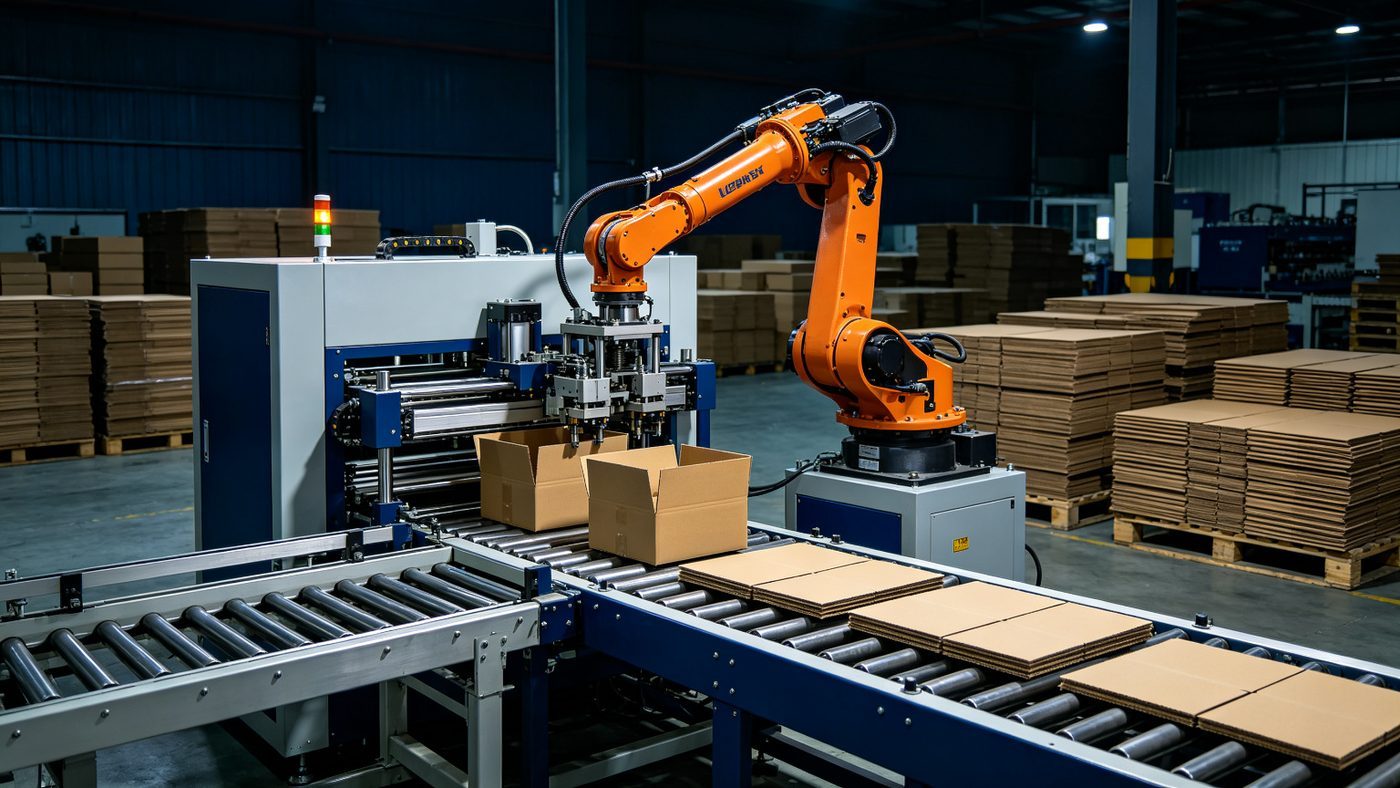
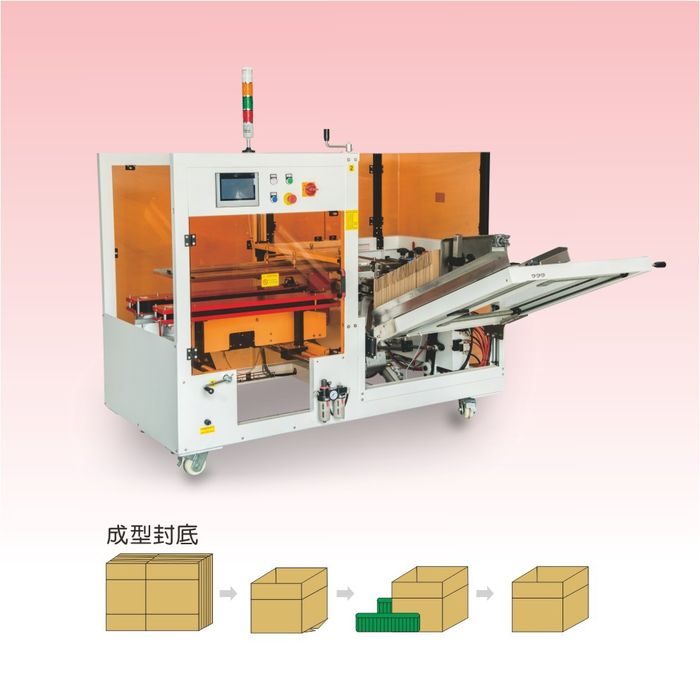
The carton former pulls flat RSC blanks from a magazine, opens each blank, and seals the bottom flaps with tape before the case moves to the packing station. The drop packer positions the case under the bottle infeed and drops a full pattern of bottles into the case — a layer at a time for the 12-bottle and 24-bottle patterns the customer runs. The sealed case then exits to the conveyor. The complete machine range for this section is documented on the fully automatic carton forming machine and the automatic case erector pages.
Why Carton Forming Automation Pays Back Fast
Case erecting looks like low-hanging fruit for automation, and it is — because the manual alternative is deceptively expensive. The cost breakdown from the Middle East installation is typical:
| Cost Element | Before (Manual) | After (Automatic) |
|---|---|---|
| Operators on case handling | 5 (2 shifts: 10 total) | 1 (2 shifts: 2 total) |
| Line throughput ceiling | 15 cases/min | 25 cases/min (filling line now the limit) |
| Carton damage / rework | ~2% (mis-folded blanks) | <0.2% |
| Changeover between case sizes | 30–45 min | <10 min (recipe) |
The payback projection landed at 11 months on labor alone — before counting the throughput gain, which effectively deferred the need for a second filling line. For bottlers running more than about 500 cases per day, the case forming automation is usually the fastest-payback investment on the packing floor, ahead of the filler upgrade. The selection framework for the broader carton handling range is covered in the case erector buying guide, which compares forming methods, tape vs glue bottom sealing, and throughput tiers.
Commissioning Lessons Worth Sharing
Three findings from commissioning apply to most carton forming projects:
Carton board quality decides forming reliability: the customer’s carton blanks came from two suppliers, and one supplier’s board had inconsistent scoring. The weak score lines caused the former to mis-fold about one blank per thousand — low enough to pass, high enough to be annoying. The fix was a specification: the carton supplier now guarantees score-line depth, and the former’s magazine sensors reject the rare bad blank automatically. Buyers should send production carton samples — not display samples — to the FAT.
Bottle-to-case pattern changeover is the real changeover: the operator’s mental model is that case size change is the changeover. In practice, the bottle pattern (12-bottle vs 24-bottle, orientation, layer count) drives most of the setup time. The recipe stores both the case format and the packing pattern, and the changeover runs under 10 minutes including pattern verification. The recipe discipline is worth copying: name recipes by product, not by case size.
The sealing station’s tape matters in hot climates: the customer’s warehouse ran above 40°C in summer, and the first tape roll’s adhesive softened, causing occasional flap re-opening in the case stack. The fix was a hot-melt-capable tape spec and storing tape rolls below 30°C. For export lines to hot climates, the tape specification is a real reliability parameter, not a consumable detail.
Integrating the Line With Downstream Equipment
The carton forming and packing line is the middle section of a complete packaging line: it takes filled bottles from the filling machine and delivers sealed cases to the palletizing station. The integration decisions are the ones that determine whether the line flows:
Conveyor from filling to case packer: the bottle conveyor from the filler must match the packer’s pattern timing. The conveyor selection method — including the accumulation the line needs when the case packer pauses — is covered in the conveyor selection guide. This line runs a motorized roller section with a buffer of 60 bottles between filler and packer, which absorbed the changeover pauses without stopping the filler.
Sealed case transport to palletizing: the sealed cases exit to a case conveyor feeding the palletizer. For a bottling line producing 25 cases per minute, the palletizing station should be automatic — the manual stacking alternative is the next bottleneck after case forming is automated. The palletizer range covers the automatic options, from layer palletizers to robotic units — including the high-level layer palletizer commissioned for a beverage bottler this month.
Weighing and inspection: a checkweigher between the packing station and the sealer catches underfilled cases before they are sealed — the cheapest quality gate on the line, and one the customer added after the first week when a 24-bottle pattern short-fill reached retail. The checkweigher position is a layout decision best made in the line plan, not retrofitted. For bagged product lines, the same inspection logic starts at the weighing station — the multihead weigher selection guide covers the accuracy decisions that prevent underfill at the source.
Maintenance and Spare Parts
The carton forming line’s moving parts concentrate in the forming mechanism, the packer’s pusher and drop system, and the sealer’s tape heads. The maintenance profile is straightforward:
- Daily: clean the forming area of cardboard dust and check magazine loading; inspect tape heads on the sealer
- Weekly: check pusher and drop mechanism wear, lubricate the forming cam and guide rails
- Monthly: verify the packer’s pattern alignment, check sensor positions on the forming station
- Quarterly: full inspection of the forming arms, vacuum cups (if fitted), and the sealer’s drive chain
Spare parts for the forming arms, pusher components, tape heads, and sensors are covered under SunAura’s 48-hour spare parts dispatch program, and the stocking method for a full line is laid out in the packaging machine spare parts strategy guide.
Common Line Problems and Quick Fixes
Carton forming lines produce a short list of recurring problems, and operators who recognize them fix the line in minutes:
Mis-formed cases — one corner not folded: the classic blank scoring problem or a worn forming guide. Check the score lines on the incoming blanks first; if the blank is good, inspect the forming arms for wear at the fold point. A single bad corner on one in a thousand cases is a material issue; a pattern of mis-forms is a machine issue.
Case jams at the magazine: blanks sticking together usually mean the magazine’s separator is worn or the blanks have static cling. Clean the separator and check the magazine’s anti-static brush. In dry climates, static is the most common cause of double-feed jams — the anti-static option is worth specifying from the start.
Bottom tape lifting on the formed case: the sealer’s tape head tension is set for the average case, and small cases over-tension the tape. Re-set the tape head brake for the case size, or check the tape quality — the same hot-climate tape issue that surfaced in the Middle East installation. Tape problems are consumable problems 80% of the time.
Bottles tipping during drop packing: the drop height is too high for the bottle geometry, or the pattern guides are not matching the bottle necks. Reduce the drop height by adjusting the case positioning, and verify the pattern guides match the bottle diameter — bottles with narrow necks need neck guides, not body guides.
Each of these is covered in the operator training delivered with the line, and the sensor diagnostics on the HMI point to the failing station before the operator opens a panel. The maintenance discipline — the daily cardboard dust clean and the weekly wear check — prevents most of them from happening at all.
Frequently Asked Questions
What is the difference between a carton former and a case erector?
The terms are used almost interchangeably, with a regional difference: “case erector” is the more common term internationally, and “carton former” is used more in European and Asian markets. Both describe the same function — taking flat RSC blanks from a magazine, opening them, and sealing the bottom. The machine’s capability is defined by the case size range, the bottom sealing method (tape or glue), and the throughput, not by the name. When comparing quotes, compare the three specifications, not the terminology.
Can the line handle half-slotted cartons (HSC) or full overlap (FOL)?
RSC cartons are the standard for this line class. Half-slotted cartons (no top flaps) can run on the former with an adjustable magazine, and are common for tray-style packing. Full overlap cartons (FOL) need a different forming head because the overlap flaps close differently — worth confirming at the specification stage if FOL is in the product plan. The size range and flap types should be listed in the proposal, not assumed.
How long does it take to install and commission the line?
A typical carton forming and packing line installs and commissions in 5–10 working days on site, including operator training. The FAT at the factory — with the customer’s cartons and bottles — usually takes 2–3 days and is the better place to catch specification issues, because rework on site costs far more than rework at the factory. SunAura’s standard delivery includes the FAT with customer materials and on-site commissioning supervision.
Is a checkweigher necessary on this line?
Not strictly, but it is the cheapest insurance on the line. A case checkweigher costs a fraction of the line and catches the failures that reach retail — short-filled cases, missing bottles, pattern errors. The Middle East customer added one after their first week; the recommendation is to include it in the original specification, positioned between the packer and the sealer, where a reject can be diverted before the case is closed.
What is the lead time for the complete line?
The carton forming, packing, and sealing line runs 6–8 weeks lead time for a standard configuration, including FAT. Custom case size ranges, glue sealing, or a high-speed packer can extend it to 10–12 weeks. Like most packaging machinery, the line’s critical path is the custom tooling — in this case the forming head and packing pattern tooling — so the case and bottle specifications should be finalized early in the project.
Availability and Support
The automatic carton forming and case packing line is available for order with SunAura’s standard export package: FAT with customer cartons and bottles, installation supervision, operator training, CE certification documentation, and an 18-month warranty on servo and mechanical components. To discuss your case formats, packing patterns, and line speed with the applications engineering team, contact SunAura Machinery.
About SunAura Machinery
SunAura Machinery is a packaging equipment manufacturer based in Qingdao, China, exporting to more than 100 countries. The company’s carton handling range covers carton formers, case erectors, case packers, carton sealers, and the conveying and palletizing equipment that completes bottling and packaging lines, all CE certified.
Editorial note: Specifications and payback figures reflect the referenced installation and are subject to change. Contact SunAura Machinery for current configuration options.