
QINGDAO, China — October 10, 2026 — SunAura Machinery has commissioned a high-level layer palletizer for a beverage bottler in Southeast Asia, replacing a manual palletizing crew that had become the last manual operation on an otherwise automated line. The palletizer stacks cased product at up to 30 cases per minute, building pallets up to 2.1 meters high with a layer-by-layer pattern controlled by PLC recipe, and it cut the palletizing crew from six operators to one across two shifts.
The project began with a numbers problem. The bottler’s filling line produced 40 bottles per minute — about 25 cases per minute — but the manual palletizing station topped out at roughly 12 cases per minute over a shift, because stacking at height is slow and fatiguing. The line ran behind schedule every day, and the plant manager’s options were to add a second shift or automate. The payback math on the palletizer came out at 16 months — and that was before counting the injury risk and the stacking quality complaints from the distributor.
High-Level vs Low-Level Palletizer: The First Decision
The first specification decision is palletizer type, and it determines the price and the floor layout. The two main categories differ in where the product is stacked:
| Factor | High-Level Layer Palletizer | Low-Level Palletizer |
|---|---|---|
| Stacking position | At an elevated platform; pallet descends as layers build | At floor level; product enters at floor height |
| Throughput | Higher — 25–60 cases/min typical | Lower — 10–30 cases/min typical |
| Floor space | More vertical, needs mezzanine access | Compact, ground-level operation |
| Pattern flexibility | High, recipe-driven | Good, recipe-driven |
| Price range | $60,000–$150,000 | $35,000–$80,000 |
| Best for | High-volume single lines, 20+ cases/min | Mid-volume lines, limited ceiling height |
The Southeast Asia bottler ran 25 cases per minute with plans to grow, so the high-level layer palletizer was the right specification. Facilities running under 20 cases per minute, or with low warehouse ceilings, should compare the low-level option before defaulting to high-level — the price difference is real and the throughput difference only matters above the crossover. The full palletizer range, including both types, is documented on the palletizers page and the high-level layer palletizer page.
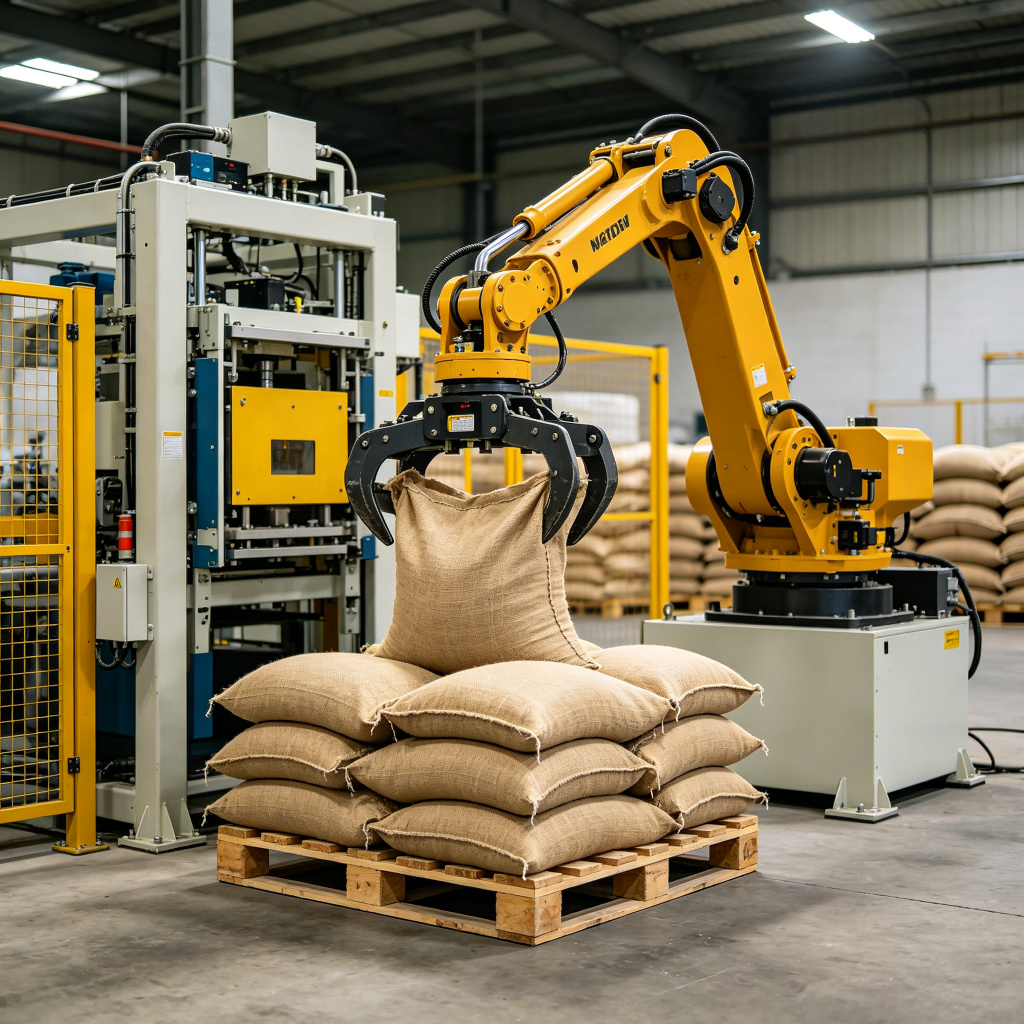
Pallet Pattern Design: The Specification That Decides Stability
Palletizing is not just stacking — it is engineering the pallet load so it survives transit. The pattern design is the specification that buyers undervalue until the first load arrives damaged:
Interlocking vs column stacking: interlocking patterns — each layer rotated against the one below — tie the load together and are the standard for cased product. Column stacking, where cases align in straight columns, is faster but unstable for most products unless the cases are rigid and the load is strapped. The palletizer’s pattern recipe must support interlocking for the product’s case dimensions, and the pattern should be verified in a transit test, not assumed.
Layer stability on the slip sheet: the first layer sits on the slip sheet or pallet deck, and its pattern determines the whole load’s base. A full first layer with case corners meeting the pallet edges is the stable base; a partial first layer with overhang is a damage risk. The pattern recipe should be checked against the pallet dimensions — standard pallets come in sizes that rarely match case dimensions exactly.
Overhang and load height: overhang beyond the pallet edge concentrates load on the case corners and causes collapse in transit. The recipe should keep the load within the pallet footprint, and the load height should stay under the practical stacking limit for the case’s edge crush strength. The film wrapping station downstream — see the pallet wrapping machine buying guide — provides the load retention that completes the stability system.
SunAura’s commissioning team runs a pattern verification with the customer’s actual cases and pallets before the line goes into production, and the recipe stores the verified pattern per SKU. This is the part of palletizer commissioning that prevents the “it works at the factory, fails in transit” problem.
Integration With the Case Line
The palletizer is the last machine on the line, and its integration requirements are often underestimated in the line plan:
Case infeed orientation: the palletizer needs cases arriving in a known orientation. The conveyor from the case sealer must deliver cases consistently — the same transport design covered in the conveyor selection guide. On this line, the case sealer and palletizer are separated by a 12-meter conveyor with an accumulation section, so a sealer pause does not starve the palletizer. The cases originate from the automatic carton forming and case packing line delivered alongside, and lines running bagged product feed the palletizer from a weigher-bagger-sealer section upstream.
Pallet handling: empty pallets must be staged and fed automatically, and full pallets removed without stopping the line. The line includes an automatic pallet magazine and a full-pallet outfeed conveyor, with the pallet exchange timed into the recipe cycle. Facilities that plan to hand-feed pallets should reconsider — the pallet exchange is a full-shift labor item that automation removes.
Stretch wrapping after palletizing: a pallet load is not stable until it is wrapped. The typical configuration pairs the palletizer with an automatic pallet wrapper — the rotary arm wrapper or turntable wrapper — so the load is secured immediately. The wrapping station’s cycle time must be shorter than the palletizer’s pallet-build time, or the wrapper becomes the bottleneck.
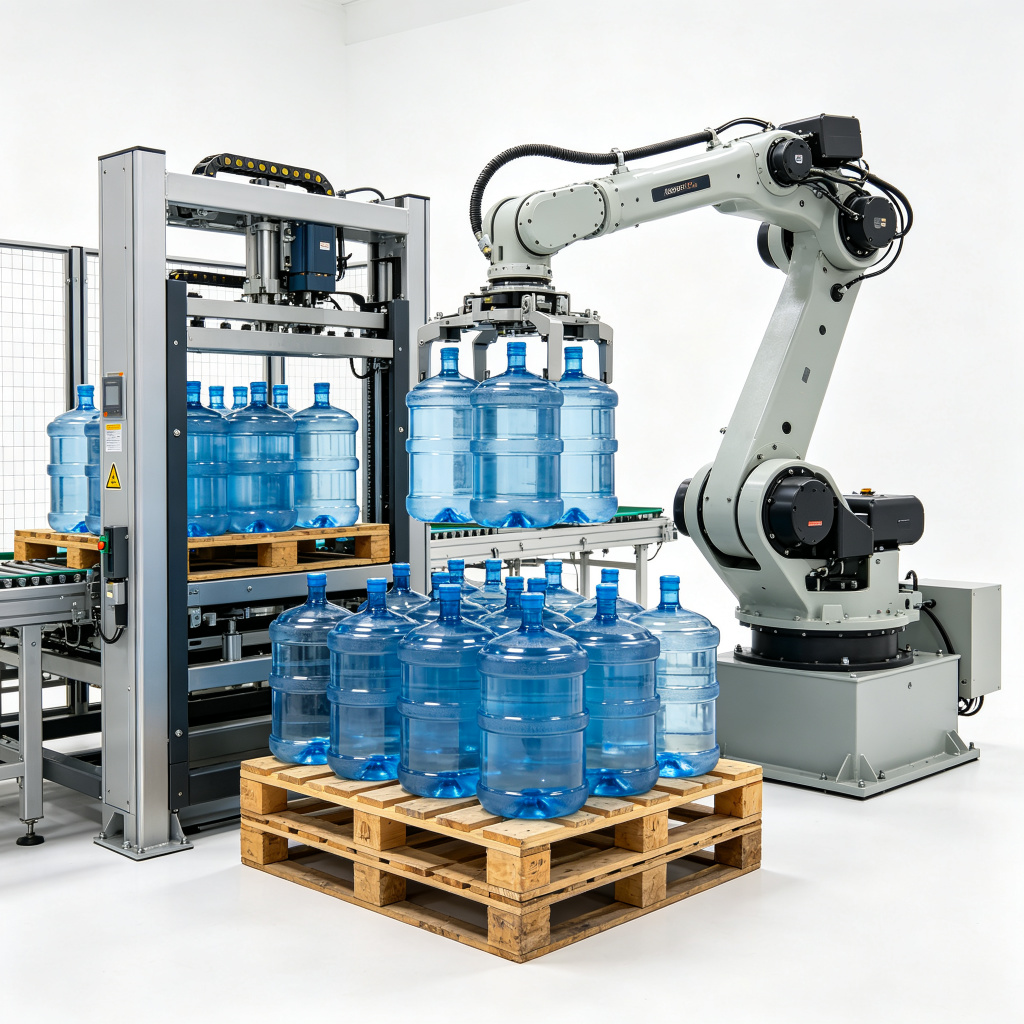
Commissioning Findings From the Southeast Asia Installation
Three findings are worth sharing with plants planning their own palletizer project:
Case dimensions drift between batches: the customer’s case supplier changed board grade mid-project, and the new cases were 2mm larger across one dimension. The palletizer’s pattern recipe handled it, but the layer gripping tolerance needed adjustment at commissioning. The lesson: measure the actual cases — not the drawing dimensions — and re-verify the pattern after any supplier change.
Pallet quality varies: warped or damaged pallets cause pattern misalignment and load instability. The pallet magazine now inspects each pallet and rejects badly warped units automatically. Facilities using mixed pallet sources should add pallet inspection to the spec — it is a cheap sensor that prevents a recurring damage claim.
Layer pressure matters more than pattern: the palletizer applies gentle compression as each layer is placed, settling the layer before the next one. The pressure setting must match the case’s crush strength — too much pressure damages the bottom layer, too little leaves gaps that shift in transit. The commissioning team tuned the pressure with the customer’s case strength data, and the recipe stores it per SKU.
Budget Reality and Payback
Palletizer pricing starts around $35,000 for a low-level unit and reaches $150,000 for high-speed high-level configurations. The payback is driven by labor and throughput:
| Cost Element | Manual Palletizing | Automatic Palletizer |
|---|---|---|
| Operators | 4–8 across two shifts | 1 (monitoring) |
| Throughput ceiling | 10–15 cases/min | 25–60 cases/min |
| Stacking consistency | Varies with operator | Identical every pallet |
| Injury risk | Lifting and reaching at height | Eliminated |
| Typical payback | — | 12–24 months |
The payback window shortens with shift count and case volume: plants running two shifts above 20 cases per minute typically recover the investment in 12–18 months on labor alone. For plants running three shifts, the payback can fall under a year. The decision framework for the full end-of-line — from case packing to palletizing to wrapping — is covered in the end-of-line packaging automation buyer framework.
Maintenance Profile
The palletizer’s moving parts — the layer conveyor, the lifting carriage, and the pattern-forming system — follow a maintenance schedule that keeps the end of the line running:
- Daily: clean the layer-forming area of cardboard dust and check the infeed sensors; inspect the pallet magazine for misfeeds
- Weekly: lubricate the lifting chain and carriage guides; check the layer conveyor drive and the pneumatic cylinder seals
- Monthly: verify the pattern recipe alignment with a test pallet; check the gripper or layer-stop wear; inspect the safety interlocks
- Quarterly: full inspection of the lifting mechanism, chain tension, and servo calibration on the carriage drive
The pattern alignment check is the maintenance task that protects load quality — a pattern that drifts 5mm per layer becomes a 50mm shift at full load height, and that is a transit claim waiting to happen. The monthly test pallet takes 10 minutes and is the cheapest quality insurance on the end of the line. Consumables — layer stops, gripper pads, sensor spares — ship under SunAura’s 48-hour spare parts dispatch program, and the full stocking method is covered in the packaging machine spare parts strategy guide.
Frequently Asked Questions
Can a palletizer handle multiple SKUs?
Yes, within the recipe range. Each SKU has its own pattern recipe — case dimensions, interlocking pattern, layer count, and load height. Changing SKUs is a recipe recall on the HMI, typically under 5 minutes including the pattern verification. The practical limit is the range of case dimensions: very different case sizes may need a gripper or layer-format change. Facilities running both tall and flat cases should confirm the size range in the specification.
What is the difference between a layer palletizer and a robotic palletizer?
A layer palletizer moves whole layers of cases at once — fast and efficient for uniform loads, best for high volume with limited SKUs. A robotic palletizer picks cases individually with a gripper — slower per case but far more flexible, ideal for many SKUs, mixed patterns, and lines where case sizes change frequently. The decision rule: uniform high volume favors the layer palletizer; multi-SKU flexibility favors the robotic unit. The robotic options are covered in the palletizer range alongside the layer machines.
How much floor space and ceiling height does a high-level palletizer need?
A high-level layer palletizer typically needs a footprint of about 6m × 4m including the infeed and pallet handling, plus service access — and ceiling height of 4.5–5.5m because the stacking platform is elevated. Facilities with lower ceilings should compare the low-level or robotic options, which run at floor height. The layout planning method, including the clearance rules for the palletizer’s service areas, is covered in the packaging line layout design guide.
Does the palletizer need the stretch wrapper, or can loads be moved unwrapped?
Never move an unwrapped pallet load of cased product — the load shifts in the first forklift turn. The stretch wrapper is not optional for most products; it is the load’s structural retention. The palletizer and wrapper run in sequence, and the combined cycle defines the end-of-line throughput. If the budget forces a choice, the wrapper comes first — a wrapped manual stack is safer than an unwrapped automated one.
What is the lead time and installation time?
High-level layer palletizers run 6–10 weeks lead time for standard configurations. Installation and commissioning typically take 1–2 weeks on site, including the pattern verification with customer cases and pallets. The palletizer is usually the longest-lead machine in the end-of-line section, so it should be ordered early in the line project — the infeed conveyor height and pallet handling layout depend on the palletizer’s specification.
Operating Discipline on a Palletizing Line
Palletizers run reliably when the operators follow three disciplines that sound simple and get skipped under pressure. First, verify the pattern on the first pallet of every SKU change — a 30-second visual check that catches a wrong recipe before 40 pallets are built wrong. Second, keep the infeed conveyor clear of stray cases and debris; a palletizer jam takes 20 minutes to clear and the layer-forming sensors are the first casualty of accumulated dust. Third, log the palletizer’s cycle counts and use them for the monthly pattern alignment check — the count tells you when the layer stops have worn before the pattern drifts into a transit claim. These are the operating habits the commissioning training establishes, and they are what separate plants that run 16 months between service calls from plants that call every month.
Availability and Support
The high-level layer palletizer is available for order with SunAura’s standard export package: FAT with customer cases and pallets, installation supervision, operator training, pattern verification, CE certification, and an 18-month warranty on servo and mechanical components. To review your case dimensions, pallet standards, and throughput with the applications engineering team, contact SunAura Machinery.
About SunAura Machinery
SunAura Machinery is a packaging equipment manufacturer based in Qingdao, China, exporting to more than 100 countries. The company’s palletizing range covers high-level and low-level layer palletizers, robotic palletizers, and the conveying and pallet wrapping equipment that completes end-of-line automation, all CE certified.
Editorial note: Specifications and payback figures reflect the referenced installation and are subject to change. Contact SunAura Machinery for current configuration options.