Chain-Plate vs Belt Conveyor: Choosing a Slat or Belt Surface for Hot, Wet and Washdown Bottling Lines
November 18, 2026James TorresRead time: 12 min
Chain-Plate vs Belt Conveyor: Choosing a Slat or Belt Surface for Hot, Wet and Washdown Bottling Lines
On a bottling or filling line, the conveyor is the thing that connects every machine, and the surface that carries the containers quietly decides how much trouble the line will give. Buyers specifying a new line or replacing a worn section usually face a choice between a chain-plate conveyor, also called a slat or table-top chain, and a belt conveyor. From a distance both move product from one end to the other, but they are built on opposite ideas. The chain-plate is a rigid, segmented metal surface that positively grips and never slips; the belt is a continuous, smooth surface that runs quietly and cheaply over long straight runs. Pick the wrong one for the conditions and the failure is predictable: a belt that slips and degrades in heat and oil, or a heavy chain that costs more than the simple job ever needed.
SunAura Machinery lays out both surfaces across beverage, edible-oil, dairy and processing plants, and the useful starting point is that the harsher the environment, the more the argument tilts toward the chain-plate. Here is how the two are built, where each earns its keep, and where the cheaper belt is the correct call and where it is a false economy.
How the Chain-Plate Conveyor Is Built
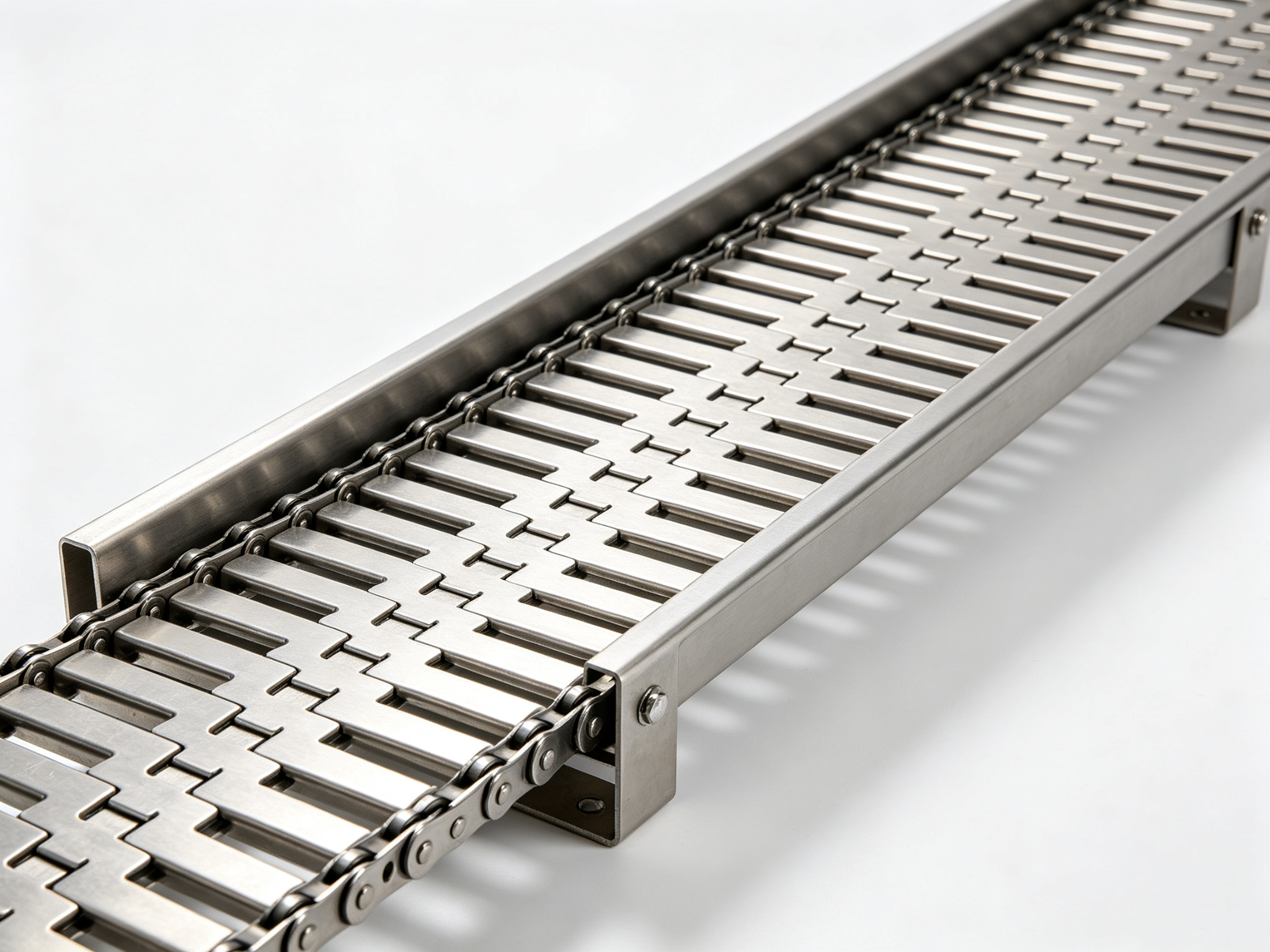
The chain-plate conveyor for bottles is made from interlinked chain segments and rigid slats, typically steel or stainless steel, and sometimes engineered plastic, that form a continuous but segmented surface. The chain is driven positively by sprockets, so the movement is mechanical rather than relying on friction. That gives the chain-plate its defining traits: it can hold concentrated loads without deflection, it does not slip even on inclines or in stop-and-go indexing, and it tolerates high temperatures, cutting oils and abrasive particles that would destroy a belt. Because the surface is modular, it can be built through curves, elbows, accumulation zones and elevation changes using specially shaped links, which is why it is the backbone of bottling lines that have to turn containers between filler, capper, labeler and packer.
The costs of that rigidity are real. The frame and drive are heavier and more expensive, the multiple metal-on-metal joints need lubrication and disciplined maintenance, and the chain runs noisier and with more vibration than a smooth belt. For long, high-speed straight runs a chain uses more energy per unit because of the friction at every link. The trade is a machine that is more demanding to own but far more durable in severe conditions, and one where individual slats or links can be replaced locally rather than swapping a whole belt.
A stainless chain-plate surface: the slats positively engage the drive and tolerate heat, oil and heavy washdown.
How the Belt Conveyor Is Built
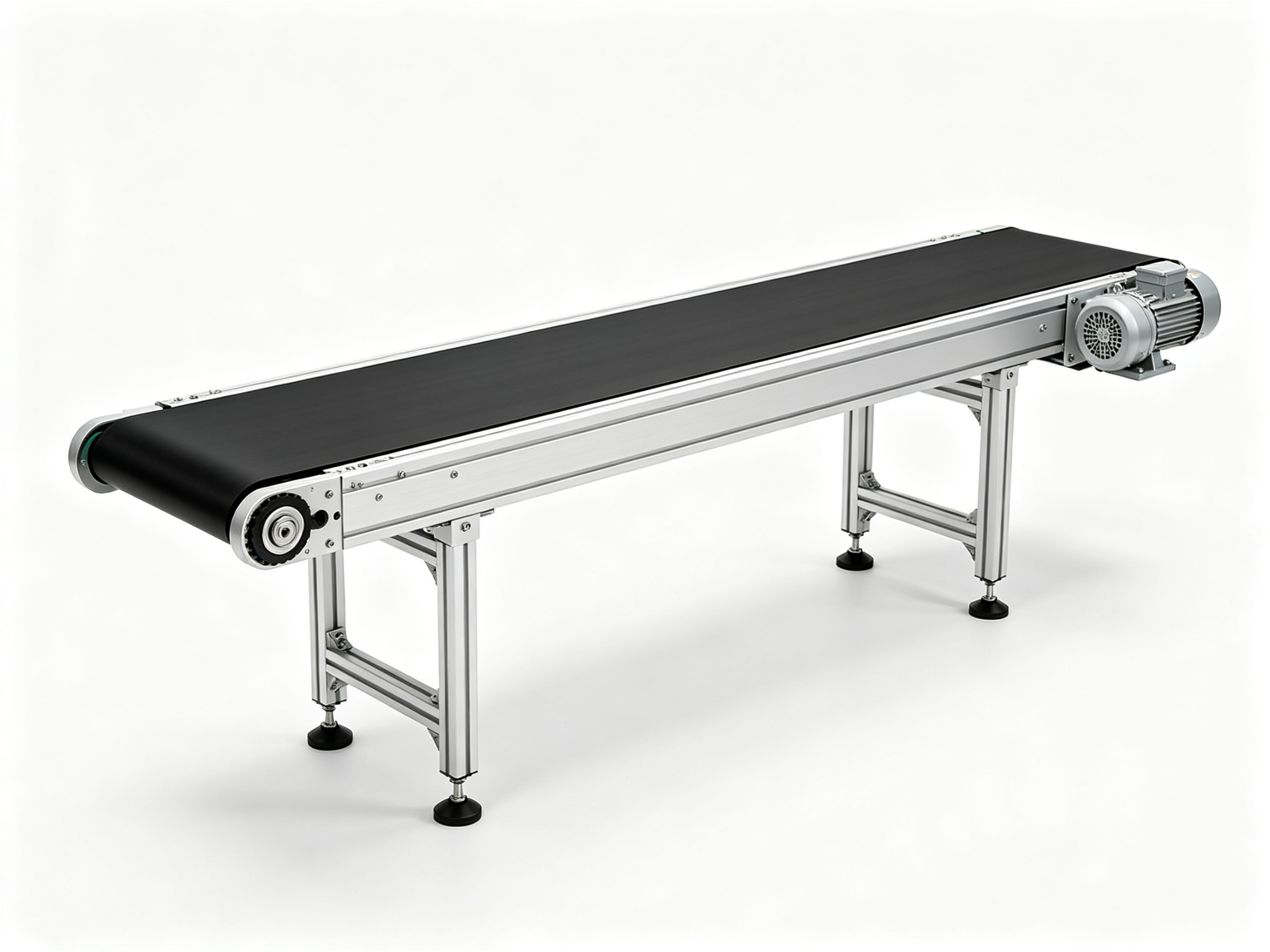
The belt conveyor runs a continuous belt of rubber, PVC, polyurethane or fabric-reinforced composite over pulleys and idlers, and the load rides on the smooth surface. It is the simpler, lighter and quieter approach, with fewer moving parts and a lower capital cost for a straightforward straight run. A well-designed belt with low-resistance idlers is more energy-efficient than a chain over long distances and can reach higher top speeds because there are no segmented transitions. For delicate products, loose bulk and processes that need an uninterrupted smooth surface, the belt is gentler and easier to seal for sanitary use, provided the belt material and splices are suitable. On a clean, dry, straight line it is often the rational, economical choice.
The belt’s weakness is that it depends on friction and on a material that can degrade. Heavy loads can slip, sticky or high-friction products can drag, and the belt softens or fails at elevated temperatures or in oily environments. Tracking has to be maintained, splices can fail, and abrasive or sharp objects shorten the belt’s life sharply. Inclined work needs cleats or special belts, which complicate tracking, and a belt used in a harsh application it was not built for will need repeated replacement and cause unplanned downtime. The belt is the right machine for continuous, lighter, cleaner duty; it is the wrong one where the environment is severe.
A belt conveyor: a continuous smooth surface runs quietly and efficiently over long straight, clean runs.
Selection Table: Chain-Plate and Belt Side by Side
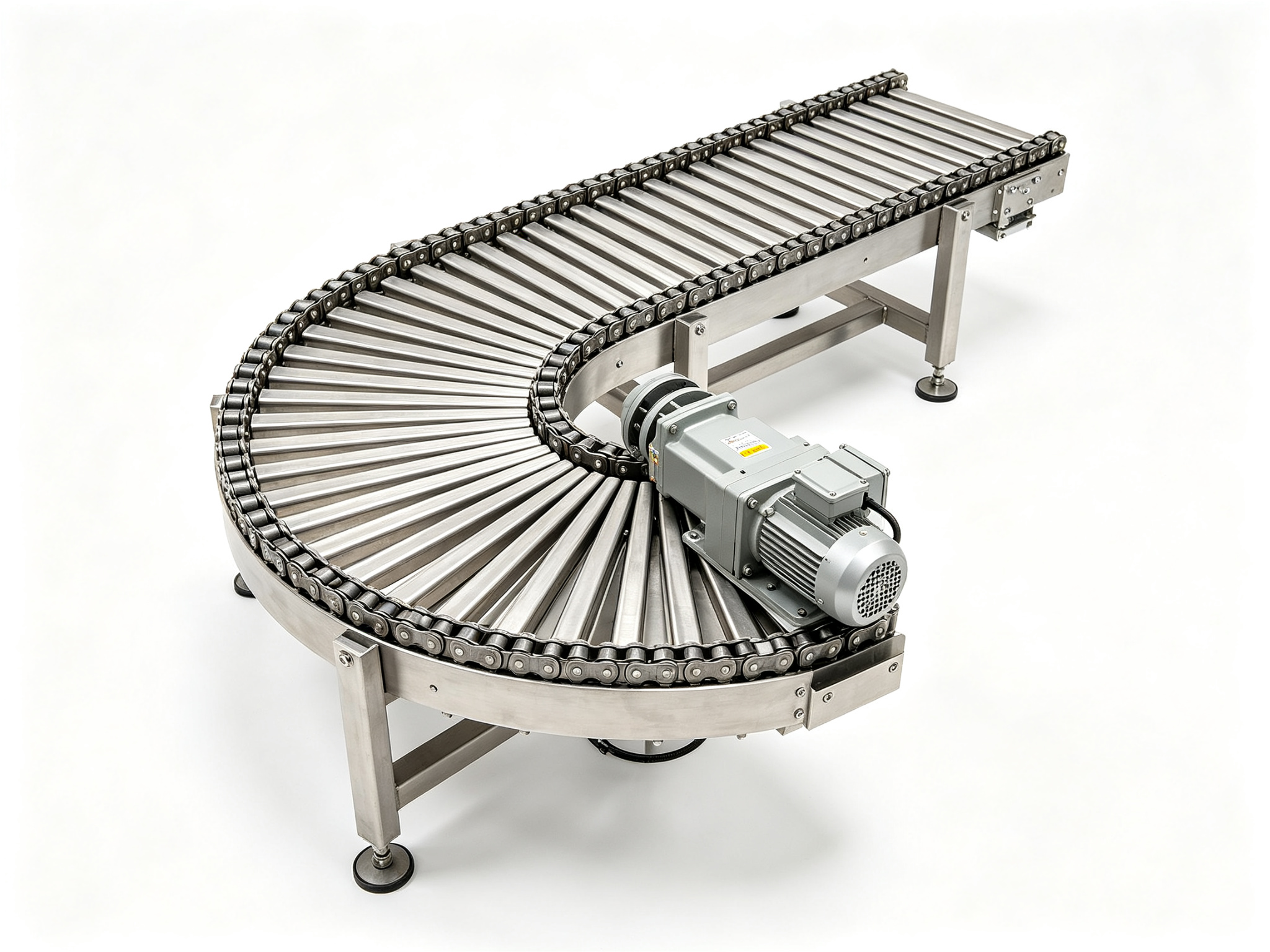
A bottling line is a demanding test of a conveyor because containers have to travel through straight runs, right-angle and 180-degree turns, and elevation changes without leaving the surface or falling over. Industry suppliers build these table-top chains from food-grade plastic for ordinary beverage work or from stainless steel such as SS304 for heavier containers and wet wash-down environments. The chain flexes through elbows and S or Z layouts, carries containers from filler to packer on one continuous surface, and indexes accurately against the machines. Mineral water, soft drinks, dairy and pharma lines use plastic or narrow chains, while edible-oil and heavy-container plants specify stainless steel for the wet washdown. It is this combination of curves, positive positioning and washdown tolerance that makes the chain-plate the default in bottling rather than a belt.
That does not mean belts have no place in the same plant. A long, straight, clean run between two fixed points, or a section handling delicate or bulk product, can be served more quietly and cheaply by a belt. The decision is often made zone by zone rather than for the whole line: chain-plate where the line turns, indexes or gets washed, and belt where it runs straight and clean. Specifying one surface everywhere is usually a sign that the layout was not thought through.
A chain-plate turn carries containers through a right-angle bend without a transfer or a belt tracking problem.
When Not to Buy Each One
Do not buy a belt for a hot, oily, abrasive or heavily washed section, or for a line that turns and indexes repeatedly; it will slip, track off and need frequent replacement, and the downtime will exceed the saving on the machine. Do not buy a chain-plate for a long, clean, straight, low-duty run where a simple belt would do; the heavier frame, lubrication and noise are cost and upkeep the job does not require. And where the product is very delicate or bulk material needs a seamless gentle surface, a segmented chain can be the wrong interface even if the environment is otherwise harsh, so match the surface to the product as well as the conditions.
Total Cost, Durability and Procurement Risks
The comparison should be made on lifecycle cost rather than the purchase tag. A belt is cheaper up front and cheaper to run on a clean straight line, but in a harsh application it becomes a recurring replacement cost with unplanned downtime. A chain-plate costs more to buy and needs a disciplined lubrication and wear regime, but it runs for a long service life under severe loads and can be repaired a link or a slat at a time. Facilities with a strong mechanical team can support that maintenance well; plants that want low-skill, quick-change components may be better served by belts. Build the TCO around the actual environment, because a belt that is replaced every few months is not the bargain its price suggests.
The procurement risks are mostly in the specification. Confirm the chain material — plastic against stainless steel — against your container weight, washdown chemicals and line speed, and confirm the chain pitch and width suit the smallest container so it cannot tip or fall through. On belts, specify the material against temperature and cleaning agents and confirm the splice and tracking arrangement rather than assuming a generic belt. If the line curves, confirm the shaped links and transfer points are engineered for your layout rather than added on site. And align conveyor speeds and transfer heights with the filler, capper and packer before anything is ordered, because mismatched transfers are where containers topple.
Both surfaces handle buffering, but in different ways. A chain-plate can be built with zero-pressure accumulation zones where containers stop and wait without putting pressure on the load in front, using sensors and special links, which is valuable when a downstream machine such as a labeler or a packer runs intermittently. The positive drive also means the buffered containers stay indexed and aligned rather than drifting. A belt can accumulate too, but stopping a friction belt against a moving load tends to push and compress product, and it needs a more elaborate sensor and drive setup to avoid damage. If accumulation is a core part of the process rather than an occasional event, the chain-plate usually gives cleaner control, especially with rigid containers.
Noise and guarding are the other practical difference. The chain’s metal links and sprockets generate higher decibel levels and create pinch points that need physical guarding and interlocked covers, while the lubricants the chain uses can attract dust and create housekeeping issues. A belt runs quieter and has fewer exposed pinch points, though its pulleys still need guarding and a worn belt can develop frayed edges. In plants where operators work close to the conveyor for whole shifts, the noise difference is a genuine ergonomic factor, not a detail, and it may justify acoustic treatment on a chain section. Factor the guarding, lubrication and noise into the installed design rather than treating them as retrofit items, because a conveyor that is loud or unguarded is a compliance problem waiting to be written up.
Frequently Asked Questions
Is a chain-plate or belt conveyor better for a washdown bottling line?
For the sections that are washed, turn and index, a stainless chain-plate is the better choice because it tolerates water, chemicals and heat and does not slip. Long clean straight runs can still use a belt. The choice is often made zone by zone rather than for the whole line.
Do chain-plate conveyors need lubrication?
Yes, the metal chain and joints need a disciplined lubrication and wear-check regime, which is part of their maintenance burden. Some plastic chains run on low-friction wear strips with less lubrication, but confirm the requirement for the chain you specify.
Why would a belt slip on an incline?
A belt moves the load by friction, so a heavy load on a slope can lose grip. Cleated or special belts help, but a chain-plate’s positive sprocket drive does not slip, which is why it is preferred for inclined and indexing work.
Can a plastic chain be used instead of stainless steel?
Food-grade plastic chains are common for ordinary beverage and bottling work where weight and quiet operation matter. Stainless steel is used for heavier containers, wet wash-down and higher mechanical loads. Choose against your container weight and hygiene regime.
Conclusion: Match the Surface to the Conditions
Neither conveyor is universally better; each is the answer to a different operating environment. Choose the chain-plate where the line is hot, oily, abrasive or wet, where containers turn and index, and where positive grip and durability outweigh the higher cost and maintenance. Choose the belt where the run is long, clean, straight and relatively light, and where quiet, smooth, low-cost transport is the priority. On a real bottling line the two often coexist, with chain-plate at the curves and washdown zones and belt on the clean straights. Specify the material against your containers and chemicals, build the lifecycle cost, and let the conditions rather than the price tag make the call.
Selected Sources
This article draws on supplier and industry material comparing slat and belt conveying surfaces, including YiFan Conveyor (slat chain versus belt comparative analysis on drive, heat, oil, abrasion and maintenance), SANAM Engineering (slat top-chain conveyor materials, SS304 and plastic chains, and bottling layouts), and Tianqi Conveyor (tabletop chain conveyor applications for food, beverage and pharma). Figures cited as supplier ranges are estimates drawn from industry material and should be confirmed against the specific chain or belt quotation and your washdown regime.
If you are planning a bottling or filling line and want help choosing the chain-plate and belt sections, materials and turns for your containers and washdown regime, tell us about your line on the SunAura Machinery contact page and we will work through the layout with you.
James TorresLine Integration & Controls Engineer
James Torres designs the controls and integration architecture for multi-station packaging lines. He has 11 years of PLC, servo, and HMI experience, aligning weigher, wrapper, filler, capper, and downstream stations to a single control system and consistent throughput. He writes on line balancing, communication protocols, recipe changeover, and why specifying machines as separate purchases often creates bottlenecks.
We use cookies to improve your experience on our website, analyze traffic, and personalize content. By browsing this website, you agree to our use of cookies. Learn more