SUNAURA MACHINERY BLOG

Gravity vs Powered Telescopic Conveyor: Choosing an Extendable Loader for Container and Truck Docks

Gravity vs Powered Telescopic Conveyor: Choosing an Extendable Loader for Container and Truck Docks

Stand at a busy loading dock and the waste is easy to see. Workers carry cartons ten or fifteen metres from a pallet or a sortation line into the back of a container, place them, and walk back empty-handed, again and again until the trailer is full. The machine that removes most of that walking is a telescopic conveyor, an extendable boom that reaches deep into the vehicle and retracts as the load builds. The decision buyers actually face is whether that boom should be gravity or powered, and the two are not interchangeable. Pick gravity where the floor and the flow give you a natural decline and you save a lot of money. Pick powered where the run is level, the loads are heavy, or the conveyor has to climb, and the cheaper machine simply will not move the goods.

This is a useful lesson from the projects SunAura Machinery works on with distribution centres and export plants. A third-party logistics operator in Rotterdam, reported in industry coverage, replaced two manual dock positions with extendable conveyors and cut the time to unload a trailer from about 90 minutes to roughly 38, without fixed steelwork or a shutdown. The gain came from removing the carry distance, but the configuration still had to be chosen correctly. Here is how the two telescopic types differ, where each earns its keep, and where specifying the wrong one turns the dock into a jam.

What a Telescopic Conveyor Is

A telescopic or expandable conveyor is built from nesting sections that slide open to a working length and compress to a fraction of it for storage. The sections typically sit on lockable casters with height-adjustable legs, so the conveyor can follow a moving load point — a container door, a trailer bed or a temporary packing station — rather than stay fixed. Suppliers commonly describe a retracted-to-extended ratio of roughly one to three or one to four, with booms made from sections of a few metres each that can reach from the dock well into a vehicle. The carrying surface is either free-turning rollers or skate wheels on a gravity unit, or motorized rollers and driven belts on a powered one, and both are built into the broader range of industrial conveyor systems for the in-feed. The frame is the same idea; the drive is where the two split.

How the Gravity Telescopic Works

The gravity telescopic conveyor has no motor. Its rollers or skate wheels turn freely, and the load moves only when the conveyor is set to a slight decline — industry guidance commonly suggests two to five degrees — so a carton travels under its own weight, or when a worker gives it a push. With no drive, there is no electrical supply at the dock, no gearbox and almost nothing to service. It is the lowest-cost type, and it is light and easy for one person to extend, retract and move between bays. The gravity boom is the standard extension at the end of a powered line, where product arrives with momentum and simply rolls the last few metres into the trailer.

The limits follow from the missing motor. Gravity needs a slope, so on a level dock the load has to be pushed by hand, and it can never move product uphill. The speed is not controlled: a steep pitch lets heavy cartons accelerate into the end of the trailer, while very light or soft-bottomed loads may stall or sag between rollers. Suppliers rate gravity units within a load capacity band, and goods beyond it simply will not flow reliably. The gravity boom is excellent where the geometry hands you a decline and the loads are firm, flat-bottomed cartons; outside those conditions it becomes a manual handling job wearing a conveyor’s clothes.
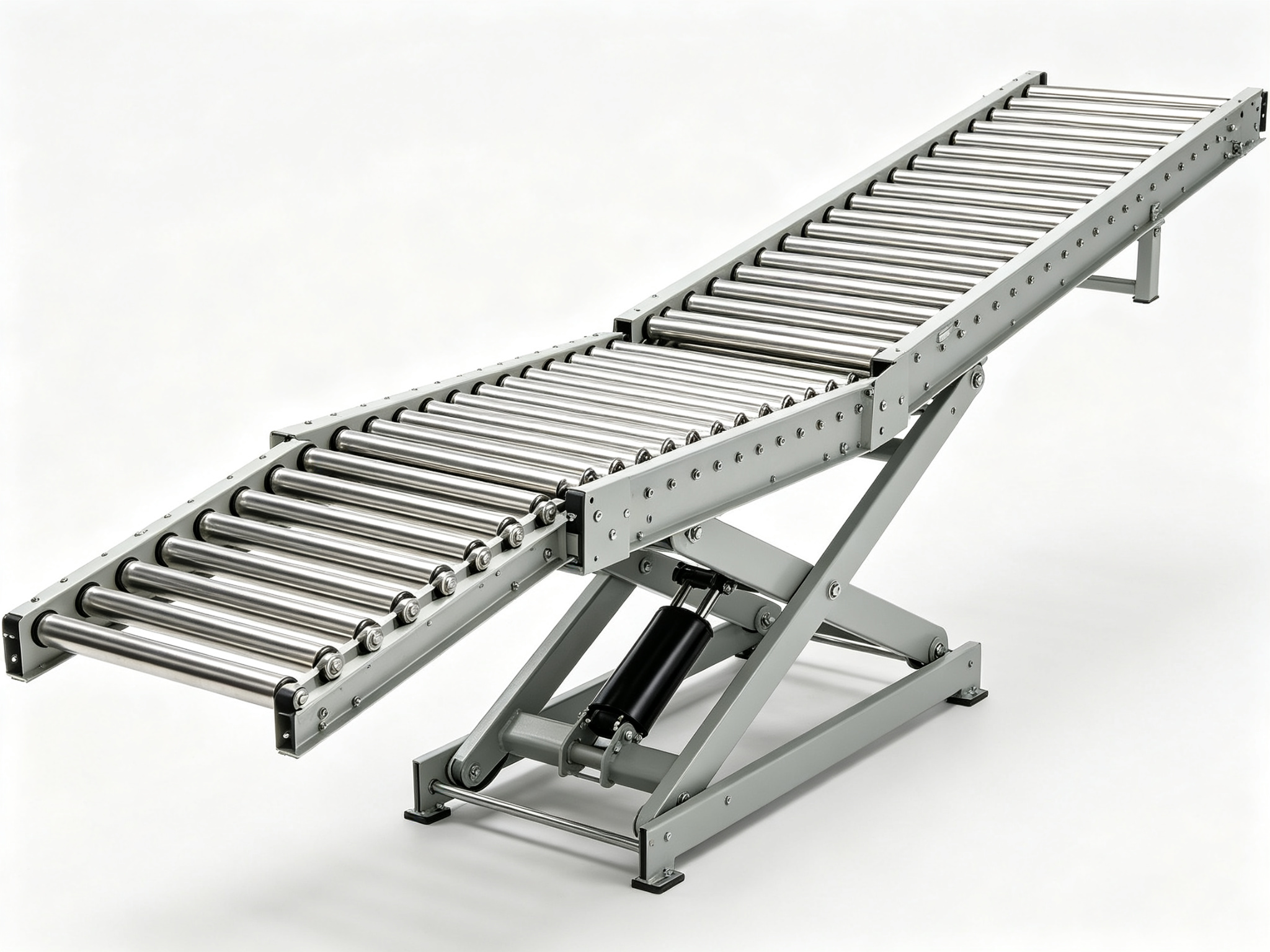
gravity telescopic roller conveyor on adjustable lift with free-turning stainless rollers for manual container loading
A gravity telescopic boom: no drive, so cartons move on a slight decline or a worker’s push.

How the Powered Telescopic Works

The powered telescopic conveyor carries motorized rollers or a driven belt through the nesting sections, with a flexible drive that tolerates the change in length as the boom extends. It moves loads on a level run, up an incline and at a steady controlled speed, regardless of whether the floor gives you a slope. Powered belt booms are the common choice for high-volume loose loading, often built in two to five sections that can reach many metres into a trailer, with adjustable or hydraulic height and, on larger units, bidirectional operation for both loading and unloading. The operator sets the speed to match the receiving line and does not have to push anything.

The trade-off is cost and upkeep. The powered unit needs an electrical supply at the dock, motors and drives that must be maintained, and controls that can include variable-frequency drives and sensors. Larger booms are typically locked to the ground during operation for stability, which makes them less casually portable than a light gravity frame. The upfront price is materially higher, and a fault in the drive can stop the whole dock. The powered boom is the correct machine where the run is level, the volume is high, or the loads are heavy and would not move on their own; it is over-specified where a simple gravity decline would already do the work.
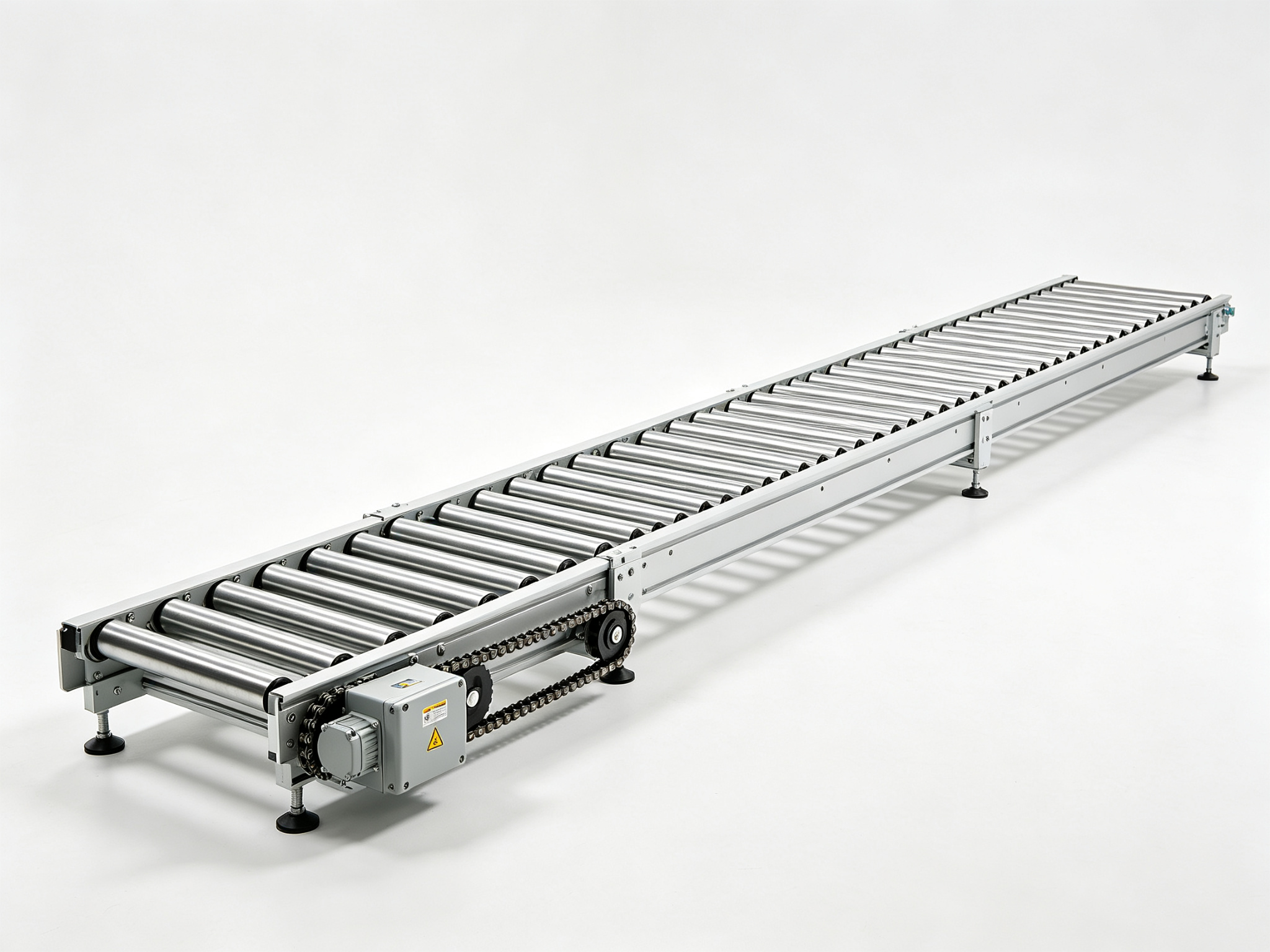
powered telescopic roller conveyor with gear motor and chain drive for controlled level container loading
A powered telescopic boom: the gear motor drives the rollers at a controlled speed, including on level and inclined docks.

Selection Table: Gravity and Powered Telescopic Side by Side

Sizing the Boom to the Dock

The first number to get right is reach. Measure from the fixed transfer point at the dock to the deepest stow position in the container, and specify the extended length to cover that distance with some margin. Because the boom compresses, also confirm the retracted length fits the aisle and storage bay when it is not in use. The carrying surface is then set by the load: rollers need a load supported by at least several rollers at once, while skate wheels are lighter and cheaper but unsuitable for soft or small-base items that can fall between them. Roller diameter and pitch should be chosen against the heaviest carton and the shortest base, rather than the average. Height adjustment matters because trailer beds and dock levels differ, and a boom that cannot match the bed height creates a transfer step that catches cartons.

How the boom is fed is the other half of the layout. A telescopic boom rarely works in isolation; it is fed from a sortation line or a staging conveyor, and the transfer point between the fixed conveyor and the moving boom has to line up in height and speed. Curved and merge modules are used where the in-feed has to turn into the bay, and powered in-feed is normally needed to bring goods from picking to the tail of the boom. Getting the feeding path wrong is a common cause of a good boom performing badly.

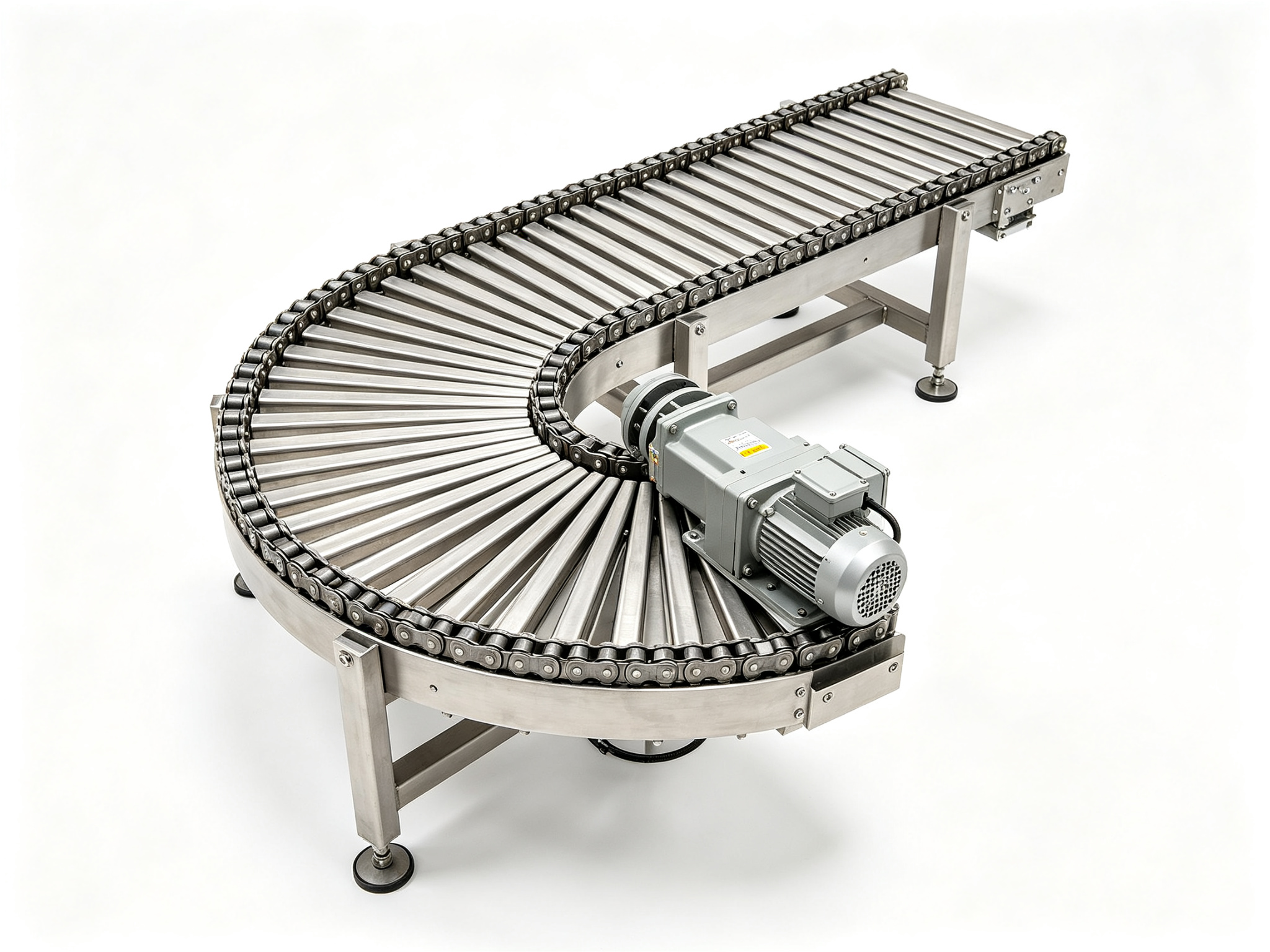
powered curved roller conveyor merge module feeding a telescopic loading boom at a dock turn
A powered curve module turns the in-feed into the loading bay and keeps the flow synchronized with the boom.

When Not to Buy Each One

Do not buy a gravity boom if the dock is level and there is no room to pitch it, the loads are heavy or soft-based, or the line has to move product uphill — the cartons will stall and the work returns to manual carrying. Do not buy a powered boom if a natural decline already moves firm cartons and the volume is modest, because the motors and controls add capital and maintenance that gravity would avoid. And consider a fixed conveyor rather than either telescopic type if the path and the load point never change and the volume is permanently high; the portable boom is built for a moving load point, and a fixed line can be cheaper and more stable for a permanent lane.

Cost, Payback and Procurement Risks

The case for either machine rests on the labor removed. Industry coverage of converted manual docks reports typical dock-time reductions in the range of forty to sixty percent, and the capital is modest compared with fixed installations because there is no building work. The gravity boom has the lowest upfront and running cost, while the powered boom costs more per metre and adds an energy bill, but it unlocks level and high-volume docks that gravity cannot serve. Estimate the minutes saved per trailer, multiply by the number of trailers and the loaded wage across a year, and compare that against the installed price; in high-throughput docks the payback is often short, while an under-used boom never earns its keep.

The procurement risks sit in the details rather than the headline. Confirm the quoted reach is the extended length you actually need and that the retracted footprint fits storage, because brochures sometimes quote one without the other. Check whether drives, controls, side guides, e-stops and guarding are included or priced separately, and whether the frame can support your heaviest load per metre. On powered units, confirm the electrical supply and locking points exist at the dock before ordering, and on multi-section booms confirm the stability arrangement. If the boom will feed a wrapping or palletizing station, align the heights and controls with that equipment up front rather than on site.

The choice of how a load leaves the dock is connected to how it is wrapped and how it is carried. Plants deciding what happens at the end of the line can compare operator-free and manual wrapping in our guide to semi-automatic and fully automatic pallet wrappers, while those handling bottles and hot or wet goods should weigh the conveyor surface in our comparison of chain-plate and belt conveyors for washdown lines.

Frequently Asked Questions

Can a gravity telescopic conveyor work on a level dock?

Only with workers pushing the loads, which removes much of the benefit. Gravity relies on a decline of a few degrees, so a level or uphill dock is a job for a powered boom. If you cannot create the pitch, do not assume gravity will manage.

How far into a container can a telescopic boom reach?

That depends on the number of sections. Powered belt booms of several sections can extend many metres into a trailer, and the boom retracts as loading progresses. Specify the reach from the dock to the deepest load rather than choosing by section count alone.

Are skate wheels or rollers better?

Skate wheels are lighter and cheaper for flat-bottomed cartons, but rollers give more stable support for heavier or irregular loads. Items with small or soft bases can fall between wheels, so choose the surface against your actual cartons.

Does a powered boom need to be fixed down?

Larger multi-section booms are typically locked to the ground while running to prevent tipping, even though they move on casters when retracted. Smaller units remain portable. Confirm the stability arrangement for the size you specify.

Conclusion: Let the Dock Geometry Decide

The gravity and powered telescopic conveyor solve the same problem — removing the long carry into a vehicle — but they answer to different floor conditions. Choose gravity when a natural decline, firm flat cartons and modest volume let the load move without a motor, and take the lowest cost and maintenance. Choose powered when the dock is level, the line inclines, or the volume and weight demand a controlled steady flow that gravity cannot provide. If the load point is permanent rather than moving, a fixed conveyor may be the better answer. Measure the real reach, confirm the feeding path and let the dock geometry rather than the brochure make the decision.

Selected Sources

This article draws on supplier and industry material describing extendable and telescopic loading conveyors, including Sentao Group (expandable conveyor applications, the Rotterdam 3PL dock conversion, load-capacity and pricing ranges, and decline guidance), Naili (truck-loading conveyor sections, telescopic belt reach, hydraulic height and stability), and Nailishen (flexible and extendable conveyor layouts). Figures cited as supplier ranges or dock-time reductions are estimates drawn from industry material and should be confirmed against the specific machine quotation and your own dock geometry.

If you are laying out a loading dock and want help choosing the boom, in-feed curves and height arrangement for your trailers and cartons, share your dock layout and throughput on the SunAura Machinery contact page and we will work through the specification with you.

We use cookies to improve your experience on our website, analyze traffic, and personalize content. By browsing this website, you agree to our use of cookies. Learn more
DimensionGravity telescopicPowered telescopic
DriveNone; decline or manual pushMotorized rollers or driven belt
Level or inclined runDecline only; never uphillLevel, incline and decline
Relative capital costLowest; no drive or wiringHigher; motors, controls and guarding
Speed controlNone; varies with pitch and loadSet and adjustable, often by VFD
Power at the dockNot requiredElectrical supply needed
Maintenance burdenVery low; occasional rollersMotors, drives, belts and sensors
PortabilityLight; one operator can move itHeavier; larger booms locked in use
Best load fitFirm flat cartons on a declineHeavy, high-volume and level-flow loads