Gravity vs Powered Conveyor: Choosing Between Unpowered and Motorized Material Handling for Your Line
Walk into most plants and the conveyors are the one piece of equipment nobody notices until they stop working. They run between every machine, through every packing station, and out to the dock. The decision that quietly sets how much they cost, how much they need, and how well they fit the work is whether a section should be gravity or powered. Buyers who treat the two as interchangeable end up one of two ways: paying for motors on a short spur where a worker would have pushed the box anyway, or installing a gravity run on a long, level or uphill lane where product simply stalls and becomes a manual handling job. This guide separates the two approaches, where each earns its keep, and where specifying it is the wrong call.
At SunAura Machinery we lay out conveyor sections across food, beverage, logistics and light-manufacturing facilities, and the honest starting point is that the cheaper option is very often the correct one — but only inside a narrow set of conditions. A gravity conveyor has no motor, no drive and almost nothing to service, which makes it hard to beat for short distances, picking zones and accumulation. A powered conveyor trades that simplicity for controlled, repeatable movement over long runs, up inclines and at high throughput. The right answer is set by the load, the distance, the floor and the people, not by which brochure looked better.
What Each Conveyor Actually Is
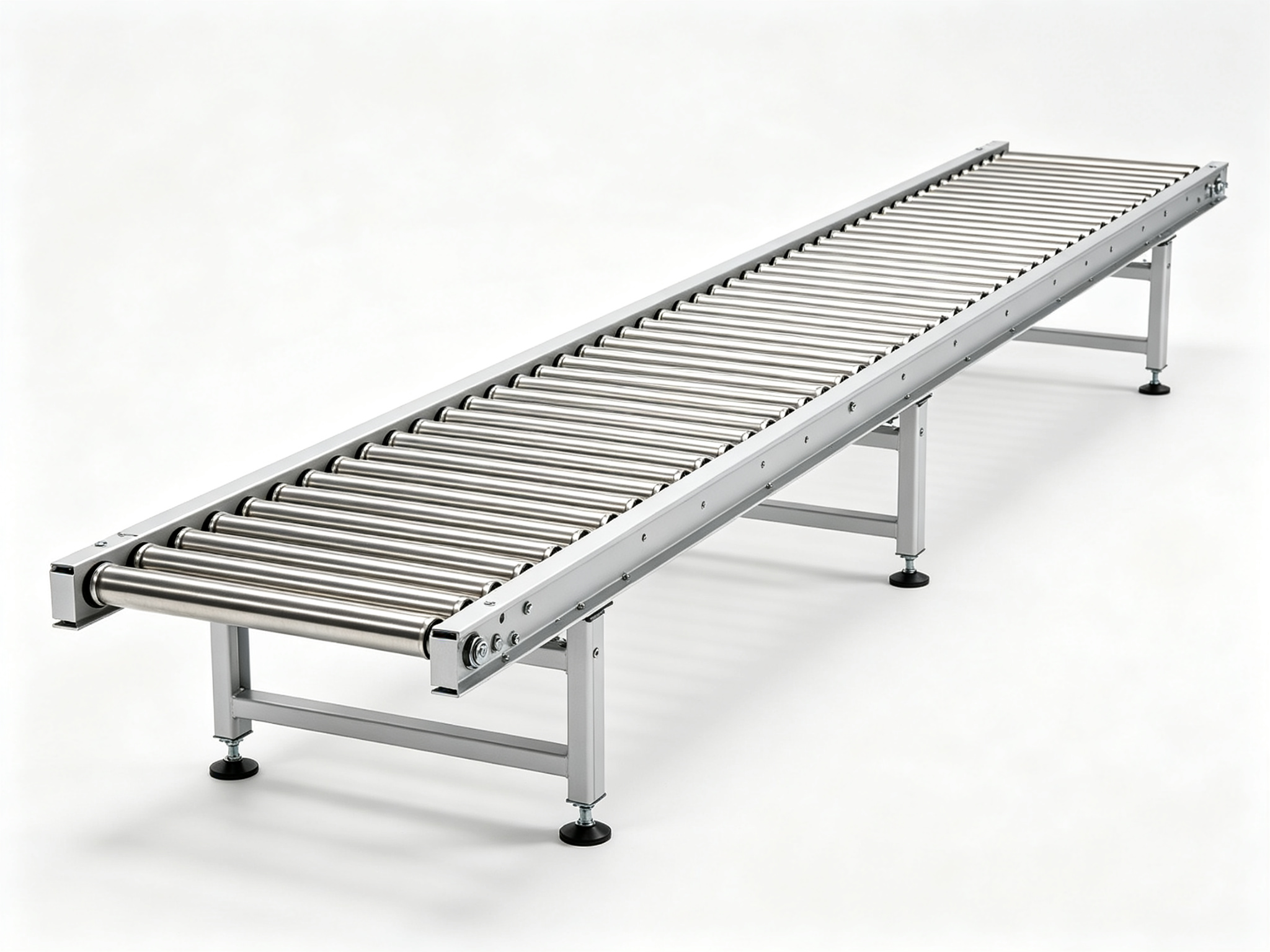
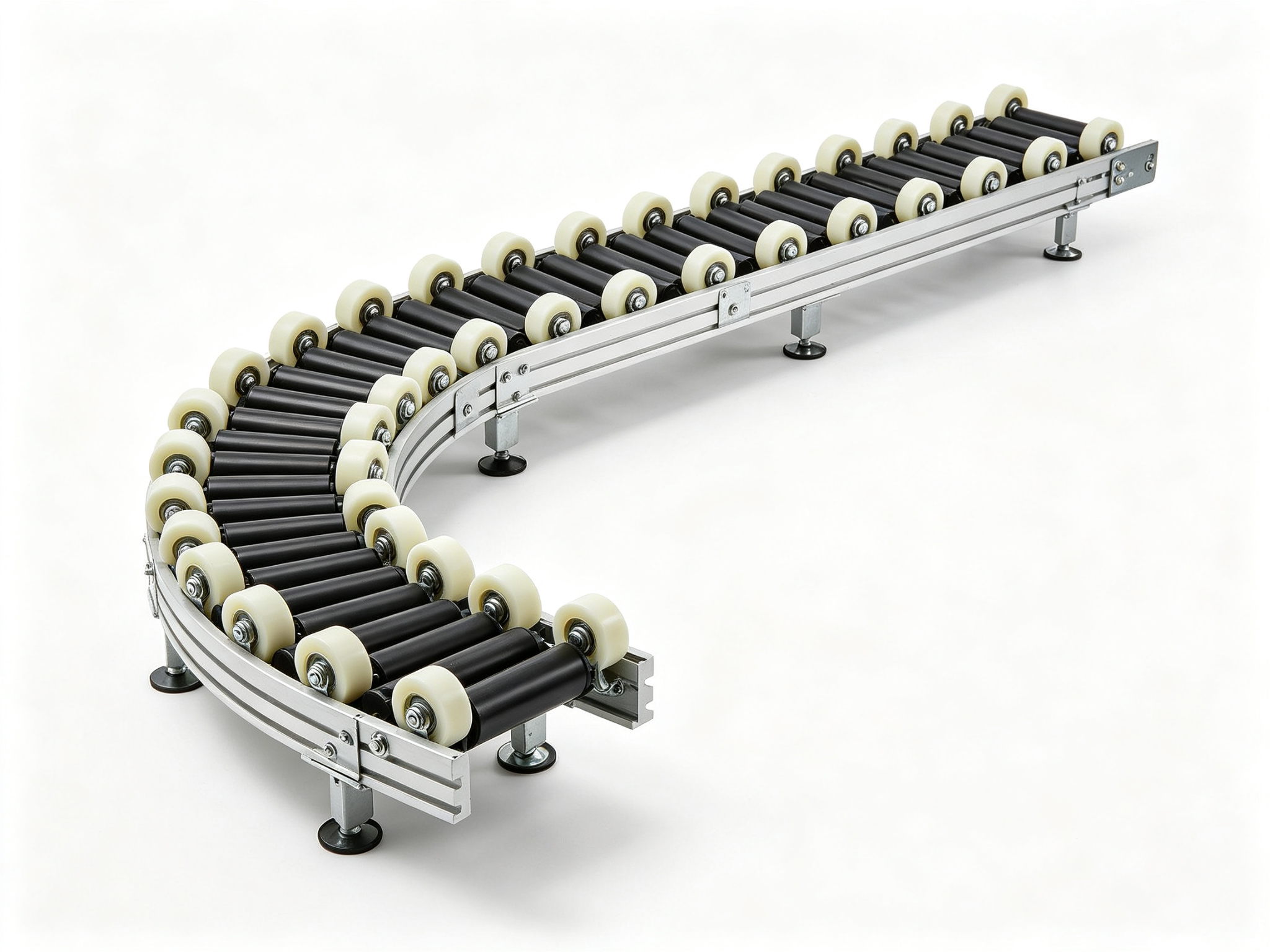
A gravity conveyor moves product without any external drive. The load travels on rollers or skate wheels set into a frame, and it moves only when something acts on it — a slight downward pitch that lets gravity do the work, or a worker who pushes it along. The two common surfaces are rollers, which suit rigid, flat-bottomed loads like cartons and totes, and skate wheels, which are small wheels mounted in rows that turn freely and work well for lighter packages and flexible, extendable layouts. Because there is no motor, a gravity section is a frame plus rotating parts and little else.
A powered conveyor — also called a live or motorized conveyor — drives the surface itself. On a motorized roller conveyor, a gear motor turns the rollers through belts or drive bands, so the load moves at a set speed regardless of pitch. On a belt conveyor, a continuous belt runs over a bed and is pulled by a head pulley, which suits softer bags, uneven bottoms and inclines where rollers would not grip. The drive runs continuously or on demand, and the speed, direction and start-stop are controlled rather than left to the load. That control is the whole reason to pay for it.
How Gravity Conveyors Earn Their Keep
The strength of a gravity conveyor is that it does almost nothing and costs almost nothing to run. With no motor, gearbox or electrical supply, it uses no energy, has no drive parts to wear, and can be installed in places where power is not available. A short pitched run will move cartons from one station to the next on its own, and a level run becomes a low-friction surface where workers slide totes during picking and packing. Gravity sections are the standard choice for short spurs, take-away lanes, accumulation in front of a machine, and the flexible, extendable booms that reach into trailers at the dock. They can be reconfigured, moved and extended without an electrician, and a frame built from stainless or coated steel will run for years with little more than the occasional seized roller replaced.
The limits are real and worth stating plainly. Gravity cannot move product uphill, and on a level or very long run it relies on a person to keep the load moving. The speed is not controlled: a steep pitch sends heavy cartons accelerating into whatever is at the end, while a light load may not move at all. Loads need a firm, flat riding surface, so soft bags and irregular items can sag between rollers or hang up. And gravity is a poor fit where throughput has to be consistent and predictable, because the pace is set by whoever is pushing. Within a short, pitched or manual workflow these are non-issues; outside it, they become the reason product stalls.
How Powered Conveyors Earn Their Keep
A powered conveyor solves the problems gravity cannot by taking control of the movement. Because the rollers or belt are driven, the load travels at a steady speed over long, level distances and, crucially, up inclines and around a synchronized line. It does not depend on a worker or a pitch, so a motorized section can feed a filler, a packer or a palletizer at a repeatable rate and keep pace with high-throughput production. Belt conveyors in particular handle soft sacks, pouches and uneven bottoms that would catch on rollers, and powered roller sections can be zoned with sensors so product accumulates without colliding — a feature called zero-pressure accumulation that is difficult to reproduce on gravity.
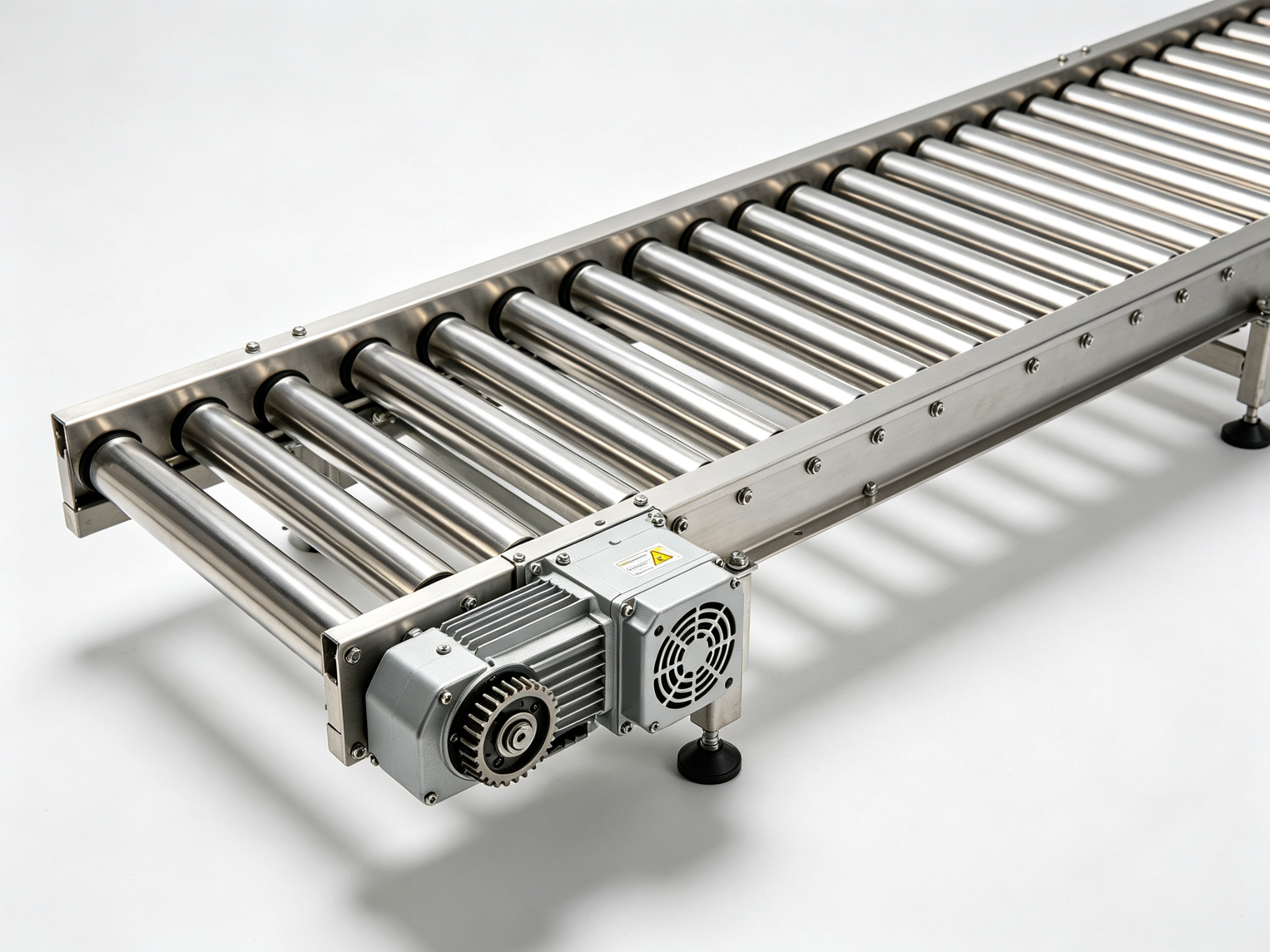
The trade-off is cost and upkeep. Every powered section needs a motor, a gearbox, wiring and a control point, and it consumes energy for as long as it runs. There are more moving parts to maintain, and a failed drive or sensor can stop the whole lane rather than a single roller. The upfront price is higher, the installation needs electrical work, and the layout is harder to change once it is wired in. Powered conveyors are also easy to over-specify: putting a driven section on a two-metre spur where an operator hands off a box every minute is a motor and a service contract solving a problem that gravity already handled. The discipline is to reserve drives for the runs that genuinely need controlled movement.
Selection Table: Gravity and Powered Side by Side
| Dimension | Gravity conveyor | Powered (motorized) conveyor |
|---|---|---|
| Drive method | None; pitch or worker push | Gear motor driving rollers or belt |
| Relative cost | Lowest; no motor or wiring | Higher; drive, controls and install |
| Speed control | None; varies with load and pitch | Set and adjustable |
| Direction and incline | Downhill or level only; never uphill | Level, incline and decline as specified |
| Best distance | Short spurs and workstations | Long runs and synchronized lines |
| Changeover / re-layout | Easy; no electrician needed | Harder once wired in |
| Maintenance burden | Very low; occasional rollers | Motors, drives, sensors, belts |
| Best product fit | Rigid cartons, totes, flat-bottom loads | Cartons plus soft bags and uneven loads |
| Typical settings | Picking, packing, accumulation, dock booms | Production feeds, inclines, high throughput |
Where Each One Fits — and Where It Does Not
Choose gravity when the lane is short, the load is rigid and reasonably light, and the work is intermittent or manual. A pitched take-away from a packing bench, a level accumulation zone, a picking aisle and a flexible skate-wheel boom at a loading bay are all textbook gravity jobs, and a powered section there would be money spent on capability nobody uses. Choose powered when the run is long or level, the floor pitches the wrong way, the load has to climb, or the machine downstream needs a steady, metered feed. High-throughput lines, inclined belts to a mezzanine, and zoned accumulation feeding a palletizer all justify the drive.
There is a mixed answer worth naming, because most real layouts use both rather than one. A common pattern is a powered backbone that moves product across the plant at a controlled speed, with short gravity spurs branching off to workstations and accumulation zones. The expensive driven metres are reserved for the main flow, while the cheap gravity metres handle the manual and buffer work. Designing the line this way keeps the capital cost down without giving up the controlled throughput where it matters, and it is usually a better buy than forcing a single technology across the whole layout.
When Not to Buy Each One
Do not buy gravity for a long level run, an uphill lane, or any station that needs a steady, hands-off feed; the load will stall and the section becomes a manual handling task that adds a person to the line. Do not buy gravity for soft bags or uneven loads that sag and catch between rollers, and do not rely on a steep pitch where a runaway carton could hit staff or product. Conversely, do not buy a powered conveyor for a short, intermittent spur where an operator already moves the load; you pay for a motor, wiring and maintenance that solve no real problem. And do not specify a fully zoned, sensor-driven live system for a simple accumulation area when a plain gravity frame would buffer the same product at a fraction of the price.
Cost, Payback and Procurement Risks
The cost gap is wider than the frame price alone suggests. A gravity section is a near-one-time purchase: no electrical install, no running energy, and maintenance that amounts to replacing a roller now and then. A powered section carries the motor and controls, an installation that often needs an electrician and a control interface, plus ongoing energy and a longer list of wear parts. When comparing quotes, look at the total installed cost rather than the metal, and ask which components are catalog items your own team can replace rather than welded one-offs. The payback on a powered section comes from the labor it removes and the consistent feed it protects; on a short manual spur that payback never arrives, which is the clearest signal that gravity belongs there.
A few procurement details save trouble later. Confirm the conveyor against the actual load — the heaviest, softest and most uneven pack you run, not a clean sample — because roller spacing and belt choice depend on the smallest and floppiest item. Check the floor pitch and available power before committing, since a gravity run needs enough fall and a powered run needs a supply. And think about future change: gravity sections move and extend cheaply, while a wired powered layout is more fixed, so leave the flexible parts of the plant on gravity where you can. The conveyor should be specified as part of the wider flow, including the conveyor systems and sections that link each machine, rather than bought in isolation.
Frequently Asked Questions
Can a gravity conveyor move product on a level floor?
Only with a worker pushing it. On a true level run a gravity section acts as a low-friction surface for manual handling, not a self-moving conveyor. If the load has to travel on its own across level ground or uphill, you need a powered section or enough downward pitch to keep it rolling.
Which is better for soft bags and sacks?
A powered belt conveyor is usually the answer. Bags and uneven bottoms sag or catch between gravity rollers, whereas a continuous belt supports the whole base and can climb inclines. Rigid, flat-bottomed cartons and totes are the loads that suit gravity rollers and skate wheels.
Do powered conveyors use a lot of energy?
Modern zoned powered conveyors can run drives on demand, so only the section with product is active, which trims energy on long systems. Even so, a driven section always uses more energy than a gravity frame that uses none, which is why short, intermittent spurs are better left unpowered.
Can I mix gravity and powered sections on one line?
Yes, and that is the most common and cost-effective layout. A powered backbone carries the main flow at a controlled speed, while short gravity spurs handle workstations and accumulation. This reserves the paid drives for the runs that need them and keeps the manual and buffer sections cheap.
Summary: Match the Drive to the Work
The decision is less mysterious than the brochures make it sound. Choose gravity for short, pitched or manual work with rigid, flat-bottomed loads — picking, packing, accumulation and dock booms — where no motor means almost no cost and almost no maintenance. Choose powered for long, level or inclined runs, soft and uneven loads, and any station that needs a steady, repeatable feed at high throughput. Most plants are best served by both: a driven backbone with gravity spurs, rather than one technology forced across the whole floor. Get that split right and the conveyor will move product without anyone noticing it, which is exactly what a good conveyor is supposed to do.
If you are laying out or extending a line and want the gravity and powered sections specified against your real loads and floor, start with the gravity roller conveyors and motorized roller conveyors we build, and for soft or inclined loads see the belt conveyors. The choice of how product is held and wrapped at the end of that flow is covered in our guide to top-press versus turntable pallet wrappers, and for rolls and long goods see how radial drum and gantry-frame wrappers differ. Send us your load list and floor plan and we will map the sections, confirm the speeds and quote the spares — contact SunAura Machinery to start the review.