
Gravity Roller Conveyor
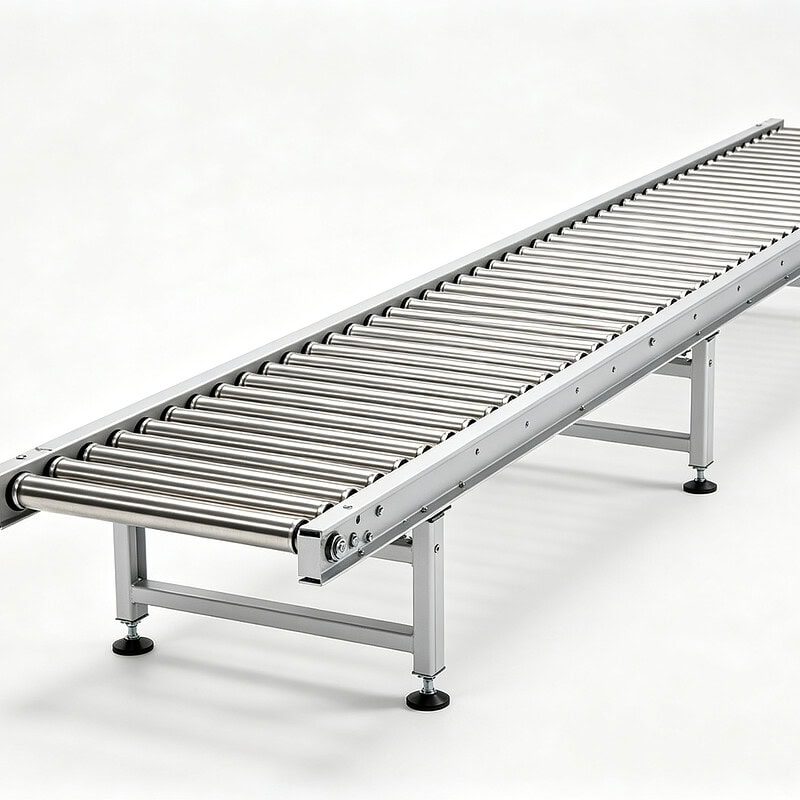
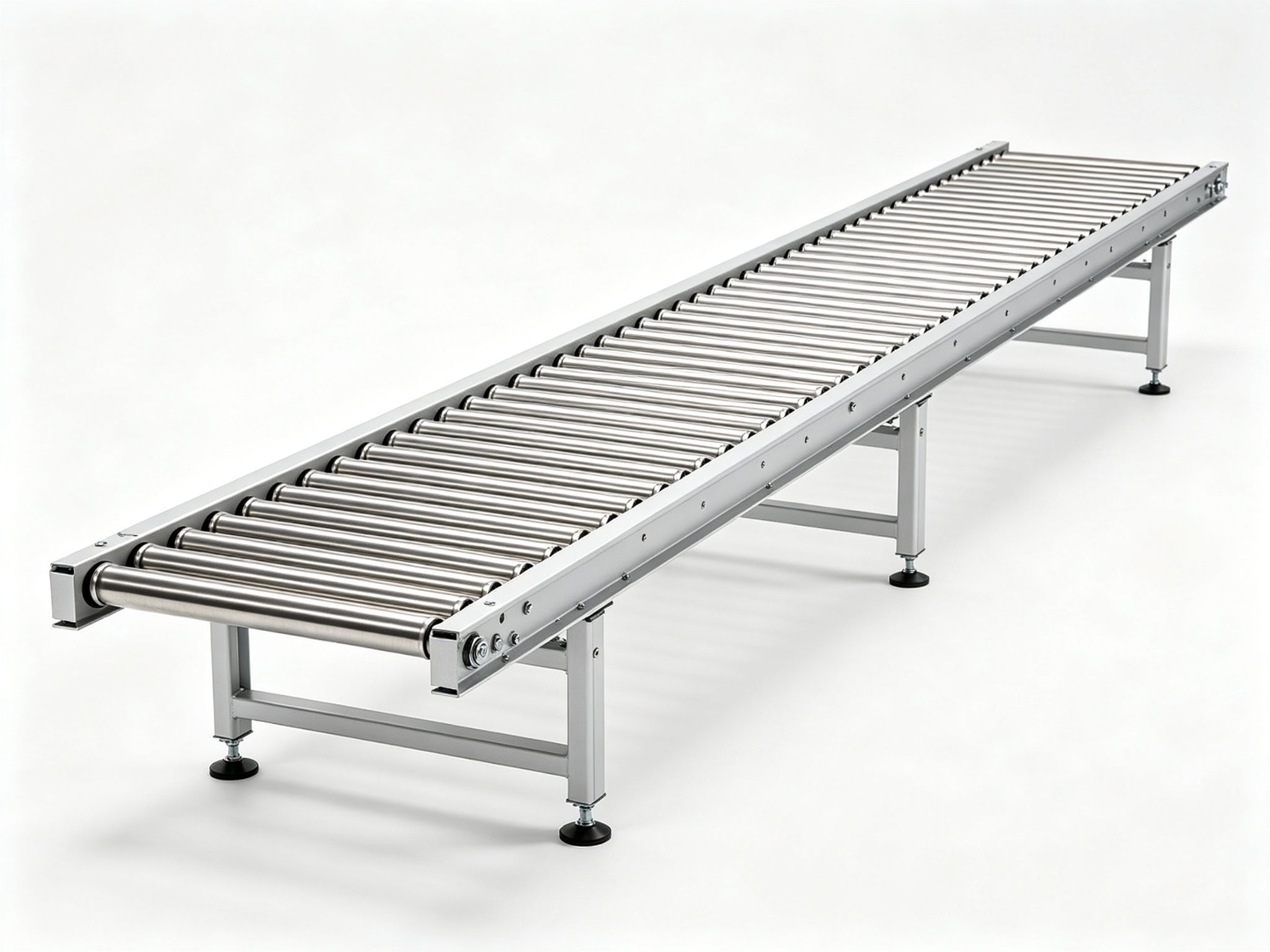
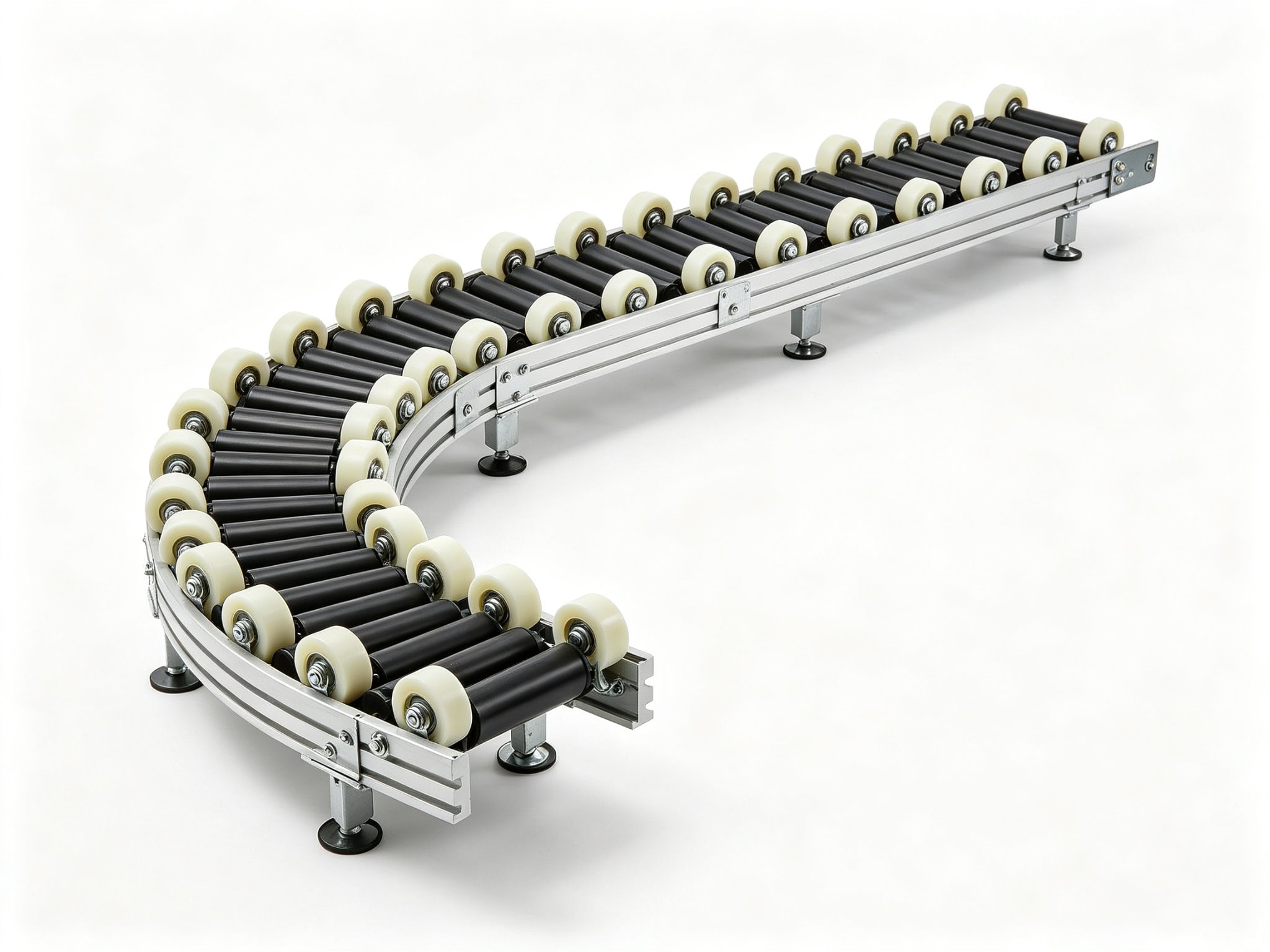
The SunAura gravity roller conveyor is an unpowered free-flow conveyor made of free-spinning galvanized steel rollers on an aluminum or powder-coated steel frame. Set on a slight 1–5 degree decline, cartons roll from one end to the other with no motor, no electricity and no maintenance — the lowest-cost way to move rigid cartons in a warehouse or packing area.
Product Description
The SunAura gravity roller conveyor is the simplest, cheapest way to move rigid cartons, boxes and totes across a short distance. There is no motor, no gearbox, no controller and no wiring — just a row of Φ50mm galvanized steel rollers mounted on a frame, set at a slight downward angle. Gravity does the work: the carton’s own weight makes the free-spinning rollers turn, and the box glides from the high end to the low end. Operators place a carton on the top and collect it at the bottom, or chain several sections together to build a longer run.
The frame is available in lightweight aluminum alloy (for light, portable sections) or powder-coated steel (for heavier duty). Roller pitch ranges from 75 to 150mm and is chosen so that at least three rollers always support the smallest carton. Load capacity is 30–50kg per meter, and adjustable-height legs cover 500–900mm so you can set the decline angle (1–5 degrees) to suit the product. Standard section lengths are 1–3m and widths from 300 to 800mm, built to order.
Because there is no electrical component, gravity conveyors ship quickly and need almost no maintenance — just keep the rollers clean and free-spinning. They are the natural partner to a motorized conveyor: use powered sections where you need control, and gravity sections where you need cheap, silent flow.
Technical Specifications
| Product Type | Unpowered (gravity) roller conveyor |
|---|---|
| Roller Diameter | Φ50mm galvanized steel |
| Roller Pitch | 75 – 150mm (selected by carton size) |
| Frame Material | Aluminum alloy or powder-coated steel |
| Load Capacity | 30 – 50 kg/m |
| Decline Angle | 1 – 5 degrees (set via adjustable legs) |
| Adjustable Height | 500 – 900mm |
| Section Length | 1 – 3m |
| Width | 300 – 800mm (custom) |
| Power Required | None (fully unpowered) |
| Drive | Free-spinning rollers, gravity feed |
| Certification | CE-compliant construction, ISO 9001 factory |
Key Features & Benefits
- Zero power, zero running cost: No motor, no electricity, no energy bill — cartons roll by gravity alone, making it the cheapest conveyor per meter you can buy.
- Galvanized Φ50mm rollers: Free-spinning galvanized steel rollers resist rust and keep rolling year after year with only basic cleaning.
- Aluminum or steel frame: Lightweight aluminum for portable sections; powder-coated steel for heavier, fixed installations.
- Adjustable decline 1–5 degrees: Set the slope with adjustable-height legs so light boxes roll gently and heavy cases don’t run away.
- Modular 1–3m sections: Sections bolt together to build any length; add stops, guides and supports as needed.
- Roller pitch matched to your carton: 75–150mm pitch ensures at least three rollers support every carton, preventing tipping.
- Nearly maintenance-free: No bearings to lubricate, no belts to tension, no electricals to fault — just wipe the rollers clean.
- Quick ship: No powered components means shorter lead times and simpler installation on site.
Application Industries
Warehouse Carton Flow
Routes cartons from racking down to packing benches along a gentle slope, freeing pickers from carrying boxes.
Packing Stations
Feeds empty cartons to packers and carries sealed boxes away without a powered section between workstations.
Unloading Docks
Spans from the truck tailgate to the floor so cartons slide off the truck under gravity.
Assembly Lines
Carries partially assembled products between manual workstations where a slight slope exists in the floor.
Temporary Material Flow
Portable sections can be moved between shifts or sites — no wiring to disconnect, just lift and go.
Product compatibility: Rigid, flat-bottomed cartons, boxes and totes weighing 30–50kg/m. Soft bags, loose parts and bottles need a belt or chain-plate conveyor instead.
How the Gravity Roller Conveyor Works
A gravity conveyor needs no energy. It converts the carton’s own weight into motion along a downward slope:
- Frame set on a decline. Adjustable legs raise one end 1–5 degrees above the other so the roller bed slopes gently downward from load end to unload end.
- Carton placed on the high end. An operator or upstream powered conveyor places a rigid carton flat on the free-spinning rollers.
- Gravity overcomes friction. The carton’s weight creates a downhill force that exceeds roller friction, so the rollers begin to spin and the carton moves forward.
- Carton rolls to the low end. The carton accelerates gently, guided by side rails, and reaches the unload end where an operator collects it or it transfers to the next section.
- Stops control accumulation. Optional end stops or brake rollers hold cartons at the low end so they don’t run away, releasing them one at a time as needed.
Is This the Right Conveyor for You?
This gravity conveyor is the right fit if your operation matches all four of the following. If you fall outside any of them, our team can recommend a powered SunAura conveyor:
- You can run the conveyor on a decline: Gravity only works if the load end is higher than the unload end by 1–5 degrees. If your floor is perfectly level and you cannot slope the line, you need a motorized conveyor.
- Rigid flat-bottomed cartons: Cartons and rigid totes roll well. Soft bags, sacks, bottles and loose items will not roll predictably — use a belt or chain-plate conveyor.
- Load up to 50kg/m: This free-flow conveyor handles 30–50kg per meter. Heavier loads or longer runs may need a powered drive to avoid runaway or stalling.
- You want the lowest cost and no maintenance: If you need speed control, accumulation, or to feed a machine at a fixed rate, a motorized roller conveyor is the better choice.
Troubleshooting Guide — Common Issues & Solutions
Gravity conveyors are simple, but slope, roller condition and carton bottom all affect whether boxes roll smoothly. Below are the most common issues and fixes.
| Problem | Possible Causes | Solutions |
|---|---|---|
| Cartons won’t roll / stop mid-section | Decline too shallow; roller pitch too wide; rollers dirty or seized; carton bottom too flexible. |
|
| Cartons run too fast / crash at the end | Decline too steep; too long a run; no brake rollers; cartons too heavy. |
|
| Cartons veer to one side | Frame not level side-to-side; rollers skewed; side guides missing; one leg shorter than others. |
|
| Small cartons tip between rollers | Roller pitch too wide; fewer than three rollers under the carton. |
|
| Rollers feel rough or don’t spin freely | Dirt and tape buildup; worn roller bearings; bent roller; debris under the roller. |
|
If the issue persists after trying these steps, email photos and a short 10-second video to [email protected] — our engineers usually diagnose the root cause within one business day.
Frequently Asked Questions
How steep should the decline be?
Most cartons roll well at 1.5–3 degrees decline. Light cartons (under 5kg) need closer to 3–5 degrees; heavy cartons roll at 1–2 degrees. Too steep and cartons run away; too shallow and they stall. Our adjustable legs let you tune this on site.
Do I need any power or electricity?
No. This is a fully unpowered conveyor — there is no motor, no plug and no wiring. It works anywhere, including outside or in remote areas without a power supply. That is why it is so popular for docks and temporary lines.
What roller pitch should I choose?
Rule of thumb: at least three rollers should be under the carton at all times. For a 300mm carton use 75mm pitch; for a 500mm carton 100mm; for a large carton 150mm is fine. Smaller pitch always works, it just costs slightly more.
Can I join gravity sections to powered conveyors?
Yes. That is a very common setup — a powered roller conveyor feeds cartons onto a gravity run, which drops them gently to a packing station. We match heights and supply transition plates so the carton transfers smoothly between the two.
What is the lead time and warranty?
Standard gravity sections are non-powered and ship quickly, usually 7–15 days. Because there are no electrical components, the warranty focuses on frame and roller integrity for 12 months, with lifetime support and spare rollers dispatched within 48 hours.
Why Buy From SunAura Machinery
48,000㎡ Own Factory
In-house manufacturing in Qingdao, China — roller fabrication and frame bending under one roof.
CE Compliant
Conveyor frames meet European safety standards with full documentation.
ISO 9001:2015
Quality management system certified across the entire production process.
SGS Audited Factory
Third-party audited manufacturing facility with 20+ national patents.
12-Month Warranty
Full warranty covering frame and rollers from the date of shipment.
Lifetime Support
Technical guidance via email and WhatsApp for the conveyor’s life.
Spare Parts in 48h
Replacement rollers shipped worldwide via DHL/FedEx within 48 hours.
100+ Countries Served
Trusted by warehouses, factories and packers across the globe.
Get a Factory-Direct Quote in 24 Hours
Tell us your carton size, required length, and available floor height difference — our engineers reply with the right roller pitch and FOB price within one business day. Every conveyor is built in our 48,000㎡ Qingdao factory, ISO 9001 certified.
Email [email protected]Related Conveyors
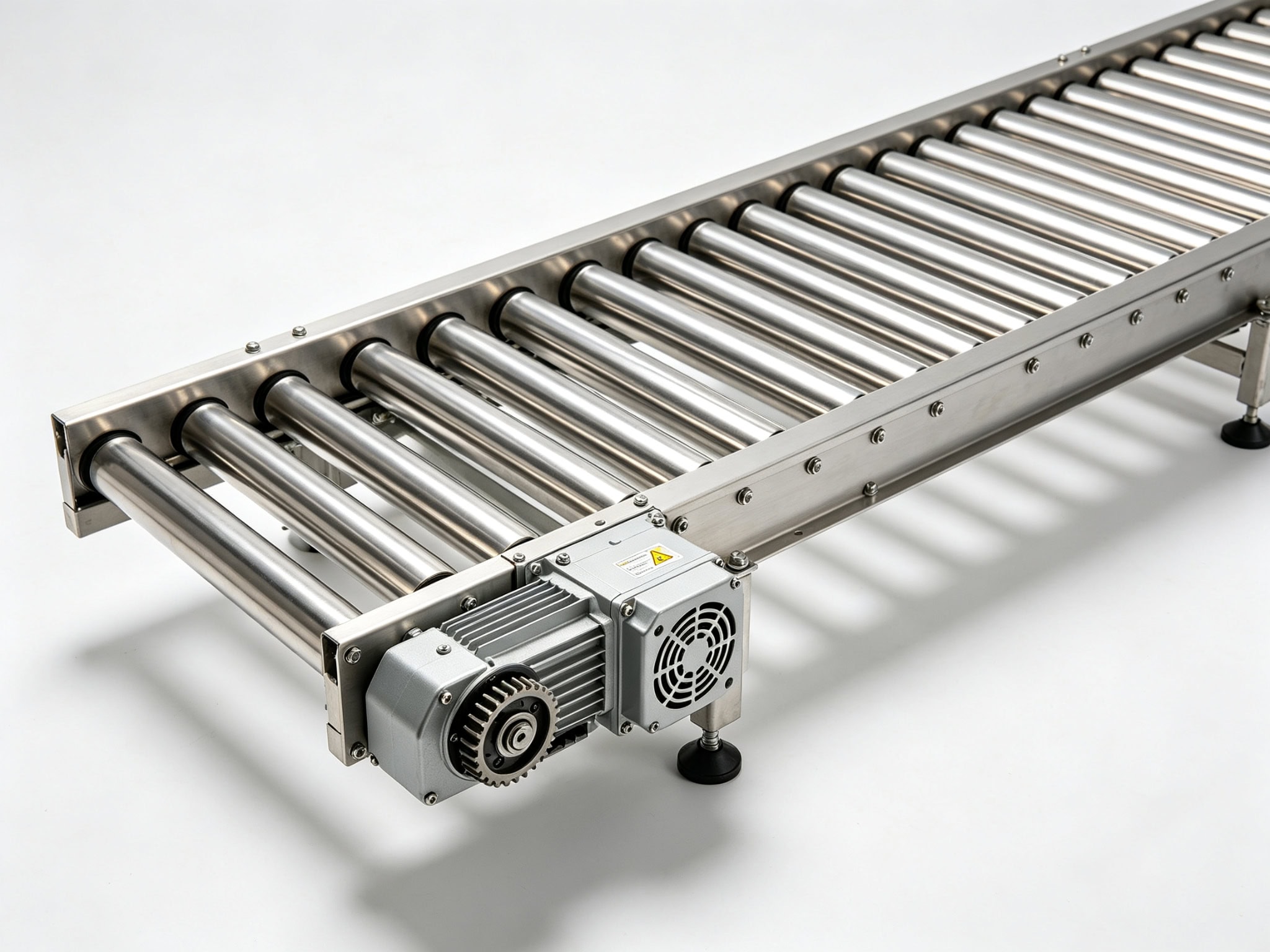
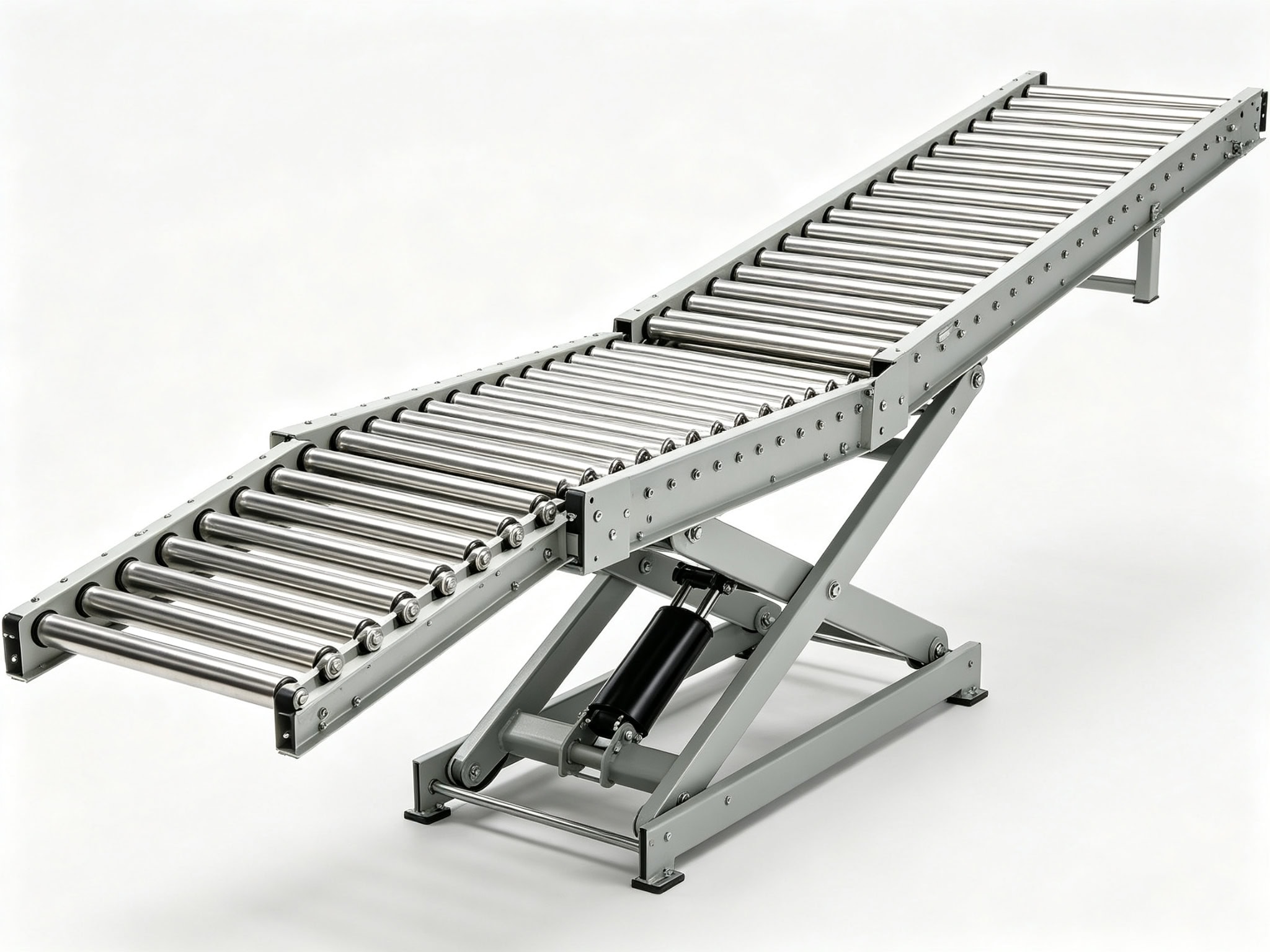
Browse the full range on the conveyors landing page. Also explore our induction sealers and carton sealers to build a complete packaging line.