Radial Drum vs Gantry-Frame Wrapper: Selecting a Specialty Stretch Wrapper for Rolls, Coils and Long Products
Most stretch-wrapping advice assumes a square pallet on a turntable. A large share of industrial output is nothing like that: paper and fabric rolls, film reels, cable and wire coils, steel and plastic profiles, doors, furniture and bundled long goods. These loads do not sit neatly on an ordinary pallet wrapper, and buyers who force them onto one end up wrapping by hand or sending product out under-protected. Two specialist families cover the work, and they are chosen by the shape of the product rather than the brand of the machine. This guide separates the radial drum wrapper, built for cylindrical rolls, from the gantry-frame or horizontal wrapper, built for long and awkward goods — where each fits, and where specifying the wrong one is an expensive mistake.
At SunAura Machinery we specify specialty wrapping for paper mills, converters, textiles, metal and building-products plants, and the honest starting point is that these machines are not interchangeable upgrades. A radial wrapper rotates the roll itself and applies film around its circumference; a gantry-frame wrapper keeps the product on a platform and moves a film ring around it. The correct answer is decided almost entirely by what you make. Pick from the product geometry first, then size the machine for weight, width and throughput, and the choice largely takes care of itself.
What a Radial Drum Wrapper Is
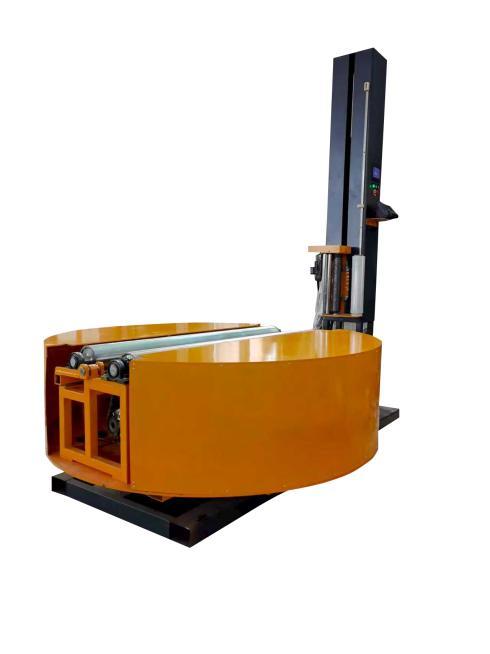
A radial drum wrapper — also called a radial or roll wrapper — is built for cylindrical products. The roll is laid horizontally onto powered support rollers or a cradle, which hold it and prevent it from moving end to end. Once the film is anchored, the drive rollers rotate the roll around its own axis at a controlled speed, while a film carriage on a linear traverse moves along the length of the roll, dispensing pre-stretched film in a precise helical or spiral pattern. The overlap, tension and number of layers are set on the control panel, and optional end-wrapping modules cover the roll faces and vulnerable edges. Because the film is applied around the circumference, it creates what suppliers describe as hoop strength that holds the roll together and protects it from moisture, dust and deformation.
The radial method closely matches the structure of a roll, which is why it is the standard for paper mills, printing houses, converters and export packaging. Supplier literature describes the load sitting on motorized rollers while the film carriage travels the roll length, with sensors holding a steady film tension so the roll is not deformed. Independent makers such as Pamminger describe a variant where travel units lift the roll off the transport system before a carrier roller turns it and the film is applied around the circumference, then the film is cut and the roll lowered. The common thread across all of them is the same: the product rotates on its axis and the film wraps radially. Typical products are paper and tissue rolls, laminated film reels, textile and fabric rolls, wire mesh and cable coils.
What a Gantry-Frame Wrapper Is
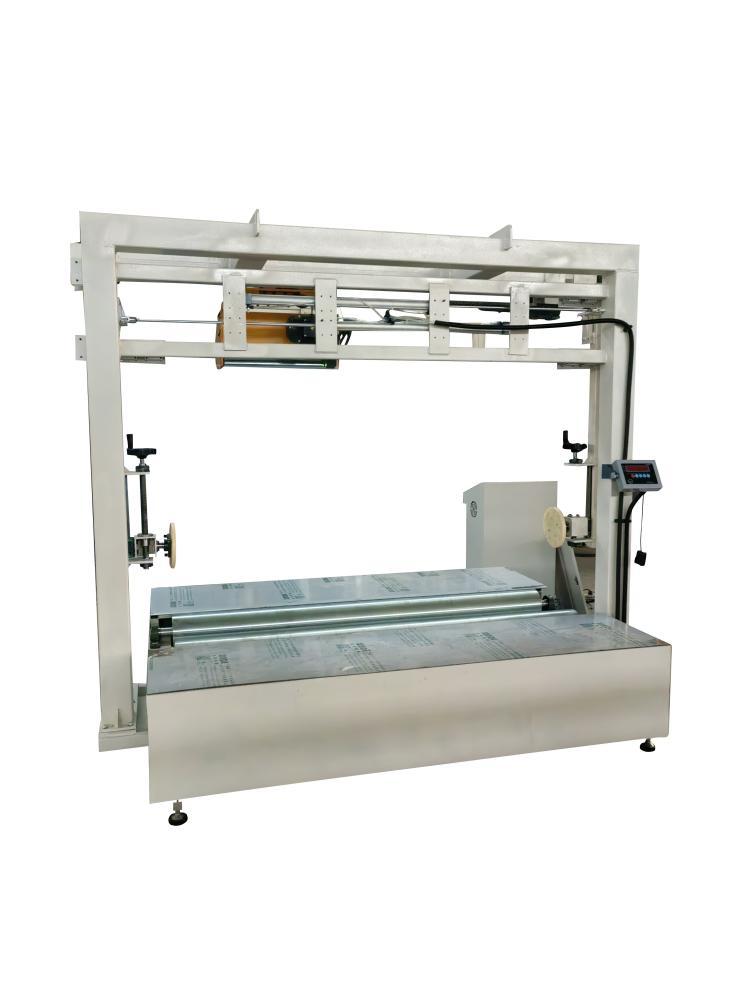
A gantry-frame wrapper is a horizontal, often orbital machine built for long, flat or awkward goods that are not cylindrical rolls. The product rests on a platform or a conveyor inside a rigid gantry frame, and a film carriage or rotating ring travels around and along the product rather than the product itself spinning. As the ring or carriage moves, it dispenses film around the load, fully encasing it along its length. The gantry design suits items that are significantly longer than they are wide or tall and that would be unstable or impossible to rotate — metal and plastic profiles, pipes and tubes, lumber and mouldings, doors and windows, cabinets and furniture components, aluminium extrusions and bundled materials. It can integrate with conveyors for continuous operation and sense the product dimensions automatically.
The distinction from the radial machine is the motion. On a horizontal gantry wrapper the product stays still and the film moves around it; on a radial wrapper the product rotates and the film carriage traverses. That matters because a long profile or a fragile, flat pack cannot be spun on rollers without damage, while a cylindrical roll is most efficiently wrapped by turning it. Industry guidance on horizontal wrappers frames them as the answer for long, bulky items moving linearly through a ring, with full encasement for protection against moisture and dirt. The gantry frame gives the moving ring a stable structure to travel on and keeps the load supported throughout.
Selection Table: Radial Drum and Gantry-Frame Side by Side
| Dimension | Radial drum wrapper | Gantry-frame (horizontal) wrapper |
|---|---|---|
| Product geometry | Cylindrical rolls and coils | Long, flat or awkward goods |
| What moves | The roll rotates on rollers | Film ring/carriage moves; load stays |
| Film pattern | Helical around circumference | Orbital, full encasement along length |
| Relative cost | Mid; specialist roll machine | Mid to high; larger frame and ring |
| Typical throughput (supplier range) | Roughly 10–20 rolls/hour | Set by line speed and conveyor |
| End/face protection | Optional end-wrapping modules | Full encasement as standard |
| Line integration | Roller infeed, semi or fully auto | Conveyorized, continuous flow |
| Best product fit | Paper, film, textile rolls, wire coils | Profiles, pipes, doors, furniture, bundles |
| Maintenance burden | Rollers, traverse, pre-stretch | Ring drive, frame, sensors, belt |
Semi-Automatic vs Fully Automatic Builds
Both machine families come in automation levels that matter as much as the geometry. A semi-automatic wrapper needs an operator to load and unload the roll or bundle and to start the cycle, while the machine controls the rotation, film tension and cutting. It is the lower-cost entry point and suits medium, intermittent volumes where a person is already present. A fully automatic version adds powered infeed and discharge, sensors that locate and size the load, and automatic film anchoring and cutting, so it can run in a continuous line with little attention; it is the choice for mills and high-output converters that move product steadily. A heavy-duty build reinforces the frame and drives for jumbo rolls and high weights, and custom machines can integrate weighing, labeling or end-wrapping. Match the automation level to the real throughput and staffing rather than buying the top level by default, because the added conveyors and sensors only pay back when the line runs continuously.
Where Each One Fits — and When to Step Back
Choose the radial drum wrapper when the product is genuinely cylindrical and can be turned on its axis — paper, tissue, film and fabric rolls, and cable or wire coils. It gives the tightest, most material-efficient wrap on a roll because the film pattern follows the circumference and builds hoop strength. Choose the gantry-frame wrapper when the product is long, flat or fragile and should not rotate, or when a mixed bundle needs full encasement along its length. There is a reverse case worth naming: if the product is an ordinary, stable, palletized load, neither specialist is needed and a standard turntable or rotary-arm wrapper is the cheaper, simpler answer. These machines exist for the loads that ordinary wrappers cannot handle, and buying one for a routine pallet is over-specification.
When Not to Buy Each One
Do not buy a radial drum wrapper for long profiles, flat packs or anything that cannot be rotated without damage; the powered rollers are made to turn a cylindrical roll, and a non-roll load will not sit or turn correctly. Do not buy a gantry-frame wrapper for a high-volume run of simple cylindrical rolls that a radial machine would wrap more efficiently; the orbital ring and large frame carry cost that the roll does not need. And do not buy either specialist for stable, ordinary pallet loads where a standard turntable wrapper already does the job at a lower price. On the radial side, film tension must be limited so a soft or low-grade roll is not deformed; on the gantry side, confirm the ring opening and platform clear the longest and widest product before ordering.
Cost, Payback and Procurement Risks
Both machines are specialist investments, with the gantry-frame and its moving ring generally the larger structure and the larger price, while the radial wrapper is sized around the roll diameter and weight. The payback comes from the same sources on both: removing slow manual wrapping, cutting film waste through controlled pre-stretch and tension, and preventing damage returns on products that arrive under-protected. Suppliers of radial machines describe meaningful film savings versus hand wrapping, though such figures are supplier claims and should be treated as estimates. When comparing quotes, ask for the supported product dimensions and weight, the pre-stretch ratio and tension control, whether end or face wrapping is included, the realistic throughput on your actual product, and which parts are catalog items your team can service. Confirm the cycle using a real, worst-case load rather than a clean sample.
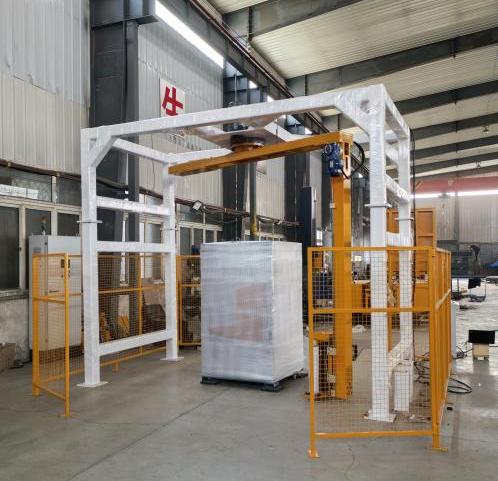
Material handling has to be planned with the wrapper. Rolls and long goods arrive on conveyors or specialized handling, and the infeed must present the load in the right orientation for the machine to take it. The wrapper should be specified as part of the wider end-of-line flow, including the radial drum wrappers and gantry-frame wrappers that match the product, with the pallet wrapper range and online conveyorized wrappers for adjacent pallet work. Where long goods are handled in high volume, the horizontal machine is normally conveyorized so product flows without lifting.
Frequently Asked Questions
Can one machine wrap both rolls and long products?
Not well. A radial wrapper turns a cylindrical roll on rollers, while a gantry-frame wrapper moves a film ring around a stationary long load. The motion is different, so the product geometry decides the machine; a plant that genuinely runs both usually needs the two specialist machines rather than one compromise.
Does radial wrapping protect the roll faces?
The helical wrap covers the circumference, and optional end-wrapping modules fold film over the roll faces and edges to protect them from impact and moisture. If face protection is a requirement, confirm the end-wrapping option is included rather than assuming the basic cycle covers it.
Which is better for fragile or soft rolls?
The radial wrapper is still the right type, but the film tension and roller speed must be adjustable and limited so the roll is not deformed. Run the softest, lowest-grade roll you produce through a test cycle and check the tension and edge handling before accepting the machine.
What if my products are ordinary pallets rather than rolls?
Then neither specialist is needed. A standard turntable wrapper for stable loads, or a rotary-arm wrapper for heavy or unstable pallets, is the lower-cost answer. Radial and gantry-frame machines are reserved for the cylindrical and long goods that ordinary wrappers cannot handle.
Summary: Start From the Shape of the Load
The decision is clearer than the machine names suggest. Choose a radial drum wrapper for cylindrical rolls and coils that can rotate on powered rollers, where a helical film pattern builds hoop strength and protects the circumference. Choose a gantry-frame wrapper for long, flat, fragile or bundled goods that should stay still, where a moving film ring fully encases the load along its length. For ordinary stable pallets, step back to a standard turntable or rotary-arm wrapper and avoid the specialist cost. Lead with the geometry of the product and the right machine follows.
If you handle rolls, coils or long goods and want the specialist wrapper sized against your real loads, review the radial drum wrappers and gantry-frame wrappers, with pallet wrapping machines for adjacent work. How those loads move into the machine is covered in our guide to gravity versus powered conveyors, and for light pallet loads see why top-press and turntable wrappers differ. Send us your product dimensions and weights and we will confirm the pattern, tension, cycle and film use — contact SunAura Machinery to start the review.
Selected Sources
This article draws on supplier and industry material on roll and horizontal wrapping, including Shandong Dyehome (radial cylindrical wrappers and paper-roll wrapping guides), Innovative Wraptech (radial type paper-roll packing and roll stretch wrappers), Pamminger Verpackungstechnik via DirectIndustry (radial stretch wrapper operation), FHOPE (horizontal versus vertical stretch wrappers), and Pesmel (paper-roll stretch film handling). Figures cited as supplier ranges are estimates and should be checked against the specific machine quotation.