QINGDAO, China — October 13, 2026 — SunAura Machinery has commissioned a collaborative robot palletizer at a specialty food manufacturer in Australia, replacing a manual palletizing station that was the plant’s highest-turnover labor position. The cobot cell stacks cased product at up to 8 cases per minute across four SKU patterns, operates without safety fencing, and runs with one operator who loads the infeed and manages pallet exchange.
The customer’s situation explains why collaborative palletizing is one of the fastest-growing segments in end-of-line automation. The plant ran 16 SKUs with small batch sizes — too many formats for a conventional layer palletizer, which pays back on high-volume uniform loads. Manual palletizing was the answer for years, but the station had 200% turnover in two years, and the plant manager was spending more time recruiting and training than planning production. The plant needed the flexibility of a human palletizer with the consistency of a machine — and no engineering staff to maintain a complex robot cell.
Collaborative Robot vs Layer Palletizer: When Each Wins
The palletizer decision at this plant is the one most mid-size producers face, and the two main options are fundamentally different machines:
| Factor | Collaborative Robot Palletizer | High-Level Layer Palletizer |
|---|---|---|
| Picking method | Case-by-case with gripper | Whole layer at once |
| Typical speed | 6–12 cases/min | 25–60 cases/min |
| SKU flexibility | Very high, pattern per case | Good, pattern per layer |
| Safety fencing | Not required (force-limited) | Required (high-speed motion) |
| Floor space | Compact, flexible layout | Large, mezzanine access for high-level |
| Price range | $45,000–$90,000 | $60,000–$150,000 |
| Best for | Multi-SKU, small batches, limited space | High-volume uniform loads |
The decision rule for most plants is throughput and SKU count: above about 20 cases per minute with a stable product mix, the layer palletizer wins on cost per case; below that — especially with many SKUs and small batches — the collaborative robot is the better fit. The full range, including both types, is documented on the palletizers page and the high-level layer palletizer page.
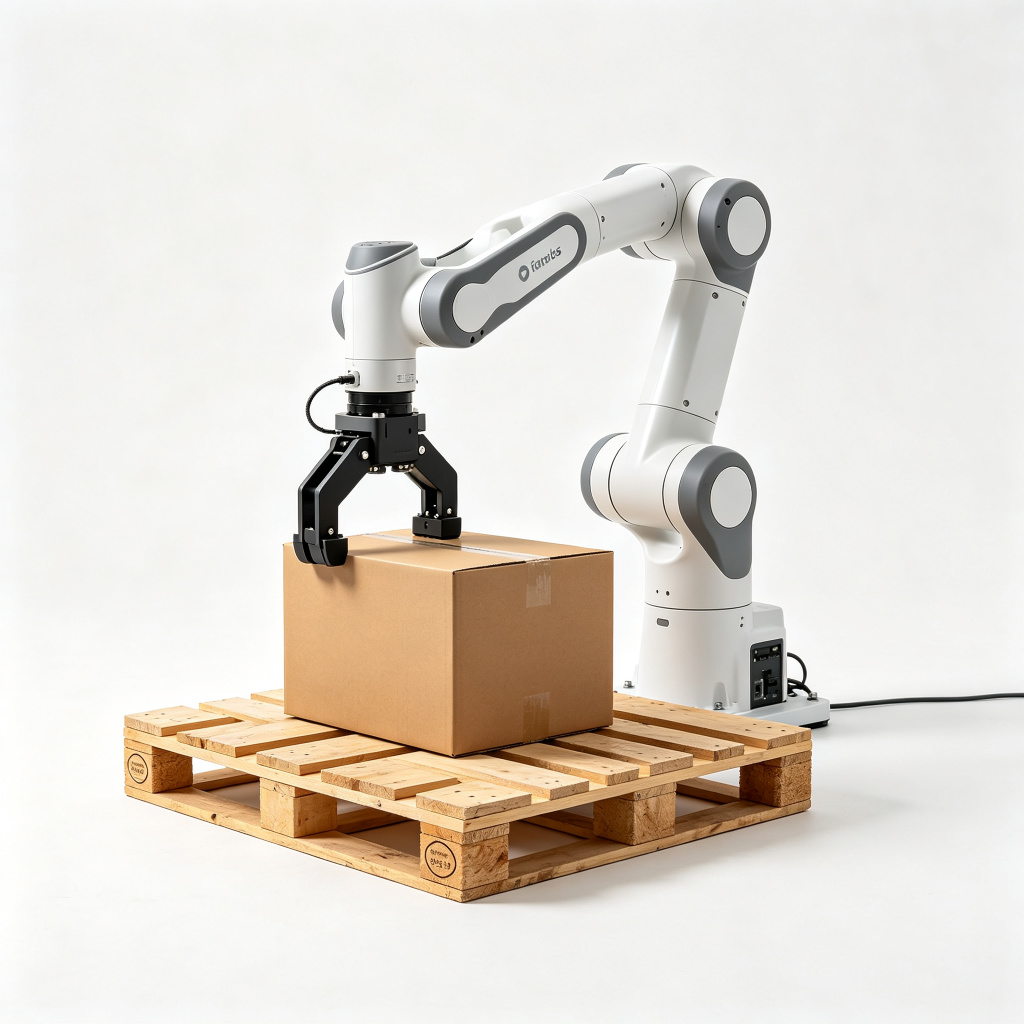
Why the Food Plant Chose a Cobot
Three requirements drove the specification at this installation, and they apply to most mid-size producers evaluating palletizing automation:
SKU flexibility without changeover time: the plant’s 16 SKUs run in batches of 20–60 cases. A layer palletizer’s changeover between patterns takes minutes of tooling and recipe work; the cobot’s pattern change is a recipe recall on the HMI, and the gripper handles the full case range without tooling change. The batch structure made case-by-case flexibility the decisive spec.
No engineering staff on site: the plant has no automation engineer — the maintenance team is two electricians. The cobot cell’s programming is limited to recipe recall and gripper teaching, both covered in the commissioning training. The cell runs for months between service calls, and the diagnostics point to the failing component on the HMI. The staffing reality at small plants is why the cobot configuration is often the right first step into palletizing automation.
Existing floor layout: the packing area had no room for a high-level palletizer’s mezzanine and no appetite for moving walls. The cobot’s compact footprint and fencing-free operation placed the cell in the existing manual station’s footprint, with the pallet exchange at the same door position the manual operation used.
The same end-of-line decision framework — throughput, SKU count, floor space, and staffing — is covered in the end-of-line packaging automation buyer framework, which walks through the crossover points between the machine types.
Integration With the Case Sealer and Conveyor
The cobot cell sits at the end of the line, and its integration follows the same rules as any palletizing station:
Case infeed: cases arrive on a conveyor from the case sealer, and the cell positions them for the cobot’s pick. The conveyor selection — including the accumulation section that buffers sealer pauses — is covered in the conveyor selection guide. On this line, a 6-meter accumulation section absorbs the sealer’s start-stop behavior and lets the cobot work at its own pace.
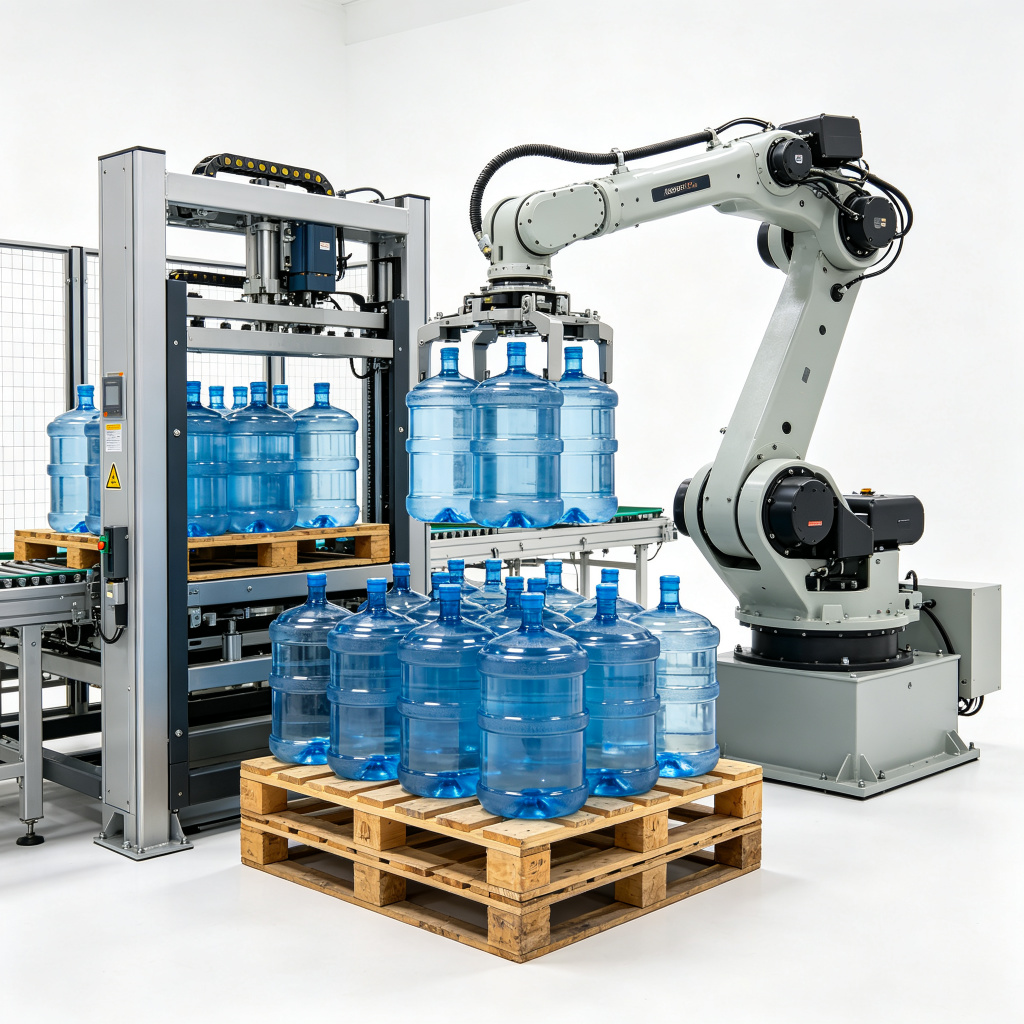
Pattern design: the cobot builds interlocking patterns layer by layer, and the pattern recipe per SKU was verified at the FAT with the customer’s actual cases. The stability principles — interlocking layers, first-layer base, load height vs edge crush strength — are the same ones applied on the high-level layer palletizer delivered for a beverage bottler this month.
Pallet handling: the cell includes a semi-automatic pallet exchange — the operator swaps full pallets and loads empties on a cart, with the cobot pausing on the exchange. A fully automatic pallet magazine is an option for plants that want the operator freed entirely; at this plant’s 8 cases per minute, the semi-automatic exchange fits the operator’s other duties.
Commissioning Findings Worth Sharing
Three findings from the Australian installation apply to most cobot palletizing projects:
The gripper is the specification that decides reliability: the case range included two box sizes that the standard vacuum gripper handled poorly — one with a coated surface, one slightly oversized. The fix was a hybrid gripper with vacuum plus mechanical grip on the edge, spec’d at the FAT with the actual cases. Buyers should send production cases — not samples — and verify the gripper on the full range, including the worst case.
Speed expectations need resetting: operators used to watching high-speed layer palletizers assume the cobot is “slow.” At 8 cases per minute against the line’s 12 cases per minute sealer output, the cobot keeps up only because the batch runs are small and the accumulation section absorbs the difference. The honest spec for a cobot cell is 6–12 cases per minute, and the line plan should be built around that number — the cobot is a flexibility play, not a speed play.
Operator training is different: the cobot’s safety is its selling point, and the training covers the force-limiting behavior, the recipe recall, and the gripper teaching — not traditional robot programming. The commissioning training converted the two electricians into confident operators in three days, and the plant has not needed a service call since. The operating habits — daily gripper inspection, weekly pattern verification — follow the same discipline as the maintenance profile below.
Maintenance Profile
The cobot cell’s maintenance is concentrated in the gripper, the pallet station, and the safety system:
- Daily: inspect the gripper pads and vacuum lines; clean the pick area of case debris; verify the safety zone sensors are clear
- Weekly: verify the pattern with a test pallet; check the gripper teaching against the case dimensions; lubricate the pallet cart
- Monthly: inspect the cobot arm joints and cables per the arm’s schedule; check the vacuum pump filter
- Quarterly: full calibration check on the arm’s force limits and the gripper’s pick position; verify the safety configuration
The arm’s own maintenance schedule follows the robot manufacturer’s intervals, and the cell’s consumables — gripper pads, vacuum cups, sensors — ship under SunAura’s 48-hour spare parts dispatch program. The full stocking method for an end-of-line cell is covered in the packaging machine spare parts strategy guide.
Budget Reality and Payback
Collaborative robot palletizer cells run from roughly $45,000 to $90,000 depending on the arm payload, gripper configuration, and the pallet handling option. The payback at this installation was driven by labor, not speed:
| Cost Element | Manual Palletizing | Cobot Cell |
|---|---|---|
| Operators | 2 per shift (high turnover) | 1 (loading and monitoring) |
| Recruiting and training cost | Recurring, 200% annual turnover | One-time commissioning training |
| Pattern consistency | Varies with operator | Identical every pallet |
| Throughput | 6–10 cases/min | 6–12 cases/min |
| Payback | — | 14–20 months |
The payback window shortens when the labor cost includes the recruiting burden — the plant manager’s estimate put the replacement cost of each palletizing operator at 30% above the wage, between advertising, training time, and the quality issues while new operators learn. For plants with high palletizing turnover, the cobot’s payback is faster than the speed math suggests. The OEE calculation guide published this week covers how to measure the availability gain once the cell replaces the manual station.
Frequently Asked Questions
Does a collaborative robot really work without safety fencing?
Yes, with limits. The cobot’s force-limiting sensors stop the arm on contact, which is why it runs fencing-free — but the cell still needs a defined work zone, and the case infeed and pallet areas need light curtains or zone monitoring where the arm’s motion is unrestricted. The safety configuration is part of the delivered cell, verified at commissioning with a force test. The “collaborative” classification means the robot can share space with people under defined conditions — not that it is safe to stand in the pick path while it moves at speed.
What is the maximum speed a cobot palletizer can reach?
Realistically 6–12 cases per minute for cased product, depending on the case weight, the gripper cycle, and the pattern complexity. Above that range, a conventional palletizer — layer or robotic — is the right machine. The speed is a function of the arm’s payload and the pick-and-place cycle, and it should be quoted against your actual case dimensions, not the arm’s maximum specification. Buyers planning for growth above 20 cases per minute should compare the layer palletizer before committing to a cobot.
Can the cobot handle heavy cases?
Up to the arm’s payload — typically 10–25kg per case for cobot palletizing configurations, with the gripper designed for the case geometry. Above that payload, a conventional industrial robot or a layer palletizer is the right choice. The payload also affects speed: a cobot at 80% payload runs noticeably slower than the same arm at 40%. The specification should state the maximum case weight and the required speed at that weight.
How many SKUs can the cell store?
The pattern recipe storage is limited by the HMI memory, not by practical use — 50+ SKU patterns are typical, with the recipe holding the case dimensions, interlocking pattern, and pallet format per SKU. The practical limit is the gripper range: cases outside the gripper’s dimension range need a gripper change, which is the one tooling change the cell requires. Facilities planning to add new case sizes should confirm the gripper’s range covers the plan.
What is the lead time for a cobot palletizer cell?
Standard cobot cells run 6–9 weeks lead time, including the FAT with the customer’s cases and pallets. The critical path is the gripper tooling and the safety configuration — both spec’d against the actual case range. Installation and commissioning take about one week on site, including the operator training and the pattern verification. The same lead-time logic applies to the broader palletizer range.
Operating Discipline on a Cobot Cell
Three operating habits keep the cobot cell at its rated reliability. First, run the pattern verification on the first pallet of every SKU change — a 30-second visual check that catches a wrong recipe before twenty pallets are built wrong. Second, keep the gripper pads clean and inspected at shift start; a contaminated pad loses grip on the next pick and the cell stops, and the stop costs more than the inspection. Third, log the cell’s pallet counts and review them against the plan weekly — a pattern that drifts with gripper wear shows up in the counts before it becomes a transit claim. These are the habits the commissioning training establishes, and they are the difference between a cell that runs through a season and a cell that calls the support line every month.
Availability and Support
The collaborative robot palletizer cell is available for order with SunAura’s standard export package: FAT with customer cases, installation supervision, operator training, safety verification, CE certification, and an 18-month warranty on the cell components. To discuss your case range, batch structure, and floor layout with the applications engineering team, contact SunAura Machinery.
About SunAura Machinery
SunAura Machinery is a packaging equipment manufacturer based in Qingdao, China, exporting to more than 100 countries. The company’s palletizing range covers collaborative robot palletizers, high-level and low-level layer palletizers, and the conveying and pallet wrapping equipment that completes end-of-line automation — all CE certified. The same range is on display at Propak Cape 2026 in South Africa this week, and buyers preparing their own specification can use the packaging machine RFP template published today.
Editorial note: Specifications and payback figures reflect the referenced installation and are subject to change. Contact SunAura Machinery for current configuration options.