
QINGDAO, China — October 17, 2026 — SunAura Machinery has delivered a complete coffee packaging line to a specialty roastery in Scandinavia, combining an 18-head multihead weigher, a servo-driven pillow flow wrapper, and a continuous band sealer into one integrated system for whole-bean and ground coffee in 250g, 500g, and 1kg formats. The line runs at up to 40 bags per minute and replaces a manual weigh-and-bag operation that the roastery had outgrown.
The roastery’s problem is common in the specialty coffee segment. Production had grown from a small-batch operation to a serious wholesale business, but packaging remained manual: an operator weighed each bag, another sealed it, and the giveaway on a 250g format averaged 4–6 grams per bag — roughly two percent of production given away. Batch consistency was the bigger issue: fill weights drifted through the shift as operator fatigue set in, and the roastery’s wholesale customers started weighing incoming bags. The owner needed machine accuracy without losing the flexibility to run three formats and seasonal single-origin SKUs.
Line Configuration
The delivered line runs three stations in sequence — weighing, bagging and wrapping, and sealing:
| Station | Equipment | Key Specification |
|---|---|---|
| Weighing | 18-head multihead weigher | ±0.5g accuracy on 250g–1kg formats |
| Bagging and wrapping | Servo pillow flow wrapper | Up to 40 bags/min, fin seal |
| Sealing | Continuous band sealer with servo temperature control | Bag top seal, ±1°C temperature stability |
| Control | Single PLC + HMI | Recipe per format, changeover < 10 min |
The 18-head weigher doses each bag with the multihead combination weighing principle — the same accuracy architecture covered in the multihead weigher selection guide — and the flow wrapper forms, fills, and seals the pillow bag in one pass. The band sealer closes the bag top after the wrapper’s fin seal, providing the double seal that coffee bags need for aroma retention. The full range is documented on the multihead weighers, pillow packaging machines, and band sealers pages.
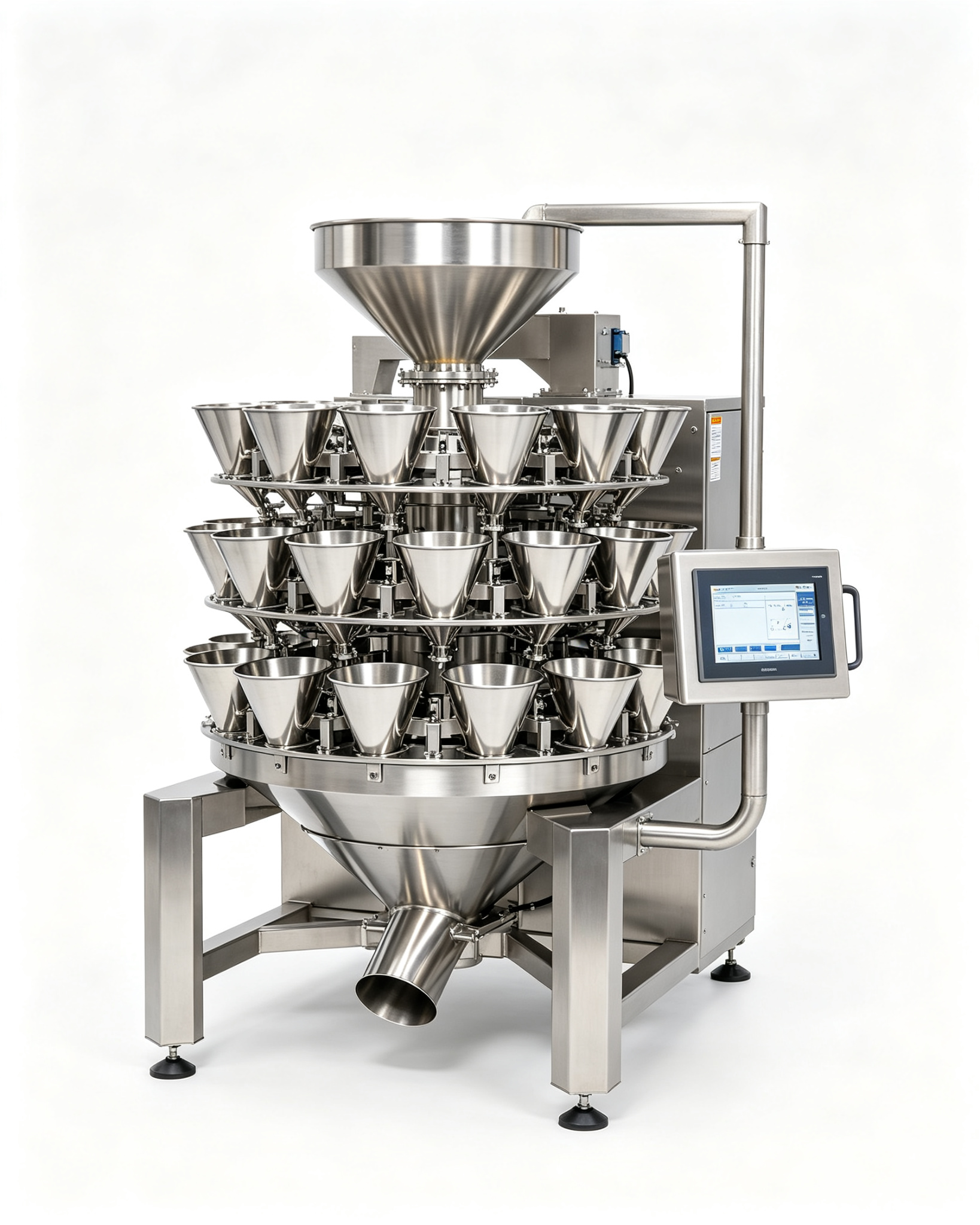
Why Multihead Weighing Decides Coffee Line Economics
For coffee, the weighing accuracy is the specification that pays for the line. The numbers from this installation are typical:
| Cost Element | Manual Weighing | 18-Head Multihead |
|---|---|---|
| Giveaway per 250g bag | 4–6g average | Under 0.5g |
| Giveaway per 1kg bag | 8–12g average | Under 1g |
| Giveaway as % of production | ~2% | <0.1% |
| Weighing rate | 8–10 bags/min (2 operators) | 40 bags/min (1 operator) |
| Weight consistency | Drifts with operator fatigue | Identical every bag |
At the roastery’s volume — about 1.2 tons of coffee per week — the giveaway reduction alone was worth roughly $18,000 a year at current green coffee prices, before counting the labor saving. For roasters above about 300kg per week, the multihead weigher typically pays for itself within the first year on giveaway and labor. The same accuracy math applies to other granular products, and the head count decision — 10, 14, 16, or 18 heads — is covered in the multihead weigher selection guide published this month.
Sealing Coffee Bags: Fin Seal, Band Seal and Aroma Retention
Coffee’s aroma retention is a packaging spec that most buyers learn after the first stale batch. The line uses a two-stage sealing approach:
The flow wrapper’s fin seal: the pillow bag’s longitudinal seal runs along the back of the bag, formed and sealed inside the wrapper. The fin seal quality depends on the film’s sealant layer and the sealing temperature profile — the same parameters covered in the flow wrapper sealing temperature and dwell time guide published this week. On this line, the wrapper’s servo temperature control holds the seal bars within ±1°C, which is the difference between a clean seal and a film-stretching hot spot.
The band sealer’s top seal: after wrapping, the open bag top passes through a continuous band sealer, closing the bag with a second seal. The band sealer’s servo temperature control is the same technology as the continuous band sealer series launched earlier this month — and the double seal is what keeps whole-bean coffee fresh for the months it sits on a retail shelf. The one-way degassing valve is an option for freshly roasted coffee that needs to release CO2 without letting oxygen in.
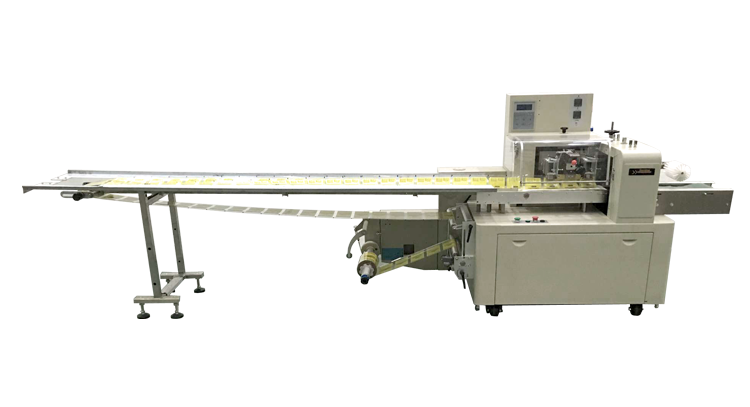
Commissioning Findings Worth Sharing
Three findings from the roastery installation apply to most coffee packaging projects:
Whole-bean vs ground coffee weigh differently: whole beans flow consistently through the weigher’s feeders, but ground coffee — especially fine grind — has different flow characteristics and can bridge in the feed hopper. The line’s feeder settings are tuned per grind size, and the recipe stores them. Roasters running both whole-bean and multiple grind sizes should specify the feeder tuning range in the FAT.
Film choice affects the seal window: the roastery’s first film — a cheap metalized PET — had a narrow sealing temperature window, causing intermittent weak seals at the line’s running speed. The fix was a film with a wider sealant window, verified at the FAT with the actual film. The film specification is a line parameter, not a consumable detail — the same lesson as the film thickness guide.
Valve application adds a station: the roastery added the one-way degassing valve option after the first month, and retrofitting a valve applicator into the wrapper’s cycle was more expensive than specifying it at the start. Roasters planning freshly roasted whole-bean SKUs should decide the valve question in the specification stage.
Integrating the Line With Case Packing
The coffee line produces bags, and the bags need case packing to reach wholesale. The integration follows the standard end-of-line pattern:
Bag-to-case transfer: filled bags exit the band sealer on a short conveyor to the case packing station, where an automatic case packer counts and packs the bags into cartons. The case erecting and packing range is covered on the case erectors page, and the counting logic uses the same checkweighing principle as the weigher — a checkweigher on the bag conveyor catches underweight bags before they reach the carton.
Conveyor design: the transport sections between the wrapper, sealer, and case packer follow the same selection method as the conveyor selection guide — including the accumulation buffer that absorbs the case packer’s cycle pauses.
Case sealing: the packed cartons close through an automatic carton sealer, completing the run from bean to shipped case. The same end-of-line configuration — weigher to wrapper to sealer to case — is what SunAura delivers for snack, pet food, and frozen food producers: the pet food bagging line delivered this month runs the same weighing-bagging-sealing sequence, and the frozen food packaging machinery selection guide covers the cold-chain specification that changes the same line for frozen products.
Maintenance Profile
The coffee line’s maintenance concentrates in the weigher’s feeders, the wrapper’s seal bars, and the band sealer’s belts:
- Daily: clean the weigher’s feed hoppers of coffee dust; wipe the wrapper’s seal bars; check the band sealer belts for wear
- Weekly: verify the weigher’s calibration with a test dose; check the seal bar temperature reading against a thermometer; inspect the film path rollers
- Monthly: full weigher recalibration; inspect the wrapper’s crimp jaws and the band sealer’s heater condition
- Quarterly: replace the band sealer belts on schedule; full inspection of the weigher’s load cells and the wrapper’s servo drives
Spare parts for the weigher, wrapper, and sealer ship under SunAura’s 48-hour spare parts dispatch program, and the stocking method for a complete line is covered in the packaging machine spare parts strategy guide.
Buying Checklist for a Coffee Packaging Line
When comparing quotes for a coffee line, confirm these points in writing — they are the specifications that decided this installation:
- Accuracy at your format: the weigher’s ±grams figure at your smallest format, not the weigher’s best-case specification — accuracy at 250g is the number that drives your giveaway
- Speed at your bag length: the wrapper’s bags-per-minute at your bag length and film type, not the machine’s maximum on short bags
- Seal temperature control: servo temperature control on both the wrapper’s seal bars and the band sealer, with the ±°C tolerance stated
- Feeder tuning range: the weigher’s feeder configuration covering your grind sizes, with the recipe settings verified at the FAT
- Valve or gas flush decision: degassing valve applicator or nitrogen flush specified at the start, not retrofitted
- Film spec agreement: the film type and sealant window agreed with the supplier and verified in the FAT with your actual film
These six points convert a proposal into a testable specification — and they are the same points verified at the factory acceptance test with the roastery’s actual coffee, film, and bag formats.
Frequently Asked Questions
How many weighing heads do I need for coffee?
For coffee in 250g–1kg formats, a 14-head weigher is the typical entry point and an 18-head configuration adds speed and accuracy margin. The head count trades speed against accuracy: more heads mean more combinations to choose from, so the weigher finds a closer-to-target dose faster. The practical guidance is 14 heads up to about 30 bags per minute and 18 heads above that — the same head count logic applied in the 18-head multihead weigher specification.
Can the same line run both whole-bean and ground coffee?
Yes, within the feeder tuning range. Whole-bean and ground coffee have different flow characteristics, and the weigher’s feeder settings are stored per recipe — the changeover is a recipe recall plus a film change if the bag format differs. The practical limit is the grind size range: very fine espresso grind may need a different feeder configuration than whole beans. The line’s FAT includes a full recipe verification with the roastery’s actual grind sizes.
What is the difference between a fin seal and a band seal on a coffee bag?
The fin seal is the longitudinal seal along the bag’s back, formed inside the flow wrapper during the forming process. The band seal is the top seal that closes the bag after filling. Coffee bags typically get both: the fin seal holds the bag structure, and the top band seal closes the open end after the product is dropped in. The two-stage approach gives the double barrier that coffee’s aroma retention needs — and the sealing parameters for both are covered in the flow wrapper sealing guide.
Do I need a gas flush for coffee bags?
For freshly roasted whole-bean coffee, the standard recommendation is nitrogen flush or a one-way degassing valve — the coffee releases CO2 for days after roasting, and the packaging must either flush with nitrogen or let the gas escape without admitting oxygen. Ground coffee, which degasses faster, usually needs the valve or flush more urgently. The line can be configured with the nitrogen gas flush option on the band sealer — the same option covered in the band sealer range.
What is the lead time for a coffee packaging line?
A complete weigher-wrapper-sealer line runs 6–8 weeks lead time, including the FAT with the customer’s actual coffee and film. Custom configurations — degassing valve applicator, nitrogen flush, dual film formats — extend it to 8–10 weeks. As with most packaging machinery, the critical path is the tooling for the bag formats and the film specification, so those decisions should be finalized early in the project.
Availability and Support
The complete coffee packaging line — 18-head weigher, servo flow wrapper, and band sealer — is available for order with SunAura’s standard export package: FAT with customer coffee and film, installation supervision, operator training, CE certification, and an 18-month warranty on servo and mechanical components. To discuss your bag formats, grind sizes, and target accuracy with the applications engineering team, contact SunAura Machinery.
About SunAura Machinery
SunAura Machinery is a packaging equipment manufacturer based in Qingdao, China, exporting to more than 100 countries. The company’s weighing and bagging range covers multihead weighers, pillow flow wrappers, band sealers, and the conveying and case packing equipment that completes packaging lines for coffee, snacks, pet food, and frozen foods — all CE certified. The same range is on display at PACK EXPO International 2026 in Chicago.
Editorial note: Specifications and payback figures reflect the referenced installation and are subject to change. Contact SunAura Machinery for current configuration options.