
Industrial Conveyors — Roller, Belt, Gravity & Telescopic
Factory-direct conveyor systems built in our 48,000㎡ Qingdao plant — motorized roller conveyors, belt conveyors, gravity and telescopic units, plus turning, chain-plate and flexible skate-wheel models. Whether you need to move cartons, bottles, totes or parcels between packing stations, into trucks, or around a production line, SunAura Machinery engineers a conveyor that fits your layout, load and throughput.
What Is a Conveyor & How Does It Work?
A conveyor is a mechanical handling system that moves goods from one point to another along a fixed path, without a worker carrying each item by hand. The principle is simple: a continuous surface — steel rollers, a PVC belt, or plastic skate wheels — supports the product while either an electric motor drives it forward (motorized conveyor) or a slight downward slope lets gravity do the work (gravity conveyor). The choice between powered and free-flowing types depends on whether your product can roll freely, how steep your floor fall is, and how much control you need over speed and direction.
Most modern packaging and warehouse lines combine several conveyor types into one conveyor system: a powered roller section links to a 90-degree turn, a flexible gravity boom reaches into a truck, and a pneumatic pusher diverts selected cartons to a side lane. SunAura Machinery builds each section as a modular, bolt-together unit — standard widths, adjustable-height legs, and variable-speed drives — so a layout can be reconfigured as your operation grows. Stainless steel or powder-coated frames, food-grade options, and CE-rated electricals come standard across the range.
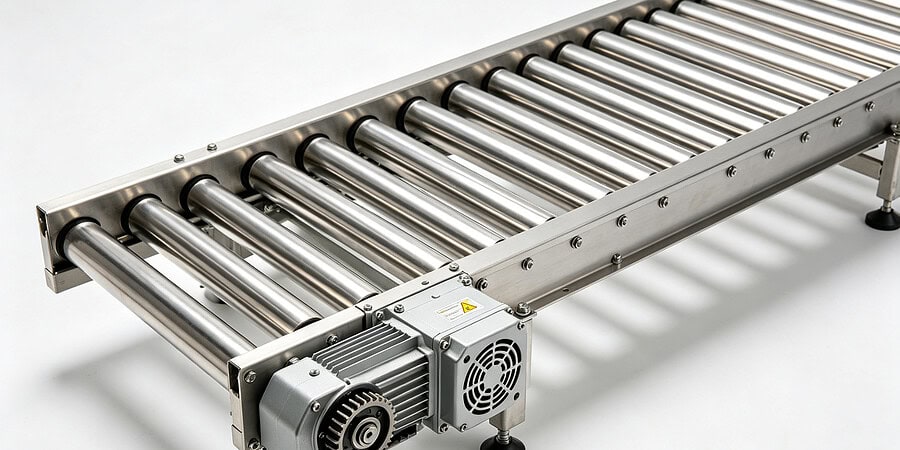
Our Conveyor Range
Ten conveyor types covering powered roller lines, belt transport, free-flow gravity, telescopic loading booms, chain-plate systems for bottles and heavy loads, plus diverting and flexible routing units. Click any model for the full spec sheet, application notes, and inquiry form.
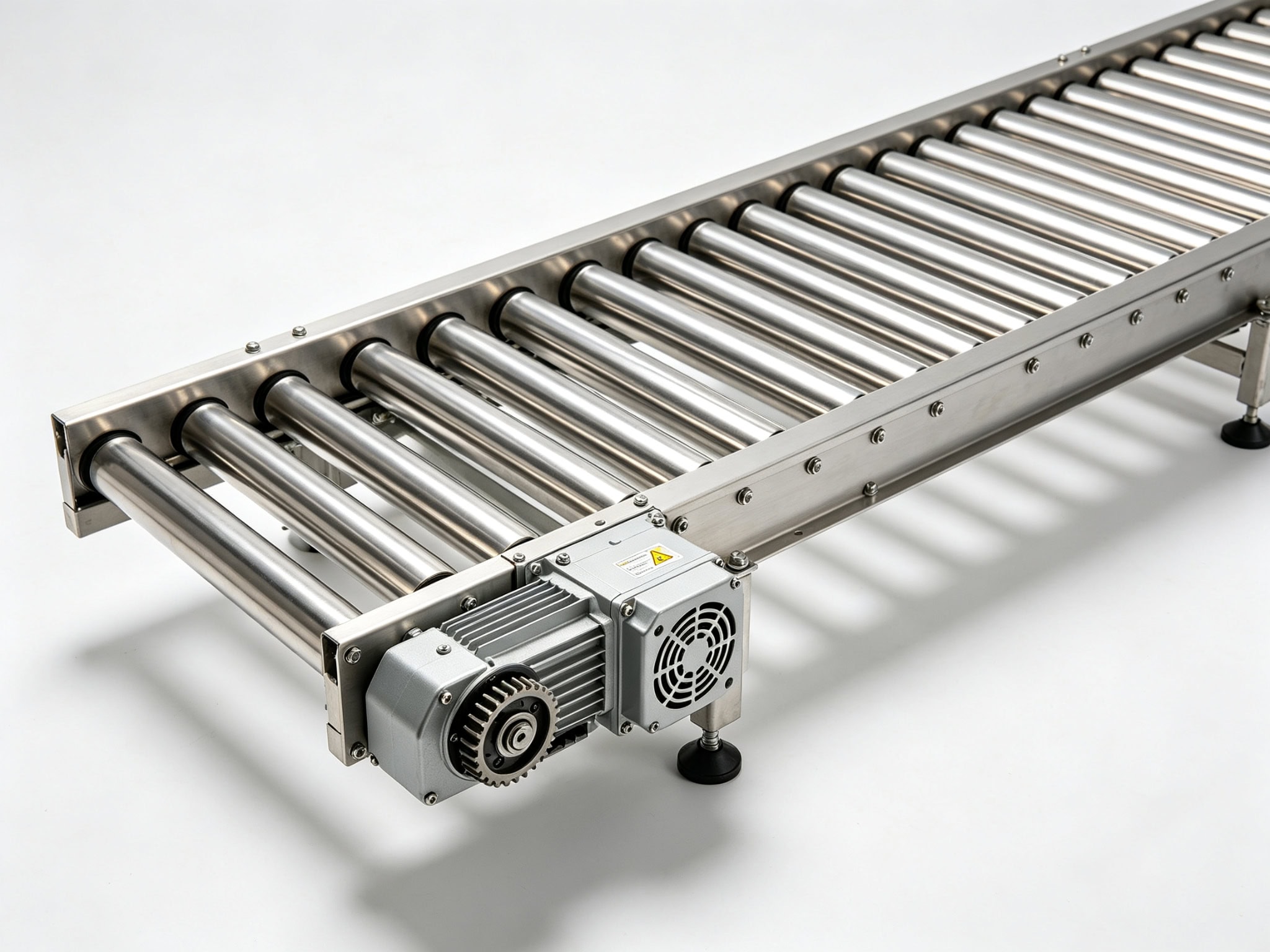
Motorized Roller Conveyor
Powered stainless steel roller conveyor with electric drive motor and gearbox. For cartons, boxes and totes in packaging lines and warehouses.
View Details →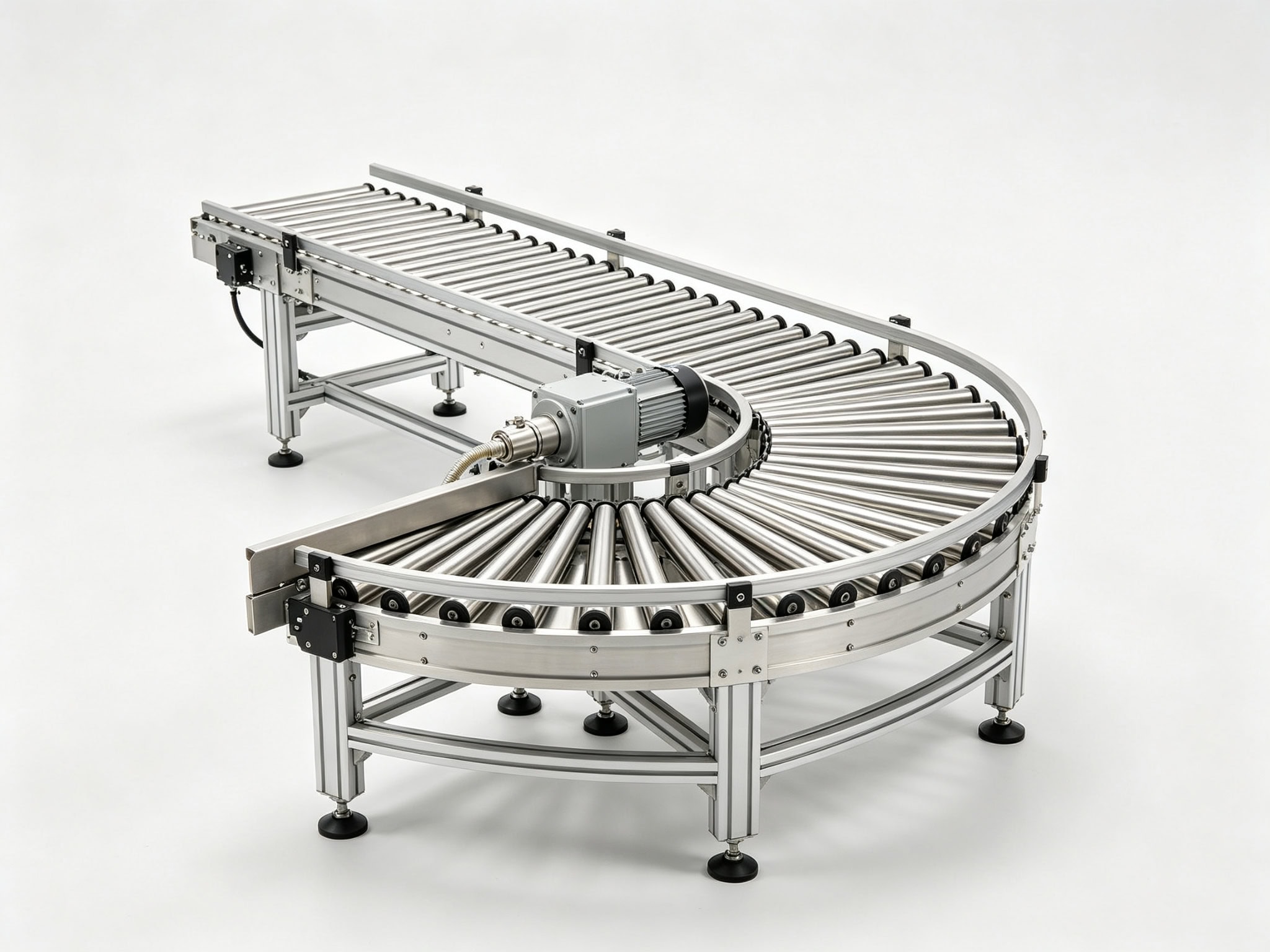
90 Degree Turning Roller Conveyor
Motorized curved roller conveyor with optional pneumatic side push. Changes product flow direction around corners in tight layouts.
View Details →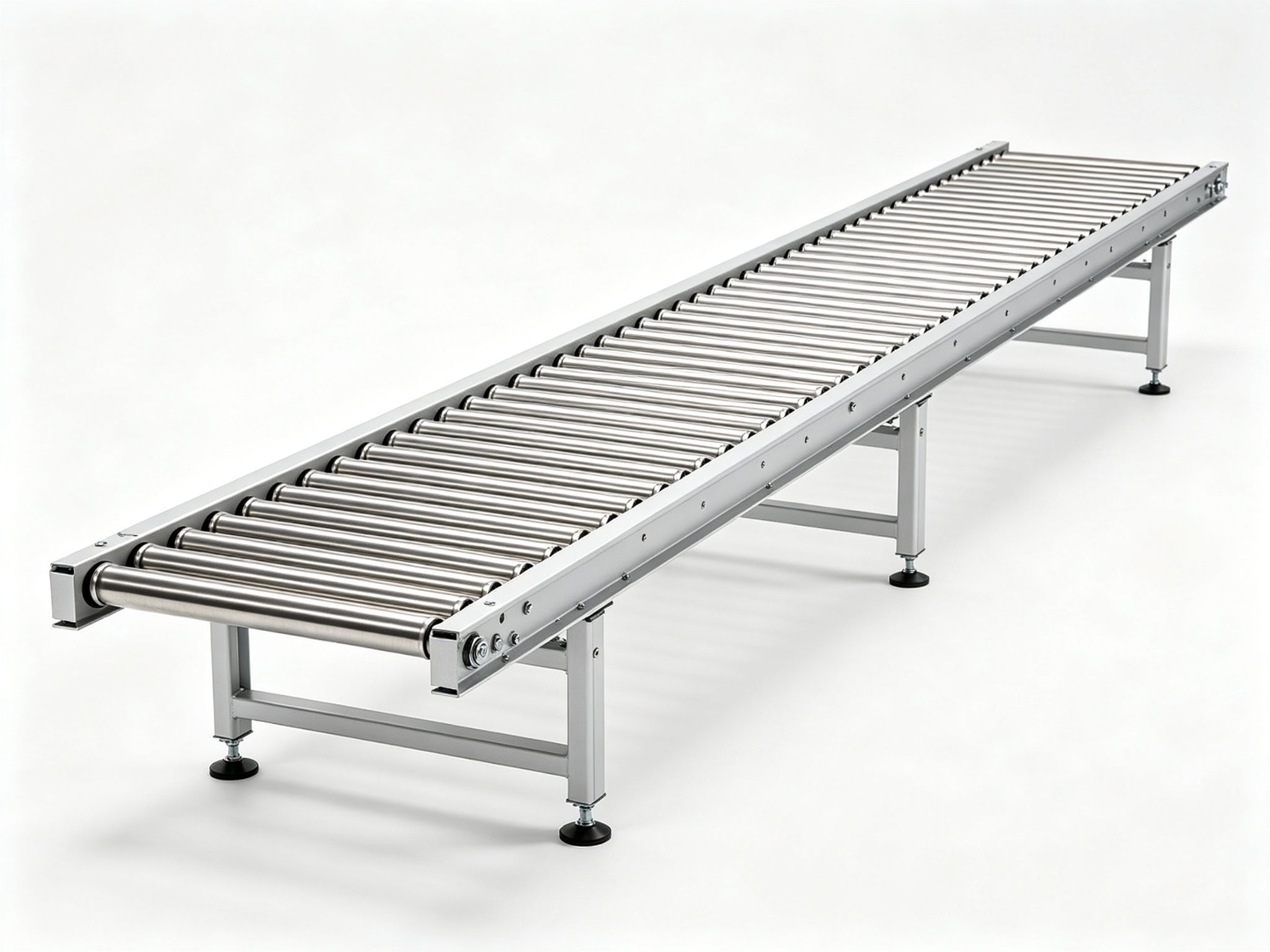
Gravity Roller Conveyor
Unpowered free-spinning roller conveyor on aluminum or steel frame. Uses a slight decline to move cartons without electricity.
View Details →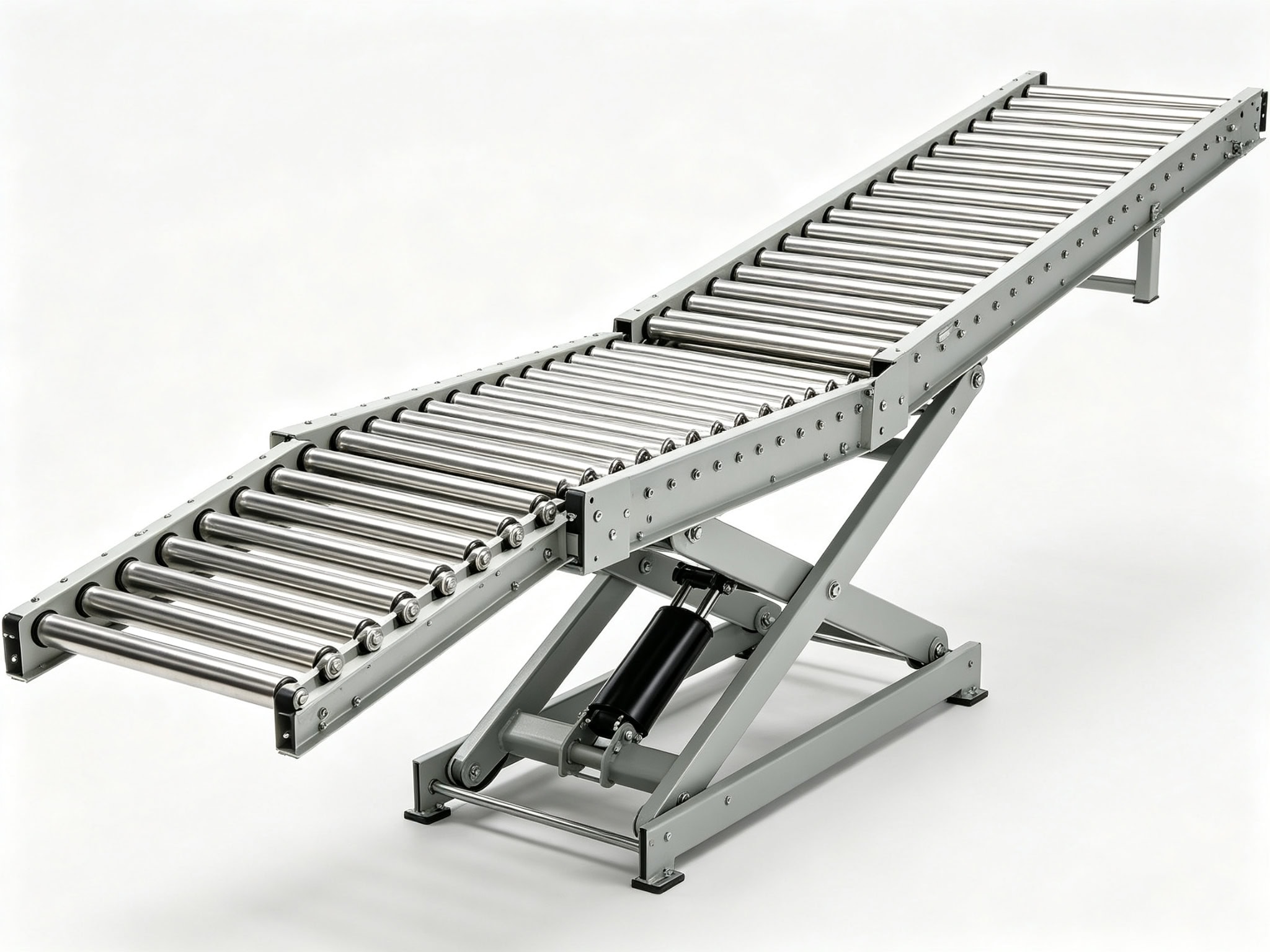
Telescopic Gravity Roller Conveyor
Extendable 2–3 stage gravity boom with casters. Ideal for loading and unloading trucks and containers without power.
View Details →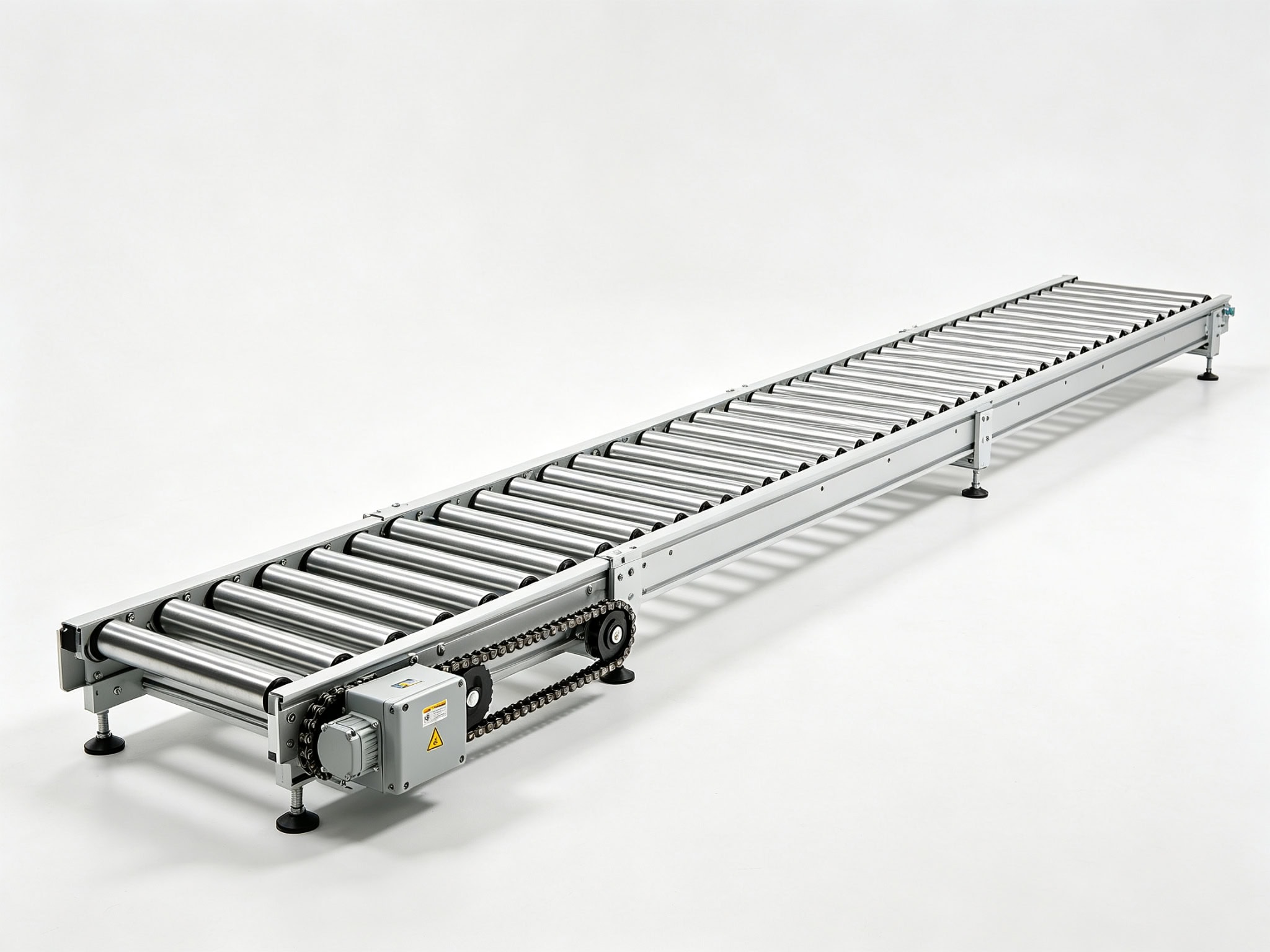
Motorized Telescopic Roller Conveyor
Powered telescopic boom with chain-driven rollers. For high-volume loading where gravity alone is not enough.
View Details →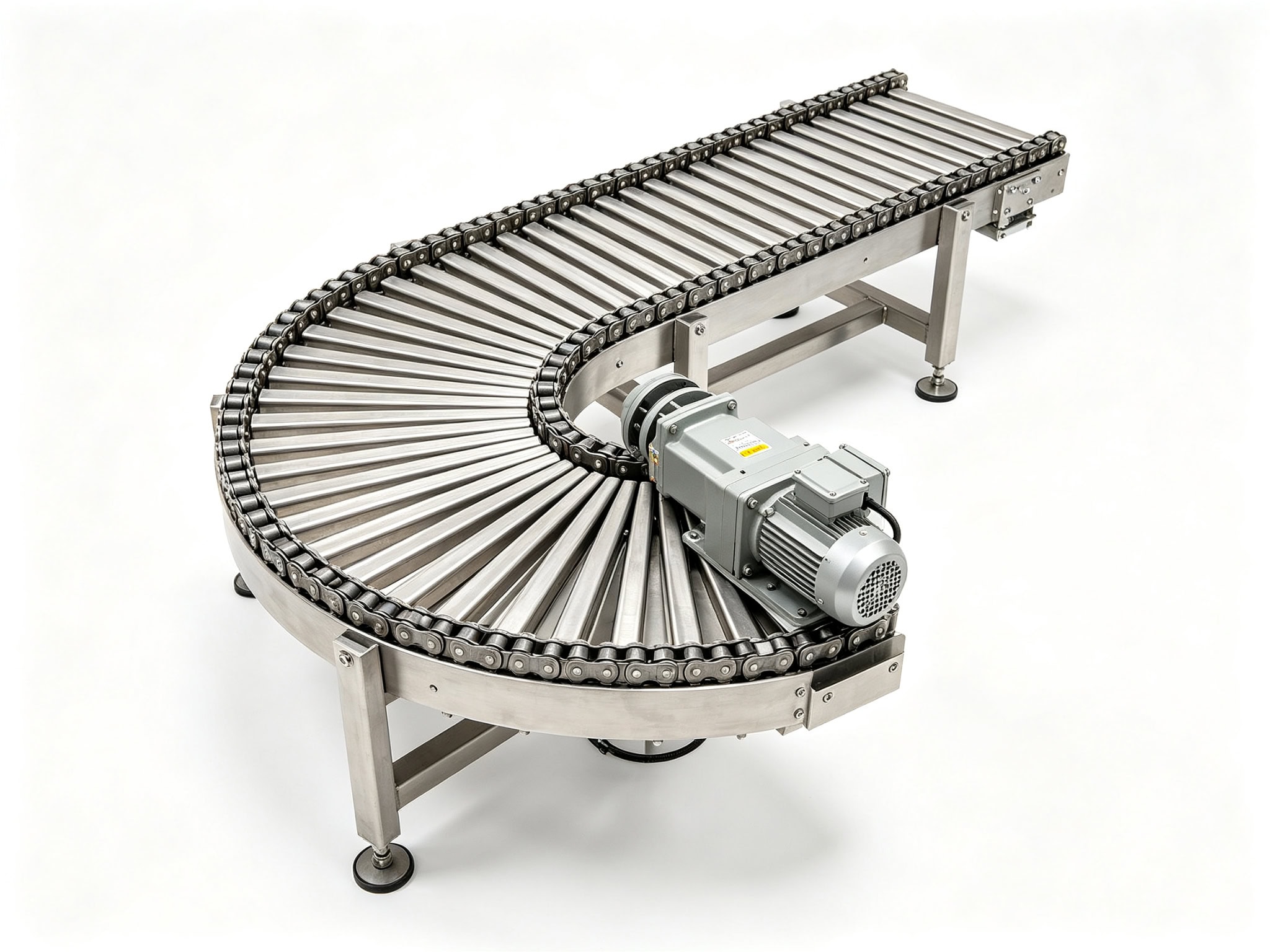
90 Degree Chain Plate Conveyor System
Modular stainless steel slat conveyor with turning section. Heavy-duty transfer for irregular loads and metal components.
View Details →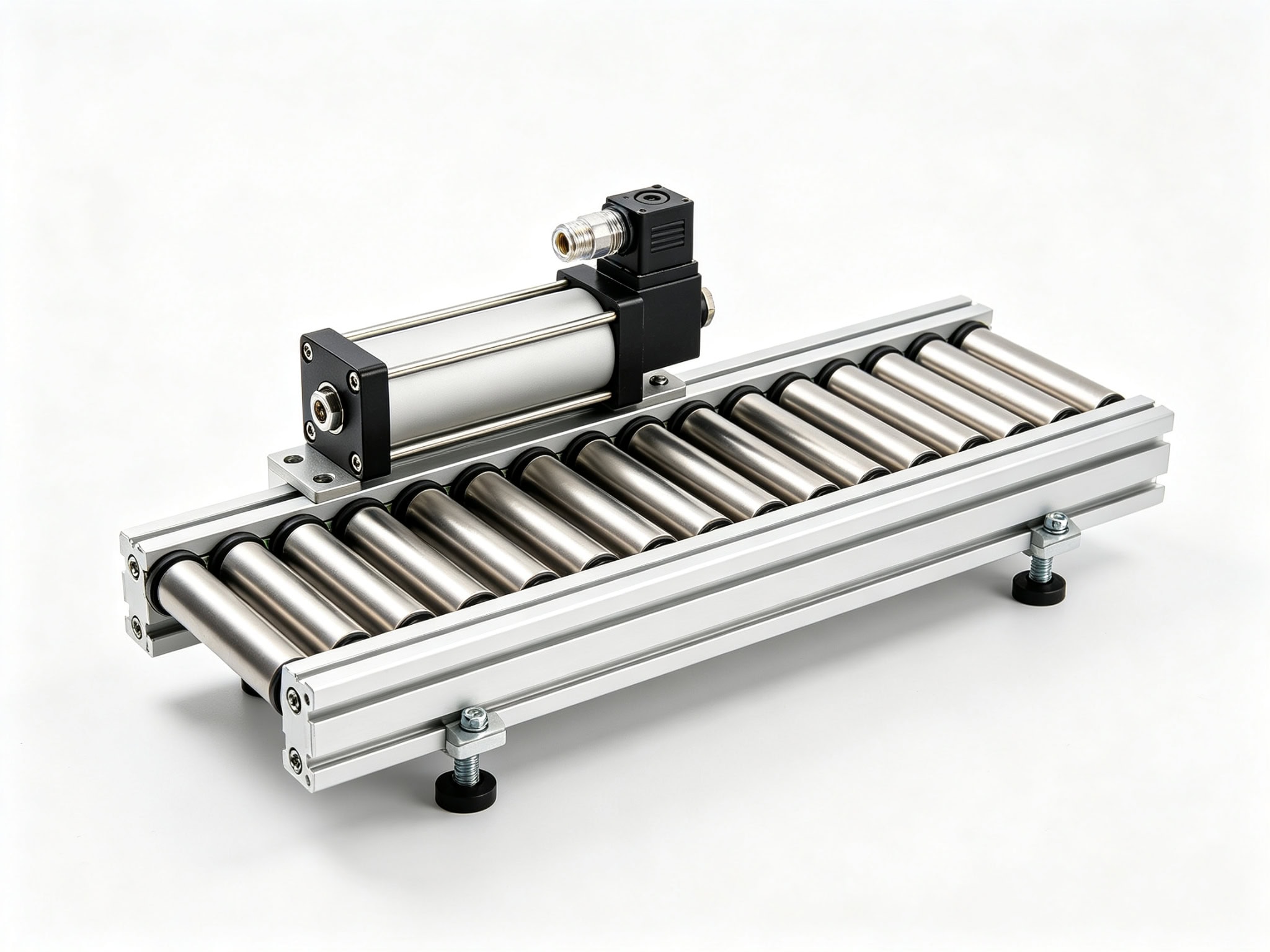
Pneumatic Push Roller Conveyor
Short roller section with integrated pneumatic pusher. Diverts, sorts or rejects cartons off the main line automatically.
View Details →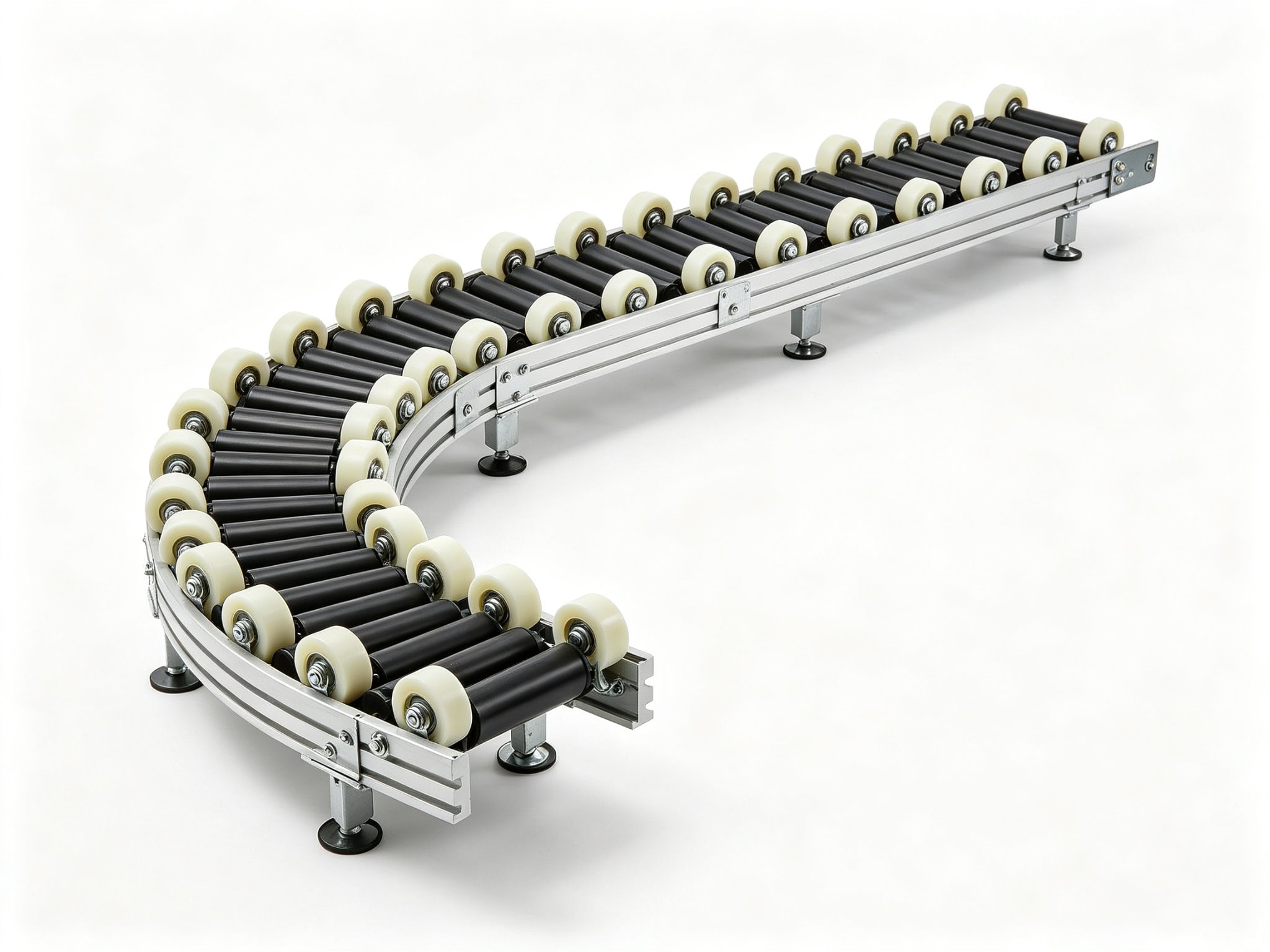
Flexible Skate Wheel Conveyor
Highly flexible expandable skate wheel conveyor. Curves, extends and contracts to fit any temporary or changing layout.
View Details →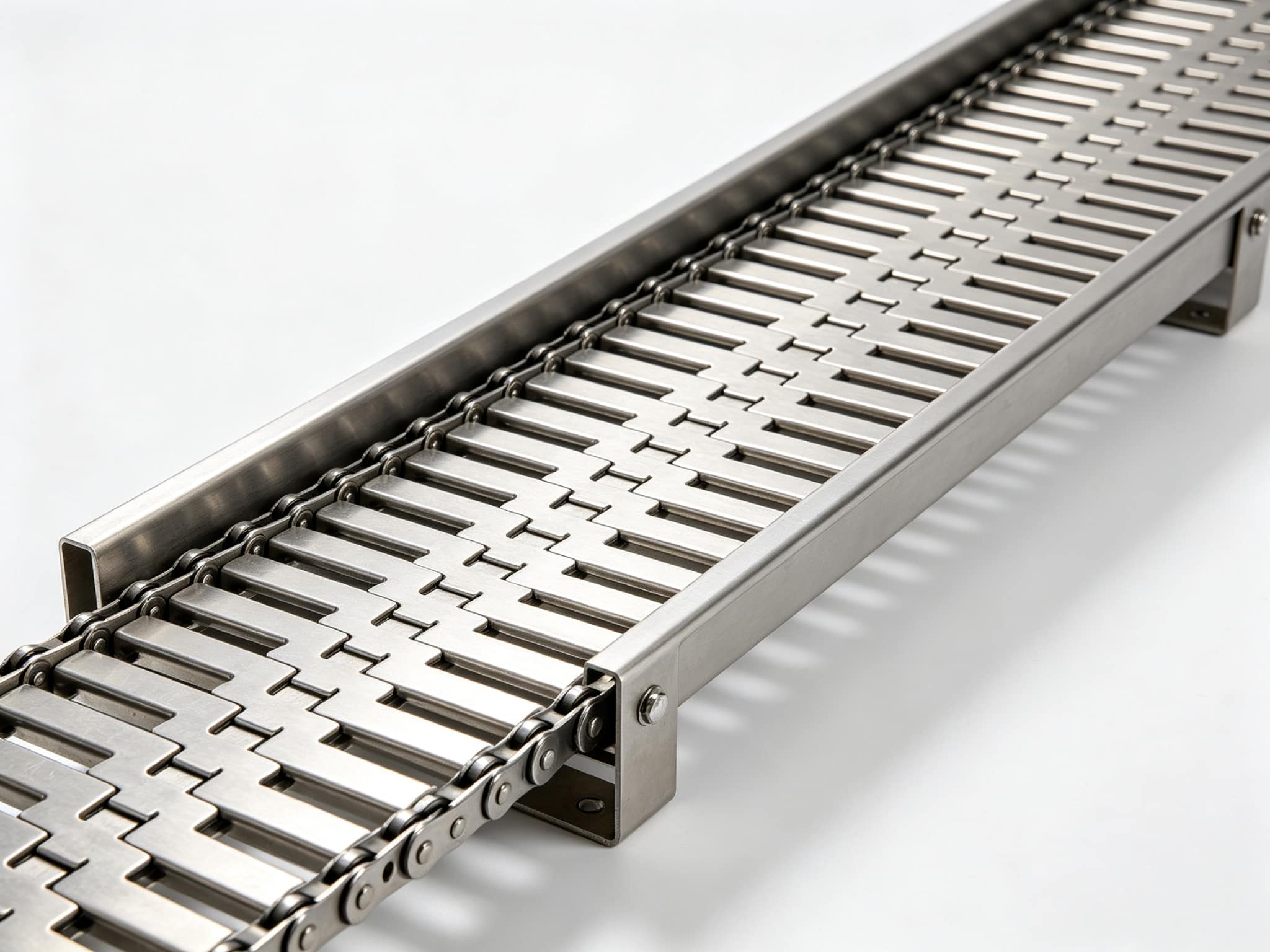
Chain Plate Conveyor for Bottles
Narrow stainless steel slat conveyor with adjustable side guides. Purpose-built for bottle and jar handling on filling lines.
View Details →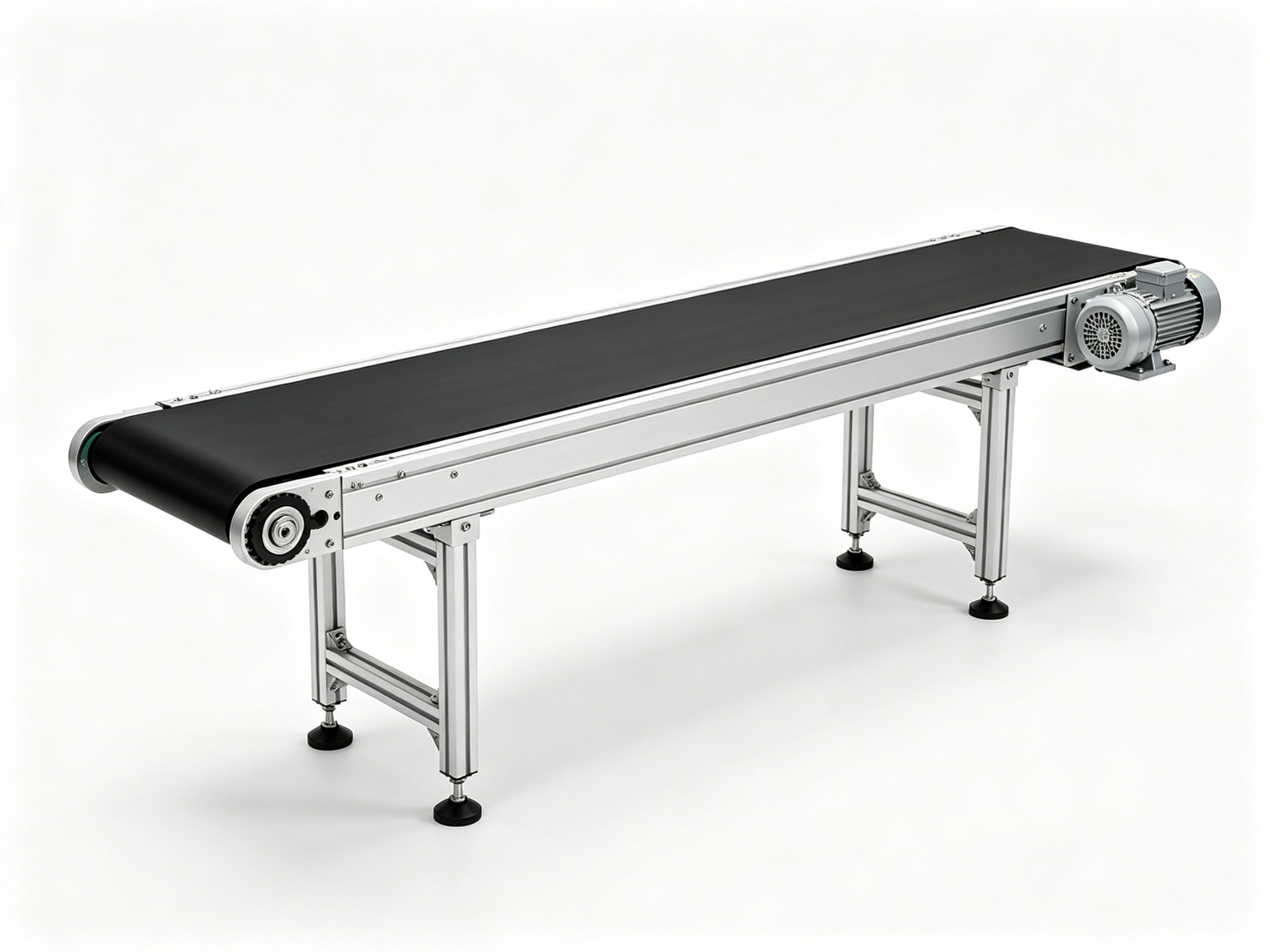
Belt Conveyor
Versatile PVC belt conveyor on aluminum frame with variable speed and height. For packages, products and loose items.
View Details →Why Buy Your Conveyor from SunAura Machinery
48,000㎡ Own Factory
Complete in-house manufacturing in Qingdao — frame bending, roller fabrication to final assembly under one roof.
CE Certified
Every powered conveyor ships with CE documentation, guarding and electrical safety compliance files.
ISO 9001:2015
Certified quality management system — from steel sourcing through final run testing.
SGS Audited
Third-party factory audit passed, with 20+ national patents in material handling equipment design.
12-Month Warranty
Full parts and labor warranty from shipment date, backed directly by factory engineers.
Lifetime Tech Support
Email, WhatsApp and remote video guidance for the entire service life of the conveyor.
Parts Shipped in 48h
Rollers, belts, motors and spares dispatched worldwide via DHL / FedEx within 48 hours.
48h Run Test
Every powered conveyor completes a 48-hour continuous run test before final shipment approval.
Applications by Industry
Conveyors move product where people cannot walk fast enough. Our conveyor systems serve these six core industries:
Food & Beverage
Stainless steel roller and chain-plate conveyors handle packaged food, bottled drinks and jars under washdown-friendly, hygienic frames.
Pharmaceutical
Clean, smooth-surface chain plate and belt conveyors carry vials, bottles and trays through filling, labeling and packing without contamination risk.
Logistics & Warehousing
Gravity and motorized roller lines connect receiving racks to packing stations, while telescopic booms bridge the dock to the truck trailer.
E-commerce & Fulfillment
Flexible skate wheel and powered telescopic conveyors absorb parcel volume spikes, enabling fast truck loading and order picking.
Manufacturing & Assembly
Belt and roller conveyors move sub-assemblies between workstations, with side pushers feeding components to the right operator.
Retail & Distribution
Carton flow, unloading docks and backroom routing — unpowered and powered sections keep replenishment moving through the distribution center.
How to Choose the Right Conveyor
Use this five-step checklist to match the correct SunAura conveyor type to your operation. If you are unsure, send us a layout sketch, product photos and daily throughput — our engineers will recommend the right configuration free of charge.
- What are you moving? Cartons and rigid boxes roll well on steel rollers. Bottles, jars and small or unstable items need a belt or narrow chain plate. Loose parts, sacks or irregular shapes usually require a belt. Soft or irregular loads should never go on free-spinning rollers.
- Powered or gravity? If your floor has a usable decline of 1–5 degrees and the products roll freely, an unpowered gravity conveyor costs nothing to run. If you need to run level, up a slight incline, or control speed precisely, choose a motorized unit with variable-speed drive.
- Length, width and height. Measure the distance between your machines, the widest product you carry, and the working height of your existing equipment. Our standard widths run 300–800mm and adjustable legs cover 500–1000mm; custom widths and heights are built to order.
- Direction changes and loading points. Need to turn a corner? Add a 90-degree roller or chain-plate turn. Need to reach into a truck? Specify a telescopic boom. Need to divert cartons to a side lane? Add a pneumatic pusher section. We modularize these so the whole system bolts together.
- Load and speed. Rate the heaviest load per meter (our range covers 20–80 kg/m) and the line speed you need (0–20 m/min). Oversizing the motor and rollers slightly pays off when volume grows — it is cheaper now than retrofitting later.
Troubleshooting Guide — Common Issues & Solutions
Conveyors are among the most reliable machines on a plant floor, but they do suffer setup and wear issues. This table covers the five most frequent problems our field engineers encounter across the range, with practical step-by-step fixes. Always lock out and tag out power before inspecting a motorized conveyor.
| Problem | Possible Causes | Solutions |
|---|---|---|
| Product drifts or runs off the side | Frame not level; rollers skewed; side guides missing or mis-set; belt tracking off on belt conveyors; heavy cartons off-center. |
|
| Cartons won’t roll on gravity conveyor | Decline too shallow; rollers seized or dirty; carton bottom too light or flexible; roller pitch too wide for the box. |
|
| Motor stops / overload trips | Jammed product between rollers; overloaded load per meter; motor gearbox overheated; chain or belt tension too tight; voltage drop. |
|
| Noisy or rough running rollers | Worn roller bearings; debris trapped under a roller; loose roller axle; chain drive dry or misaligned on motorized sections. |
|
| Telescopic boom won’t extend / retend |
|
For issues not covered above, send photos and a short video of the problem to [email protected] — our engineering team typically diagnoses root cause within one business day.
Frequently Asked Questions
What is the difference between a roller conveyor and a belt conveyor?
A roller conveyor uses a row of steel cylinders that products roll over; it works best for rigid, flat-bottomed cartons, totes and pallets. A belt conveyor uses a continuous fabric or PVC loop that carries the product; it handles irregular, small, unstable or inclined loads that would not roll on rollers. Many production lines use both — rollers for carton flow and a short belt for tricky transitions.
Do I need a motor, or can I use gravity?
If your conveyor can slope downward at 1–5 degrees and your product has a rigid flat bottom, a gravity roller conveyor moves cartons with no electricity, no maintenance and zero running cost. Once the path runs level, goes uphill, or you need controlled speed, you need a motorized conveyor with variable-speed drive. Our engineers will advise based on your floor layout and product.
How do I decide the right conveyor width?
Width is normally set 50–100 mm wider than the widest product you carry, on both sides. Standard widths are 300, 400, 500, 600 and 800 mm. For bottle handling, a narrow 80–150 mm chain plate is often better than a wide roller because bottles sit single-file on guide rails. Send us your largest carton or bottle dimensions and we will confirm the width.
Can conveyors be joined together around corners?
Yes. That is exactly what modular conveyor systems are designed for. Straight motorized roller sections bolt to 90-degree turning units, which bolt to gravity or telescopic sections. Heights are matched so the product transfers smoothly from one frame to the next. We supply matching side guides, transitions and support legs for every joint.
What voltage and power options are available?
Our powered conveyors are built to order for 220V or 380V, 50 or 60 Hz, single-phase or three-phase depending on motor size. Motors range from 0.37 kW for light duty up to 1.5 kW for heavy telescopic or chain-plate sections. Tell us your local supply and we configure the motor, plug and control box accordingly.
How long is the lead time and what is covered by warranty?
Standard-width stock conveyors ship in 7–15 days; custom widths, lengths and stainless steel food-grade builds take 20–30 days. Every powered conveyor carries a 12-month warranty covering parts and labor, plus lifetime technical support. Spare rollers, belts and motors are dispatched worldwide within 48 hours.
Get a Factory-Direct Conveyor Quote in 24 Hours
Tell us what you are moving, your line layout, and daily throughput — our engineers reply with the right conveyor combination, FOB price and lead time within one business day. Every conveyor is built in our 48,000㎡ Qingdao factory, CE & ISO 9001 certified, and powered units are run-tested for 48 continuous hours before shipment.
Email [email protected]