
Palletizers — Automated Palletizing Systems
Industrial automated palletizers for cartons, bags, bottles, jugs and drums. From collaborative robot palletizers that work safely beside your staff, to high-level layer palletizing systems and heavy-duty gantry cells, our automatic palletizing machines stack product steadily and consistently — factory-direct from SunAura Machinery’s 48,000㎡ Qingdao plant.
What Is Palletizing & How Does It Work?
Palletizing is the automated process of arranging finished product — cartons, woven bags, bottles, jugs, drums or bulk containers — onto a shipping pallet in a stable, predictable pattern so the loaded pallet can be stretch-wrapped and trucked to distribution. A modern palletizer receives product on an infeed conveyor, identifies the incoming layer, and places each item onto the accumulating load using a programmed stacking pattern (rows and layers defined by pallet size, box footprint, and desired layer count).
There are three dominant architectures. Robotic palletizers use a 4-axis or 6-axis arm to pick and place product — the most flexible option for mixed product formats and frequent changeovers. Gantry (Cartesian) palletizers use a moving bridge beam overhead to carry product across a fixed work envelope — ideal for heavy, regular patterns and high uptime. Layer palletizers (high-level or low-level) fully form a complete layer on a staging table before sweeping it onto the pallet — the highest-throughput solution for uniform case lines. All three rely on an end-of-arm tool (EOAT) matched to the product: a vacuum gripper for rigid cartons and trays, a mechanical gripper/clamp for bags, jugs and drums, or a fork/plate tool for heavy layer picking.
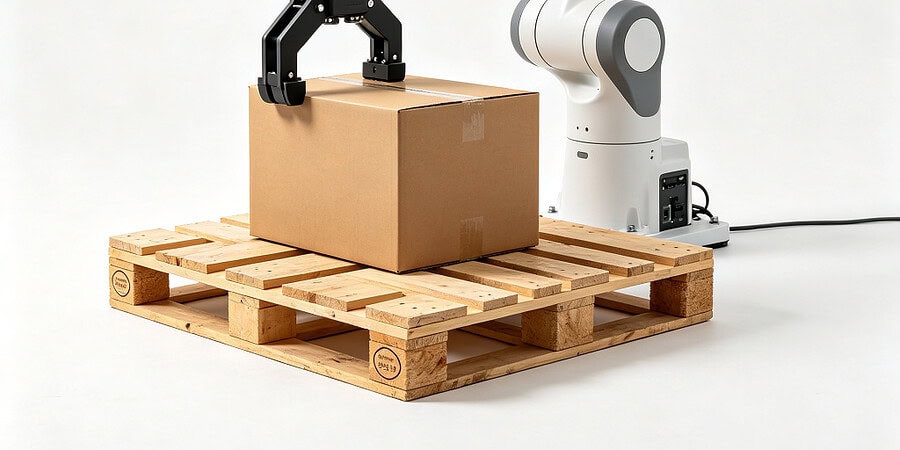
Our Palletizer Range
Ten models covering collaborative cobots, floor-standing robotic cells, dual-station systems, dedicated water-jug cells, layer palletizers, bag palletizers and gantry systems. Click any model for the full spec sheet, palletizing demo video, and inquiry form.
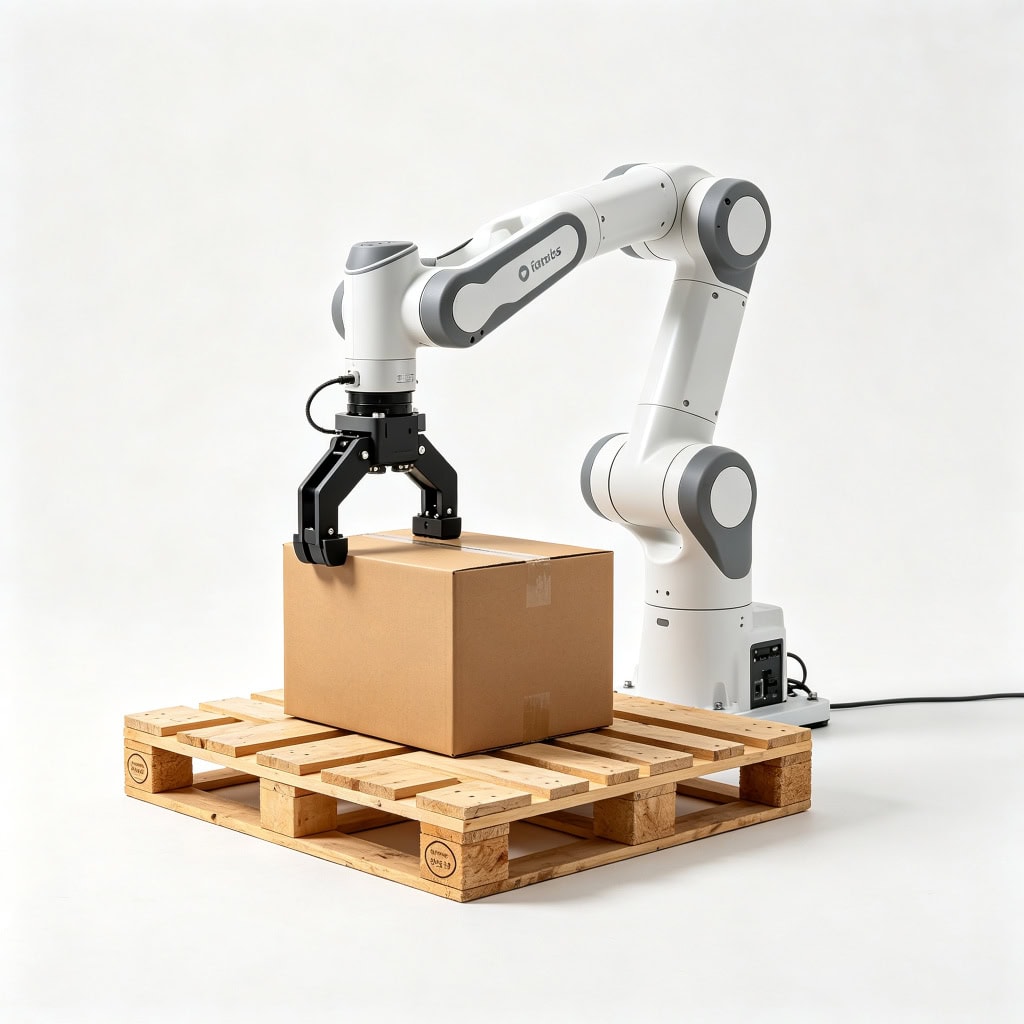
Collaborative Robot Palletizer System
10kg payload 6-axis cobot palletizer with hand-guided programming. No safety fencing — safe to work beside staff. Small businesses and e-commerce.
View Details →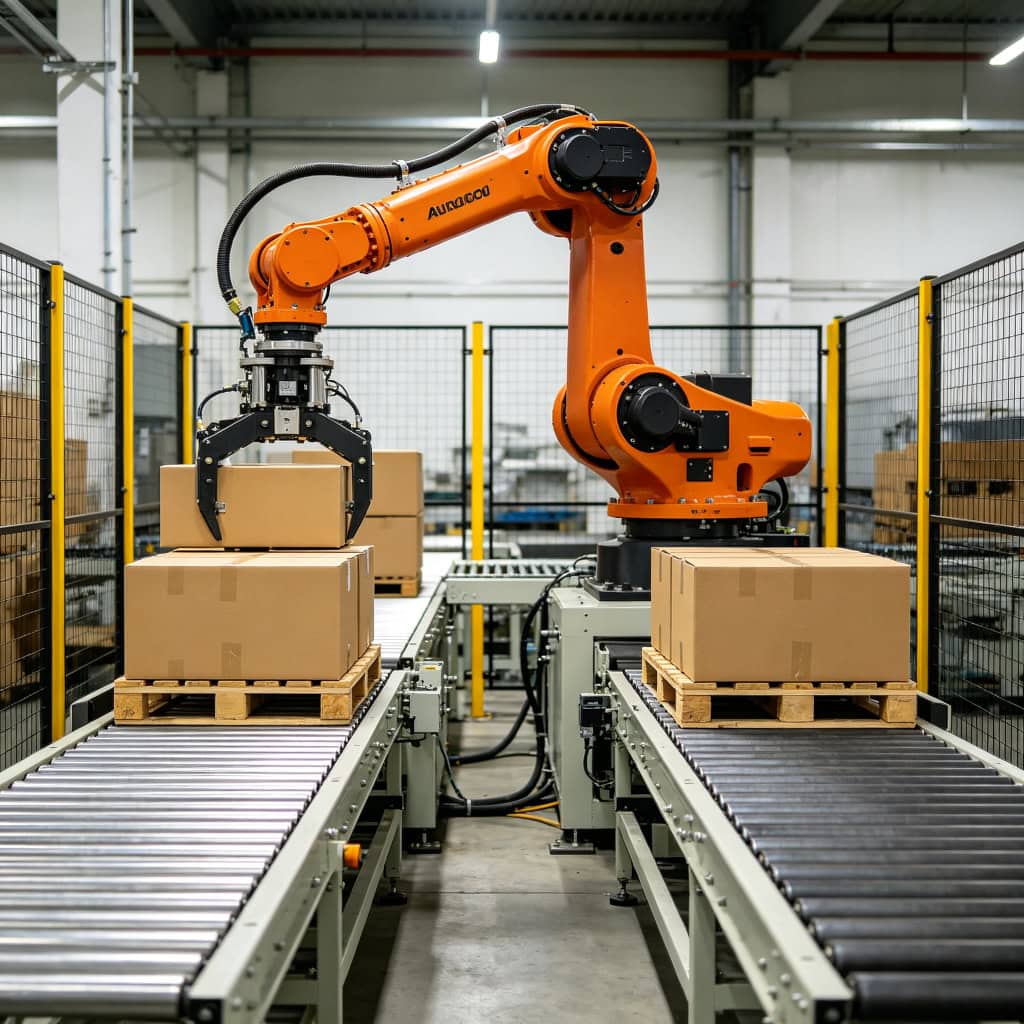
Dual-Station Robotic Palletizer
50kg payload 4-axis robot with two pallet positions. Continuous operation — operators swap pallets while the robot keeps running. High throughput.
View Details →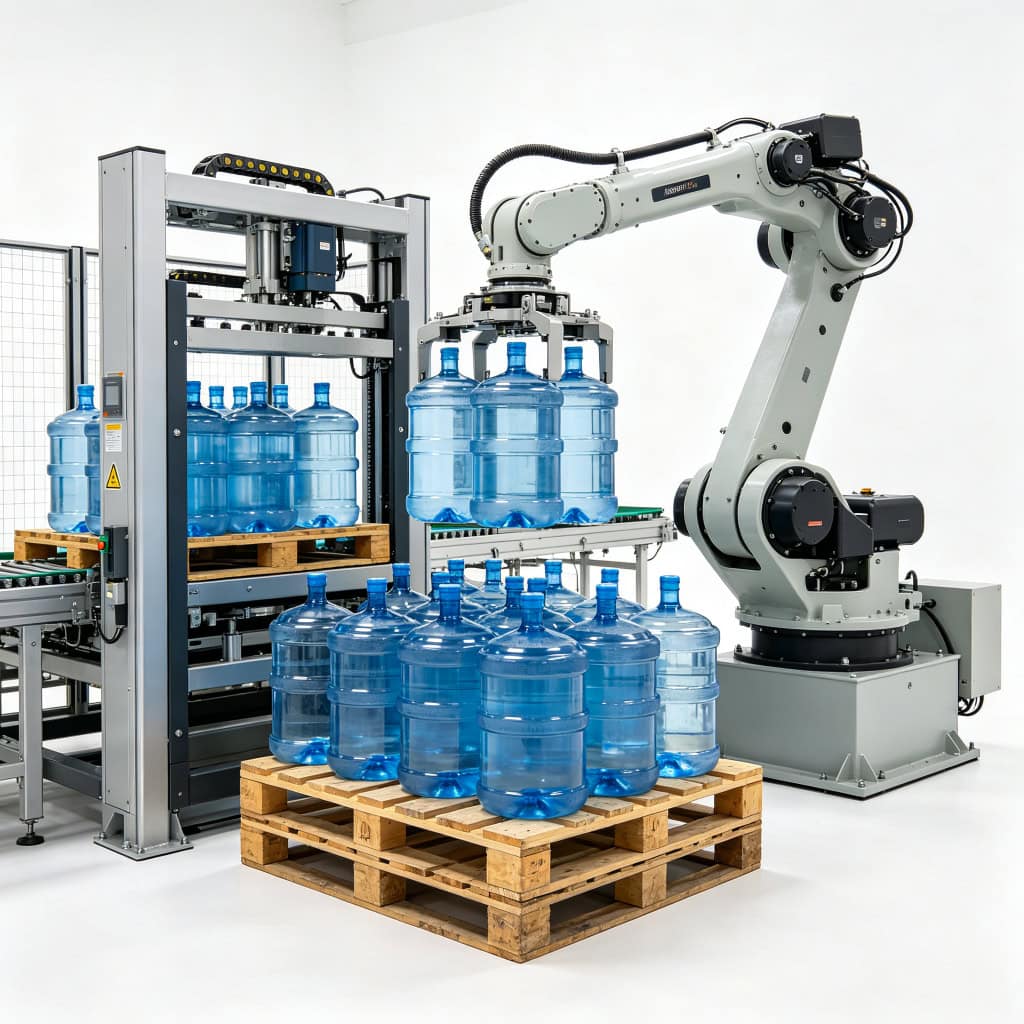
Bottled Water & Drum Palletizer
Up to 600 jugs/hour for 5-gallon (18.9L) water jugs and drums. Stainless steel contact parts, 4×4 or 3×3 pallet patterns. Beverage plants.
View Details →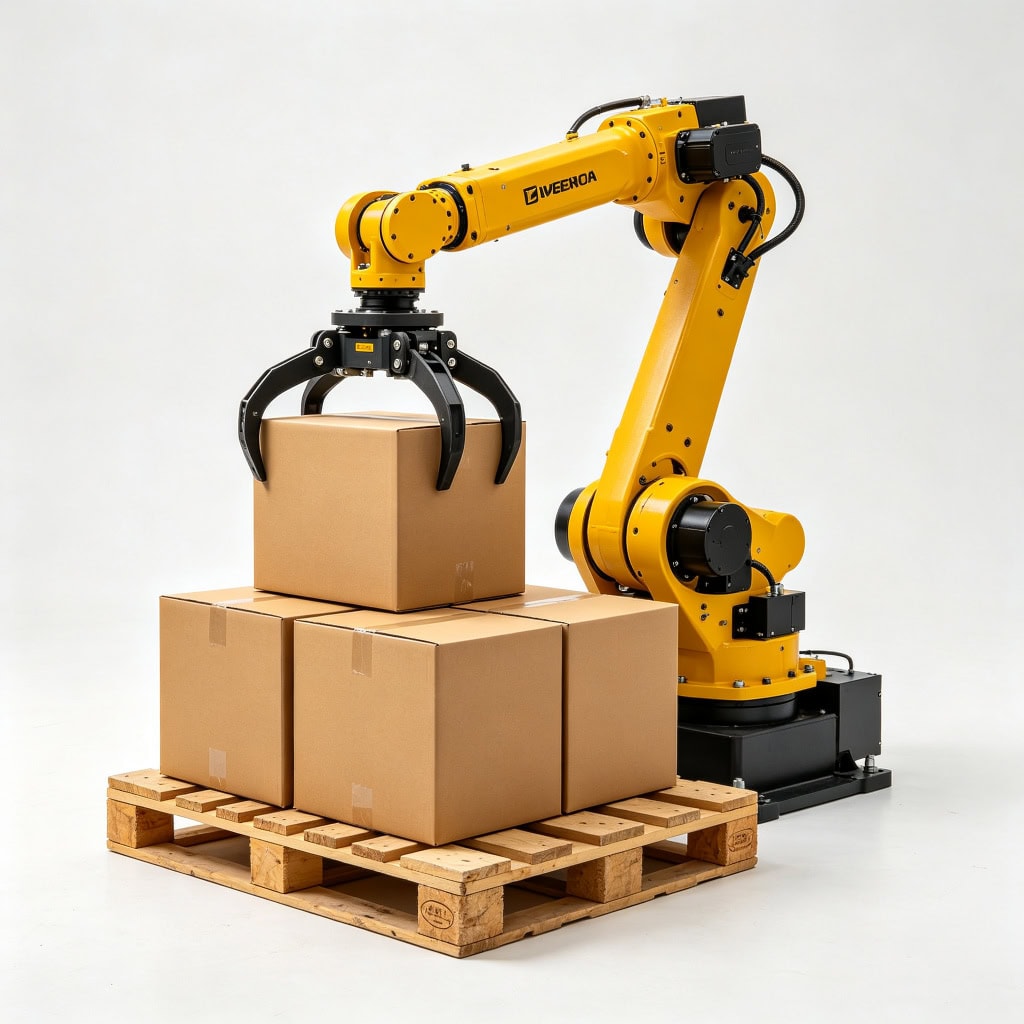
Four-Axis Robotic Palletizer (120kg Payload)
120kg payload, 2400mm reach, multiple EOAT options. Versatile medium-heavy palletizing for cartons and bags. General industrial use.
View Details →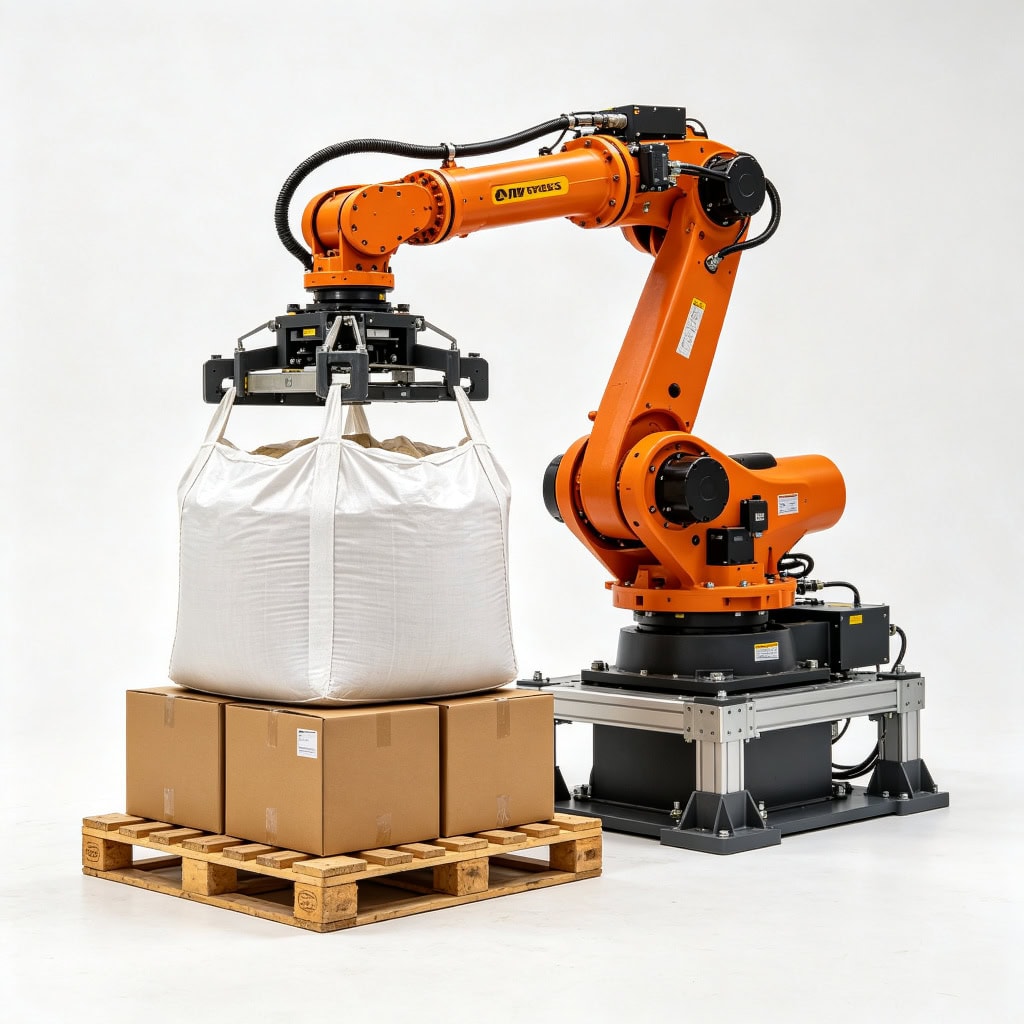
Heavy-Duty Four-Axis Robotic Palletizer (180kg)
180kg payload, 2600mm reach, IP65 protection, reinforced wrist. Built for heavy bags, cement, fertilizer, chemicals and building materials.
View Details →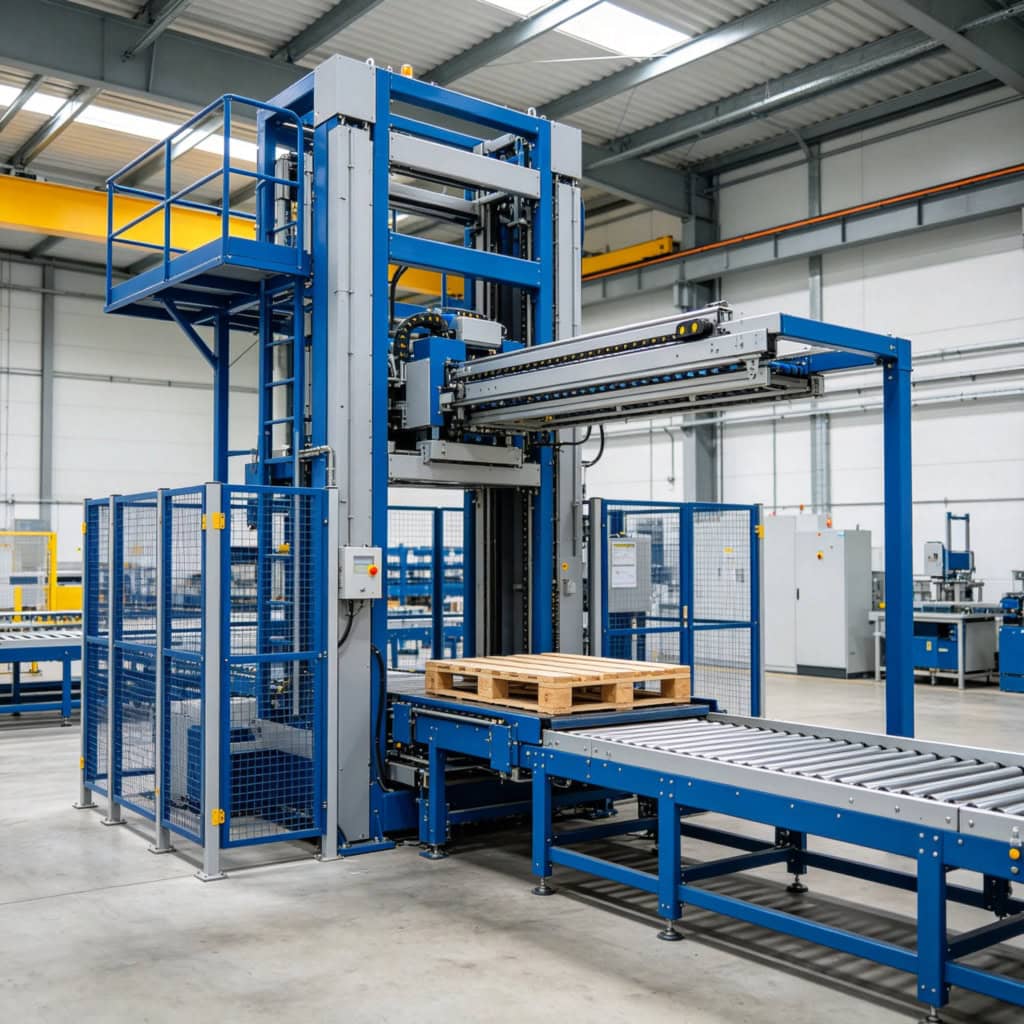
High-Level Layer Palletizer
Top-infeed layer-forming palletizer for high-speed uniform case lines. Highest throughput for food, beverage and distribution centers.
View Details →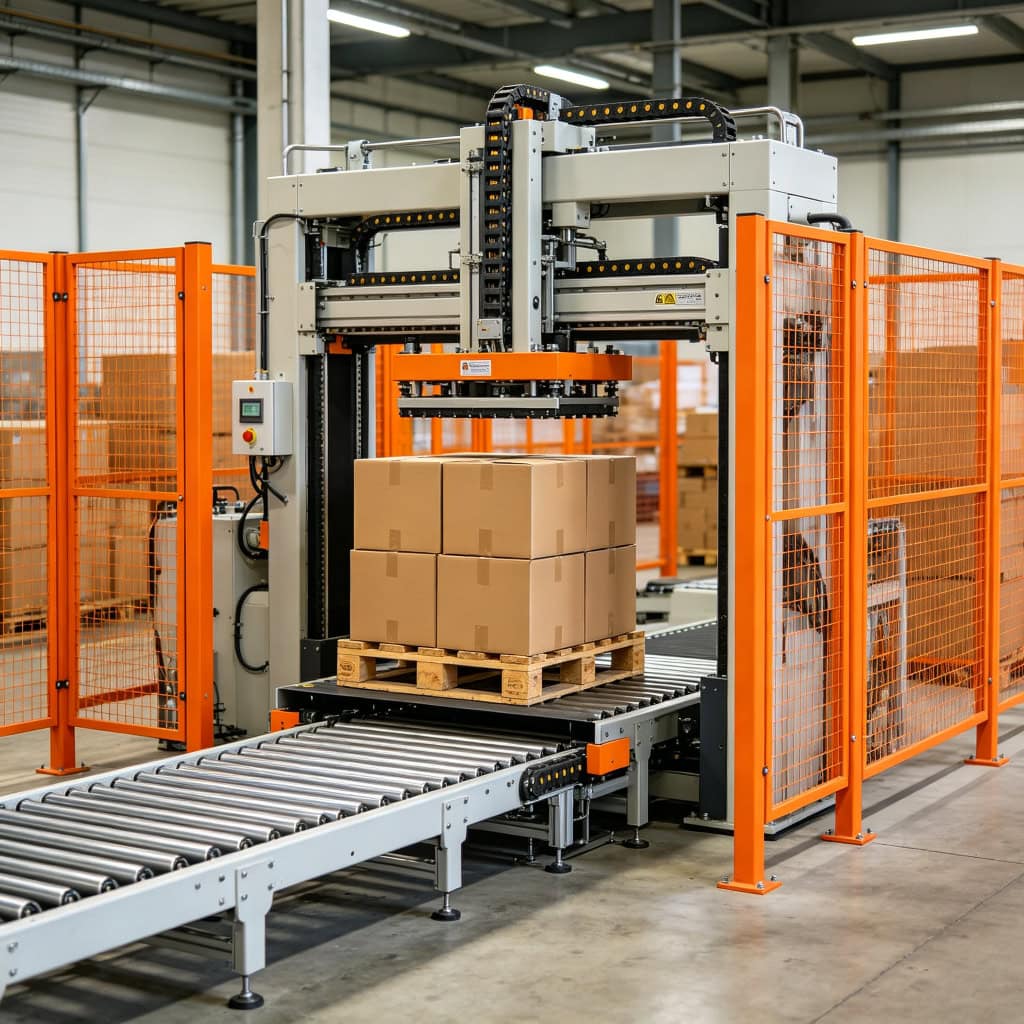
Low-Level Case Palletizer
Floor-level infeed case palletizer — no mezzanine, simple maintenance and easy operator access. Ideal for medium-speed carton lines.
View Details →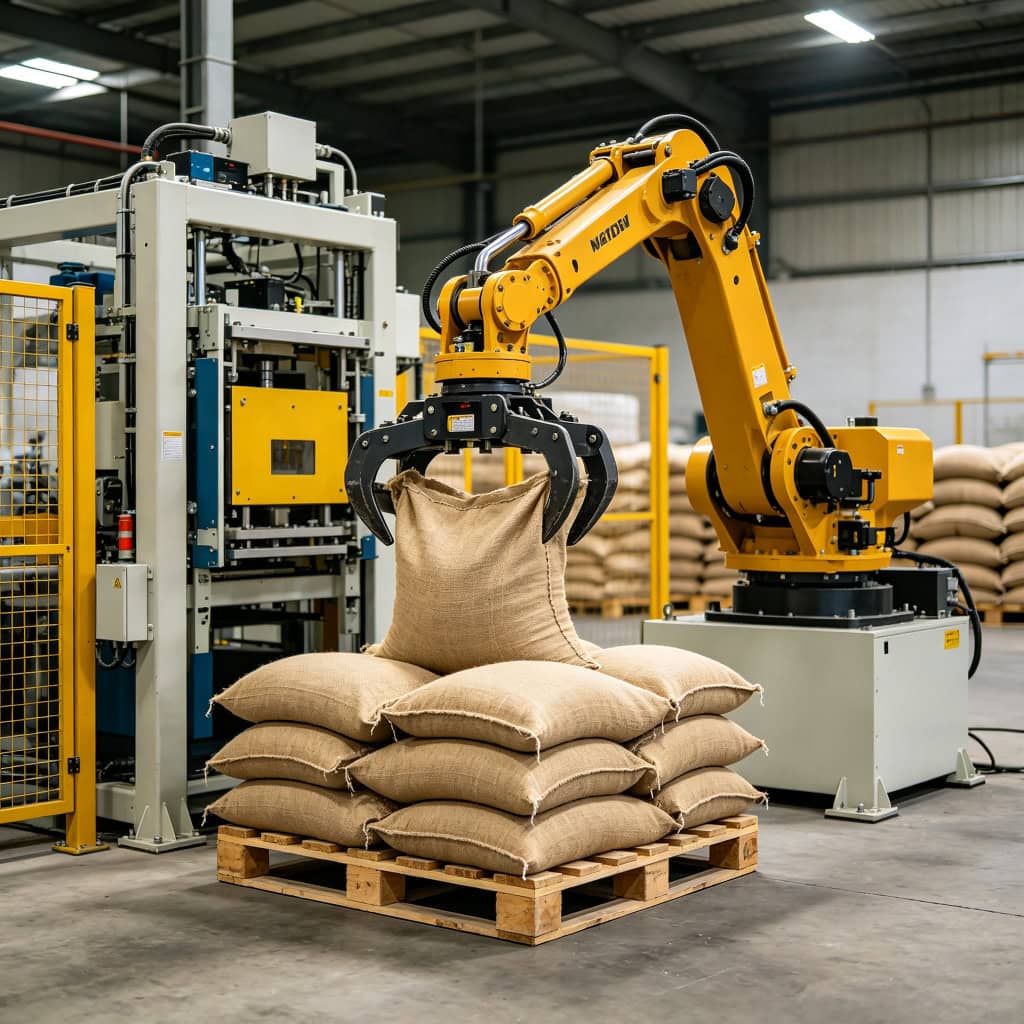
Automatic Bag Palletizer
Dedicated woven-bag and paper-bag palletizer with sweep layer formation. Fertilizer, flour, cement and chemical bag stacking.
View Details →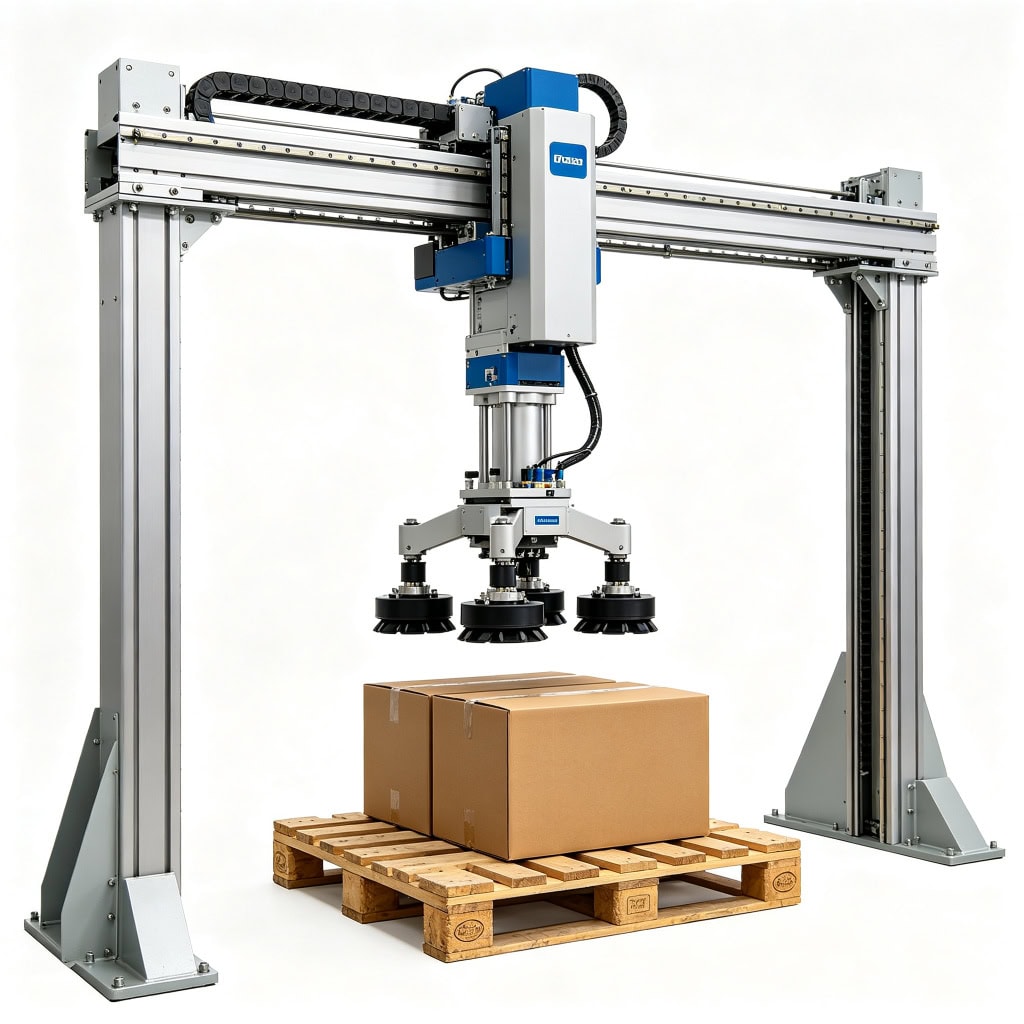
Gantry Palletizer System
Overhead Cartesian gantry palletizer for heavy, regular patterns and multi-pallets. Rigid, high-uptime solution for bulk handling.
View Details →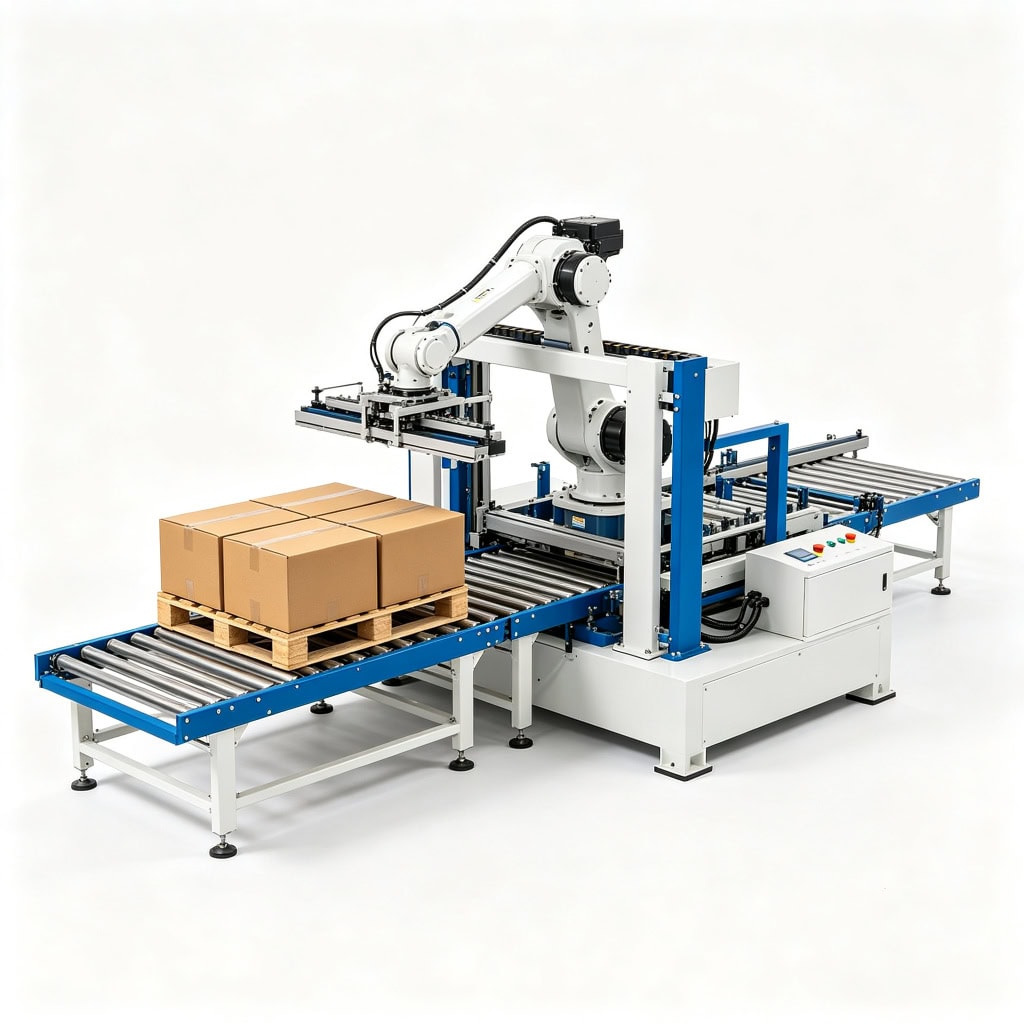
Compact Carton Palletizer
Space-saving compact carton palletizer for small-footprint rooms. Entry-level automation for growing case lines with limited floor space.
View Details →Why Buy Your Palletizer from SunAura Machinery
48,000㎡ Own Factory
Complete in-house manufacturing in Qingdao — raw steel to final assembly under one roof.
CE Certified
Every palletizer ships with CE documentation and full machinery safety compliance files.
ISO 9001:2015
Certified quality management system — component sourcing through final run testing.
SGS Audited
Third-party factory audit passed, with 20+ national patents in packaging machinery design.
12-Month Warranty
Full parts and labor warranty from shipment date, backed directly by factory engineers.
Lifetime Tech Support
Email, WhatsApp and remote video guidance for the entire service life of the machine.
Parts Shipped in 48h
Genuine spare parts dispatched worldwide via DHL / FedEx within 48 hours of confirmation.
48h Run Test
Every machine completes a 48-hour continuous run test before final shipment approval.
Applications by Industry
Automated palletizing is used wherever finished goods leave the production floor on pallets. Our palletizers serve these six core industries:
Food & Beverage
Cases of canned goods, cartons of packaged food, bottled water and jugs — high-speed layer and robotic palletizers keep packaging lines running 24/7.
Pharmaceutical
Cartons of medicine and boxes of blister packs — clean-room friendly collaborative and low-level systems protect product and support GMP.
Chemical & Building Materials
Cement bags, mortar sacks, drums of chemicals and pails — heavy-duty 120–180kg robots and gantry systems handle abrasive, dusty loads safely.
Agriculture & Fertilizer
Woven bags of fertilizer, seed and feed — automatic bag palletizers form stable rows on standard pallets for long-haul export shipping.
Consumer Goods & E-commerce
Mixed cartons, cosmetics, household goods and online-order cases — flexible cobot and dual-station robots adapt to frequent SKU changeovers.
Logistics & Warehousing
Distribution centers and fulfillment hubs — high-level layer palletizers and multi-pallet gantry systems handle high case volumes and throughput targets.
How to Choose the Right Palletizer
Use this five-step checklist to match the correct SunAura palletizer to your production reality. If you are unsure, send us your product samples, pallet size and hourly output — our engineers will recommend the right configuration free of charge.
- Payload and product type: Weigh the heaviest single item to be handled. Up to 10–20kg of light cartons: a collaborative robot or compact cell. 50–120kg of cartons and bags: a standard 4-axis robotic palletizer. 120–180kg of heavy bags, drums or bulk: the heavy-duty 180kg model or a gantry system. Your EOAT (vacuum, gripper, fork) must match whether the product is a rigid carton, a soft bag, a jug or a drum.
- Throughput rate (cases or bags per hour): Count your fastest shift output. Below 600 units/hour: a collaborative robot or compact carton palletizer. 600–1200 units/hour: a single or dual-station 4-axis robot. 1200–1800+ units/hour on uniform cases: a high-level layer palletizer. Higher throughput usually favors layer or gantry systems over single-arm robots.
- Floor space and layout: Measure the available footprint and ceiling height. A collaborative cobot needs roughly 1.2×1.0m and no fencing. A floor-standing 4-axis robot needs a safety envelope around it. A high-level layer palletizer needs overhead infeed (a mezzanine or elevated conveyor), while a low-level case palletizer sits entirely at floor level.
- Integration with your existing line: Confirm infeed conveyor height, belt width, pallet size (standard 1200×1000mm or 1100×1100mm), and how empty pallets are supplied (auto dispenser or manual). We design infeed, layer-staging and outfeed conveyors to bolt onto your current end-of-line — left-to-right or right-to-left, whichever suits your room.
- Budget and automation level: Entry-level automation (cobot, compact cell) gives you immediate labor savings with fast payback. Mid-tier (dual-station robot, low-level layer) removes the operator-to-pallet bottleneck. High-tier (high-level layer, gantry, multi-pallet) delivers lights-out 24/7 operation. Tell us your target ROI and we will size the system to it, not the other way around.
Troubleshooting Guide — Common Issues & Solutions
Palletizers are robust machines, but end-of-line issues do arise. This table covers the five most frequent problems our field engineers encounter, with practical step-by-step fixes. Always lock out and tag out energy sources before entering the work cell.
| Problem | Possible Causes | Solutions |
|---|---|---|
| Misaligned or crooked layers | Programmed pallet pattern wrong for product size; layer staging plate off-square; infeed conveyor pushing product at an angle; slip sheets missing. |
|
| Dropped products mid-cycle | EOAT suction weak (vacuum); gripper not fully closed; product too heavy for payload; bag softening / deformation; speed too high. |
|
| Robot fault or error code on HMI | Axis overload / collision; emergency stop pressed; safety fence interlock open; teach pendant program corrupted; over-temp drive. |
|
| Conveyor jam / cases not advancing | Photo-eye blocked; case tipped or nested; motor overload tripped; chain / belt tracking off; side guides too narrow. |
|
| Pallet not detected / wrong position | Empty pallet not centered on lift; pallet height sensor dirty; damaged or warped pallet; pallet not loaded by dispenser; Z-axis height drift. |
|
For issues not covered above, send photos and a short video of the problem to [email protected] — our engineering team typically diagnoses root cause within one business day.
Frequently Asked Questions
What is the difference between a robotic palletizer and a layer palletizer?
A robotic palletizer uses an articulated arm (4-axis or 6-axis) to pick and place each item individually. It is flexible, handles mixed product, and handles frequent changeovers easily. A layer (high-level or low-level) palletizer builds a complete layer on a staging table and sweeps the whole layer onto the pallet at once. Layer palletizers are faster and more repeatable for uniform, single-format case lines, but less flexible for mixed product. Choose robot for flexibility, layer for maximum speed on steady lines.
How much does an automatic palletizer cost?
Entry-level collaborative and compact palletizers start at the lower end; mid-range 4-axis robotic and dual-station systems sit in the middle; high-level layer, heavy-duty 180kg and gantry systems are the largest investment. The exact figure depends on payload, reach, EOAT, infeed/outfeed conveyors and safety guarding. Send us your product samples and hourly output for a factory-direct FOB quote — most customers recover the cost from eliminated manual palletizing labor within 1–3 years.
Can a collaborative robot palletizer work without safety fencing?
Yes — that is the main advantage of a collaborative (cobot) palletizer. Rated for power and force limiting, the cobot slows down or stops on contact, so it can operate safely beside human operators without a full safety fence. This saves floor space and cost, and lets operators load and unload pallets without opening a guard. Collaborative models are best for lighter payloads (up to ~20kg) and lower throughput; heavy or high-speed loads still require a fenced robotic cell.
What end-of-arm tooling (EOAT) do I need — vacuum, gripper or fork?
Match the tool to your product. A vacuum gripper is best for rigid, flat-surfaced cartons, trays and shrink-wrapped packs. A mechanical gripper / clamp is used for soft or deformable loads such as woven bags, jerry cans, 5-gallon jugs and drums that vacuum cannot hold. A fork / plate layer tool picks up a whole pre-formed layer. We specify the correct EOAT based on your actual product samples before build.
How long is installation and commissioning, and what do I need to prepare?
Most robotic cells are delivered as a pre-wired unit; mechanical installation on site typically takes 3–7 days once utilities are ready. You prepare the foundation or floor bolting point, the correct voltage supply (220V single phase for cobots, 380V 3-phase for most robots), compressed air for the EOAT, and your standard pallet supply. We commission remotely via video and send a technician on-site for critical large systems. Standard models ship in 25–45 days; custom lines take 45–75 days.
Can you palletize bags, bottles and drums — not just cartons?
Yes. Our range covers cartons (vacuum EOAT), woven and paper bags (mechanical bag gripper), 5-gallon water jugs and drums (mechanical clamp), and bulk containers. The dedicated bottled water & drum palletizer uses stainless steel contact parts and a mechanical clamp; the heavy-duty 180kg robot and gantry system handle cement, fertilizer and chemical bags. Send photos or samples of your product and we will confirm the right tool and pattern.
Get a Factory-Direct Palletizer Quote in 24 Hours
Tell us your product type, pallet size, and hourly output — our engineers reply with the right palletizer recommendation, EOAT selection, FOB price and lead time within one business day. Every machine is built in our 48,000㎡ Qingdao factory, CE & ISO 9001 certified, and run-tested for 48 continuous hours before shipment.
Email [email protected]