
October 20, 2026 | by Monica, SunAura Machinery Applications Engineering
HO CHI MINH CITY, Vietnam — SunAura Machinery has commissioned a set of powered telescopic roller conveyors at the finished-goods distribution center of a fast-moving consumer goods distributor on the outskirts of Ho Chi Minh City. The site loads and unloads more than 40 containers a day, mixing cartons of home-care products, shrink-wrapped trays of bottled goods and a smaller flow of inbound raw materials. Until this project, every carton crossed the dock on a human chain: four to six workers carried cases by hand between the pallet and the trailer floor, in 34 °C heat and a dock that saw frequent product damage and a slow turnover of labor. The three telescopic sections, fed by powered fixed conveyors, now drive the case flow directly into the trailer. Container load time for a standard 40-foot box has fallen from roughly 90 minutes to 35, and the number of workers required at each dock door has dropped from five to two.
Why the Manual Dock Could Not Scale
A distribution center that still hand-carries cases usually diagnoses the problem as a labor shortage, but the real bottleneck is geometry. The useful floor of a 40-foot container runs 12 meters in, and only the front two meters are at a comfortable height. Beyond that, workers carry cases into a hot, low, confined space, turn around, and walk back empty. Each case that is loaded deep in the trailer costs several times the walking effort of a case loaded at the door, and the rate collapses as the box fills because every load is carried further. Add a slippery or uneven trailer floor, the wait for a dock worker who is also needed for palletizing, and the seasonal surge before Tet, and the dock becomes the constraint on the whole warehouse.
Damage was the second cost. Cases handed person-to-person in a hurry are dropped, set down hard on the carton corner, or thrown the last meter to the loader. Thin-walled cartons of bottled goods and printed retail packs scuffed at a steady rate, and the customer was paying claims for damaged shelf-ready packaging that a buyer in Europe rejects at receiving. The manual dock also had no accumulation: when the trailer was briefly full, the upstream packing line had to be slowed or the cases stacked on the floor, feeding the very congestion that slowed loading.
What Was Installed
The solution is a conveyor system rather than a single boom, which is the important detail for buyers comparing dock equipment.
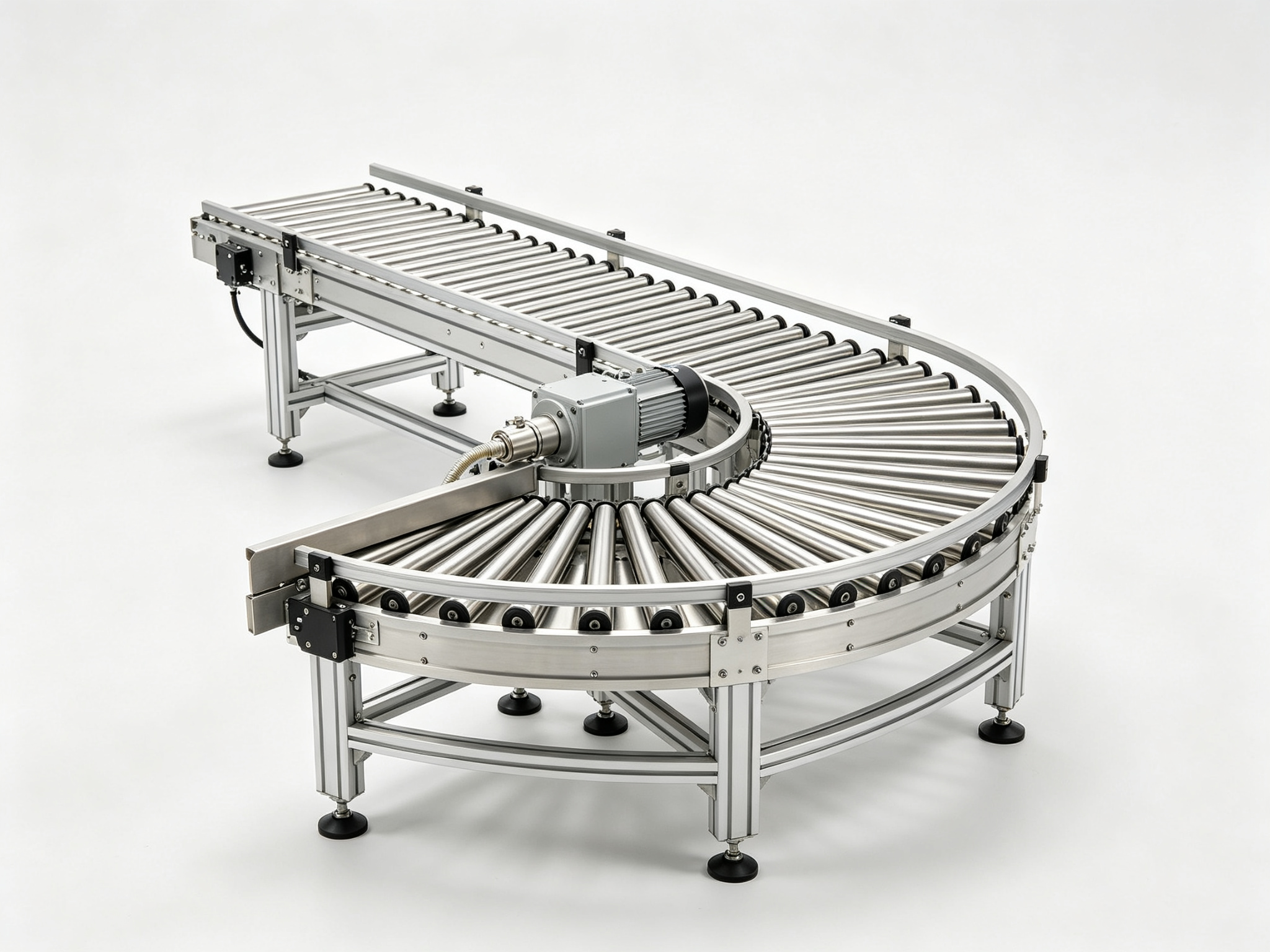
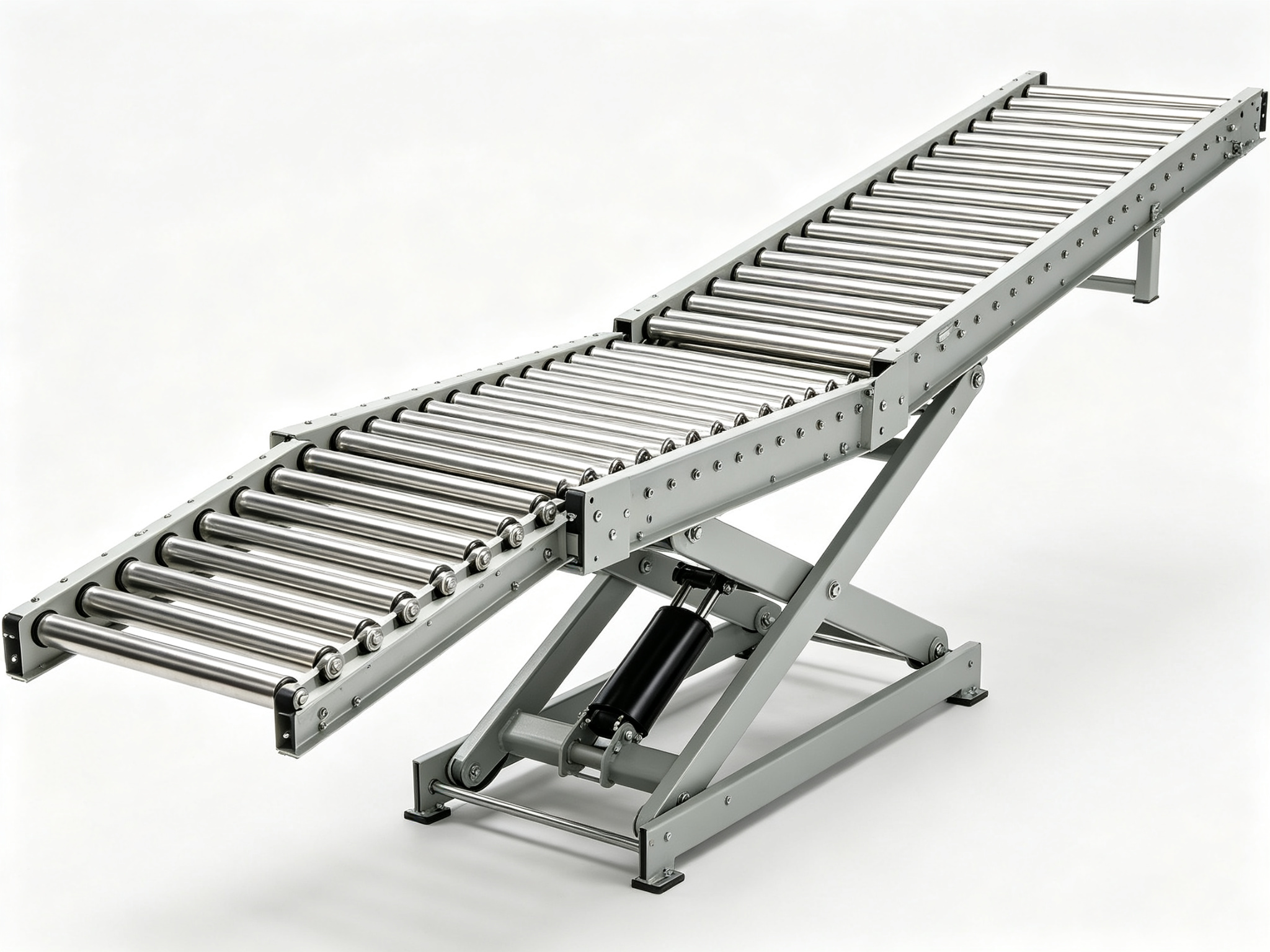
- Powered telescopic sections: three motorized telescopic roller conveyors, one per dock door, each extending roughly 12 meters into the container and retracting as loading progresses. The driven rollers carry the case in both directions, so the same machines handle outbound loading and inbound unloading.
- Fixed powered approach: permanent motorized roller conveyor runs from the case-sealing and palletizing area to the dock, with an accumulation zone that buffers cases while the trailer is being repositioned.
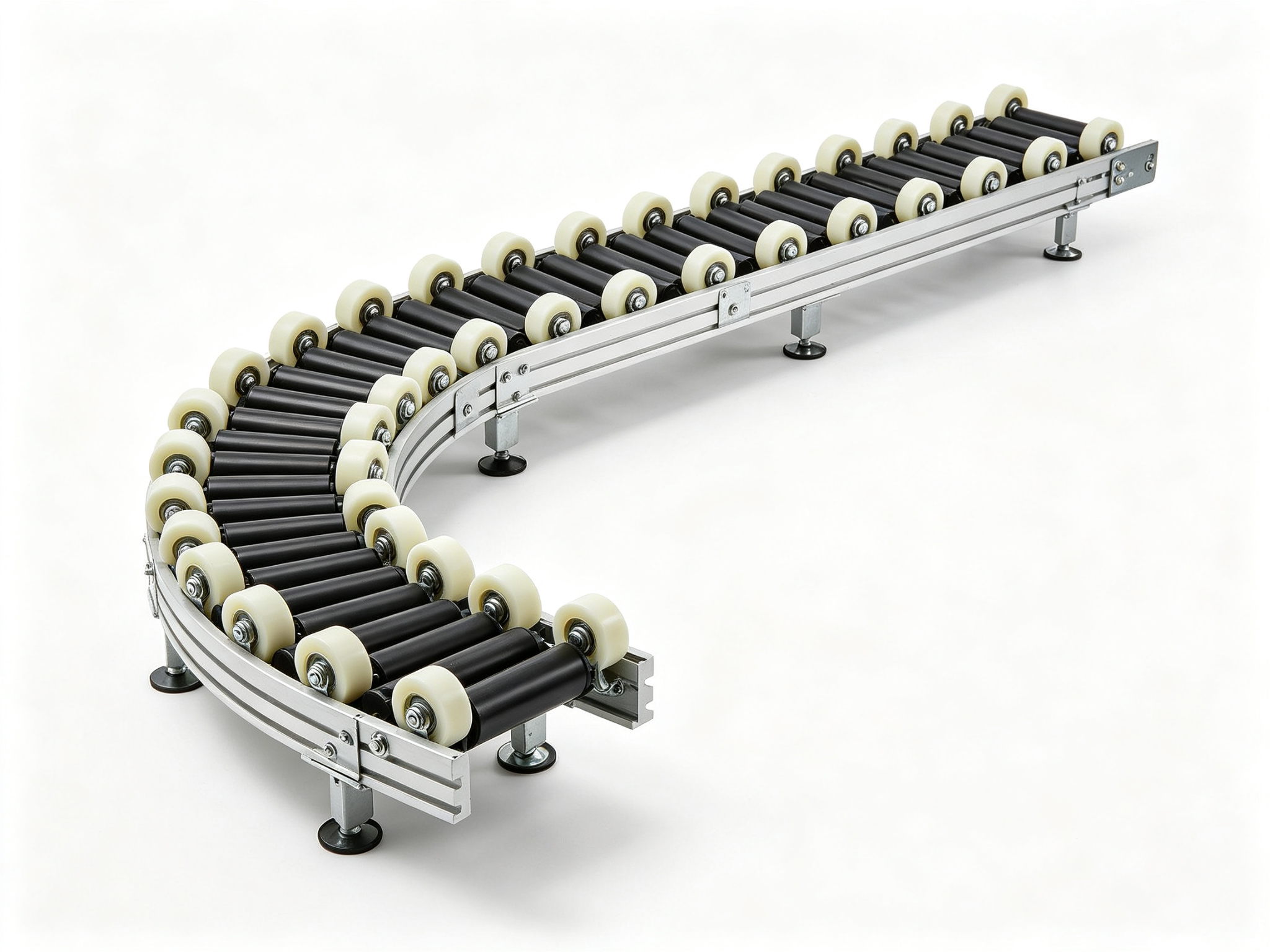
- Gravity fallback and flexibility: a non-powered telescopic gravity roller conveyor at the lower-volume inbound dock, where gravity and a slight pitch move cases without a motor; plus a flexible skate-wheel conveyor that can be wheeled across the floor to serve a temporary door or a cross-dock operation.
- Controls: forward and reverse drives at both the dock and the boom end, soft-start rollers so cases do not collide, height adjustment to meet trailer floors that vary between container types, and guarding at the dock edge.
The full range of configurations is covered in the conveyor systems hub. Powered telescopic booms are not the same as a fixed conveyor: the boom must be able to follow the operator into the container, support the weight of a full case stream on its extended sections, and retract without the operator leaving the trailer.
Powered or Gravity: Matching the Boom to the Door
The single most common question on a dock project is whether to spend on powered extension or to use gravity. The answer depends on throughput, direction and the case weight. Powered booms are required where cases move both into and out of trailers, where the dock clears more than roughly 20 containers a day, where cases are heavy or the trailer floor is not pitched for gravity, or where labor is the binding constraint. Gravity booms are cheaper and need no power at the dock; they work well for steady outbound loading of lighter, consistent cartons where the floor pitch and the operator can control the flow. Many sites use a mix, as this one did, concentrating the powered machines at the high-volume outbound doors and using gravity and flexible conveyors at the rest.
| Measure | Manual hand-carry | Powered telescopic conveyor |
|---|---|---|
| 40-ft container load time | ~90 minutes | ~35 minutes |
| Workers per dock door | 5–6 | 2 |
| Damage / rejected cartons | Steady claims | Down to under 0.3% |
| Containers per shift per door | ~4 | ~10–11 |
| Accumulation buffer | None (floor stacking) | Powered zone |
| Loading in heat / confined box | Yes | Operator at the tail only |
Layout Details That Decide Throughput
A boom is only as good as the conveyor that feeds it, and the project spent as much engineering time on the approach as on the telescopic sections. The fixed powered line includes an accumulation zone just before the dock so that a full trailer or a delayed shunt truck does not stop the packing area. The cases travel in a controlled stream rather than a pile, and the zone releases them to the boom at a rate the operator can stack. The two directions are separated by a routing decision: outbound cases arrive already sealed, labelled and sometimes palletized, while inbound returns and raw materials are unloaded on the reverse drive and routed to a flexible skate-wheel conveyor that curves into the receiving area.
Height adjustment matters more than buyers expect. Container and trailer floors are not all the same height, and a boom fixed at one level forces the operator to lift or drop each case at the transition. The powered booms were specified with powered height adjustment to land level with the trailer floor, and a hinged lead-in section bridges the small gap between the dock and the vehicle so that cases do not catch on the lip. The flexible skate-wheel conveyor, used for the temporary door, is expandable and bends around columns; it is the right tool for irregular cross-dock flows that do not justify a fixed install.
Safety, Service and the Seasonal Peak
Dock work is among the most accident-prone in a warehouse, and the telescopic install was as much a safety project as a throughput one. The driven rollers stop at guarded pinch points, the boom retracts only under a held control so it cannot trap a person, and the dock edge is protected so a worker is no longer stepping in and out of a trailer gap. Removing the hand-carry also removed the repetitive lifting that was the main source of the site’s back injuries, and the operators who used to walk into the hot container now stack cases at the tail from the dock level.
Service on telescopic machines is concentrated in a few places: the extension chains or belts, the drive motors, the rollers at the sections that take the most load, and the electrical festoon that feeds the moving boom. The site keeps a set of rollers and the usual wear items, and the drives are placed so they can be reached without dismantling the conveyor. The decisive test came during the pre-Tet surge, when the dock cleared its highest container count in history with the same headcount, and the temporary doors were brought into service using the flexible and gravity conveyors rather than hiring the seasonal manual teams the site had depended on before.
Installation, Floor Conditions and Payback
Telescopic conveyors are fitted into an existing building, so the floor and the dock structure are part of the specification. The fixed approach needs a level, load-rated floor and a clear path from the packing area to the doors without crossing forklift traffic; the powered booms need three-phase power at the dock, which is the item most often forgotten when a site assumes the doors are “just a loading area.” The dock plates, bumpers and trailer restraints were checked so the boom lands level and cannot move while a vehicle is being loaded, and the routes were marked to keep pedestrians out of the case stream. At the inbound doors, the lower floor and the absence of a power supply were exactly why the customer chose gravity and flexible sections there rather than paying for new wiring.
The payback came mainly from labor and container turnaround. Reducing each outbound door from five or six workers to two, and nearly tripling the doors’ daily container capacity, let the site redeploy the hand-carry team to receiving and value-added work rather than hiring at the seasonal peak. The damage reduction was smaller in headline value but strategically important: the European retail buyers who reject scuffed shelf-ready packs expect load stability, and removing the last-meters throw in the trailer stabilized the product for the sea journey. On a two-shift basis the powered booms, the fixed approach and the gravity sections together paid for themselves in roughly eleven months; the gravity and flexible units, which are a fraction of the cost of a powered boom, paid for themselves in the first two surge periods.
Because the system is modular, the customer did not have to convert every dock at once. The two highest-volume outbound doors were powered first, the returns door took a gravity boom, and the remaining doors were left with a flexible conveyor that could be moved to wherever the day’s volume was. That staged approach kept the capital tied to measured throughput, and the same fixed approach conveyor can be extended to additional doors as the warehouse grows. The practical lesson is that a dock automation project is easier to justify per door than as a single warehouse-wide build, and the powered and gravity sections can be added in the order that the container volumes actually justify.
Questions From the Warehouse Floor
Can the same telescopic conveyor both load and unload?
Yes, a powered telescopic roller conveyor runs forward and reverse, so it loads outbound finished goods and unloads inbound materials or returns. A gravity-only conveyor is effectively one-directional without assistance, which is why the customer reserved powered booms for the two-way doors and gravity for the outbound-only, lower-volume doors.
How far can the boom reach into a container?
Telescopic sections are built in stages and are commonly specified to reach the full depth of a 20- or 40-foot container; the three booms here reach roughly 12 meters. The reach, case weight and extension ratio must be specified together, because a boom extended to its maximum must still support the case stream without sagging.
Do we need powered rollers, or is gravity enough?
Choose gravity for steady, lighter, one-way outbound loads on a dock that can use the trailer-floor pitch. Choose powered for two-way flow, heavy cases, flat or variable floors, high container counts, and wherever the bottleneck is labor. Most multi-door sites end up with a mix rather than a single type.
What happens when the trailer is full or the shunt is delayed?
The fixed approach includes an accumulation zone that holds cases until the boom can take them, so the upstream packing and sealing line keeps running. Without accumulation, every dock pause propagates back into production and produces the floor-stacking that originally slowed the site.
Connecting the Dock to the Whole Line
A loading dock is the last station in a line that starts at the packing machine, and the conveyor choices at the dock should match the equipment upstream. For a food exporter whose product is portioned and vacuum-sealed before it reaches the dock, the same principles of controlled, buffered flow apply inside the plant; see how the system was applied for a Vietnamese seafood exporter adding vacuum packing and conveyors. And for engineers integrating a weighing step into the front of the line, the discharge and timing logic is explained in the multihead weigher integration guide on discharge timing and line balancing. To size a telescopic or fixed conveyor for your dock, send the SunAura Machinery team your container count, carton dimensions, dock-door layout and trailer types — request a layout and quotation.