
October 17, 2026 | by Frank, SunAura Machinery Project Engineering
QINGDAO, China — SunAura Machinery has installed an automatic bag palletizing cell for a dry pet food producer in Vietnam that runs two VFFS lines of kibble and treats in 1.5 kg to 15 kg stand-up and flat bags. Until the project, finished bags were palletized by hand at the end of two shifts, a job the plant manager described as the hardest position to keep staffed: heavy, repetitive, in a dusty room, and directly on the path to a shipping dock that had to be cleared before the daily truck cut-off. The new cell is built around a high-level automatic bag palletizer with an automatic pallet magazine, bag flattening and an infeed that merges both packaging lines into a single, ordered stream.
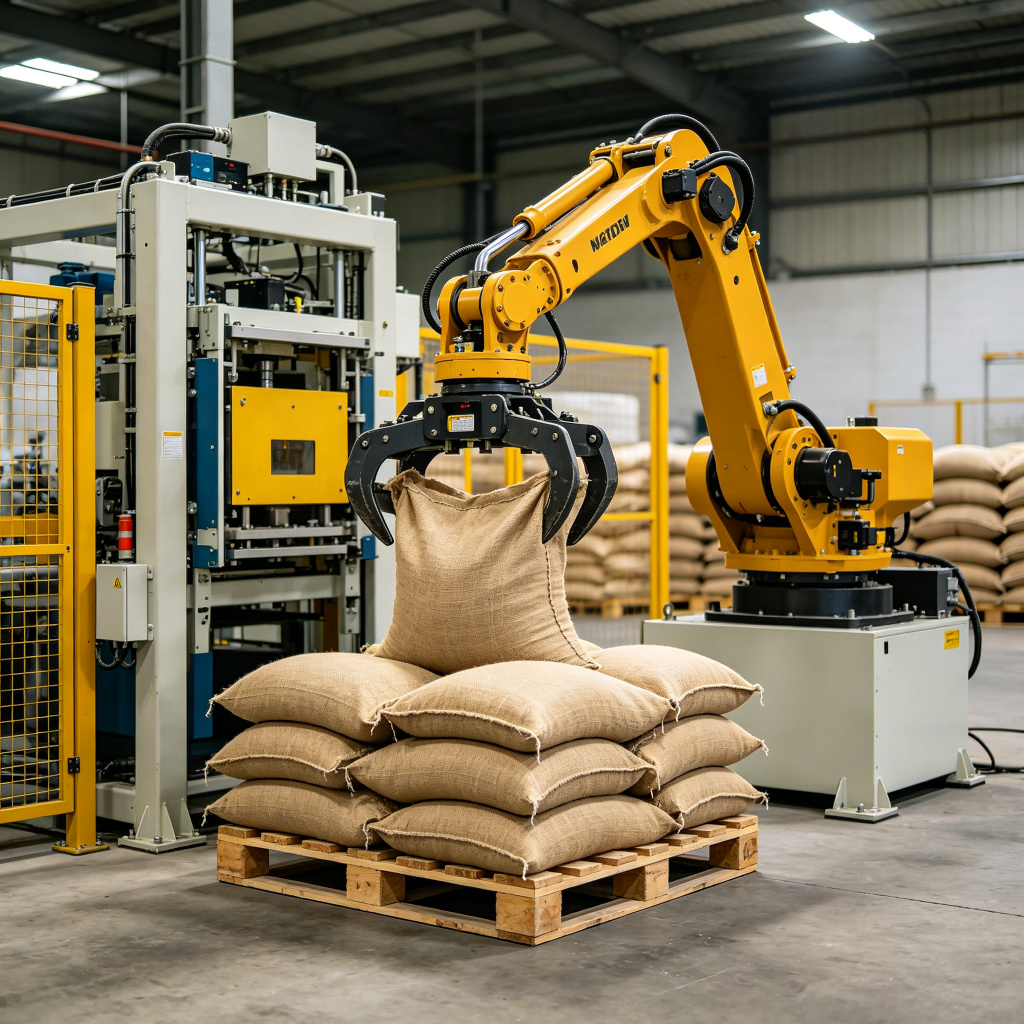
The Real Bottleneck Was Labor and Cut-Off, Not Speed
It is tempting to diagnose a palletizing problem as a speed problem, but the filling and bagging lines were already fast enough. The constraint was downstream. Two workers manually stacked roughly 12–14 tonnes of bags per shift, and the quality of the pallet depended on who showed up. Tired operators at the end of a long shift produced loose, uneven stacks that the forklift driver had to square up before wrapping; on the busiest days, finished bags backed up on the take-away conveyor and the bagging line was throttled to wait for the manual pallet station.
Pet food bags make the job harder than cartons. They are soft, irregular and slightly slippery, so a “perfect” stack is always a little loose, and the larger 15 kg sacks are close to a single-person manual handling limit. The customer wanted a machine that would: take a bag from either line, flatten and orient it, build a stable interlocked pattern, place an empty pallet without a fork truck entering the cell, and hand a finished load to the existing wrapper. They also wanted one operator to run the whole end of line rather than a dedicated palletizing crew.
Why a High-Level Bag Palletizer Instead of a Robot
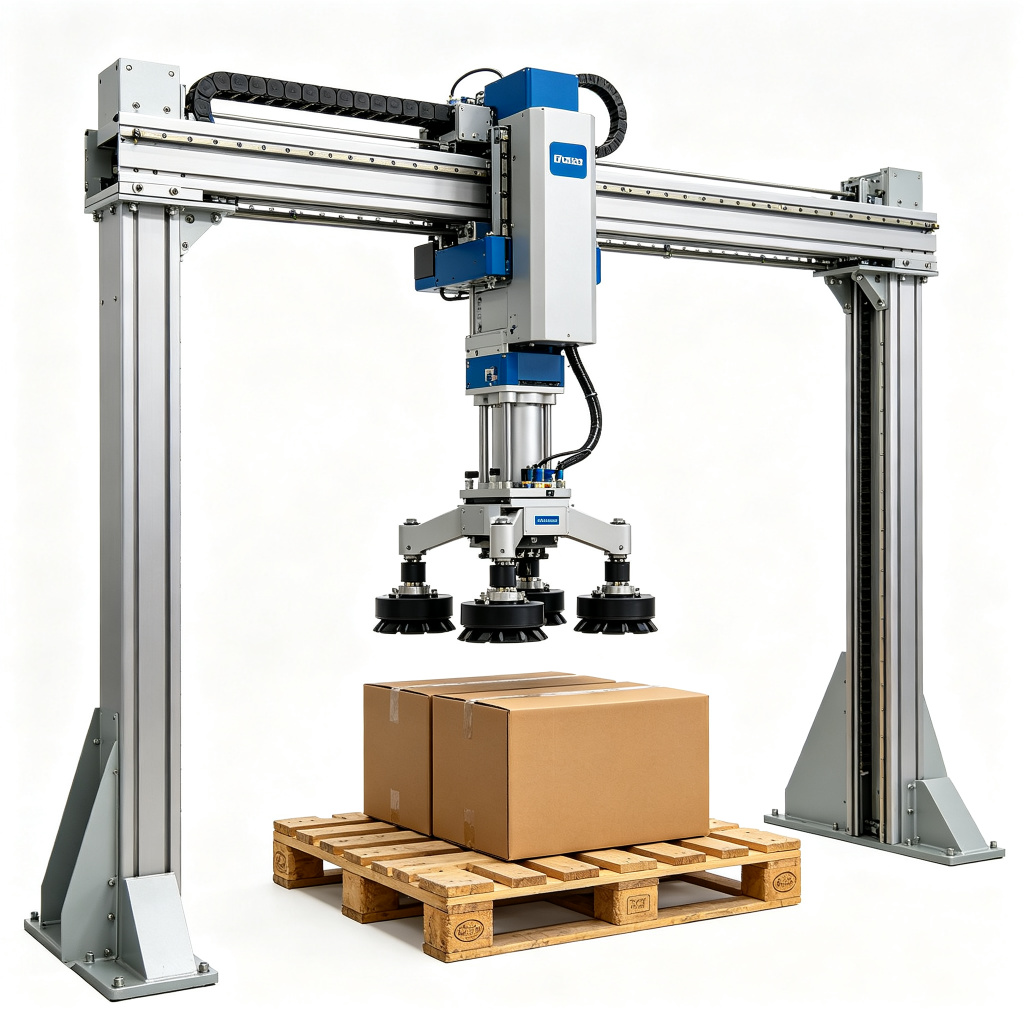
For a narrow range of bag sizes running continuously at moderate-to-high speed, a conventional high-level (or high-infeed) bag palletizer is the most cost-effective choice. It builds the pattern layer by layer on a raised platform and lowers the load, which is mechanically simple, very repeatable and easy to maintain with a plant’s own maintenance crew. A robotic palletizer is the better answer when the plant needs to handle many SKUs, multiple infeed lines feeding different patterns at once, or very low headroom. We build both, and the selection comes from the product mix rather than from a preference for a moving robot arm.
| Consideration | High-level bag palletizer | Robotic palletizer |
|---|---|---|
| Best fit | Few bag sizes, steady high volume | Many SKUs, flexible patterns |
| Pattern repeatability | Excellent, mechanical | Excellent, programmed |
| Footprint | Longer infeed, lower headroom-friendly | Compact, can feed multiple lines |
| Maintenance | Simple, conventional parts | Robot axis & gripper service |
| Changeover | Guided recipe per bag size | Fast, recipe-driven |
For this plant, the range was only four bag sizes and two lines, with the same 1.0×1.2 m pallet for everything, so the high-level bag palletizer was the right economics. The customer has a newer, mixed-SKU plant where we would recommend a gantry palletizer system, and we designed the conveyor so a second, more flexible cell can be added later.
How the Cell Handles a Soft, Slippery Bag
Palletizing a bag is different from palletizing a rigid carton, and the differences are all in the infeed. Before the bag reaches the pattern-building station, it passes through a flattening and conditioning section that settles the kibble, squeezes out air and gives the bag a predictable, rectangular shape. A turner and stop-and-go metering conveyor then orient each bag to the recipe, because the stable interlock of a bag pallet depends on bags lying flat and squarely overlapped. The palletizer places slip sheets between layers on the customer’s largest bags, and a pallet magazine feeds empty pallets automatically so a fork truck never enters the working area.
- Dual-line merge combines the two VFFS outputs into one controlled infeed with accumulation, so a brief stop on one line does not stop the palletizer.
- Bag flattening and de-aeration turns a puffy, air-filled sack into a flat, stackable unit, which is the single biggest factor in pallet height and stability.
- Pattern and slip-sheet station builds an interlocked, overlapping stack and inserts tier sheets for the 15 kg bags.
- Automatic pallet magazine stages empty pallets without a fork truck inside the cell.
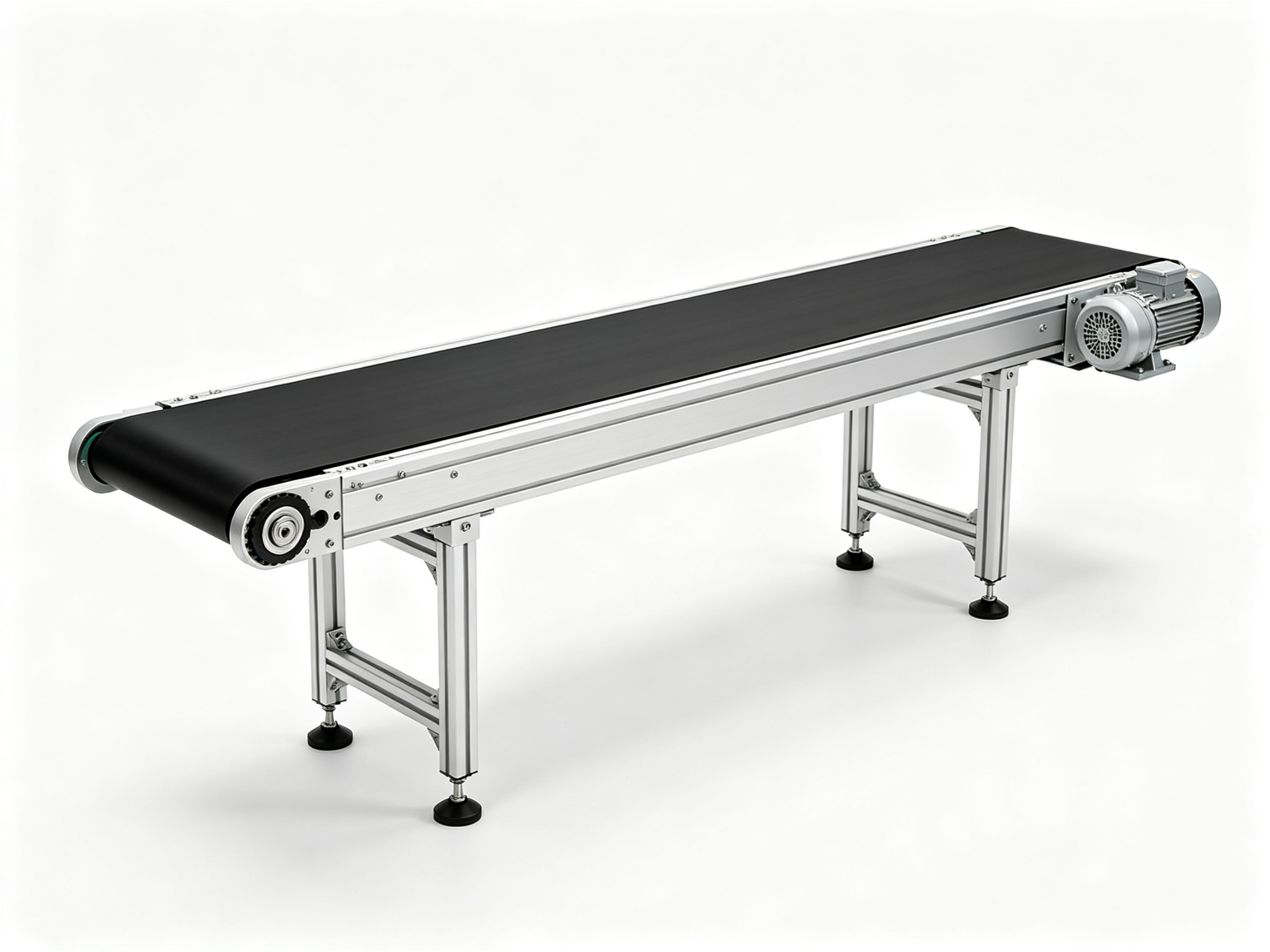
- Discharge to the existing wrapper via a heavy-duty belt conveyor, with the option to add a pallet wrapping machine inline.
Cell Specifications
| Parameter | Specification |
|---|---|
| Product | Dry kibble and treats, 1.5–15 kg stand-up / flat bags |
| Palletizer | High-level automatic bag palletizer |
| Pallet | 1.0 × 1.2 m, load up to 1,200 kg |
| Infeed | Dual-line merge, flattening, turner, slip-sheet station |
| Pallet feed | Automatic pallet magazine |
| Out-feed | Powered belt conveyor to existing wrapper |
| Guarding | Interlocked perimeter fence, light curtain, E-stops |
| Operators | One supervising both lines and forklift call-off |
Commissioning and the Importance of the De-Aeration Section
The main commissioning issue was the one we expected: the 15 kg bags were leaving the VFFS line inflated with air, and the first layer was sitting too high, which threw off the pallet count and the wrapper’s film pattern. The fix was not a faster palletizer but a properly adjusted flattening and de-aeration section. Once the bags were conditioned flat, the layer height and the number of layers per pallet became predictable, and the wrapper could apply a consistent wrap without the operator adding hand film. This is the same downstream-stability logic we applied to a building-materials cell documented in our rotary-arm pallet wrapping case study: the load has to be conditioned before it is wrapped.
Results After the First Two Months
- Two manual palletizing positions were removed; one operator now supervises both bagging lines and the cell.
- Finished bags no longer back up on the take-away conveyor at the daily truck cut-off, so the line runs at its rated speed.
- Pallet height and pattern are now consistent, which let the wrapper use a fixed recipe instead of operator-dependent hand wraps.
- Fork-truck traffic into the palletizing area was eliminated, removing the safety exposure that worried the plant manager most.
When a Bag Palletizer Pays Back Fastest
The economics are strongest where three conditions hold: the bag is at or above roughly 10 kg, the plant runs two or more shifts, and palletizing is causing either overtime, missed dispatch windows or a chronic staffing problem. Light, low-speed operations are often better served by a low-level case palletizer or a compact robotic cell, and for carton-based lines we would look at a compact carton palletizer first. The point of a site survey is to match the machine to the bag weight, SKU count and dispatch rhythm rather than to sell the largest palletizer on the floor. It is worth noting that the same upstream accuracy that keeps bag weights on spec matters when filling the bags in the first place, which our multihead-weighing and filling colleagues address on the 18-head multihead weigher.
Throughput, Accumulation and Line Balancing
One of the most useful questions in the layout workshop is not how fast the palletizer can run, but how much it has to absorb. Upstream VFFS and filling machines do not stop politely for the end of line. A film roll change, a weigh check, a hopper refill or a minor adjustment all cause short stops, and when the line restarts it can deliver a short burst of bags faster than the average rate. If the palletizer’s infeed has no accumulation, that burst backs up and either throttles the bagger or shoves bags off the conveyor. The merge section was therefore sized with several minutes of accumulation, which decouples the two bagging lines from the palletizer and lets it run to its own steady rhythm.
The line-balance calculation we worked through with the customer was deliberately conservative. We took the true sustained bag rate over a full shift, not the machine’s peak figure, subtracted the expected downtime for roll and reel changes, and added the pallet- and slip-sheet handling time. Sizing the palletizer to that sustained number with accumulation meant it was not the bottleneck and was not over-specified. The same logic, applied to the overall plant, is the subject of our availability and performance guide to calculating OEE on a packaging line.
Site Preparation, Safety and the Fork-Truck Question
The most visible safety gain was separating people from fork trucks. In the old manual setup, a forklift collected a finished pallet from the same area where operators were stacking, and near-misses were a standing item on the plant’s safety board. The automatic pallet magazine brings empty pallets into the cell and the powered discharge carries finished loads out, so trucks now collect only from a marked pickup lane that the operators never enter. The cell is guarded by an interlocked perimeter fence with a light curtain at the only manual position, and the E-stop circuit is tied into the upstream bagging lines so the infeed stops before the palletizer can accumulate a jam.
Site preparation was modest for a high-level cell: a reinforced, level pad for the palletizer, a powered supply to match the infeed and magazine, and compressed air for the turner and sheet-handling functions. The roof height had to be checked because a high-level infeed raises the machine, which is why a low-level or robotic configuration is specified in plants with low headroom. In the event, this plant had the height and the floor, and the two-line merge was routed in the space the manual staging area had occupied.
Frequently Asked Questions
Can a bag palletizer handle both stand-up and flat bags?
It can handle a defined set of bag sizes and styles with a stored recipe, but the infeed must be set up for the bag shape. Stand-up pouches that will not flatten are typically handled with a robotic pick instead of a high-level layer palletizer.
How fast does it need to run?
Speed is set by the bagging line and the dispatch window, not by the palletizer’s peak. We size the cell with enough accumulation to absorb short stops so the upstream filling and sealing machines keep running.
Does it need a robot or a conventional palletizer?
For a few bag sizes at steady volume, the high-level conventional bag palletizer is the lower-cost, easiest-to-maintain choice. For many SKUs or several lines feeding different patterns, a gantry or robotic cell is the better fit, and we supply both.
Can it connect to our existing wrapper?
Yes. The discharge conveyor can be matched to an existing wrapper or to one of our pallet wrapping machines, and the handshakes are agreed during layout design.
What guarding and safety are required?
An interlocked perimeter fence, a light curtain at the manual pickup point, and E-stops at the HMI and discharge are standard; the magazine keeps fork trucks out of the cell. The same guarding principle applies to the heavy-gauge manufacturing cells we describe in the double-layer thermoforming line project.
Next Steps
The cell is running across both shifts, and the after-sales and spare-parts team keeps wear parts for the infeed belts, flattening rollers and pallet magazine on hand. Each bag size and pattern is stored as a recipe, so adding a new SKU is a configuration task rather than a mechanical rebuild.
Still hand-stacking bags or missing dispatch windows? Send us your bag weight, SKU list, pallets per hour and shift pattern, and we will recommend a high-level bag palletizer, a gantry cell or a robot — with the right infeed and guarding. Explore palletizers, pallet wrappers and end-of-line packaging lines, then start the conversation on the contact page. For related reading, see the double-layer thermoforming line and, for the rigid trays and cups produced elsewhere in the same packaging hall, our PP, PET, PS and PLA thermoforming sheet guide.