Top-Press vs Standard Turntable Pallet Wrapper: Choosing a Stretch Wrapper for Light and Unstable Loads
A pallet wrapper is supposed to leave a load tighter than it found it, but on a lightweight or wobbly stack the opposite can happen. The turntable starts to rotate, the film pulls on the outer cartons, and empty bottles, light boxes or a tall, narrow stack begin to walk, tilt and sometimes go over before the cycle finishes. Buyers who assumed every turntable wrapper was the same then discover there is a machine built specifically for that problem — a top-press wrapper that holds the load down while it wraps. This guide separates the two, where the extra pressing mechanism earns its cost, and where paying for it is unnecessary.
At SunAura Machinery we specify end-of-line wrapping across food, beverage, electronics and logistics plants, and the honest starting point is that the standard turntable wrapper is the right machine for the majority of stable loads. The top-press version is a specialist: it adds an overhead platen that applies controlled downward force so the load cannot lift or shift during rotation. It is the correct answer for a defined set of light, tall or unstable products, and an added expense for a stable, heavy pallet that never needed holding. The decision is set by the load, not by which option has more features.
What the Two Machines Are
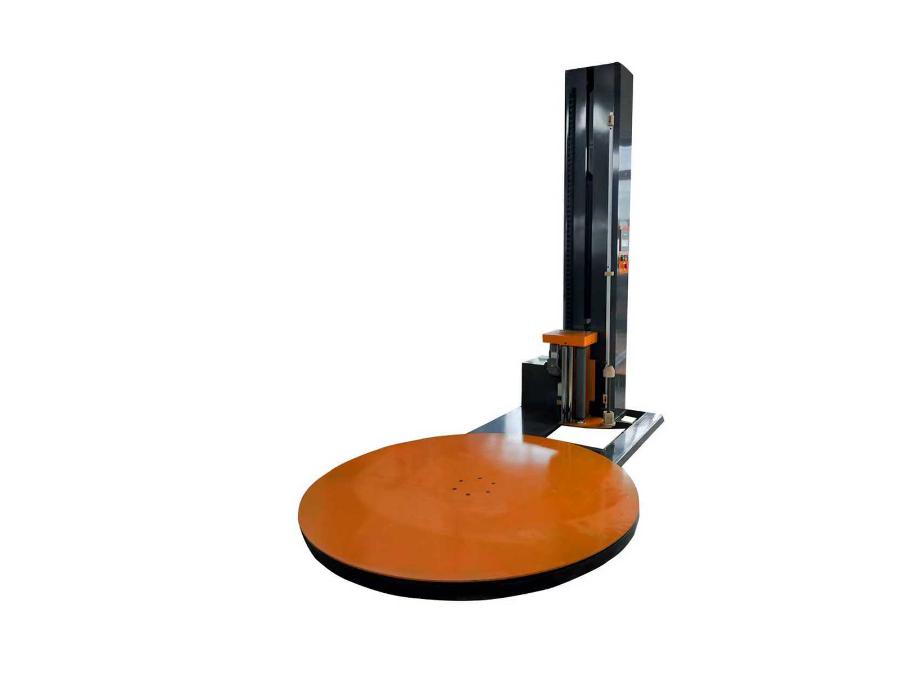
A standard turntable wrapper is the familiar design. The pallet sits on a rotating platform, and a film carriage travels up and down a mast dispensing stretch film around the spinning load. It relies on the load being stable enough to rotate without moving, and on the film tension not pulling the outer items off. It is a simple, proven design that handles stable, uniform pallet loads, and most suppliers rate the turntable type for loads up to roughly 2,000 kg. A semi-automatic version needs an operator to attach the film; a fully automatic conveyorized version does not.
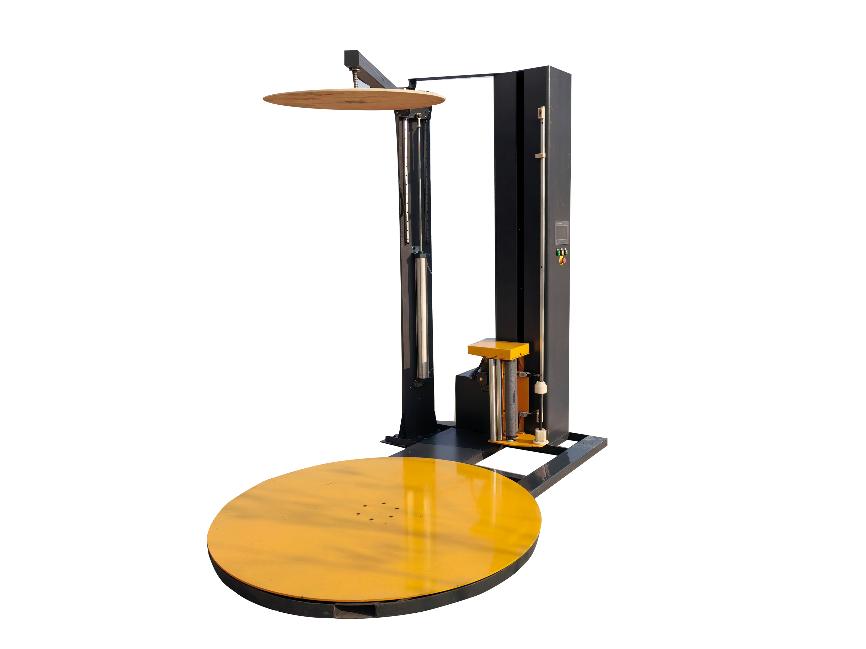
A top-press wrapper is the same turntable machine with one addition: an overhead pressing device, sometimes called a top platen, mounted on an arm above the load. Before the cycle starts the platen lowers onto the top of the stack and holds it with a controlled, adjustable force for the whole wrapping cycle. The platen is driven either electrically by a motor or pneumatically by an air cylinder, and the pressing force and height are set to suit the load. While the platen keeps the stack pinned, the turntable rotates and the film carriage wraps as normal, so the load cannot tilt, lift or collapse under the film’s pull.
Why the Top Press Exists
The problem it solves is genuine and surprisingly common. Lightweight or irregularly stacked products — empty plastic bottles and cans, light cartons, tissue and paper products, foam and soft packaging, tall narrow stacks — have little weight holding them down. When the film is applied under tension it exerts a sideways and upward pull on the outer layer, and on a light load that is enough to drag items out of position. The wrapper that was meant to stabilize the load is the thing destabilizing it. The top platen removes the cause by pinning the stack from above, so the film can be pulled tight without the load moving, and the finished pallet is genuinely secure rather than wrapped around a shifted stack.
According to industry and supplier material, the pressing force and height are adjustable, which matters because the platen has to hold the load without crushing it. Soft outer packaging and fragile cartons need a gentle, controlled pressure; a heavier unstable stack can take more. Operators can also set the number of top reinforcement wraps and total layers to suit the product. On a powered pre-stretch carriage, which supplier literature commonly rates at a stretch ratio of around 1:2.5, the film is elongated before it is applied, giving tight containment while using less material. The combination of a held load and pre-stretched film is what produces a consistent, tight wrap on products that a standard machine would struggle with.
Electric vs Pneumatic Platen
Buyers will be offered two ways to drive the platen, and the choice is a practical one. An electric, motor-driven top press gives precise control over force and height, does not need a compressed-air supply, and suits plants that want a self-contained machine. A pneumatic platen uses an air cylinder, which is simpler and often more compact but requires an external compressor and a reliable air supply. Suppliers such as CECLE note the pneumatic design as a compact option that depends on shop air, while the electric version is the usual choice where compressed air is not already available. Confirm which drive is quoted and whether the force can be limited to protect fragile products, since an unregulated press is itself a damage risk.
A short decision checklist helps before the order is placed. First, run the lightest and most unstable pallet you actually ship on a standard turntable and watch what happens; if the outer items move, the press is justified rather than optional. Second, weigh the load against the turntable rating and confirm the maximum wrapping height clears your tallest stack. Third, decide whether the machine will be standalone and forklift-loaded or conveyorized into the line, because that sets the automation level and price. Fourth, if the press is pneumatic, confirm a compressor is within reach; if it is electric, confirm the force can be capped. Working through those four points in order separates a genuinely needed top-press purchase from a feature added on instinct.
Selection Table: Top-Press and Standard Turntable Side by Side
| Dimension | Standard turntable wrapper | Top-press wrapper |
|---|---|---|
| Load stability assumed | Stable, self-supporting load | Light, tall, soft or unstable load |
| Overhead mechanism | None | Electric or pneumatic platen |
| Relative cost | Lower | Higher; added drive and controls |
| Pressing force | Not applicable | Adjustable; must suit fragile items |
| Utilities needed | Power only | Power, plus air if pneumatic |
| Typical throughput (supplier range) | Roughly 20–40 pallets/hour | Roughly 20–40 pallets/hour |
| Typical load rating | Up to around 2,000 kg | Up to around 2,000 kg |
| Best product fit | Stable cartons, bags, uniform pallets | Empty bottles, cans, light boxes, tissue, tall stacks |
| Maintenance burden | Turntable and film carriage | Adds platen drive and controls |
Where Each One Fits — and When Neither Does
Choose the standard turntable wrapper when the load is stable, reasonably heavy and uniform — full cartons, sealed bags, drummed goods and ordinary export pallets. Adding a press there is money spent on a mechanism that never engages. Choose the top-press wrapper when the load is light, tall, soft or prone to shifting — empty containers, light cartons, tissue and foam products, and any stack that has walked or tipped on a standard machine. There is a third case worth naming: for very heavy, very light or genuinely unstable loads that should not rotate at all, the better answer is often a rotary-arm wrapper, where the load stays stationary and the arm moves around it. The top-press turntable is the middle option for light loads that can still rotate safely once held.
When Not to Buy Each One
Do not buy a standard turntable wrapper for a light or unstable load that you have already seen shift or topple; the film tension will keep pulling the outer items out of place and the pallet will leave the machine no more stable than it arrived. Do not buy a top-press wrapper for a stable, heavy, single-SKU load that wraps fine without holding; you pay for a platen, an extra drive and extra maintenance that solve no real problem. And do not assume the press rescues a load that should not rotate in the first place — a very tall or extremely unstable stack is safer on a rotary-arm machine that keeps the load still. The platen also has to be force-limited: an unregulated press on fragile cartons will crush the very product it is meant to protect.
Cost, Payback and Procurement Risks
The top-press wrapper carries a higher price than the standard turntable because of the added platen, its drive and the control logic, and a pneumatic version adds the requirement for a compressor. The payback is not hard to justify where it fits: it removes the labor of re-wrapping failed loads, cuts product damage from toppled stacks, and lets light products be wrapped at the same pace as ordinary pallets rather than handled slowly by hand. Where the load is stable, that payback never arrives. When comparing quotes, ask for the platen drive type, the range and limit of pressing force, whether the height senses automatically, and which parts are catalog items your team can replace. Confirm the machine against your actual lightest and most fragile pack rather than a stable sample, and watch the full cycle to see the platen hold and release without marking the cartons.
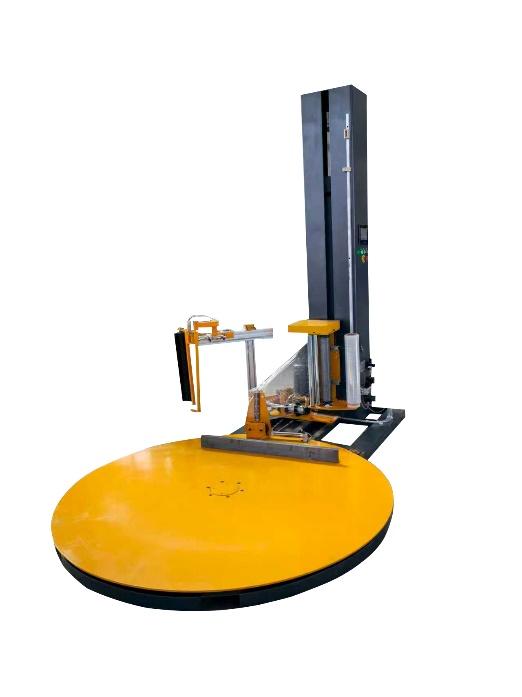
Integration is the other factor. For a high-volume line, a conveyorized online wrapper — with or without a top press — removes the forklift and keeps pallets moving at a steady rate, while a standalone semi-automatic machine is the lower-cost choice for intermittent, multi-line work. The wrapper should be planned as part of the end-of-line sequence, including the pallet wrapping machines and the top-press pallet wrappers that match the load, rather than selected after the line is built. For stable loads the simpler semi-automatic pallet wrappers keep the cost down, and where pallets must stay still the rotary-arm wrappers are the alternative.
Frequently Asked Questions
What kinds of products need a top-press wrapper?
Lightweight or unstable loads that shift under film tension — empty bottles and cans, light cartons, tissue and paper products, foam and soft packaging, and tall narrow stacks. Stable, heavy, uniform pallets do not need the platen and wrap fine on a standard turntable.
Will the platen crush fragile products?
It can if the force is not controlled, which is why the pressing force is adjustable and should be limited to the load. Run the cycle on your most fragile pack and check for marking before accepting the machine. A controlled, low-force descent is a standard safety feature on reputable models.
Electric or pneumatic platen — which should I choose?
Electric gives precise control and needs no compressed air, so it suits a self-contained installation. Pneumatic is simpler and more compact but requires a compressor and steady shop air. Choose based on whether reliable compressed air is already available at the line.
What if the load is too unstable to rotate even when held?
Then a rotary-arm wrapper is the better fit, because the load stays stationary and the arm carries the film around it. The top-press turntable is intended for light loads that can rotate safely once pinned, not for extremely tall or unstable stacks that should not turn at all.
Summary: Hold the Load Before You Wrap It
The decision is cleaner than the feature list suggests. Choose the standard turntable wrapper for stable, heavy, uniform loads, where adding a press would be unused cost. Choose the top-press wrapper when the load is light, tall, soft or unstable and the film tension is what pulls it out of place; the overhead platen pins it so the wrap tightens rather than topples it. For loads that should not rotate at all, step up to a rotary-arm machine. Match the wrapper to the actual stability of the load and the machine will leave every pallet — even the light ones — genuinely ready to ship.
If you are wrapping light or unstable products and want the pressing option specified against your real loads, review the top-press pallet wrappers and the wider pallet wrapper range, with online conveyorized wrappers for high-throughput lines. How product moves into that machine is covered in our guide to gravity versus powered conveyors, and for rolls and long goods see the comparison of radial drum and gantry-frame wrappers. Send us your lightest and most fragile pack and we will confirm the pressing force, cycle and film use — contact SunAura Machinery to start the review.
Selected Sources
This article draws on supplier and industry material describing top-press and turntable stretch wrappers, including Shandong Dyehome (top-press pallet wrapper specifications and pre-stretch ratings), Innovative Wraptech (top-pressure wrapper working process and pneumatic platen), StarsPlas (automatic top-pressure wrapper), CECLE Machine (pneumatic versus electric top platen), and FHOPE (press-down device applications). Figures cited as supplier ranges are estimates and should be confirmed against the specific machine quotation.